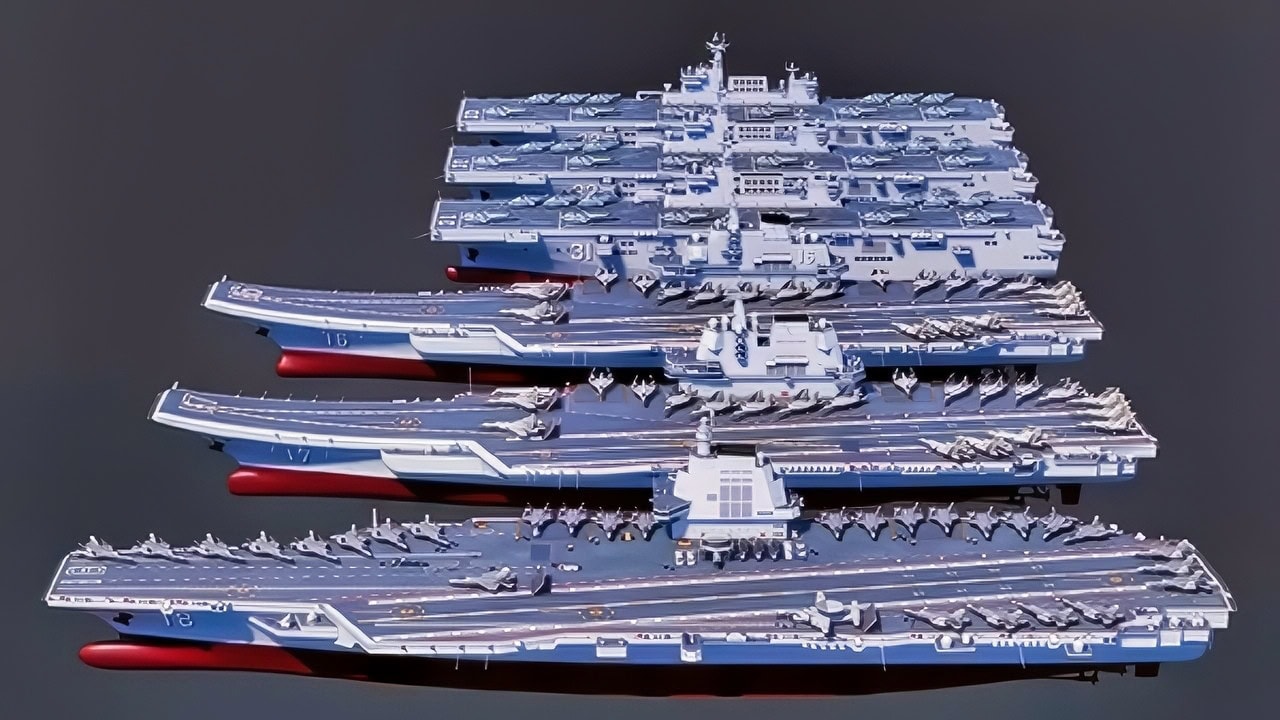
New satellite imagery details a massive hull arising from China’s Dalian shipyard. Analysts have identified this new leviathan being assembled in Dalian as China’s fourth and most advanced aircraft carrier, the Type 004.
Satellite photos show a collection of components scattered across the sprawling shipyard, being rapidly assembled into an aircraft carrier comparable in size (and capability) to an American supercarrier.
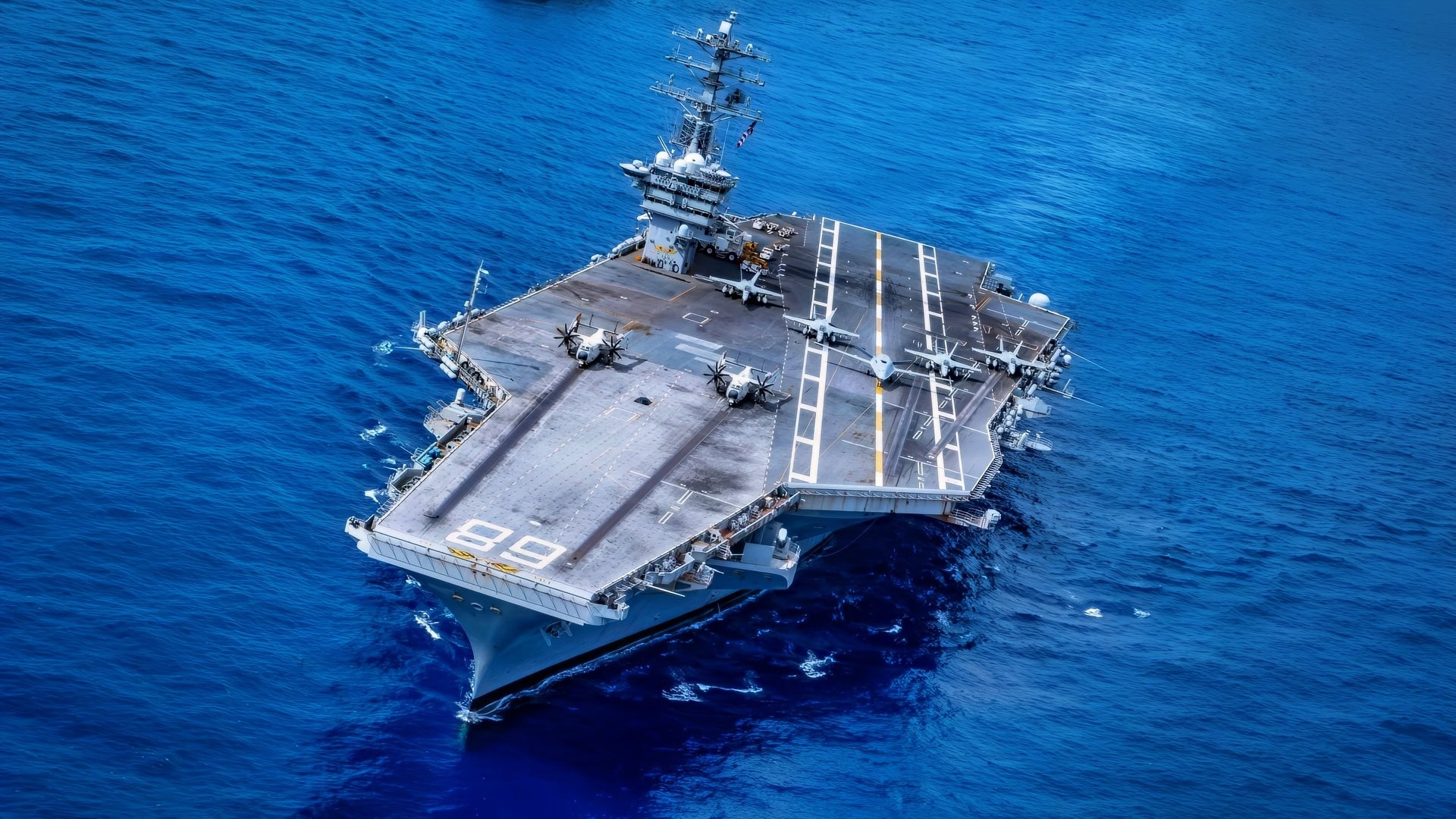
Twenty-six ships from 13 partner and allied nations steam in formation with Nimitz-class aircraft carrier USS Nimitz (CVN 68) as part of Fleet Exercise (FLEETEX) 250 in the Atlantic Ocean, June 25, 2026. Nimitz is underway taking part in Fleet Exercise (FLEETEX) 250, a series of structured multilateral training events at-sea, aimed at building cohesiveness, validating tactical procedures, and strengthening the interoperability of participating units—which include warships, aircraft, and crews from the U.S. and 13 partner and allied nations. (U.S. Navy photo by Mass Communication Specialist 3rd Class Gina M. Gallia)
Beijing has neither confirmed the veracity of these images nor released official specifications for the purported Type 004.
Since 2012, when China’s first carrier–the upgraded Soviet-made ski-jump-only Liaoning entered service, China’s growing carrier force has not only become more numerous.
That force has effectively become more advanced with each iteration. This is the natural progression for any long-term industrial project.
What is surprising, as an aside, is the rapidity of China’s carrier growth and technological advancement.
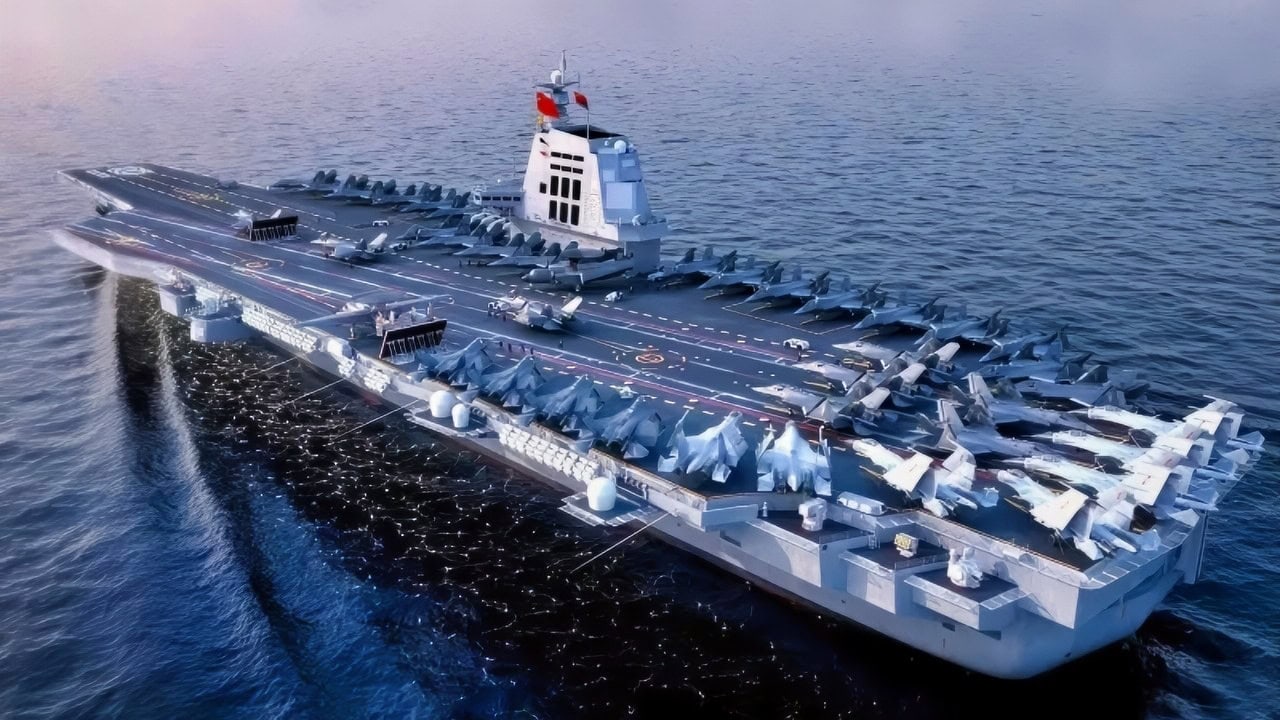
China Aircraft Carrier Mock Up Image.
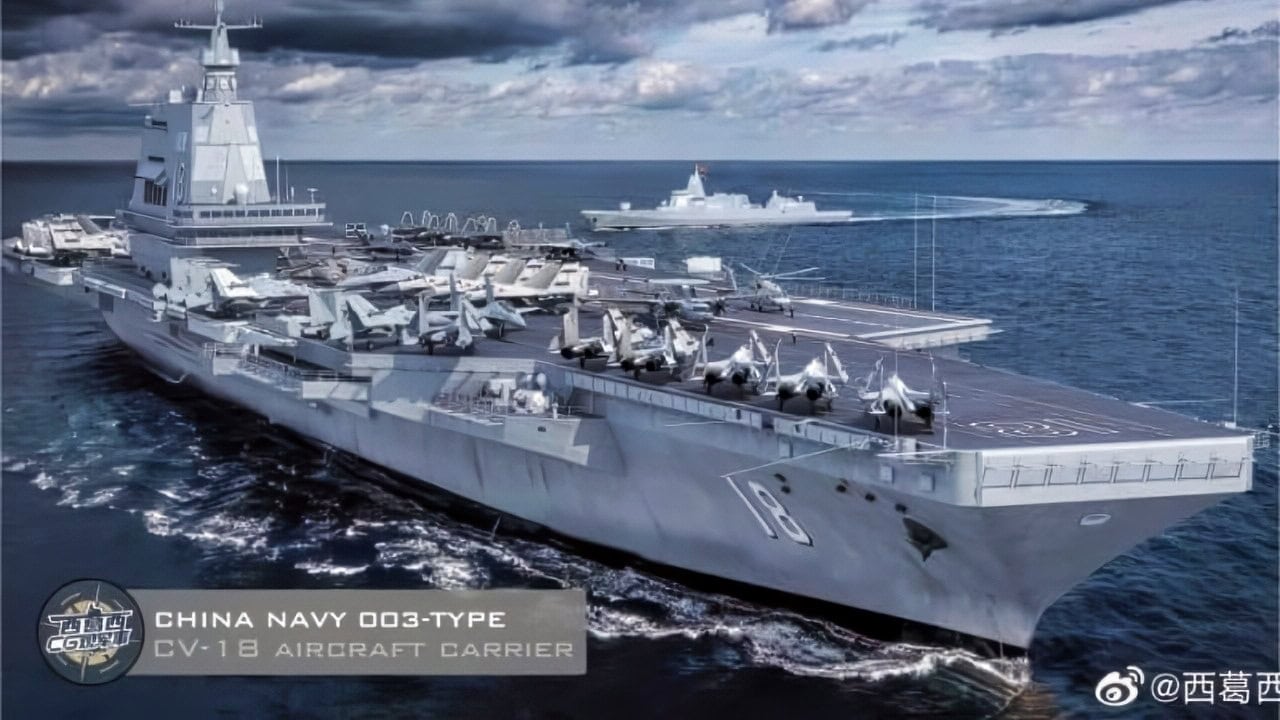
China Aircraft Carrier Type 003 Conventional Supercarrier. Image Credit: X Screenshot.
What’s Going On at Dalian?
According to The War Zone, a popular online trade publication, the incomplete hull of what is believed to be the Type 004 has already reached a whopping 1,050 feet in length and 151 feet across.
Those dimensions could increase as additional sections are added, and the flight deck is eventually installed.
In other words, China’s first supercarrier is at hand.
Until now, China’s carriers have all been conventionally powered.
Yet many analysts assume the Chinese are preparing to install a nuclear reactor on the Type 004, making it China’s first indigenous nuclear-powered carrier.
For instance, some images show what appear to be two large containment structures resembling those associated with naval nuclear reactors.
Currently, conventionally powered Chinese carriers must carry large quantities of fuel, reducing their endurance. Nuclear power would effectively make the Type 004’s range limitless.
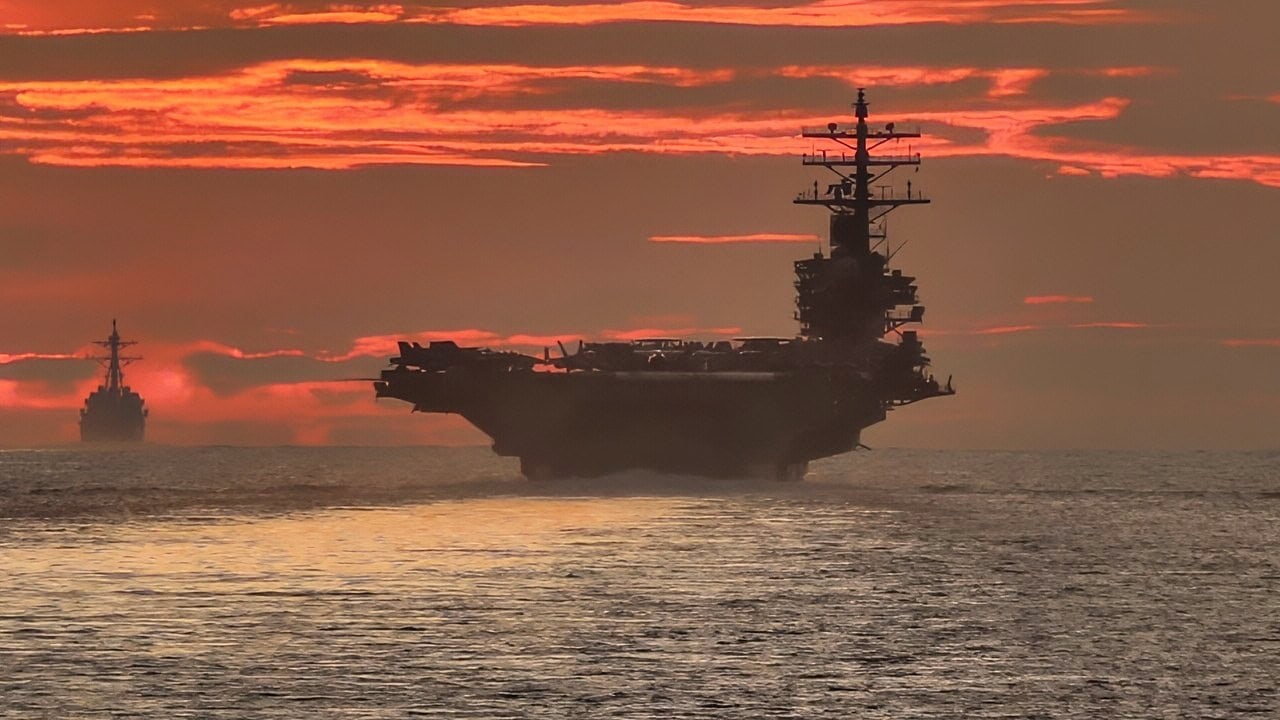
210618-N-JW440-2165 STRAIT OF MALACCA (June 18, 2021) As seen from the Ticonderoga-class guided-missile cruiser USS Shiloh (CG 67), the Navy’s only forward-deployed aircraft carrier USS Ronald Reagan (CVN 76) transits the South China Sea with the Arleigh Burke-class guided missile destroyer USS Halsey (DDG 97). The ships are part of Task Force 70/Carrier Strike Group 5, conducting underway operations in support of a free and open Indo-Pacific. (U.S. Navy Photo by Mass Communication Specialist 1st Class Rawad Madanat)
Of course, the Type 004 would still require ammunition, aviation fuel, and other supplies to support the crew and aircraft, but the carrier itself would be a powerful new addition to the Chinese fleet.
If the carrier were nuclear-powered, the People’s Liberation Army Navy (PLAN) would join a tiny group of nations (the United States and France) that operate nuclear-powered aircraft carriers (the US has 11 of them while France has one aging flat top, the Charles de Gaulle).
The New Type 004
Like the new US Navy Gerald R. Ford-class aircraft carriers, the Chinese envision the new Type 004 employing electricity.
Thus, the Chinese are effectively skipping a generation of carrier designs (such as the Nimitz-class carriers) by equipping the Type 004 with technologies like Electromagnetic Aircraft Launch Systems (EMALS).
These new forms of catapults are energy hogs, and only nuclear-powered carriers can reliably provide the power needed for launch.
China’s procurement program for the PLAN’s growing carrier force includes aircraft such as the fifth-generation J-35 stealth fighter, which can be deployed from EMALS-equipped carriers.
China is expanding its fleet of J-15 fourth-generation warplanes (including an electronic-warfare variant like America’s EA-18 G Growler) while building carrier-capable KJ-600 airborne early-warning aircraft.
What’s more, the Chinese are making the Type 004 ready for the future by integrating drones into the carrier’s air wing from the design stages of the Type 004.
So, from a technical standpoint, China has already caught up to the United States in carrier capabilities. It remains numerically inferior to the current US carrier force.
Yet, if we are being honest, the US Navy cannot field all 11 of its carriers at once.
The Americans struggle to maintain three to four of those flat tops at any one time, with the rest of the force held back in repair and maintenance cycles (which are becoming increasingly prolonged due to the decline in US naval shipyards).
China’s New Carrier Force
In terms of numbers, too, China will have caught up to the Americans once the Type 004 is deployed.
And China’s superior manufacturing capabilities mean those numbers will grow while the Americans struggle to produce their own carrier force.
The complicating factor for the Chinese–for now–is having enough skilled sailors to fill all the slots on the four carriers the PLAN will soon operate.
Of course, China has expanded the recruitment for the PLAN’s carrier force.
In fact, some reports indicate that China is recruiting candidates for the PLAN’s carrier force directly from high school and universities rather than relying on experienced military pilots transferred to naval aviation.
But as the air wings themselves become more technically complex, finding skilled pilots will be harder.
America Rests On Its Fraying Laurels
For now, the United States maintains some advantages in skilled personnel.
Yet, for anyone in Washington resting on the idea that the capabilities gap will persist, they will soon be very surprised to find that China has both the hardware, the number of carriers, and the quality of skilled personnel to rival America’s.
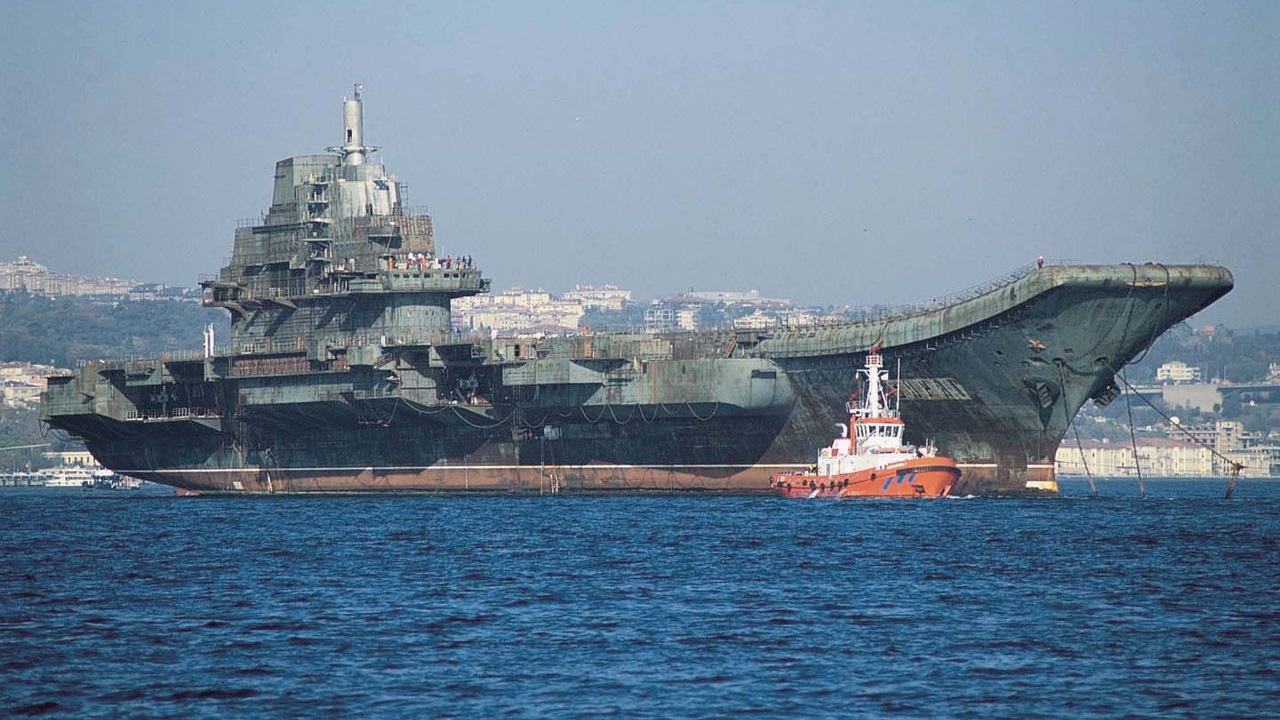
Varyag under tow in Istanbul. Mainland China purchased the former Soviet carrier, Varyag, from the Ukraine in 1998 for about $20 million dollars (US). The Varyag was the newer, sister ship to the Russian Kuznetsov. But the Ukrainian government had never finished the carrier after the fall of the Soviet Union and had tried to sell it to various concerns. As a result, the carrier fell into a state of disrepair. The Chinese bought the carrier and indicated that the holding company that had purchased it planned to tow it to China and make it a floating casino.
China’s Type 004 carrier is the true technological pivot of China’s carrier force.
It is the country’s first true supercarrier. Over time, China’s carrier force will look more like that of America’s.
The difference between the US and Chinese forces is: what you see with the US Navy’s force is what you get, while China’s is a growing force.
Pentagon leaders would be wise to remember hockey legend Wayne Gretzky’s advice to never worry about where the puck is, but where the puck is going.
About the Author: Brandon J. Weichert
Brandon J. Weichert is the Senior National Security Editor at 19FortyFive.com. He also manages The Weichert Brief on Substack. Weichert also hosts “National Security Talk” on Rumble. He is the author of four bestselling national security books, the most recent of which is A Disaster of Our Own Making: How the West Lost Ukraine (Encounter Books). Follow him via Twitter/X @WeTheBrandon.