
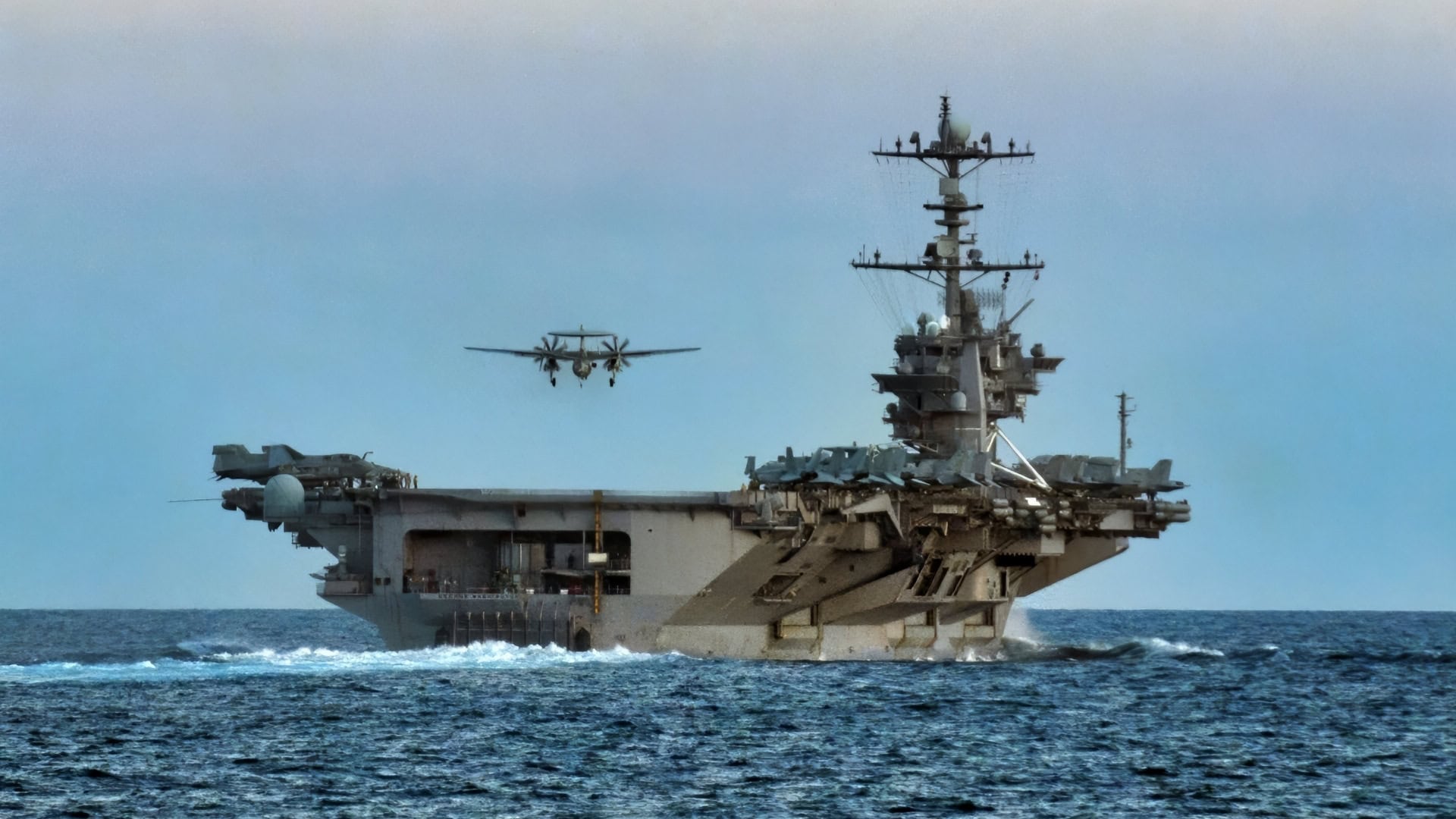
At a moment when the Pentagon says China’s navy aims to reach nine aircraft carriers by 2035, the United States is preparing to have zero deployed on station in the western Pacific. The People’s Liberation Army Navy plans six additional carriers on top of its current three. USS George Washington, America’s only forward-deployed carrier, is steaming west to relieve USS Abraham Lincoln in the Middle East. Beijing is building toward nine flight decks while Washington struggles to keep one near Japan, Taiwan, and the Philippines.
The Media Keeps Saying No Aircraft Carriers in the Pacific – Let’s Talk More On That…
The phrase “no carriers in the Pacific” needs to be more precise. USS Theodore Roosevelt and USS Carl Vinson remain with the Pacific Fleet, while USS Ronald Reagan is finishing maintenance in Washington state. None is deployed on station in the Western Pacific. George Washington’s departure leaves the region without a U.S. carrier presence until another strike group arrives.
Lincoln explains the decision and the Iran war. The carrier left San Diego on November 21, 2025, reached the Middle East in January, and was expected home in May. By August 13, it had spent 265 days deployed and 241 consecutive days at sea, with no port call since December 11. The Iran conflict extended the cruise and disrupted supply hubs. Families raised concerns over mental health and shipboard conditions. Navy leaders disputed some reports while acknowledging the strain.
Relief became an operational requirement. Nuclear reactors give a carrier extraordinary endurance, while sailors, aircraft, escorts, and machinery still face limits. George Washington departed Da Nang on August 5 and passed westbound through the Singapore Strait on August 13 with Carrier Air Wing 5 and two escorts.
USS George H.W. Bush was already operating beside Lincoln in the Arabian Sea. George Washington’s arrival keeps a second carrier in the theater after Lincoln turns home, with the Western Pacific paying the immediate price.
Eleven Aircraft Carriers Produce Only a Few Deployable Strike Groups
The Navy lists 11 active nuclear-powered carriers. The number counts commissioned hulls; ready strike groups are far fewer. Each carrier rotates through maintenance, training, deployment, and repair. A usable group also needs a trained air wing, Aegis escorts, logistics ships, and thousands of sailors prepared to leave together. Availability drives the current carrier shortage.
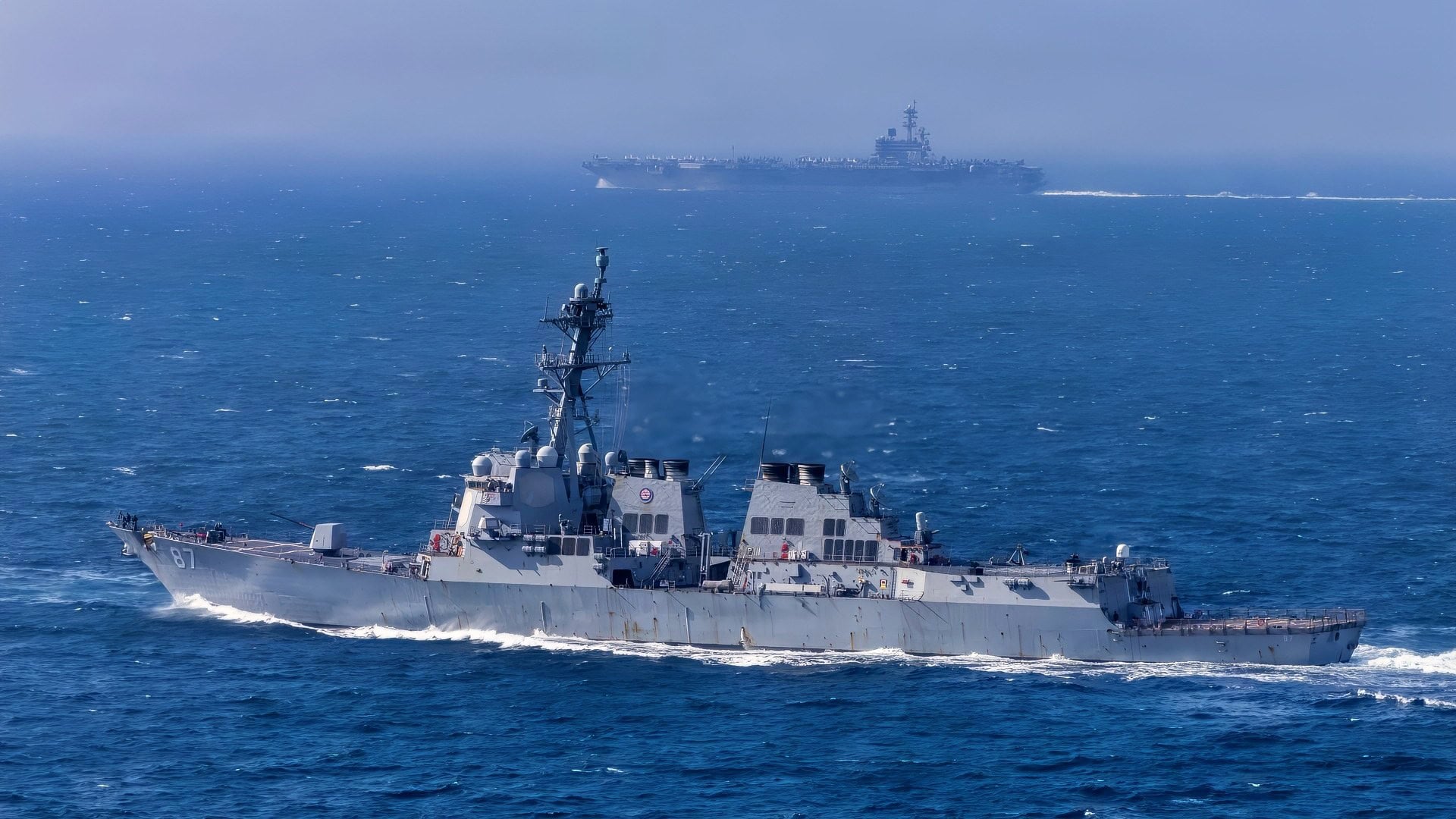
The Arleigh Burke-class guided-missile destroyer USS Mason (DDG 87) transits alongside the Nimitz-class aircraft carrier USS George H.W. Bush in the Atlantic Ocean, Feb. 21, 2026. The George H.W. Bush Carrier Strike Group is at sea training as an integrated warfighting team. Composite Training Unit Exercise (COMPTUEX) is the Joint Force’s most complex integrated training event and prepares naval task forces for sustained high-end Joint and combined combat. Integrated naval training provides combatant commanders and America’s civilian leaders highly capable forces that deter adversaries, underpin American security and economic prosperity, and reassure Allies and partners. (U.S. Navy photo by Mass Communication Specialist 2nd Class Jayden Brown)
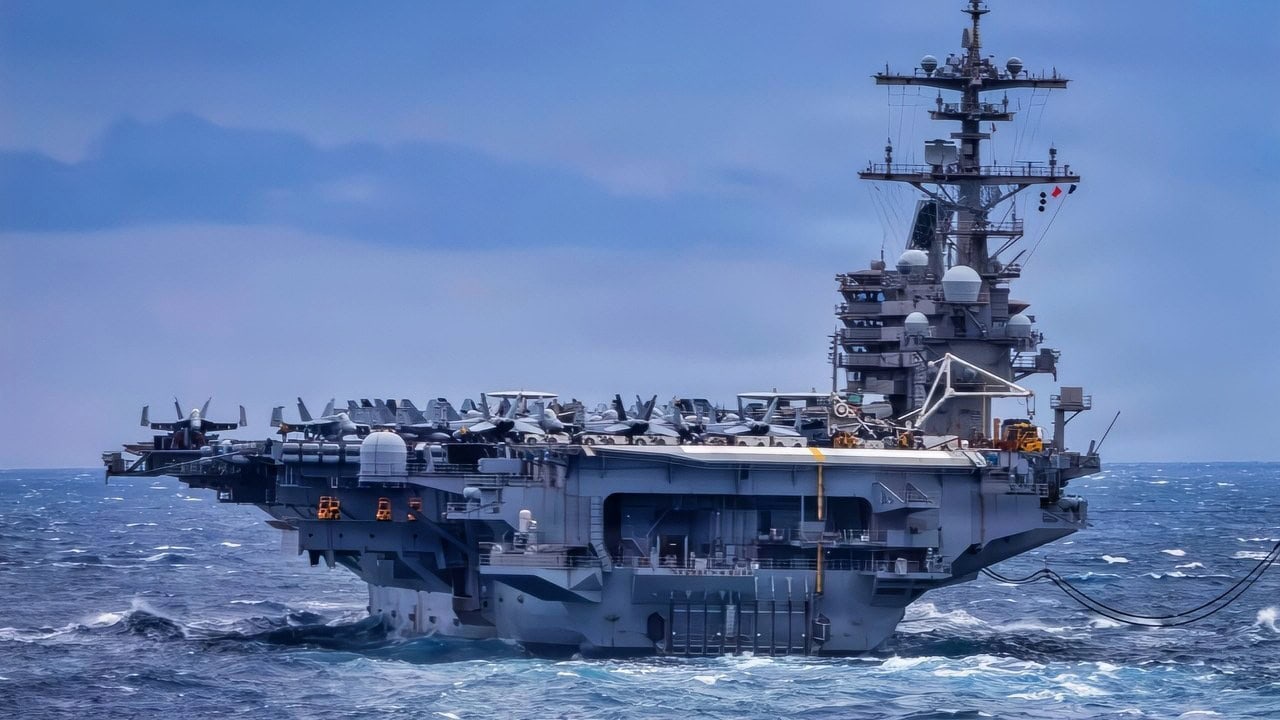
The Nimitz-class aircraft carrier USS George H.W. Bush (CVN 77) and the Henry J. Kaiser-class fleet replenishment oiler USNS John Lenthall (TAO 189) transfer cargo and JP-5 during a replenishment at sea in the Atlantic Ocean, Feb. 15, 2026. The George H.W. Bush Carrier Strike Group is at sea training as an integrated warfighting team. Composite Training Unit Exercise (COMPTUEX) is the Joint Force’s most complex integrated training event and prepares naval task forces for sustained high-end Joint and combined combat. Integrated naval training provides combatant commanders and America’s civilian leaders highly capable forces that deter adversaries, underpin American security and economic prosperity, and reassure Allies and partners. (U.S. Navy photo by Mass Communication Specialist 2nd Class Mitchell Mason)
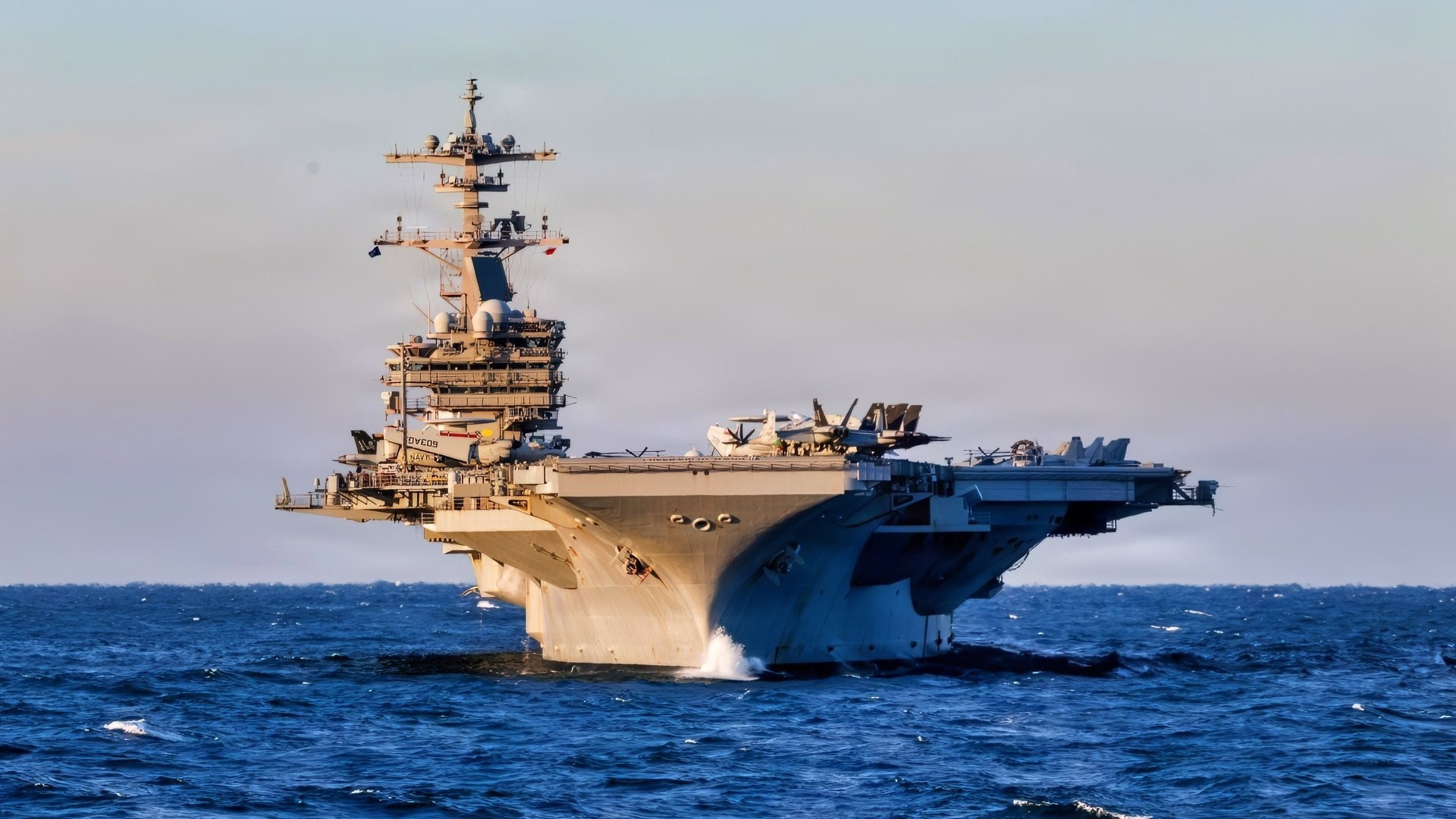
The Nimitz-class aircraft carrier USS George H.W. Bush (CVN 77) sails in the Atlantic Ocean, Feb. 6, 2026. The George H.W. Bush Carrier Strike Group is at sea as an integrated warfighting team. Composite Training Unit Exercise (COMPTUEX) is the Joint Force’s most complex integrated training event and prepares naval task forces for sustained high-end Joint and combined combat. Integrated naval training provides combatant commanders and America’s civilian leaders highly capable forces that deter adversaries, underpin American security and economic prosperity, and reassure Allies and partners. (U.S. Navy photo by Mass Communication Specialist 3rd Class John R. Farren)
The Government Accountability Office found that only 20 percent of carrier strike group maintenance phases were finished on time in fiscal 2021, rising to 39 percent in fiscal 2022. USS Gerald R. Ford entered the yard in July after a 326-day deployment. Ronald Reagan is completing a 17-month maintenance period. USS John C. Stennis remains in its midlife refueling overhaul. The country relies on one shipyard for carrier refueling overhauls. Delays spread across the fleet’s training and deployment calendars.
New construction offers no rapid rescue. The future USS John F. Kennedy completed acceptance trials in August 2026 but remains undelivered. The Congressional Budget Office says maintaining 11 carriers requires one new Ford-class ship every four or five years. Delivery is followed by crew certification, air-wing integration, and workups.
The legal count also includes USS Nimitz during its final approach to retirement.
The Western Pacific Gap Carries Political Weight
Surely, perspective matters here. Attack submarines, destroyers, land-based fighters, bombers, Marines, and missile units remain across the region.
An aircraft carrier supplies a distinct form of presence. Its air wing places fighters, electronic-attack aircraft, airborne early warning aircraft, helicopters, and logistics under a single mobile command. It moves without requesting use of another country’s runway and places a visible American commitment near a crisis.
China gains a window for pressure even if no one expects George Washington’s departure to trigger an invasion of Taiwan. Additional drills near Taiwan, Japan, or the Philippines would reinforce Beijing’s argument about regional power. Allies see two American aircraft carriers in the Arabian Sea, another crossing the Indian Ocean to sustain the rotation, and none on station in East Asia.
Geography deepens the imbalance. China keeps its carriers near mainland airfields, missile forces, shipyards, and logistics bases. The United States divides its fleet among global deployments, training, and maintenance. The Pentagon’s nine-carrier assessment has no matching public Chinese construction schedule. The regional effect of China’s carrier buildup begins before the ninth hull enters service because Beijing concentrates its available decks close to the main theater.
USS Theodore Roosevelt Offers the Fastest Route Back
USS Theodore Roosevelt and its strike group are preparing for deployment in California. The carrier completed RIMPAC activity and hosted a friends-and-family cruise on August 8. The Navy has released no departure date or destination. Sending Roosevelt into the Western Pacific closes the visible gap after certification, maintenance, and crew preparation are finished. An early departure would carry unfinished work and fatigue into the deployment.
Carl Vinson is active around San Diego and the eastern Pacific. Ronald Reagan is due to finish its 17-month maintenance period by the end of August, followed by sea trials and workups. Neither ship offers an instant replacement for George Washington.
The Pacific Has Useful Reinforcements Below the Supercarrier Level
USS Tripoli remains forward-deployed at Sasebo and supports Marine Corps F-35B operations. The amphibious assault ship supplies stealth fighters and helicopters from a mobile deck. Its smaller air group lacks the E-2D Hawkeye, EA-18G Growler, catapults, and sustained sortie capacity of a nuclear carrier air wing.
Land-based aircraft in Japan and Guam, bombers, attack submarines, Aegis destroyers, and ground-launched missiles cover other missions. Japan’s JS Kaga has completed developmental sea trials with the F-35B. These forces preserve combat power during a carrier gap. A U.S. nuclear carrier still delivers a larger air wing, integrated command structure, and sustained flight operations.
The Navy Needs a Protected Pacific Carrier Schedule
The immediate fix is Theodore Roosevelt. The durable fix starts with deployment discipline. Keeping two carriers continuously near Iran consumes the force level an 11-carrier fleet normally sustains across the globe. Land-based aircraft, bombers, submarines, and surface ships should assume more Middle East missions wherever basing rights and operational conditions permit. The Japan-based carrier’s schedule also needs protection, with a West Coast group maintained as a genuine surge force.
Industrial work decides whether such plans survive. Public shipyards need enough skilled labor to finish maintenance on schedule, Newport News needs stable refueling and construction workloads, and Kennedy must enter service without another major delay. Carrier air wings, escorts, and logistics require the same attention.
As of today, the latest public fleet tracking placed Lincoln and George H.W. Bush in the Arabian Sea. George Washington was moving west through the Indian Ocean. Theodore Roosevelt was preparing for deployment, Ronald Reagan was finishing maintenance, and the Navy had announced no date for restoring a deployed carrier to the western Pacific.
MORE – Australia’s Aircraft Carrier Cut a US Navy Destroyer in Half
About the Author: Harry J. Kazianis
Harry J. Kazianis (@Grecianformula) was the former Senior Director of National Security Affairs at the Center for the National Interest (CFTNI), a foreign policy think tank founded by Richard Nixon based in Washington, DC. Harry has over a decade of experience in think tanks and national security publishing. His ideas have been published in the NY Times, The Washington Post, The Wall Street Journal, CNN, and many other outlets worldwide. He has held positions at CSIS, the Heritage Foundation, the University of Nottingham, and several other institutions related to national security research and studies. He is the former Executive Editor of the National Interest and the Diplomat. He holds a Master’s degree focusing on international affairs from Harvard University.

