
Scott Bessent picked an odd philosopher to build a sanctions campaign around.
In his Sunday op-ed previewing what he’s calling an “economic D-Day,” the Treasury Secretary invoked Pascal’s Wager: bet on God’s existence even without proof, because the cost of being wrong is too high.
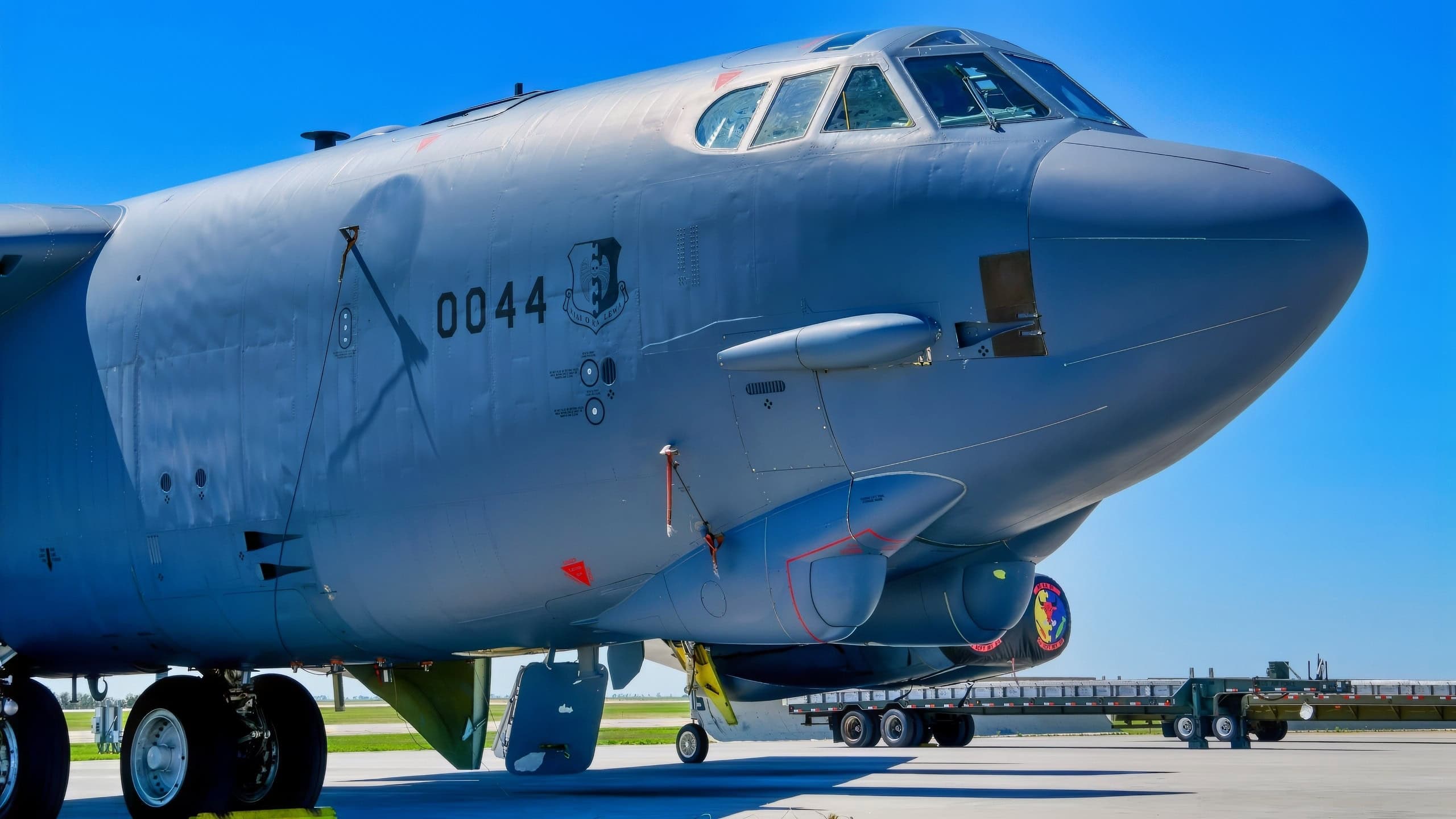
A B-52H Stratofortress sit parked on the flight line at Minot Air Force Base, North Dakota, Aug. 8, 2022. The B-52 is capable of dropping or launching gravity bombs, cluster bombs, precision-guided missiles and joint direct attack munitions. (U.S. Air Force photo by Airman Alysa Knott)
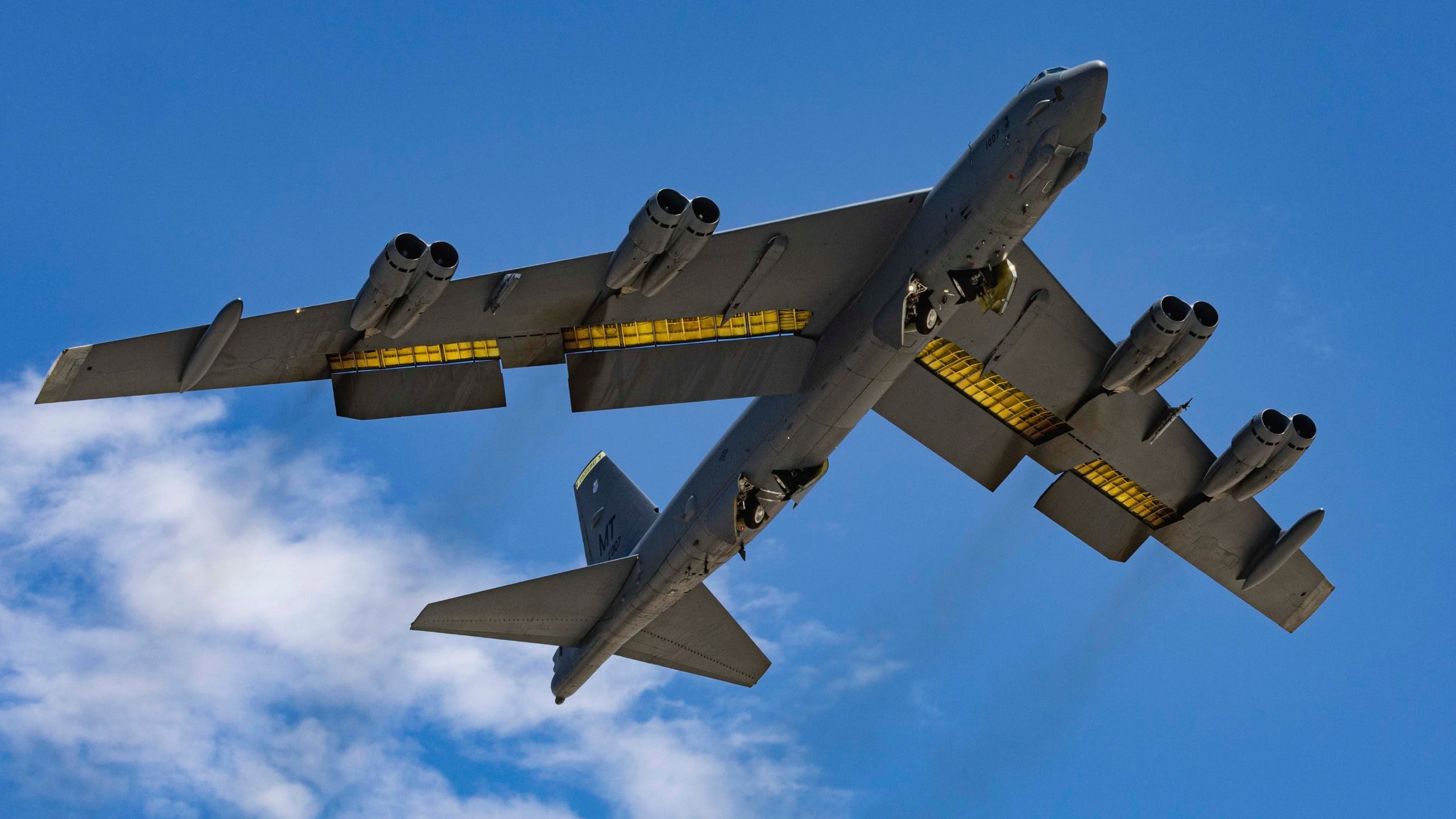
A B-52 Stratofortress assigned to the 69th Bomb Squadron, Minot Air Force Base, North Dakota, flies during Red Flag-Nellis 22-3 at Nellis Air Force Base, Nevada, July 18, 2022. RF-N 22-3 provides realistic combat training that saves lives while increasing combat effectiveness. (U.S. Air Force photo by Airman 1st Class Makenna Gott)
Applied to Iran: any country still doing business with Tehran should walk away now, certainty be damned, since guessing wrong is about to get expensive. It’s a good line, and it gives away the game.
You reach for a wager when you don’t have a mechanism. Bessent isn’t claiming the sanctions will produce a deal; he’s betting enough countries get nervous and fold before he has to prove it.
Iran’s economy isn’t just under pressure, it’s visibly buckling, and Bessent has a real case here. Chinese refiners, who take most of Iran’s exported crude, imported close to 1.4 million barrels a day last year. This month that figure has fallen to roughly 534,000.
Floating storage Tehran leans on has shrunk from roughly 105 million barrels to 80 million, and Iranian crude is now selling at a premium instead of its usual discount — the sound scarcity makes in oil markets.
Add a rial at a record low the same morning, and this looks less like a press release than a serious crisis.
The harder question, the one the wager sidesteps, is whether more pain gets Iran to sign something. The only real test this year came on terms far more generous than anything on the table today, and the resulting agreement lasted only about three weeks.
What June Actually Bought
On June 17, during the G7 summit in France, Trump and Iranian President Masoud Pezeshkian signed a memorandum known as the Islamabad agreement.
The fourteen-point text committed Washington to an immediate blockade lift and oil waivers, with full sanctions relief and the $300 billion reconstruction fund contingent on a final deal within sixty days.
Days later, Treasury followed through with a general license authorizing Iran to sell oil freely. Iran got relief up front, in writing, plus a credible path to much more.
It held for three weeks.
After three commercial vessels were attacked near the Strait on July 7, Treasury revoked the oil waiver that same day, giving companies ten days to wind down.
The blockade was back within the week.
Whatever you conclude about Tehran’s decision-making, this belongs on the record: the most generous offer Washington made all year didn’t produce a durable Iranian yes.
It bought three weeks of quiet, then a reversion to the status quo.
That comparison isn’t flattering to today’s announcement.
Bessent unveiled Operation Economic Outcast: expanded secondary sanctions across five sectors, including digital assets, technology, gold, aviation, and shipping, plus sanctions on more than sixty entities, individuals, and vessels, aimed at isolating Tehran “until Tehran stands alone.” No relief, no waiver: pressure alone, stacked on a blockade already biting.
That may still work; sanctions sometimes grind a state down without a carrot ever showing up.
But the burden sits with whoever argues that a heavier stick alone succeeds, whereas the stick plus a credible path to much more has failed, and nobody has cleared that bar yet, including Bessent.
Who’s Holding the Phone in Tehran
Credit where it’s due on Hormuz.
Traffic through the strait has improved from the worst months of spring, when it looked more like a war zone.
It’s still running well below prewar volumes, and this week Iran’s self-declared Persian Gulf Strait Authority blacklisted tankers it accuses of violating its passage rules, warning of fines and seizure.
Better is the right word for Hormuz today.
Open isn’t yet, and conflating the two is a category error people selling optimism love to exploit.
There’s a genuine crack worth noting. President Pezeshkian, who chairs Iran’s Supreme National Security Council, said this month that his country “cannot continue with war forever,” and has publicly defended the Islamabad memorandum against hardline criticism at home.
Presidents don’t usually say things like that unless something has shifted behind the scenes.
But the man running that same council day-to-day is Mohsen Rezaei, a former Revolutionary Guard commander named secretary the same week Iran’s Supreme Leader separately named him his own representative to the body.
That second appointment matters: Rezaei has his own line to Mojtaba Khamenei, apart from the president he serves, and in July he offered his read on what Hormuz is worth to Iran: more, he said, than “dozens of atomic bombs.” Not the words of a subordinate waiting on instructions.
So when the president sounds conciliatory, and his security council secretary sounds ready to make an example of the next tanker on the list, the honest move is to weigh which signal carries more weight, not both.
Rezaei answers to Khamenei as much as to Pezeshkian, and he spent this week escalating rather than standing down.
The Threat Aimed at the Allies, Not Us
Rezaei’s threats aren’t only pointed at Washington.
He has separately warned that if Gulf states join the new sanctions, Iran will cut off their oil exports too, making the entire waterway unusable, not just its own side of it.
That’s a threat aimed at Saudi Arabia and the United Arab Emirates, and it exposes the soft spot in Bessent’s wager.
Asking third countries to bet on American resolve is one thing when the downside is losing access to Iranian crude, and another when the downside is their own oil revenue.
This is where the sanctions story stops being a bilateral argument between Washington and Tehran and turns into an alliance-management problem.
A secondary sanctions campaign is only as strong as the discipline of the countries being asked to enforce it, and Rezaei has made that discipline costly and personal for the two Gulf producers Washington needs most.
Whether Riyadh and Abu Dhabi treat that as bluster or leverage will say more about where this heads than anything Bessent announced this afternoon.
None of this means the sanctions will fail.
It means nobody has real evidence yet that they’ll succeed, and the two things that would count as evidence aren’t hidden.
Watch whether the Strait Authority quietly stops enforcing its blacklist in the weeks ahead, and whether Rezaei’s threats against Gulf shipping go quiet too.
Either would suggest that the institutions actually running security policy, not just the president’s foreign interviews, have decided that the cost of holding out now exceeds the cost of accepting the terms.
Neither has happened yet, and nothing announced this afternoon changes that on its own.
What should worry anyone tracking this closely is a pattern, not a single data point.
Washington keeps treating each fresh increment of pressure — the strikes in February, the blockade in April, the D-Day rhetoric in August — as the one that finally forces Tehran’s hand.
The only time Iran put its name on something this year, it got relief up front and a written path to much more than the first Trump administration ever offered.
This time, it’s being asked to fold in exchange for a promise of relief with no path attached. Rezaei, for one, does not sound like a man waiting for that offer.
About the Author: Dr. Andrew Latham
Andrew Latham is a professor of international relations and political theory at Macalester College in Saint Paul, MN. You can follow him on X: @aakatham.