
Top 5 Reasons the Iran War Means More Peace Through Strength – After a week when the news flipped from Tehran trouncing Trump to the Iranians being in serious trouble, it could well be time to look beyond the war to what it means for the future of American peace through strength.
Behind the headlines brews a rationale, stronger than Jack Daniel’s Single Barrel Bourbon, that allies and enemies ought to show greater respect for America as a resilient and rising global power.
(See Dr. James Jay Carafano on Fox News Above)
Here are the top five reasons why the USA will likely emerge from the Iran War as a more formidable force in the world.
Reason #1. Arsenal Replenishment
Iran and Ukraine offered similar and reinforcing lessons. The defense industrial base is an integral component of conventional deterrence. Russia hoped to win a short war. When that failed, Putin banked on, given the anemic state of NATO’s magazines and defense industry, that even with Western aid, he could grind the Ukrainians into submission through a war of attrition.
Meanwhile, Tehran expected that with U.S. arsenals depleted supporting Ukraine, the Iranians could absorb an American first strike and then sit back as Washington’s offensive capability dwindled. In response, however, not only have we seen an unprecedented surge in production to meet the needs of current conflicts, but also a renewed resolve to leave no doubt that we are arming up to handle future fights.
Without question, these conflicts sent a loud and clear demand signal to the West. When the Ukraine War started, for example, the U.S. produced about 4,000 155 mm artillery rounds a month. Now, the Pentagon has a goal of 100,000 per month. The Army hit seventy-one percent of that objective. Ongoing conflicts are keeping up the pressure to do more. Meanwhile, total production by America’s European allies looks to double the U.S. goal. In fact, globally, the large caliber munition market is growing rapidly, reforming with new procurement strategies, expanding with additional investments and partnerships, and “increasingly focusing on developing smart and guided munitions.”
President Donald Trump greets President Volodymyr Zelenskyy of Ukraine, Friday, February 28, 2025, in the West Wing Lobby. (Official White House Photo by Daniel Torok)
In short, the allied arsenal of the bread-and-butter munitions for ground warfare will be significantly more robust by the end of the decade.
For the U.S., the Iran War raised even more pressing concerns over stocks of high-performance, precision weapons, including those for long-range precision strike and air and missile defense. Trump’s Pentagon responded with alacrity to this need, not only by increasing demand for larger volumes and higher production rates, but also by pressuring industry to innovate and deliver faster, lower-cost alternative munitions in greater numbers.
Reporting suggests, “defense experts say those new, cheaper missiles—and the push to accelerate production of existing weapons—won’t soon overcome problems exacerbated by the Iran war….” Still, the same experts acknowledge, “they will eventually provide the military with much-needed options.” That’s obvious. The U.S. has a rapidly growing defense industry rising to meet new demands.
According to one research report, “[r]oughly 10,000 new firms have entered the market in the past two years, and nontraditional companies received over $120 billion in contract obligations in FY 2025, adding competition and innovation to the sector.” There is every reason to expect that, as long as the demand and cash keep coming, America’s defense industry will replenish America’s arsenal. In the long term, this can only mean that fighting the USA in future wars is going to be an expensive and terribly painful exercise. That realization strengthens America’s deterrent posture.
Reason #2. Offense-Defense Mix
The most stable deterrent force is an offense-defense mix, delivering a powerful capacity to strike at the targets that hurt the enemy most, while demonstrating a robust capability to defend your own forces, assets, infrastructure, and people. Further, the most credible deterrent forces are those that have proven themselves in battle and have the willingness, grit, and strength to fight. The Iran War clearly demonstrated both.
Some doubt President Trump’s claim that the U.S. “completely destroyed” Iran’s military. Nevertheless, beyond question, America has demonstrated a daunting capability to strike at will by land, sea, and air, with minimal casualties. Further, it’s not just the U.S. that demonstrated offensive muscle. The Israelis have hammered Iran with air attacks. In July, Saudi Arabia joined the Americans in joint strikes on Iran-backed militias. There are also reports that Bahrain and Kuwait secretly retaliated against Iran.
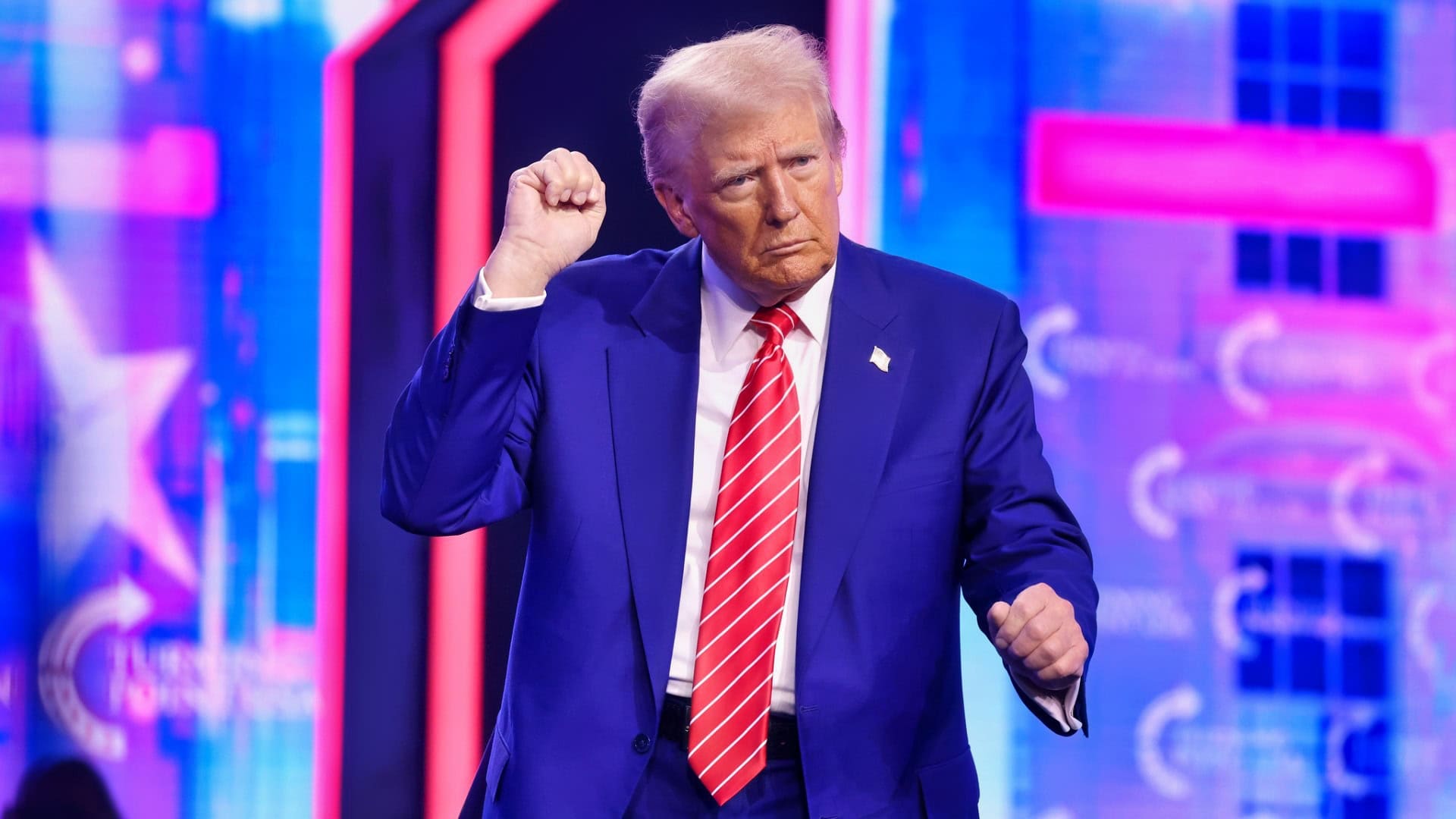
President-elect of the United States Donald Trump speaking with attendees at the 2024 AmericaFest at the Phoenix Convention Center in Phoenix, Arizona.
The U.S. has also done a remarkable job defending its forces in theater, as well as combating Iranian hybrid warfare, including cyber attacks and attempted terrorism, including reportedly trying to assassinate President Trump. America’s allies in the region have pitched in. Every Gulf State, Israel, and Jordan have all shown the capacity to defend their airspace against missiles and drones. These efforts are continually expanding. The UAE, for example, recently undertook an initiative to build giant anti-drone cages to protect oil infrastructure and built a fleet of cheap but effective anti-drone drones. Meanwhile, the U.S. led offense-defense efforts to protect traffic in the Strait of Hormuz have resulted in a reported 400 percent increase in maritime traffic.
Robust offensive and defensive capabilities have proven deeply frustrating to Iranians. While some in Tehran still argue the regime can hang on and win—there is no credible evidence they can triumph by taking the fight to the Americans, except for vague threats of an unachievable “October Surprise.” First of all, if Iran declares it’s going to try, it is not a surprise, and the Americans will be ready. Second, if they couldn’t muster the combat power to cripple the U.S. in the first go-round, it’s not likely they can spring a Tet Offensive in the fall. No, Iran facing off against the Americans is like a powder puff football team taking on the 1996 Green Bay Packers.
Deterrence is not just having capability but demonstrating that the capability is effective. Here, the U.S. has given the world an object lesson in how hard American hard power is, showcasing a “sustained capacity to deploy and project combat power, including the ability to generate air sorties and steam ships at sea. No nation on the planet has America’s mix of combat experience, global basing and logistical support, and proven raw operational combat power.” No country in the world today can match America’s joint combat experience in multi-domain, coalition warfare. That is the definition of a force for peace through strength.
Reason #3. Space Really is the High Ground
They mocked Trump for establishing the Space Force with Saturday Night Live skits and an unfunny comedy on Netflix. No one is laughing now. “From missile warning to satellite communications for drones, the Space Force has played a key, if often unseen, role in the U.S. conflict with Iran,” stated the Head of Space Force Command. Adding it’s not just the role service plays, but how space operations make all the services more dominant. “What you are seeing in these operations isn’t just extremely proficient space operations. What you’re seeing from U.S. forces is extremely proficient joint operations….”
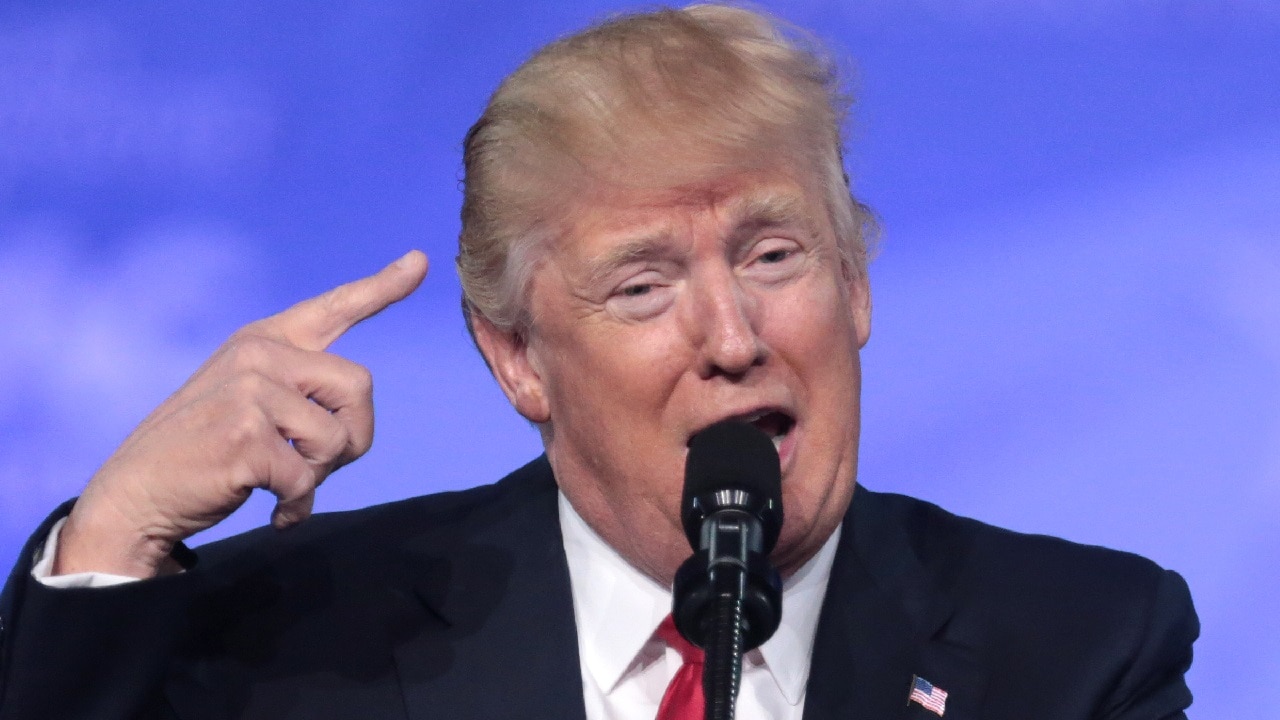
President of the United States Donald Trump speaking at the 2017 Conservative Political Action Conference (CPAC) in National Harbor, Maryland. By Gage Skidmore.
It is not just the U.S.; in the future, it’s doubtful that any power will attempt to wage a major kinetic war without robust space capabilities.
That’s a big deal, because the U.S. space capabilities are to space what Caitlin Clark is to the WNBA. Further, the line between civil, commercial, and military space is blurry and getting blurrier. The U.S. is crushing it in all three leagues. The recently released U.S. space transportation strategy, with a goal of 1,000 launches and reentries per year, is as important for military space operations as it is for the civilian and scientific sectors. The Iran War has validated American investments in space, and Washington expects to invest more, thereby increasing its capacity to enforce peace.
Reason #4. Hard Power is the Best Soft
There are no end of articles bemoaning the decline of soft power under Trump, pining for the halcyon days when Joe Nye argued that after the Cold War, we could substitute diplomats for Army divisions. What nonsense. If American soft power under Obama and Biden was so awesome, we wouldn’t have had a war in Ukraine; a nuclear program in Iran; China running wild; Cuba funding an anti-American network in America; terrorists taunting us from Venezuela; and other nefarious forces eating away at Washington’s power and influence.
What the Iran War reminds us is that the most practical means to secure our interests is through the prudent application of American power, not soft peddling with foreign aid that mostly just enriches NGOs and leads to pleading at international forums that hate us. Hard and soft power are not alternative options for exercising American power. Hard power is foundational to American strength and serves to leverage and enable other instruments of power.
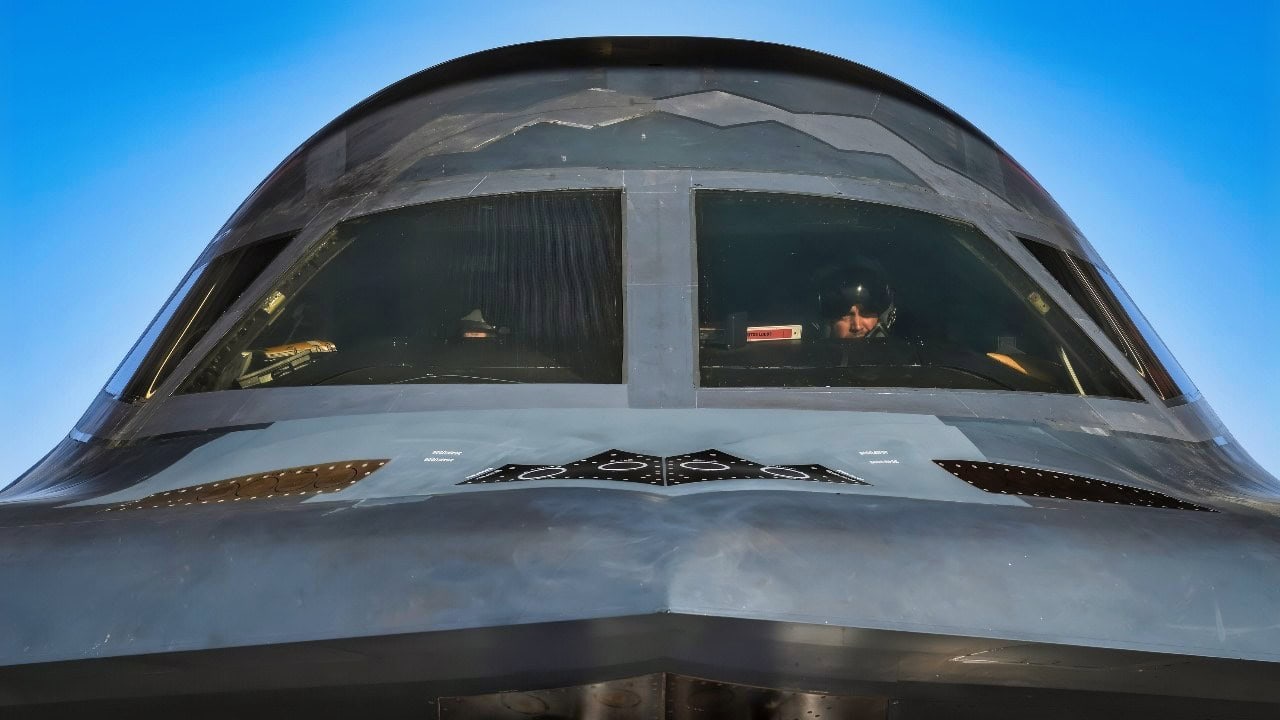
A U.S. Air Force B-2 Spirit aircrew performs pre-flight checks in the cockpit of their aircraft at Whiteman Air Force Base, Missouri, March 8, 2020. The B-2 took off from Whiteman AFB to support U.S. Strategic Command Bomber Task Force operations in Europe. The 131st Bomb Wing is the total-force partner unit to the 509th Bomb Wing. (U.S. Air Force photo by Tech. Sgt. Alexander W. Riedel)
Crushing Iran has brought unprecedented cooperation in the Middle East, with a focus on reconstruction and the normalization of relations. The U.S. also has unprecedented influence and engagement in Central Asia and the South Caucasus. All this reflects how right Trump was to realign and reconstruct the instruments of power, making them better suited to the world in which we live, such as a State Department that actually represents the state and economic instruments of power that move heaven and earth, as the Iranians are witnessing with Economic D-Day.
Reason #5. Allies are Not Optional
Sure, Trump’s had his grumpy moments with many allies, but let’s not kid anyone: Operation Epic Fury would not have been possible without the basing and other support provided by friends and allies. Allies are just not optional.
Arguably, no one has learned this lesson better than Trump. Despite claims to the contrary, the U.S. has been adding friendly nations to its ranks rather than losing them. Just a few years ago, for example, the notion of the U.S. being welcome in places like Lebanon, Syria, and Armenia was unthinkable.
No question, Trump has been more than a little tough on some allies. He recently dressed down South Korea, which gets between 60% and 80% of its oil imports through the Strait of Hormuz, for not pitching in to keep the strait open. Trump is not trying to be mean. Rather, the president sees the importance of allies fulfilling their obligations and is impatient when they don’t. In fact, Trump could not have easily taken the offensive in Iran if the Europeans had not already stepped up, reinvested in NATO, and picked up the lion’s share of the work in Ukraine. In the future, America will be looking for more friends and allies, maybe even some of them former enemies, not fewer.
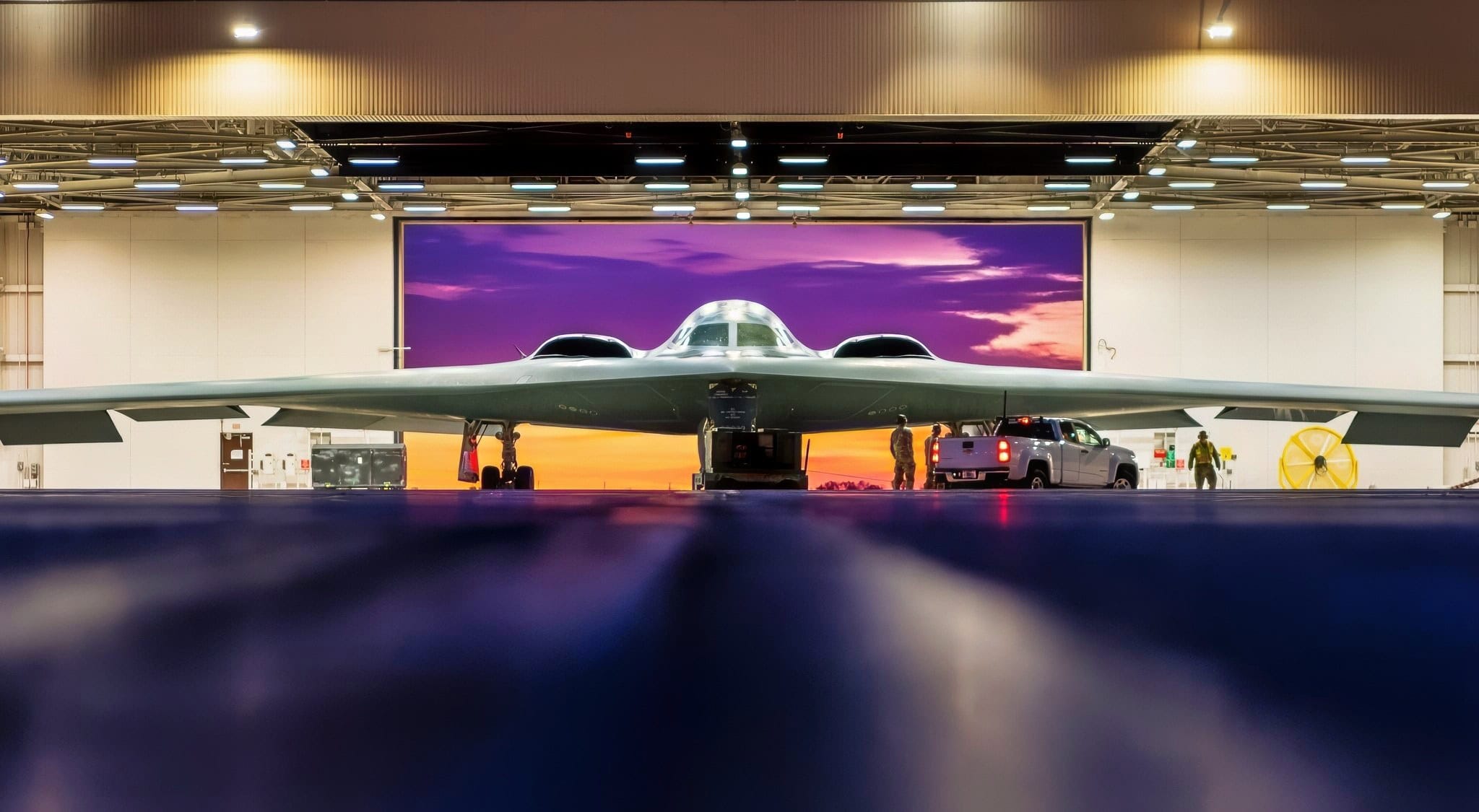
U.S. Airmen assigned to the 393rd Bomber Generation Squadron prepare a B-2 Spirit aircraft for flight during Exercise Global Thunder 26 at Whiteman Air Force Base, Missouri, Oct. 24, 2025. Global Thunder is an annual command and control exercise designed to train U.S. Strategic Command forces and assess joint operational readiness. (U.S. Air Force photo by Staff Sgt. Joshua Hastings)
There is a case to be made that Washington has learned these lessons and reason to believe implementing them will deepen and strengthen American capacity to practice peace through strength from here on out—raising the conventional and nuclear deterrence bar against enemies that want to start a kinetic war with the U.S.
That’s not saying the world will get more peaceful; there will likely be, in war’s stead, more hybrid conflict, economic and political warfare, and other malicious efforts to undermine America and its allies—but big bad wars against America are going to be a much bigger mountain to climb after Iran.
About the Author: Dr. James Jay Carafano
James Jay Carafano is a national security expert and a 25-year Army veteran. His most recent books are Cold Combat: Mountain Warfare in Italy and the Battle of San Pietro, 1943, and Digital Dominance: Winning in a Socially Networked World. He is a 19FortyFive Contributing Editor. Carafano is also a Senior Counselor to the President and E.W. Richardson Fellow at The Heritage Foundation.