
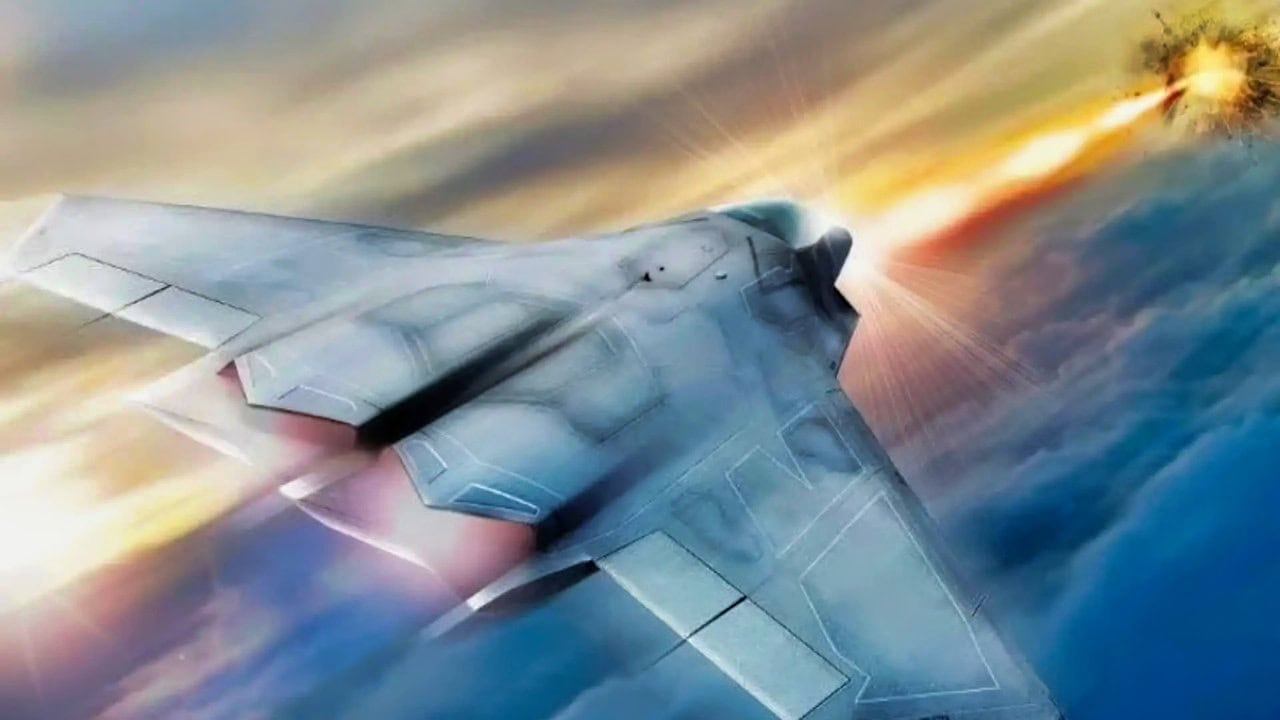
In March 2025, President Trump announced in the Oval Office alongside Air Force leadership that Boeing had been awarded one of the most consequential fighter contracts in a generation: the F-47, America’s first sixth-generation crewed combat aircraft.
Since then, the program has moved from announcement to hardware.
The first representative airframe is under construction in St. Louis; engine-maker finalists Pratt & Whitney XA103 or the General Electric XA102 have cleared assembly reviews for their adaptive-cycle powerplants, and the jet is slated to fly for the first time in 2028.
But as the F-47 has moved from design tables to the production line, a sharper debate has emerged inside the defense establishment: is the Air Force buying enough of them?
Meet The F-47 NGAD
The F-47 is the crewed centerpiece of the Next Generation Air Dominance (NGAD) family of systems, not a single aircraft so much as a networked ecosystem.
It is designed to fly alongside Collaborative Combat Aircraft (CCAs), semi-autonomous drone “loyal wingmen” that scout, jam, and strike ahead of the manned jet while the F-47 acts as the quarterback, directing the fight from a stealthy, long-range airframe.
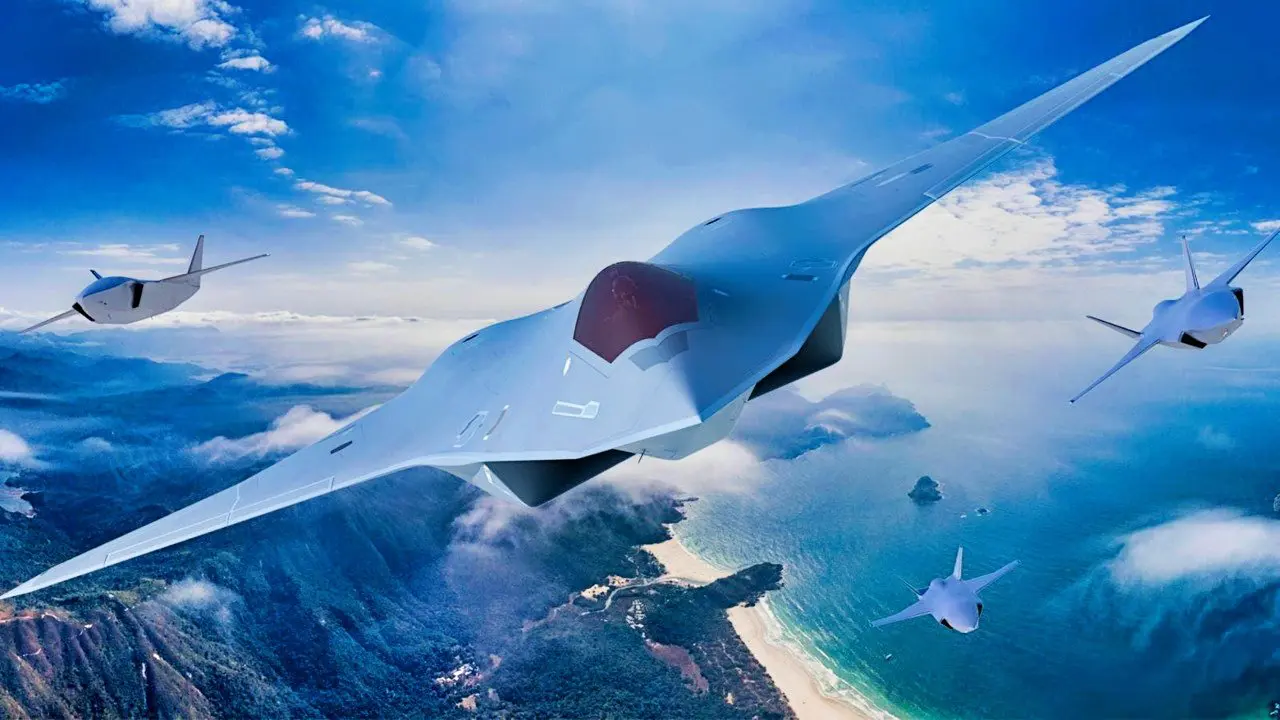
NGAD fighter from U.S. Air Force.
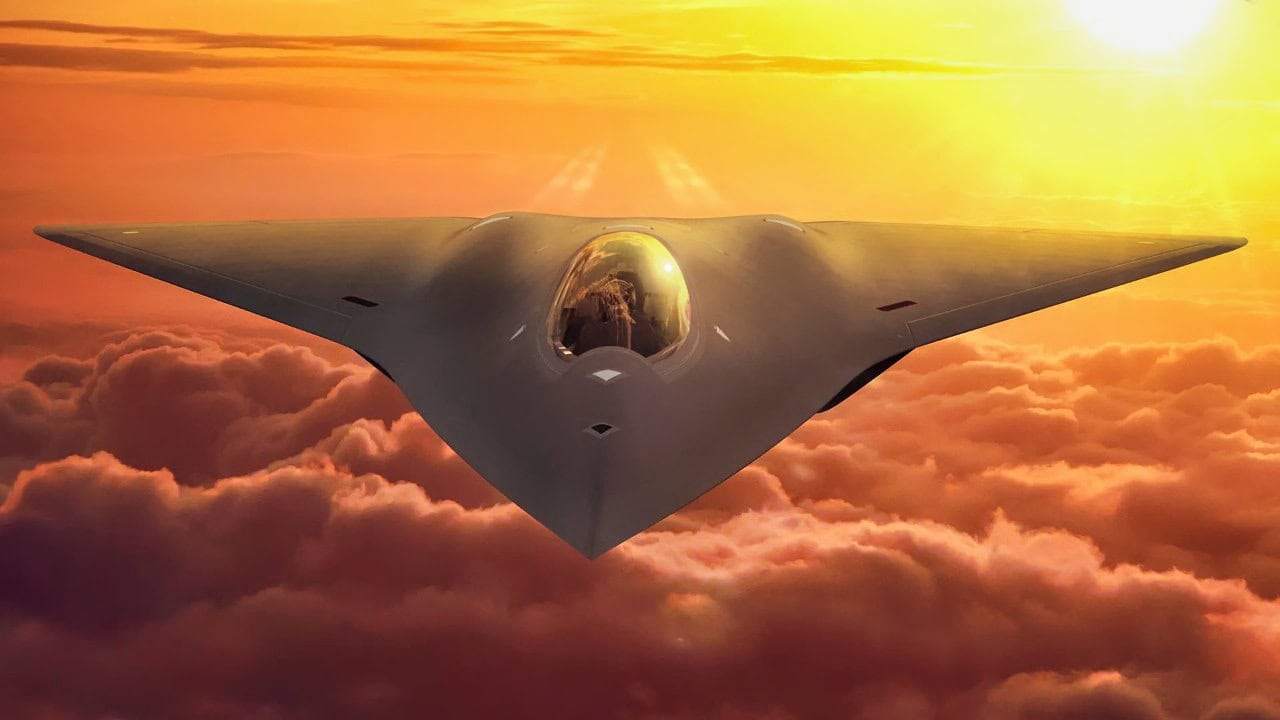
NGAD Fighter via Lockheed Martin.
Official figures put the F-47 price tag at roughly $300 million per aircraft, with a combat radius exceeding 1,000 nautical miles and a top speed of Mach 2.9 (2,225 mph), a significant range advantage over the F-22 it replaces, whose short legs have long been a liability in the vast distances of the Pacific theater.
The program has already consumed nearly $8.5 billion in cumulative funding, with the fiscal year 2026 budget alone dedicating $3.5 billion to the effort and the 2027 request pushing past $5 billion.
Is The 185 Number The Floor Or The Ceiling?
The Air Force’s program of record calls for “at least” 185 F-47s, a figure chosen deliberately to match the number of F-22 Raptors the jet is meant to replace.
That symmetry is telling, and not entirely reassuring.
The F-22 program was originally supposed to produce 750 aircraft during the Cold War and its immediate aftermath; budget cuts in the 2000s reduced that to 187 built, of which 195 total (including test aircraft) were assessed, with roughly 185 combat-coded jets typically counted as the operational fleet.
In other words, the Air Force plans to replace an already-truncated fighter fleet with a one-for-one swap, rather than using the F-47 to expand America’s air superiority force.
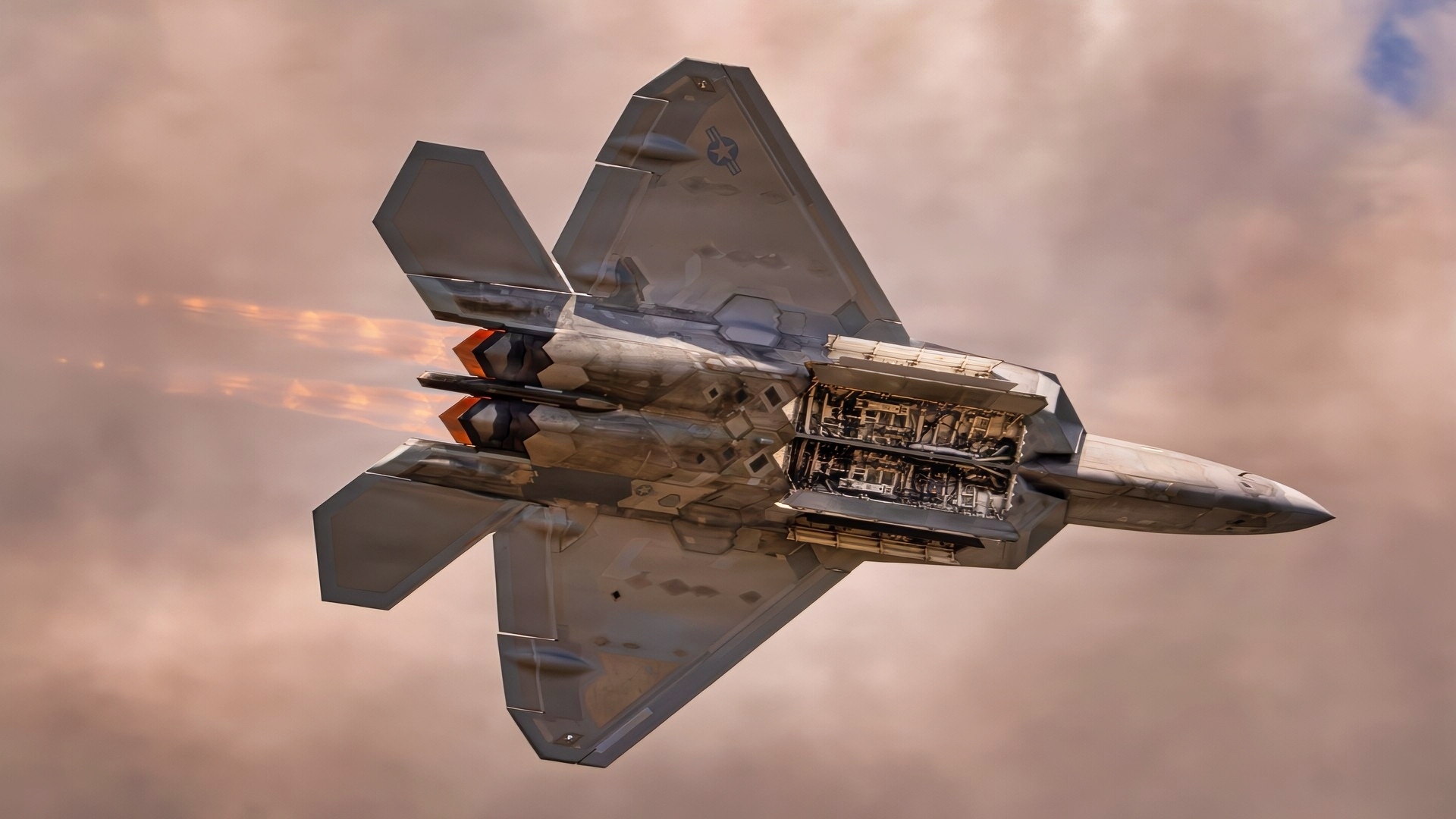
U.S. Air Force Capt. Nick “Laz” Le Tourneau, pilot and commander of the F-22 Raptor Aerial Demonstration Team, performs an aerial demonstration during the 52nd Annual SUN ‘n FUN Aerospace Expo in Lakeland, Florida, April 18, 2026. Capt. Le Tourneau showcased the unmatched capabilities of the F-22 to the SUN ‘n FUN crowds by performing multiple series of combat maneuvers. (U.S. Air Force photo by Staff Sgt. Mary Bowers)
Why Critics Say That’s Not Enough
The most pointed challenge to the 185 figure came in February 2026, when the Mitchell Institute for Aerospace Studies, the research arm of the Air Force Association, published a report titled “Strategic Attack: Maintaining the Air Force’s Capacity to Deny Enemy Sanctuaries.”
Authors Heather Penney, a former F-16 pilot, and retired Col. Mark Gunzinger argued that current plans for 185 F-47s and roughly 100 B-21 bombers amount to what Penney called “a raid force, not a campaign force.”
The distinction matters. A raid force can execute a single, high-value strike — the kind of mission flown against Iranian nuclear sites in 2025’s Operation Midnight Hammer, which leaned on a relatively small number of B-2s and F-35s.
A campaign force, by contrast, must sustain repeated strikes over weeks or months against a peer adversary’s air defenses, command nodes, and missile infrastructure, the kind of sustained pressure that would be required to deny China “sanctuaries” from which it could launch attacks during, for instance, an invasion of Taiwan.
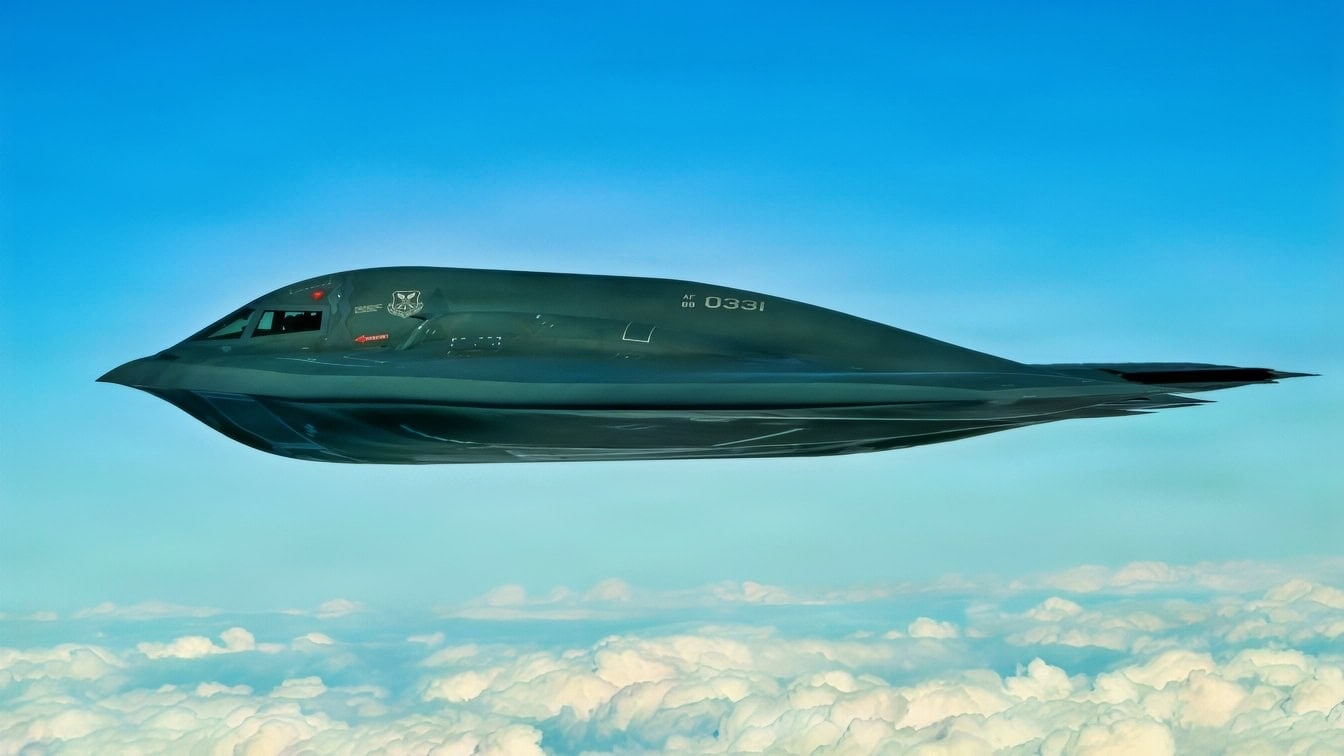
A U.S. Air Force B-2 Spirit conducts an integrated maritime strike training exercise with U.S. Navy F-35C Lightning II and F/A-18E Super Hornets from Carrier Air Wing Eleven (CVW-11) off the coast of California, on Feb. 10-11, 2026. Practicing innovative methods to employ and integrate strategic bombers like the B-2 with Navy carrier strike groups enhances combat capabilities through synchronized, integrated power projection. (U.S. Navy photo by Katie Archibald)
The report’s authors contend that today’s planned fleet simply cannot generate the sortie volume such a campaign would demand, especially once aircraft are pulled aside for nuclear deterrence and homeland defense duties that don’t show up in headline fleet numbers.
Their recommendation: nearly double the F-47 buy to around 300 aircraft, and double the B-21 bomber fleet to at least 200.
In the interim, before those larger fleets can be built, a process the authors acknowledge could take a decade or more, they urge the Air Force to keep every B-2 Spirit in service rather than retiring them, and to accelerate F-35 and F-15EX purchases to maintain near-term capacity.
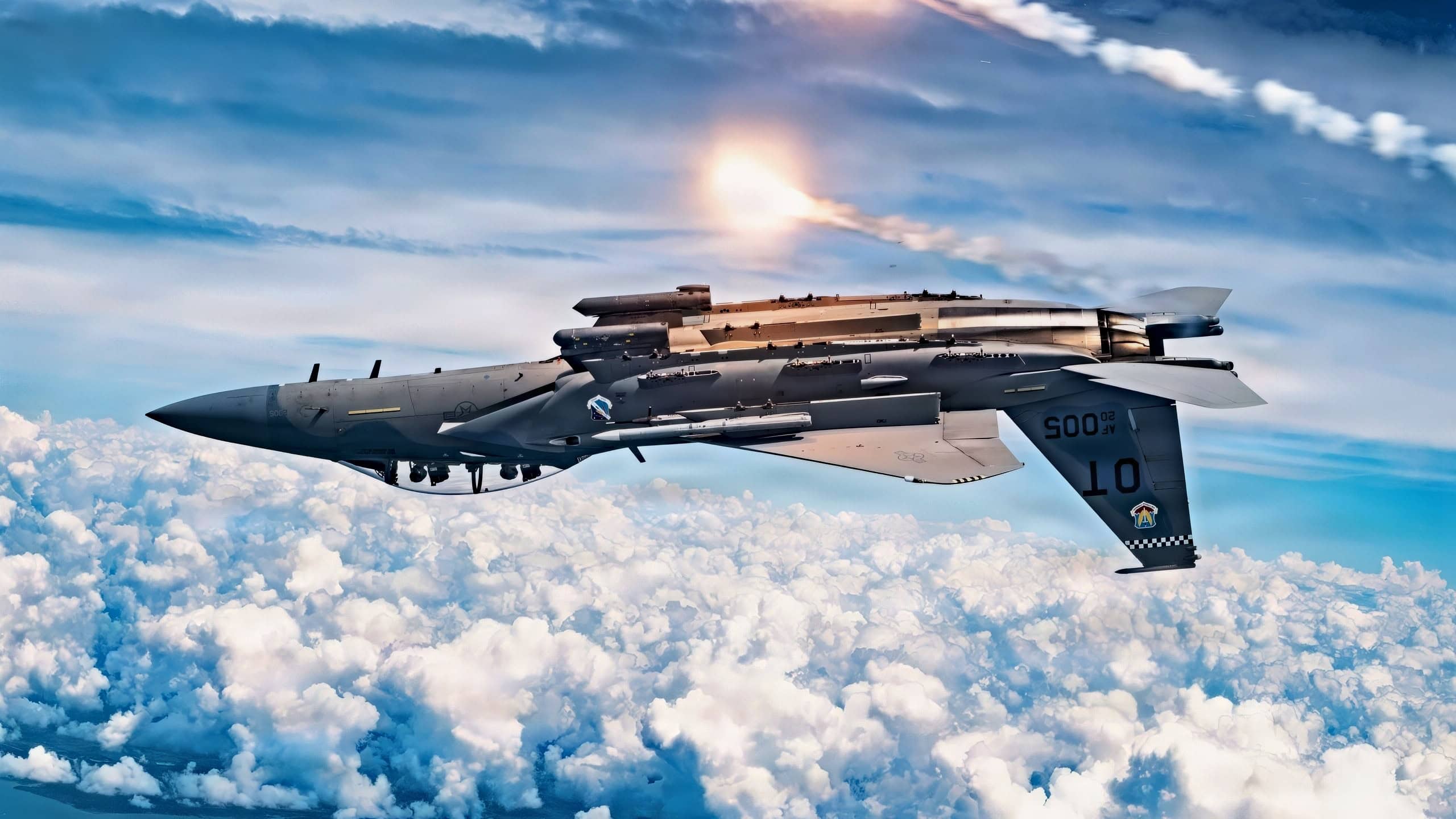
A U.S. Air Force F-15EX Eagle II assigned to Eglin Air Force Base, Florida, releases flares over the Gulf Coast, April 3, 2026. The 96th Test Wing and 53rd Wing perform developmental and operational test series on the platform including next-generation survivability, radars, sensors and networking capabilities. (U.S. Air Force photo by Tech Sgt Thomas Barley)
The F-47’s Realistic Number
So how many F-47s does the Air Force actually need? There’s no single authoritative answer, because the “right” number depends entirely on the mission the Air Force is asked to prepare for.
If the requirement is deterrence through occasional, high-precision strikes, 185 aircraft, mirroring the F-22 fleet, may be defensible, particularly paired with a growing CCA fleet that the Air Force hopes will eventually exceed 1,000 drones, roughly two per crewed fighter.
That drone multiplier is central to the Pentagon’s argument that raw jet count matters less than it used to, since a smaller number of F-47s directing swarms of CCAs could generate combat mass that a headline fighter count doesn’t capture.
If the Air Force fields 185 F-47s with two CCAs each, that is a 555-aircraft sixth-generation force structure. If it fields 185 F-47s with four CCAs each, as some Air Force exercises have explored, that is a 925-aircraft force.
But if the strategic requirement is what the Mitchell Institute describes, sustained, attritable pressure against a peer competitor capable of contesting the skies for weeks at a time, then most independent analysts agree 185 is a floor, not a target.
The 300-aircraft figure floated by Penney and Gunzinger isn’t a maximalist demand; it is closer to a mid-range estimate for genuine campaign capacity, especially given China’s own rapid fielding of fifth- and sixth-generation combat aircraft. China is also building its own CCA force.
The honest answer is probably somewhere in between, and it will keep moving. Budget reality, industrial capacity at Boeing’s St. Louis line, and the pace of the CCA program will do as much to set the real number as any strategic study.
What is clear is that 185 was chosen for continuity with the F-22, not because an independent requirements analysis concluded that number would be sufficient to fight and win a sustained great-power air war, and that gap between inherited assumption and actual need is exactly what the current procurement debate is about.
Selling The F-47 To US Allies Reduces The Pricetag
The United States has a decision to make with the Air Force’s sixth-generation stealth fighter, the F-47 NGAD. Whether to keep it strictly as a US aircraft or sell it to allies, like the F-35, which has been shared with more than 20 countries to date.
When President Trump announced the F-47 sixth-generation, Next Generation Air Dominance (NGAD) stealth fighter contract to Boeing, he also said the aircraft would be considered for sale to our staunchest allies.
Selling the F-47 to allies has been a subject of intense debate, with arguments focusing on high costs, the security of advanced technology, and alliance strategy.
Potential sales involve selling “toned-down” (10 percent less capable) versions to trusted partners to manage risks, while others argue the tech is too sensitive to export. Key factors include lowering unit costs for the US, strengthening regional security, and concerns that allies may pursue their own projects.
Since that announcement, the F-47 has been quiet on foreign sales.
However, Japanese media leaked that in a phone call between the President and Japanese Prime Minister Shigeru Ishiba, he indeed offered the F-47 to Japan.
The Chinese threat in the Indo-Pacific may seem less so if our allies in Japan, Australia, and elsewhere had their fleets of F-22 Raptors today.
The US fighter fleets would be even more formidable than they are today. And in a crisis, it would not require US squadrons deploying to Pacific hotspots to operate alone.
Collective Defense Among Coalition Partners
Our pilots would operate alongside our Pacific allies, making collective defense much stronger.
The multinational F-35’s universal Multifunctional Advanced Data Link (MADL) technology enables all F-35s to securely and seamlessly share time-critical combat information across a combat formation.
This adds a command-and-control advantage for attacking stealth aircraft, as they can share intelligence and targeting information quickly.
But this must be done selectively, with our closest allies. The UK (at least until recently) and Poland in Europe, and Israel in the Middle East, but not with the “yard sale” approach taken with the F-35, where nearly everyone got into the act.
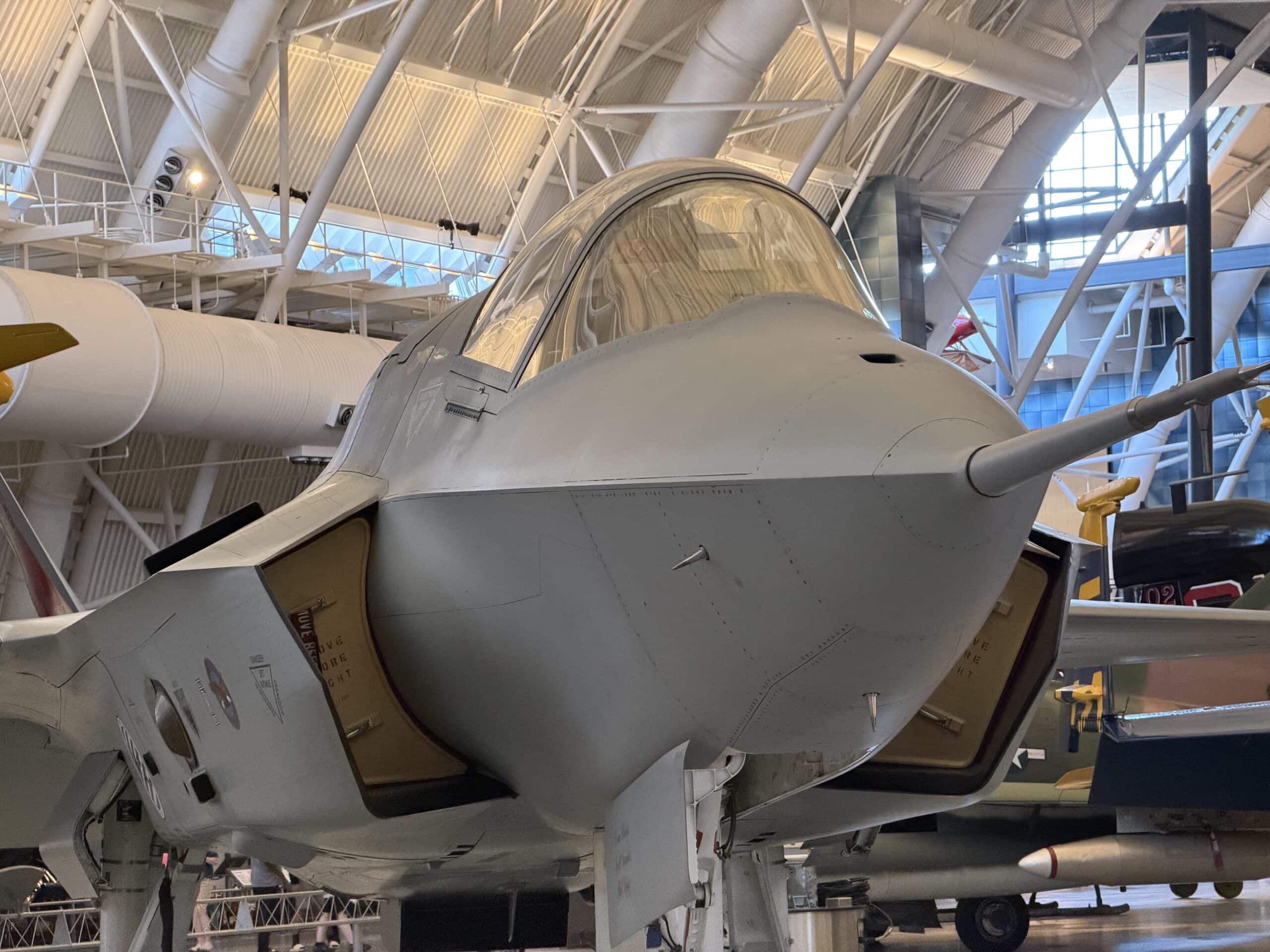
F-35 at the Smithsonian. Image taken on 7/8/2026 by 19FortyFive Staff.
Beyond strengthening our ties with allies, exporting the aircraft could reduce unit costs through increased production volume, making it more affordable for the U.S. Air Force and our closest allies.
Selling the F-47 will add to the collective defense for decades to come. If wielded selectively and strategically, it will strengthen the US, our allies, and partners.
US, Japanese, and Australian F-47s with CCA-dedicated loyal wingmen will go a long way toward deterring China’s expansionist ideas.
About the Author: Steve Balestrieri
Steve Balestrieri is a National Security Columnist. He served as a US Army Special Forces NCO and Warrant Officer. In addition to writing on defense, he covers the NFL for PatsFans.com and is a member of the Pro Football Writers of America (PFWA). His work was regularly featured in many military publications.