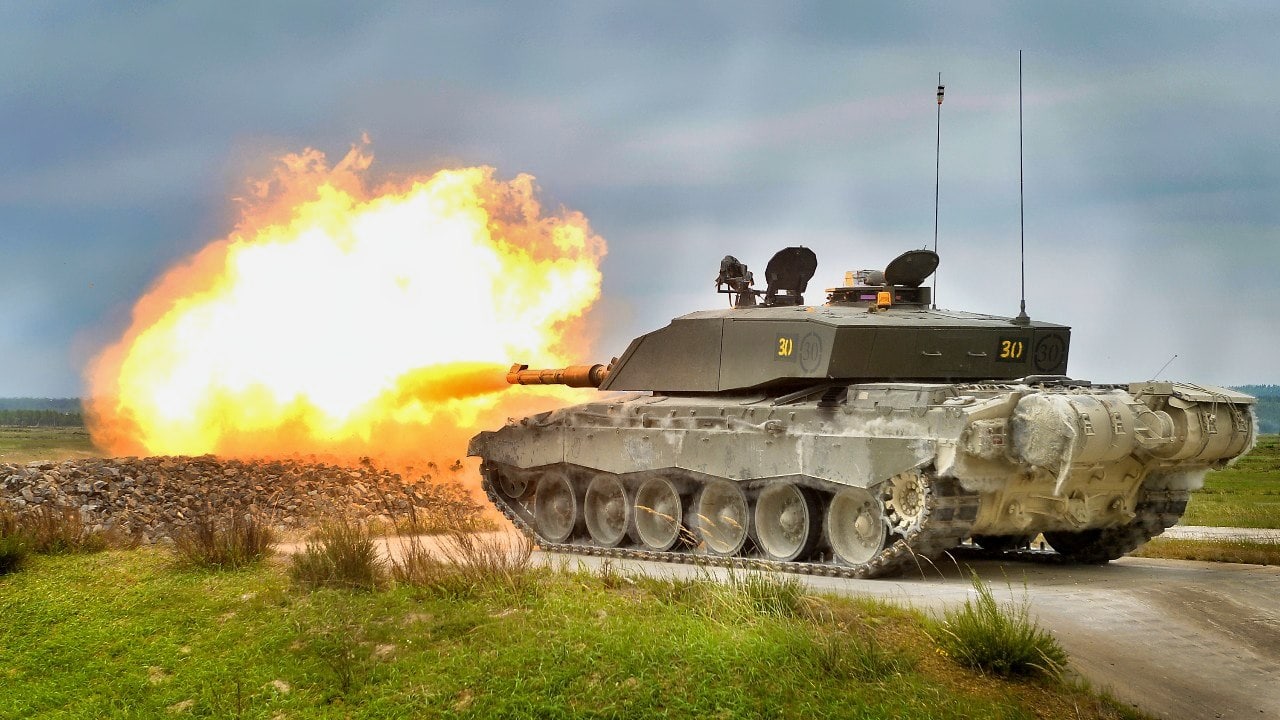
Summary and Key Points: The British Army ordered 386 Challenger 2 main battle tanks. They fought in Kosovo, across southern Iraq, and eventually in Ukraine. Iraqi T-55s lost every engagement they had with one. Insurgent RPGs hit them repeatedly through the occupation years, and the composite armor held every time. In 20 years of service, exactly one Challenger 2 was destroyed in combat, and the tank that killed it was another Challenger 2, on March 25, 2003, outside Basra.
Challenger 2: A History of This Tank and More
The British Challenger 2 main battle tank (MBT) proved to be one of the best MBTs of the twentieth century.
This system was deployed repeatedly throughout the last part of the previous century, from the Balkans to Iraq, and the heavily armored platform survived every encounter.
Despite the support from the West, Russian propagandists are still telling the Russian people that NATO believes that Ukraine can’t win the war
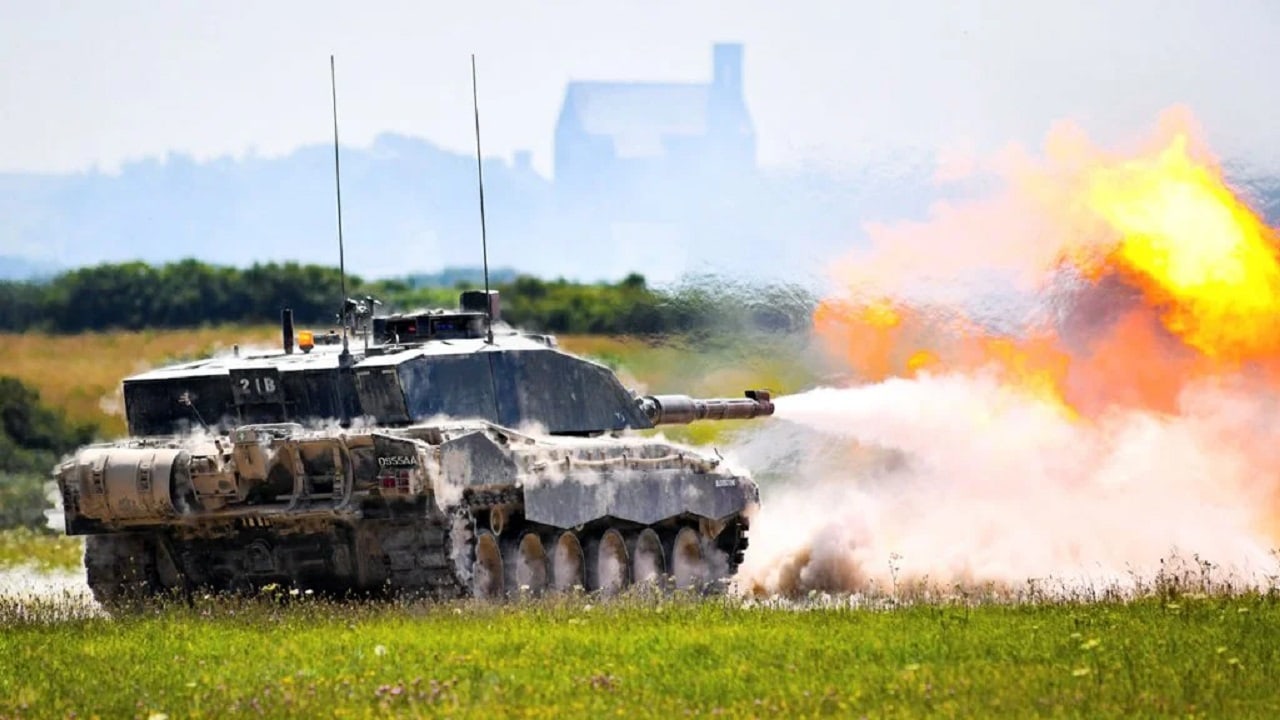
Challenger 2 tank.
Indeed, until 2023, no Challenger 2 had been destroyed by enemy fire in combat.
That’s not to say that the Challenger 2 had a spotless record, though.
In fact, the first Challenger 2 destroyed while in a combat zone was not hit by enemy fire at all. It was the victim of friendly fire.
The Friendly Fire Incident
It occurred in March 2003. In the opening phases of the Iraq War, the British joined the Americans in their invasion of the Middle Eastern country.
While the Americans focused on lunging from southern Iraq to Baghdad, the British pivoted and stormed into southeastern Iraq, in and around Basra.
On March 25, 2003 — just a few days after Coalition forces invaded Iraq—a Challenger 2 belonging to the Queen’s Royal Lancers was misidentified by another Challenger-2 MBT as an Iraqi armored vehicle.
That engagement involved multiple enemy contacts approaching the British force, causing some confusion (and trigger-happiness) among the British military.
So, another Challenger 2 MBT opened fire on the target it believed was an Iraqi armored unit.
The attacking Challenger 2 launched a 120mm high-explosive squash head (HESH) at the other Challenger-2 it believed was an Iraqi armored system.
The attacking Challenger 2 fired a second round at the commander’s hatch of the other Challenger-2.
Fragments sprayed into the turret of the stricken Challenger-2, creating a conflagration inside that inevitably ignited the ammunition stored within the armored vehicle.
Corporal Stephen Albutt and Trooper David Clarke of the Queen’s Royal Lancers were killed. Another two British soldiers were grievously wounded.
The British Ministry of Defense (MOD) called the incident a tragic case of “friendly fire,” and the MOD attributed the incident to the fog of war, especially when tanks are engaged with multiple enemy targets, as the advancing force of the Queen’s Royal Lancers’ Challenger 2s were.
An Impressive Tank
Nevertheless, until the Ukraine War in 2023, no British Challenger 2 had ever been destroyed by enemy fire. Its only combat loss was due to friendly fire.
That’s an amazing selling point for a system that defined the British Army in the latter part of the Cold War and the early phases of the twenty-first century.
Indeed, the Challenger-2 came out of Britain’s need to replace its iconic Challenger 1 MBT. That system entered service in the 1980s and fought in the Gulf War.
Vickers Defense Systems initiated development of Challenger 1’s successor in the 1980s.
If one were to place an image of the Challenger 1 and Challenger 2 side-by-side, it’d be hard to tell the differences between the two armored platforms.
But they were different. Vickers incorporated all-new systems in the Challenger 2 to make it better suited to take the British Army’s armored force into the twenty-first century.
Vickers included a new turret, better fire-control systems, and significantly upgraded armor. London ordered 386 units of the new Challenger 2 MBT.
That type entered service in the 1990s. Its raison d’etre was hunting and killing enemy armor.
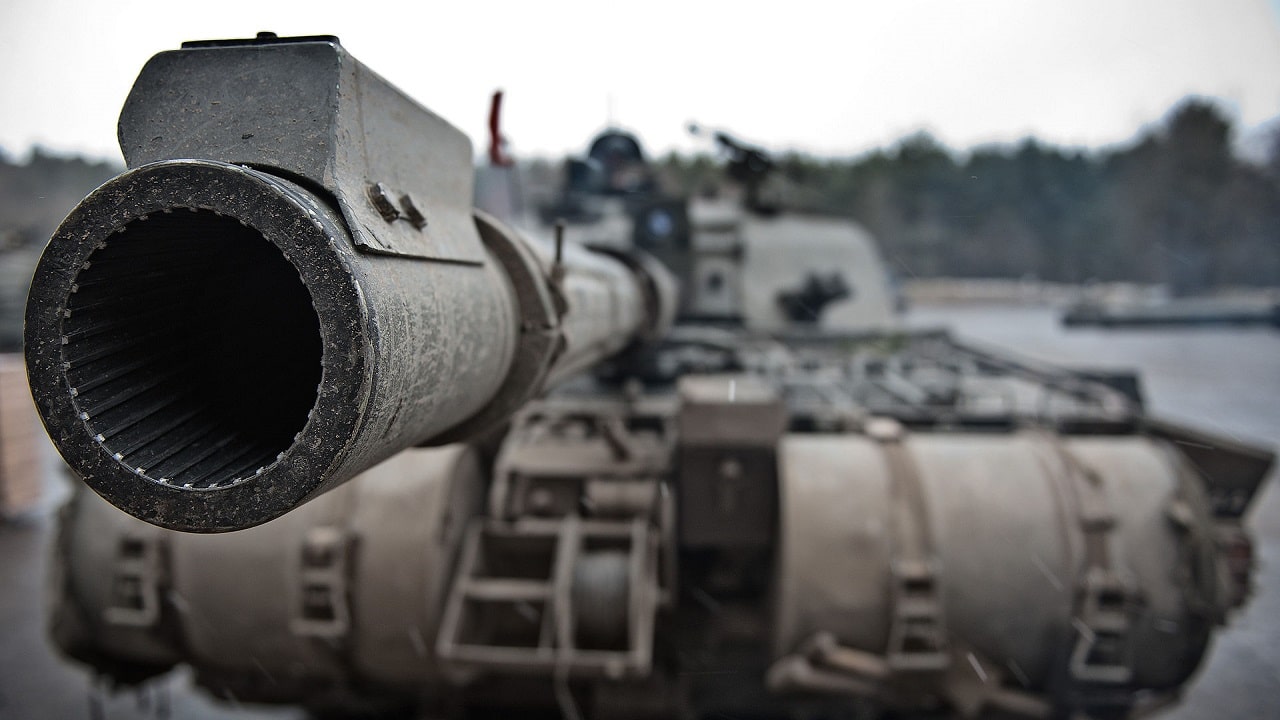
One of Challenger 2’s most unique features was its rifled 120mm cannon.
That made the Challenger 2 distinct from the American M1 Abrams and the German Leopard 2 MBTs.
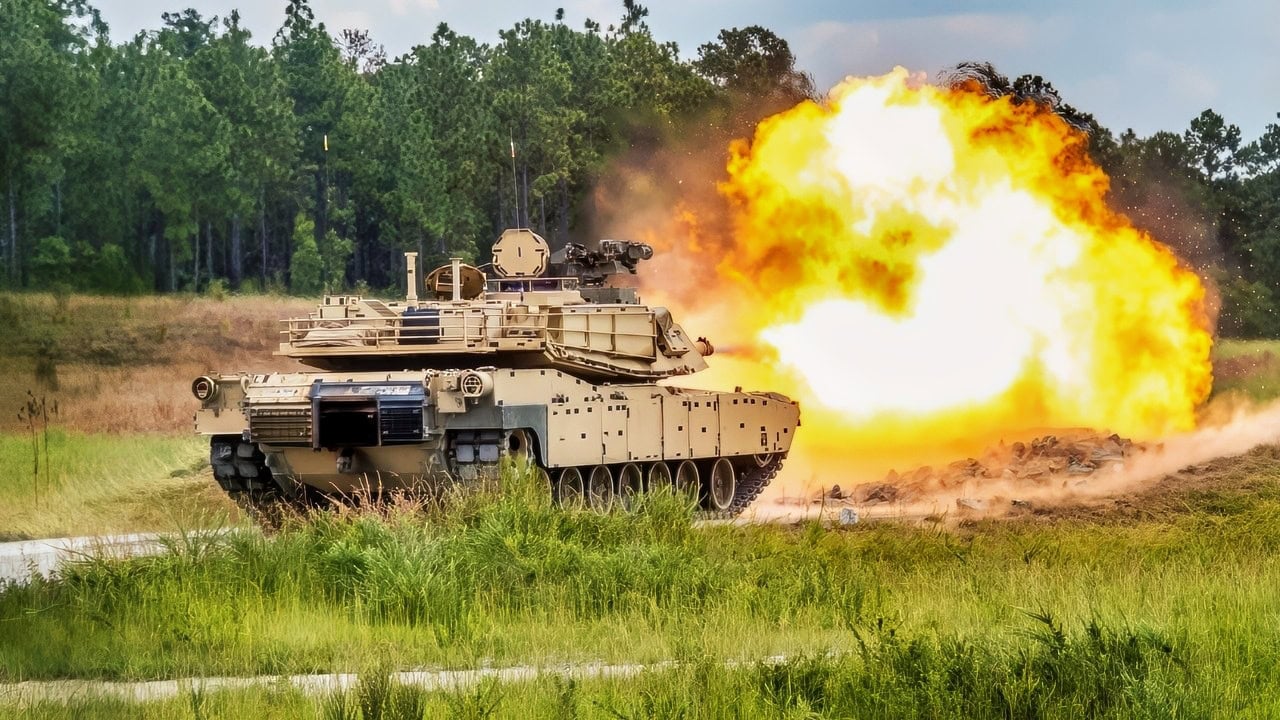
Soldiers with Echo Company, 1st Battalion, 81st Armor Regiment, 194th Armored Brigade, conduct tank gunnery training with the M1 Abrams tank July 09, 2025, at Brooks Range, on Fort Benning, Georgia. (U.S. Army photo by Daniel Marble)
Britain’s Challenger-2 L30 gun could deploy armor-piercing ammunition alongside HESH rounds. Challenger 2’s advanced composite armor allowed for greater survivability, too.
No Major Combat Losses to Enemy Fire
The Challenger 2 was deployed as part of the NATO mission to Kosovo. It was never destroyed in that campaign.
It was in Iraq where the Challenger 2 cut its teeth and, as you read above, lost its first system.
Indeed, Britain’s Challenger 2s had multiple encounters with Iraqi T-55 tanks (and other Soviet-era armored vehicles).
Each time, the Challenger 2s came out as the decisive victor in those engagements.
Throughout the insurgency years in Iraq, Challenger-2s were subjected to multiple attacks with rocket-propelled grenades (RPGs).
Each time, the Challenger 2’s composite armor held up. There were injuries to the crews in some of those attacks. But no deaths were reported, and the tanks remained viable despite the damage.
Britain held its head high for decades regarding the Challenger 2’s reputation.
After all, the platform had both proven itself in multiple forms of combat over the years and had suffered no losses at the hands of the enemy.
The only loss was when a sister Challenger-2 accidentally attacked another Challenger 2. In other words, an air of invincibility surrounded the Challenger 2.
Russians Kill the Challenger-2 In 2023
That’s why the Ukrainians were so keen to receive these tanks in 2023.
Ukraine received fourteen Challenger 2s, along with ammunition and spare parts (and Ukrainian tank crews received training on the system).
In September 2023, imagery emerged highlighting a Ukrainian Challenger 2 burning near the front in southern Ukraine.
The Guardian reported at the time that the tank in question had run over a Russian mine, exploding the rear fuel compartment, thereby immobilizing the legendary tank.
The four-man crew, however, survived. Russian forces ultimately struck the abandoned tank with one of their Lancet loitering munitions for good measure.
Nevertheless, from March 25, 2003, to September 2023 — an astonishing 20 years — the British Challenger 2 MBT was destroyed in combat only once, and by a fellow Challenger 2.
Today, Britain is replacing the Challenger 2 with the Challenger 3 (which is why London agreed to hand over 14 Challenger 2s to Ukraine in 2023). Yet the Challenger-2 remains an amazing tank.
About the author: Brandon J. Weichert
Brandon J. Weichert is the Senior National Security Editor at 19FortyFive.com. He also manages The Weichert Brief on Substack. Weichert also hosts “National Security Talk” on Rumble. He is the author of four bestselling national security books, the most recent of which is A Disaster of Our Own Making: How the West Lost Ukraine (Encounter Books). Follow him via Twitter/X @WeTheBrandon.