
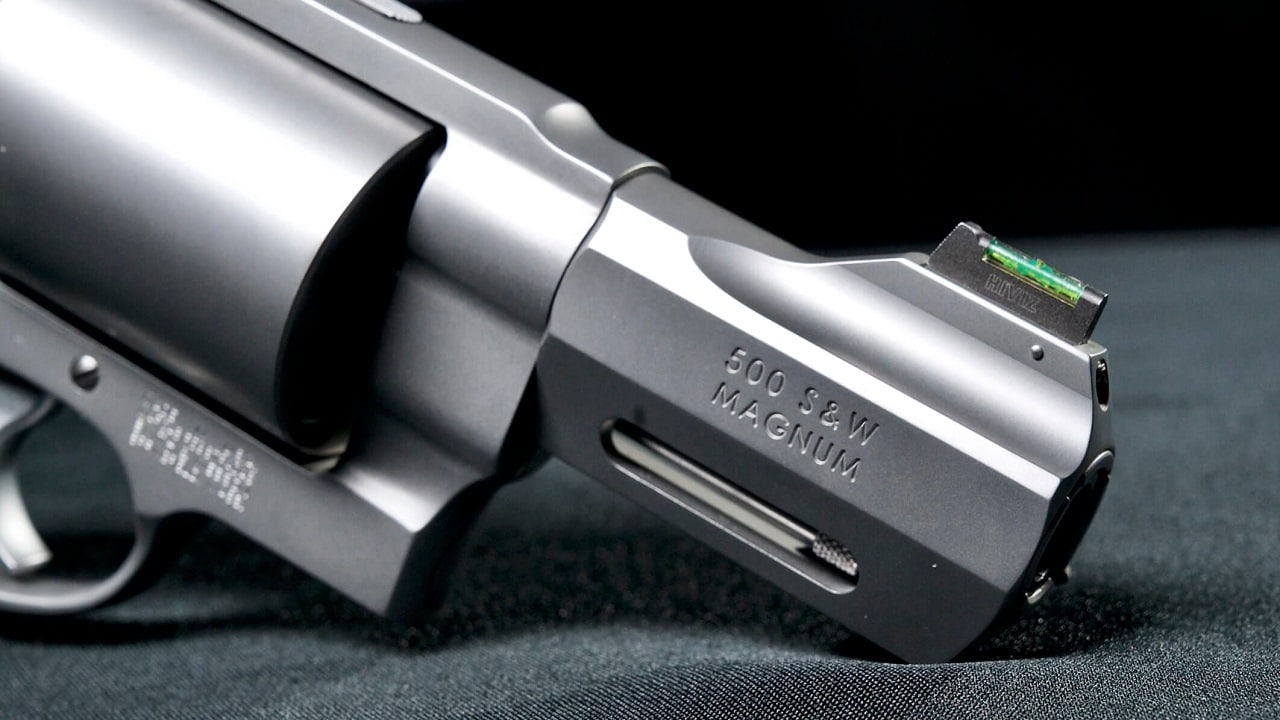
Summary and Key Points: Somebody sets a Smith & Wesson Model 500 on the bench, and every conversation within twenty feet stops. There is a reason. The .500 S&W Magnum throws a 440-grain bullet at around 1,625 feet per second for roughly 2,580 foot-pounds of muzzle energy — more than a 147-grain 7.62 NATO rifle round makes leaving the barrel. To handle it, Smith & Wesson had to build an entirely new frame, the X-Frame, the largest the company has ever produced, and it dwarfs the N-Frame that carries the .44 Magnum. With the 8.375-inch barrel, the gun weighs about four and a half pounds empty, which sounds absurd until you fire it and understand that the mass is doing you a favor. The cylinder holds five rounds rather than six, because there is simply no room for a sixth chamber that size in a cylinder you can still get a hand around.
What Makes the Smith & Wesson Model 500 More of a Cannon Than a Gun
I’ve always had an affinity for S&W revolvers; one of my favorite handguns was my Model 29. And the Model 29 was always a conversation piece at the range.
However, none of them draws a crowd at the range quite like the Smith & Wesson Model 500.
Somebody sets one on the bench, and every conversation within twenty feet stops.
Kind of like the old E.F. Hutton commercials.
That’s the effect this gun has.
It doesn’t just chamber a cartridge; it chambers a reputation.
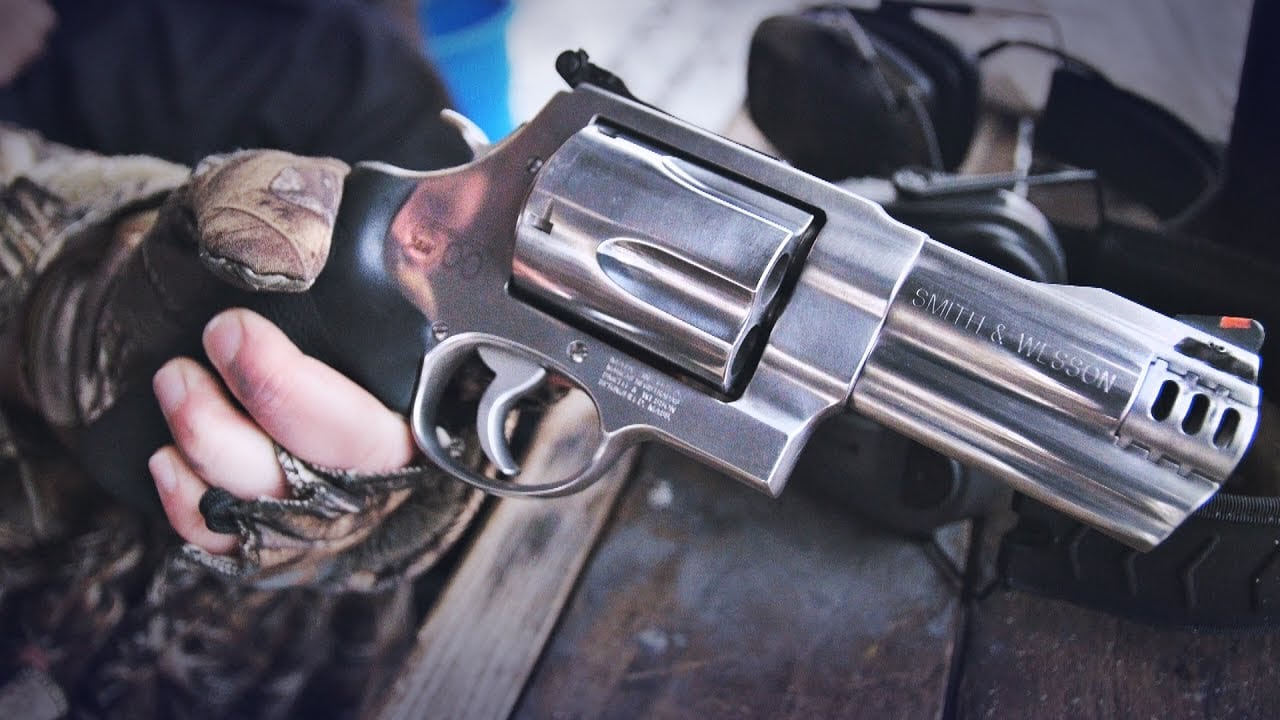
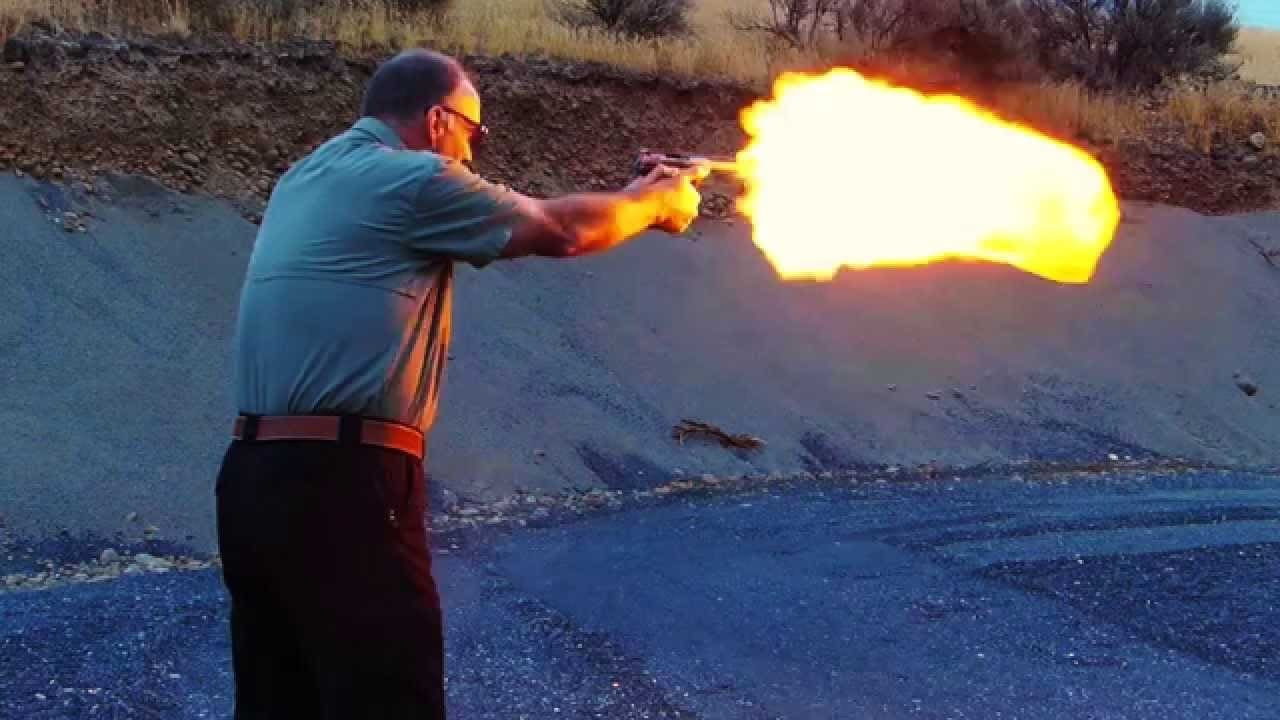
Smith & Wesson Model 500. Image Credit: YouTube Screenshot.
Background On The S&W Model 500
The story behind it is almost as good as the gun itself.
At the 2002 SHOT Show, Smith & Wesson’s handgun production manager, Herb Belin, decided the company needed to reclaim a title it had effectively invented decades earlier with the .357 and .44 Magnums: the most powerful production handgun round in the world.
So S&W teamed up with Cor-Bon and Jamison International and, in roughly ten months flat, went from concept to a finished cartridge: the .500 S&W Magnum. What’s wild is that engineers Rich Mikuta and Brett Curry designed the cylinder in SolidWorks and got it right on the first try.
No prototypes needed. That almost never happens with a clean-sheet firearm design, let alone one built around a cartridge nobody had ever fired before.
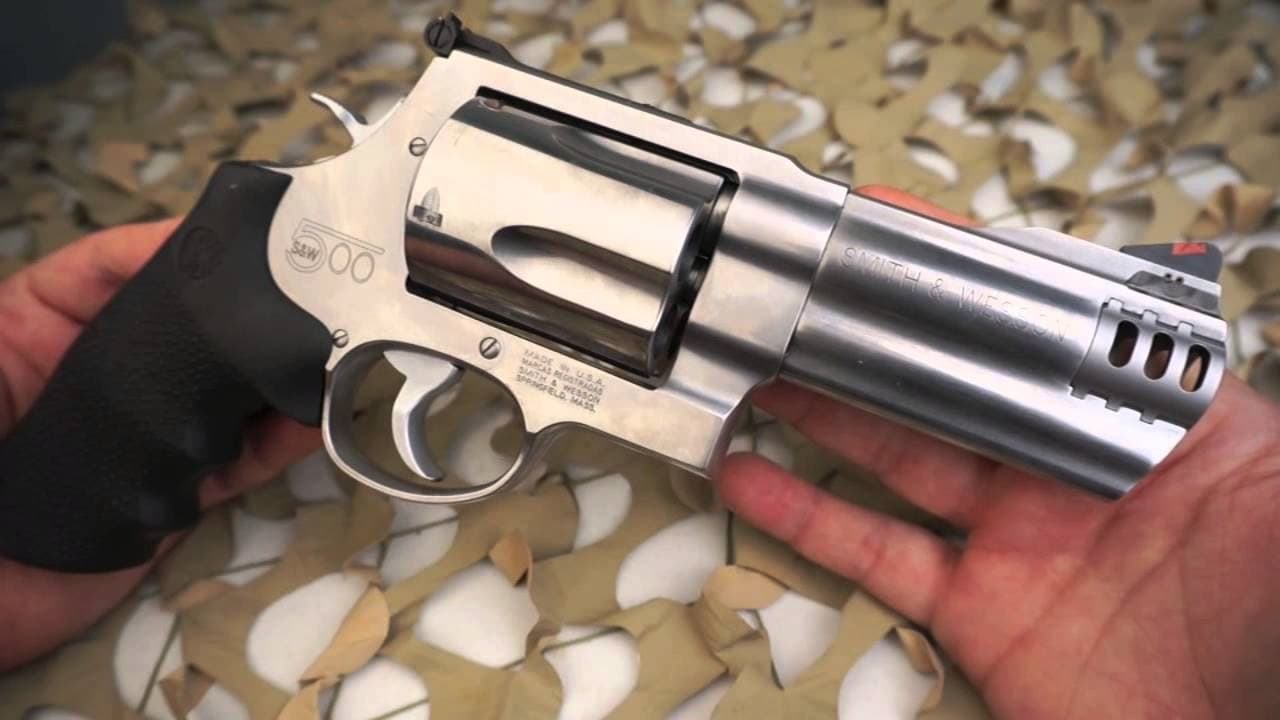
What the Smith and Wesson Model 500 is good for is as a sidearm for hunters chasing very large game. Creative Commons Photo.
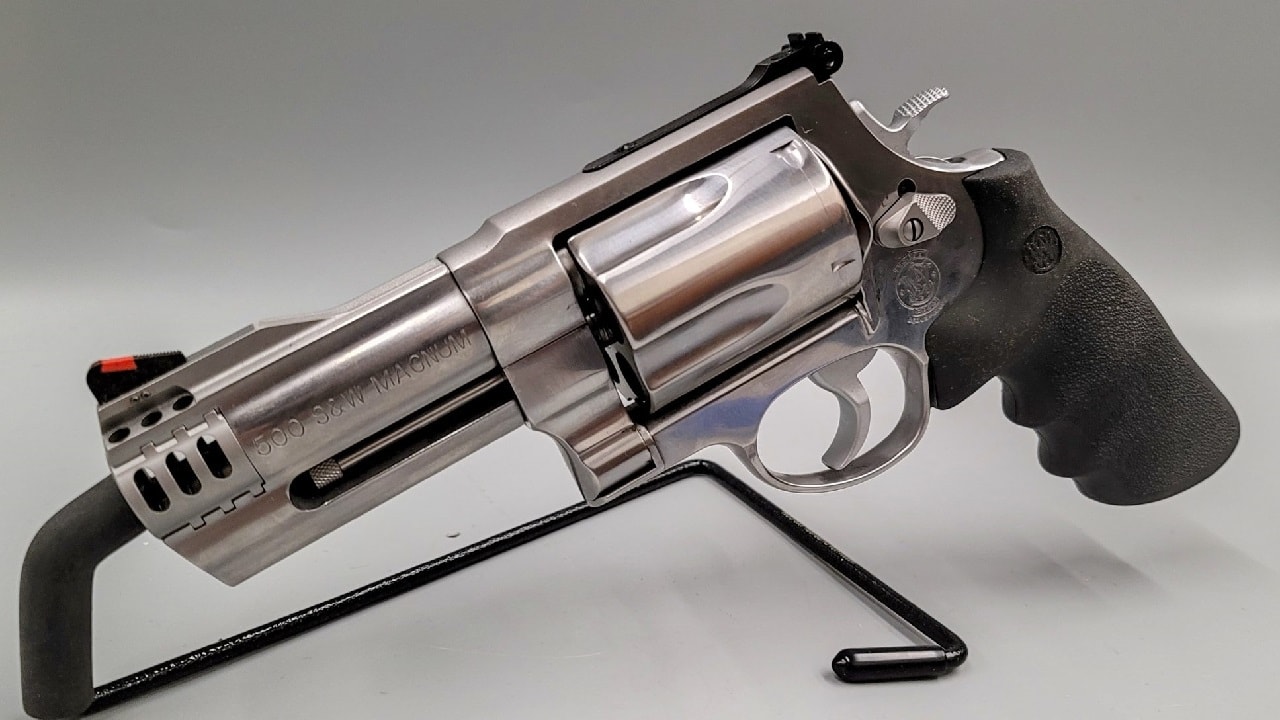
Smith and Wesson Model 500. Image Credit: Creative Commons.
To handle that round, S&W had to build an entirely new frame, the X-Frame, the biggest revolver frame the company has ever produced.
It dwarfs the N-Frame that houses the .44 Magnum.
A Model 500 with the standard 8.375-inch barrel tips the scales at around four and a half pounds unloaded, which sounds absurd until you’re holding one and realize that mass is doing you a favor every time you pull the trigger.
S&W offers it in barrel lengths from a stubby 4 inches up to that long 8.375-inch hunting barrel, and the cylinder holds five rounds, one less than a typical .357 or .44, because there’s simply no room for a sixth chamber that size in a cylinder you can still close a hand around.
The .500 S&W Magnum Round
Now, about that massive round.
The factory loads tell the story.
The lighter 275-grain load leaves the barrel at around 1,665 feet per second, delivering roughly 1,700 foot-pounds of energy.
Step up to the 400-grain load, and you’re still moving at 1,675 fps, generating more energy than a 300-grain .45-70 rifle load, a rifle cartridge, out of a handgun.
And the 440-grain load, moving at a comparatively modest 1,625 fps, produces around 2,580 foot-pounds of muzzle energy.
For reference, that’s more than a 147-grain 7.62 NATO rifle round carries downrange.
All of that comes from a cartridge that S&W and Cor-Bon deliberately kept under 50,000 psi, with about 66.3 grains of case capacity doing the work.
It’s a reminder that raw power isn’t always about extreme pressure; sometimes it’s about extreme case volume and a slow-burning powder column doing its job over a long barrel.
Put that next to the cartridges that used to hold the title of “most powerful” — the .44 Magnum, the .454 Casull, the .480 Ruger, and the .500 — and it simply outmuscles all of them as a mass-produced, off-the-shelf round.
.44 Auto Mag. Image Credit: Creative Commons.
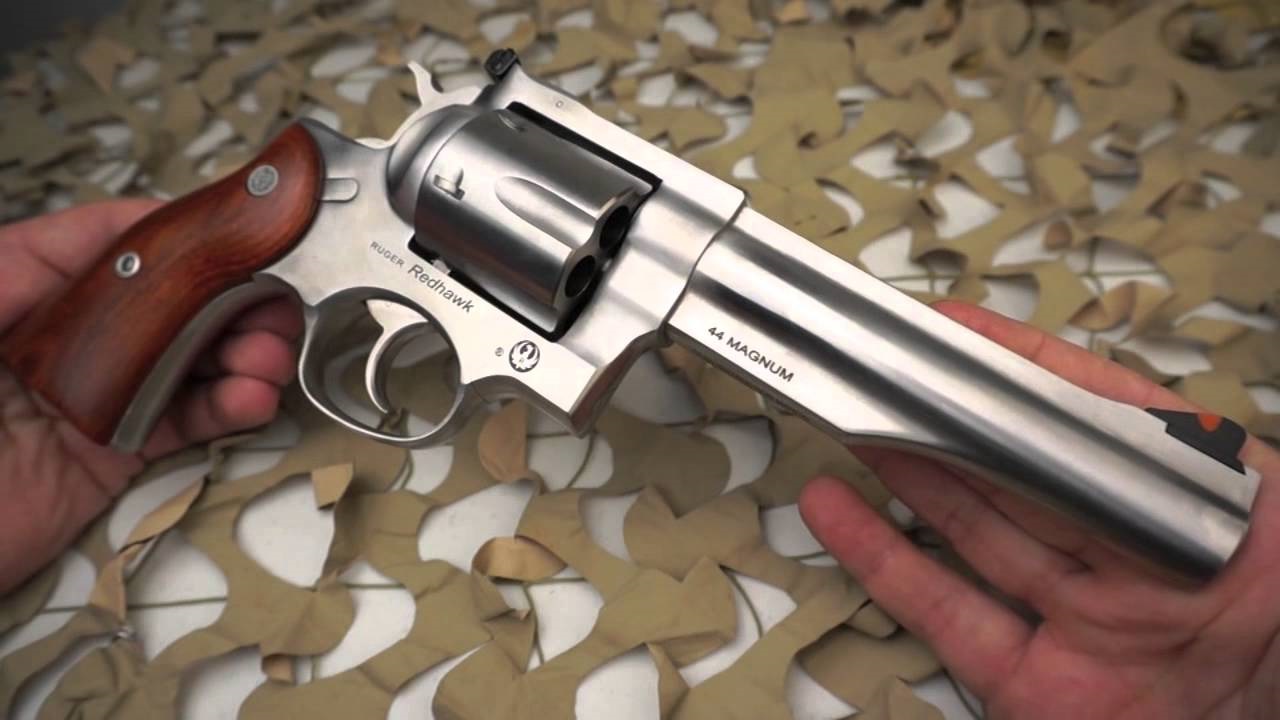
Ruger Redhawk .44 Magnum. Image Credit: Creative Commons.
That’s not a knock on those cartridges.
The .44 Magnum is still one of the best all-around big-bore rounds ever made.
It’s just that the .500 was built from day one to be the heavyweight champ, and it is.
The Model 500 Is Built For Bear Defense
None of this is theoretical macho posturing, either.
Guides in Alaska and hunting outfitters who deal with brown bears and grizzlies at close range carry X-Frame revolvers for a reason: when a bear charge is happening at fifteen feet, you want something that ends the conversation immediately, and the .500 does that better than almost anything you can carry on a hip holster, although personally, I’d opt for a shoulder rig due to the weight.
Handgun hunters chasing elk, moose, and big black bear load it for the same reason: with the right bullet, it has the penetration and energy transfer to do serious work on animals that would shrug off lesser rounds.
The Recoil Is A Drawback
The tradeoff, obviously, is recoil.
This is not a gun you shoot for fun all afternoon at the range.
Even at four and a half pounds, full-power 440-grain loads will remind your hand, your wrist, and honestly your whole arm that physics doesn’t negotiate.
The .500 S&W Magnum cartridge generates a massive 45 to 55 foot-pounds of free recoil energy, roughly three times the kick of a standard .44 Magnum.
Many owners keep a box of milder .500 loads around for practice and save the full-house stuff for when it actually matters, in the woods, not at the range.
Say what you want about whether anyone “needs” a handgun this powerful. That’s beside the point.
The Model 500 exists because Smith & Wesson set out to build the most powerful production revolver on earth, and they did it in under a year, on the first try, with a cartridge that still holds the title more than two decades later.
About the Author: Steve Balestrieri
Steve Balestrieri is a National Security Columnist. He served as a US Army Special Forces NCO and Warrant Officer. In addition to writing on defense, he covers the NFL for PatsFans.com and is a member of the Pro Football Writers of America (PFWA). His work was regularly featured in many military publications.