
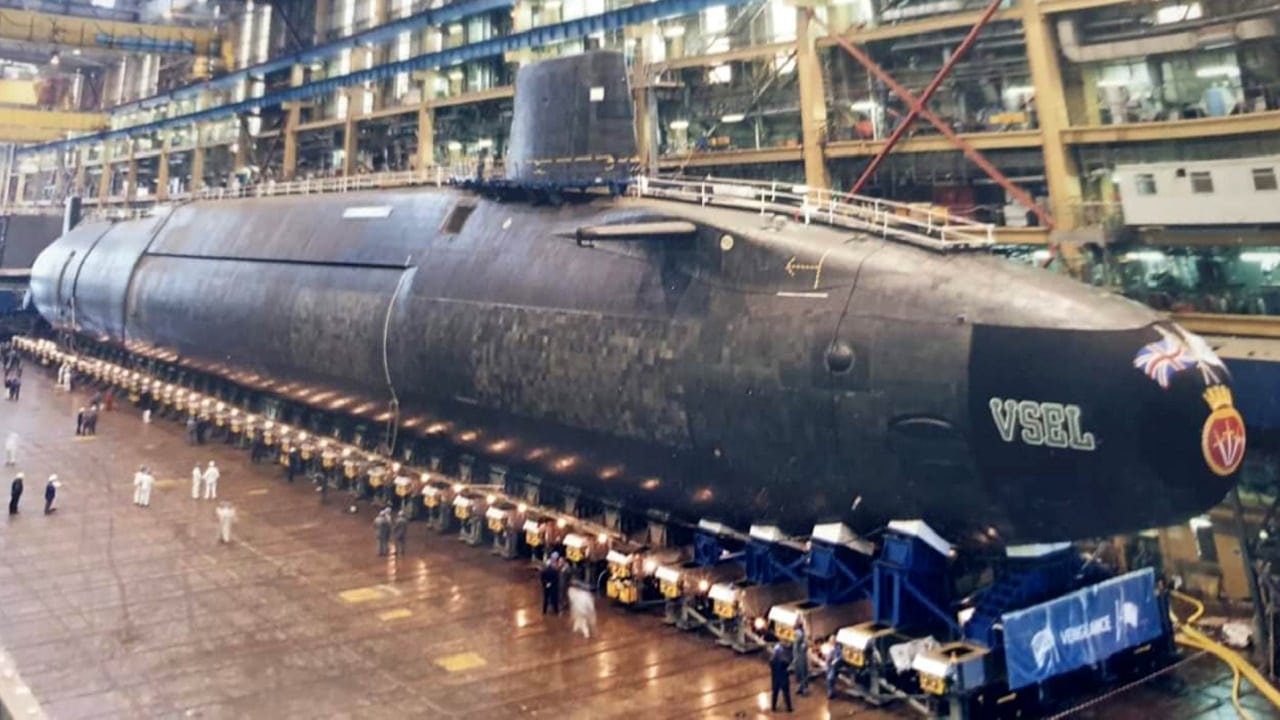
Summary and Key Points: On March 17, a British Prime Minister stood on a jetty at HM Naval Base Clyde and did something no holder of his office had done in more than a decade: he went aboard a Royal Navy submarine. Keir Starmer and Defence Secretary John Healey were there to welcome home HMS Vanguard from a 204-day patrol, the longest in the history of Britain’s nuclear deterrent, and the images from Gare Loch showed a government celebrating an extraordinary feat of endurance. The uncomfortable truth underneath the ceremony is that the feat exists because the system is failing. Nobody plans a seven-month deterrent patrol. Crews serve them because the boats that should relieve them are broken, delayed, or in pieces in a dockyard, and the record Vanguard set that morning is the most visible symptom of the deepest problem in British defense: a four-boat nuclear force designed for 25 years of service, now aged 27 to 33, holding the line alone while its replacement runs sixteen years from first steel to first patrol. Everything else in this story, the refit that took longer than building the submarine, the glue found in a reactor compartment, the two failed missile tests, flows from that single bet coming due.
The Arithmetic of Four Royal Navy SSBNs and the Vanguard-Class
Britain’s deterrent rests on a piece of arithmetic with no slack in it anywhere.
Since 1969, the Royal Navy has kept at least one ballistic missile submarine hidden at sea at all times, a mission now called Operation Relentless and the longest sustained military operation in British history, first with the Polaris-armed Resolution-class and, since the 1990s, with the four Vanguard boats carrying the Trident II D5.
Four is the minimum the mission allows: one boat on patrol, one preparing or returning, one in shorter maintenance, and one in deep overhaul. The design assumes everything works, because there is no fifth hull.
When a single refit overruns, the patrol boat stays out longer; when two boats are laid up at once, the entire deterrent rides on the remaining pair; and when the class ages past the roughly 25-year service life it was planned around, every one of those pressures compounds.
The Vanguard-class has now experienced all of it simultaneously, and the past decade reads as a controlled experiment in what happens to a no-margin force when the margin is finally needed.
The Refit That Outlasted the Build
The clearest measure of the trouble is a comparison nobody at the Ministry of Defence enjoys making.
HMS Vanguard arrived at Devonport in December 2015 for her second major overhaul, planned to take up to four years and cost about £200 million.
She left about 89 months later, a stay of nearly seven and a half years that exceeded the 83 months it had taken to build her in the first place, with reported costs running hundreds of millions beyond the plan.
Her three sisters had averaged about 42 months for the same class of overhaul.
Part of the explanation was familiar program mismanagement, and a senior uniformed officer later called the project “a textbook example of how not to set up a major project,” an admission preserved in the naval press.
Part of it was genuinely unlucky engineering. Vanguard’s Core H reactor fuel was designed to last the boat’s whole life without refueling, and no refueling was ever envisioned, until indications from the Vulcan shore test reactor prompted a precautionary decision to refuel her anyway, making Vanguard the first submarine ever to undergo a Core H refuel, a task her overhaul was never scoped for.
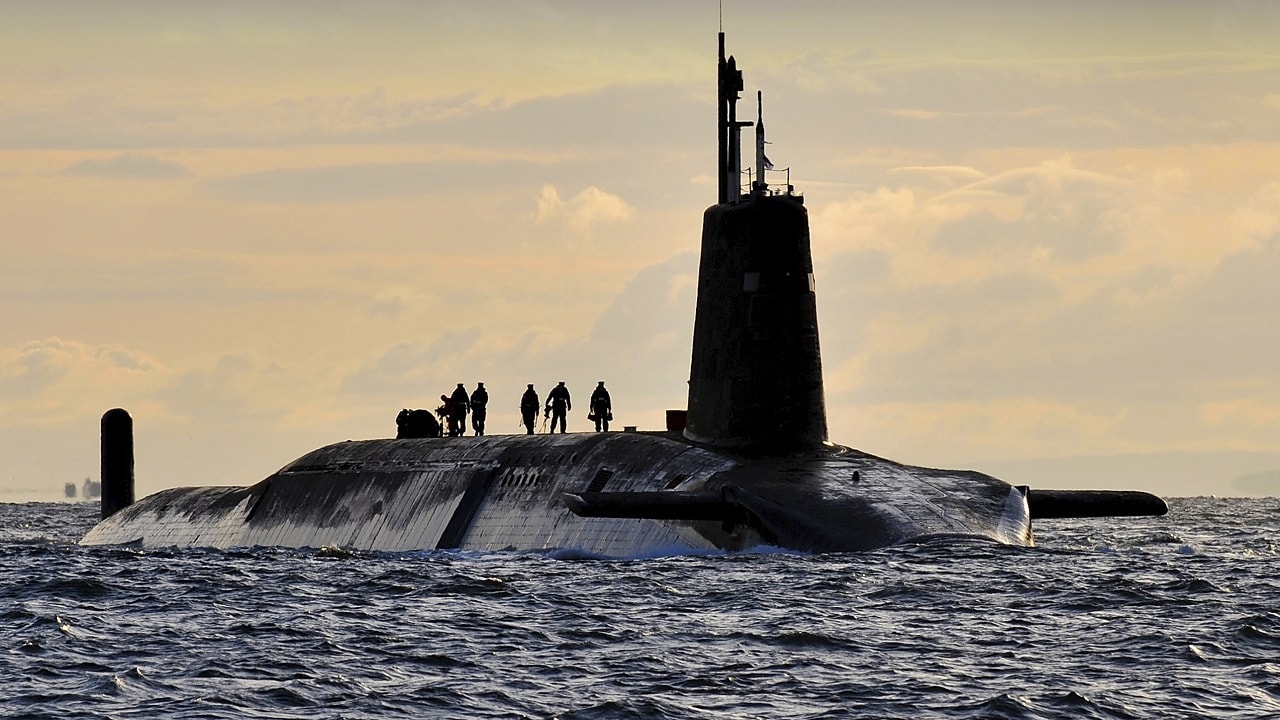
Nuclear submarine HMS Vanguard arrives back at HM Naval Base Clyde, Faslane, Scotland following a patrol.
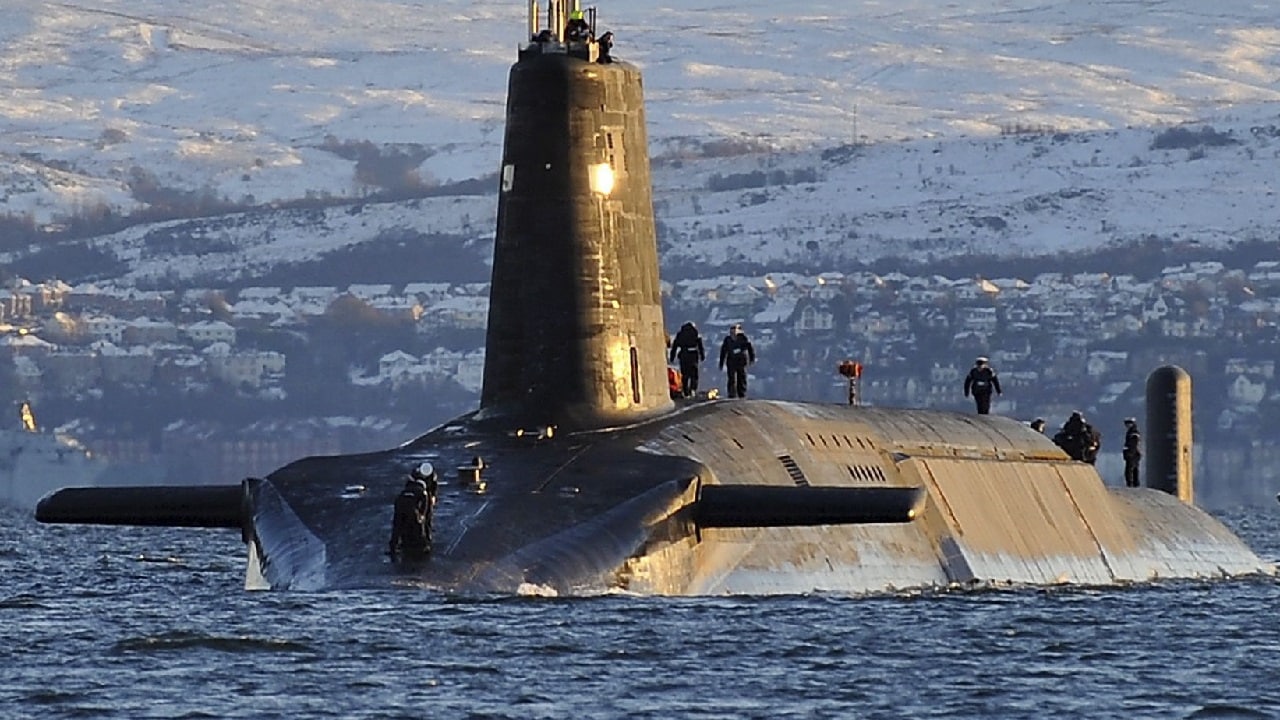
Nuclear submarine HMS Vanguard arrives back at HM Naval Base Clyde, Faslane, Scotland following a patrol in 2010.
The delay rippled outward through the whole force, because the rotation that assumed four boats spent the better part of a decade running on three, and the crews at sea paid the difference in months.
Glue in the Reactor Compartment
What emerged from inside that refit made the schedule look like the lesser scandal.
In January 2023, reporting revealed that a routine inspection aboard Vanguard had found broken bolts in the reactor compartment repaired with adhesive: workers for the contractor Babcock had over-tightened and snapped the bolts, which held insulation in place on the coolant pipes serving the nuclear reactor, and rather than reporting the damage and boring out the broken shafts, had glued the heads back on.
At least seven such bolts were found, and the discovery reportedly came as engineers prepared to bring the reactor toward full power.
The Defence Secretary summoned Babcock’s chief executive to seek assurances; the Ministry of Defence stated the defect was promptly reported and fixed, and a Navy source’s verdict circulated through the coverage: “You can’t cut corners with nuclear.”
One detail from that week has aged into irony.
Among the loudest voices demanding accountability was the opposition defense spokesman, John Healey, who insisted the deterrent demanded the highest maintenance standards at all times.
Two years later Healey stood on the jetty at Faslane as Defence Secretary, welcoming home the same submarine from the record patrol his warnings had foreshadowed, the problem now his to own.
Two Missiles, Two Failures
In June 2016, HMS Vengeance launched a Trident II D5 off Florida, and the missile malfunctioned, an event the government did not disclose at the time; the failure became public months later, drawing sharp criticism because Parliament had voted to renew the deterrent in the interval without being told. In January 2024, the chance to reset the record came.
HMS Vanguard, fresh from her marathon refit, sailed for her Demonstration and Shakedown Operation, the formal test proving the boat and crew ready to rejoin the deterrent, with Defence Secretary Grant Shapps aboard to observe.
The missile’s first-stage motor failed to ignite, and the Trident fell into the sea close to the launch point rather than flying its planned trajectory toward the mid-Atlantic. It was Britain’s first test launch in eight years, and its second consecutive failure.
The government’s position is straightforward: Shapps told the Commons the failure was an “anomaly” that was “event specific,” with no implications for the reliability of the wider missile system, and officials noted that in both cases the submarine and crew performed as intended, which is what the exercise formally tests.
The pattern question remains uncomfortable regardless, because the same American-built missile continues to succeed in United States Navy test launches, and whatever separates the two national experiences has now cost Britain its only two attempts in a decade to demonstrate, publicly, that the weapon at the center of its security flies.
The 204-Day Patrols
Analysis of recent years put the average patrol at 163 days, nearly five and a half months, with five-month patrols routine since 2020 and one calculation identifying a 207-day patrol by HMS Victorious in 2021, a figure that sits alongside the officially framed records rather than neatly within them.
HMS Vigilant returned from a 195-day patrol in 2023 visibly coated in green algae.
Vanguard’s 204-day patrol, ending this March, now stands as the acknowledged record.
The precedent for a deterrent force in this condition is not encouraging, since accounts from the end of the Polaris era describe late-life Resolution-class boats obliged to loiter nearly stationary on patrol to spare their worn systems.
The arithmetic behind the long patrols is visible in the dockyards: HMS Victorious entered a deep maintenance period at Devonport in mid-2023 that continues years later; another boat spent more than nineteen months at Faslane outside the patrol rotation; and, at times, the entire national deterrent has effectively ridden on two hulls. The strain shows in the crews as well as the calendar.
In 2017, HMS Vigilant lost both her commanding officer and executive officer over alleged improper relationships with crew members, and nine of her sailors were dismissed for cocaine use; in 2020, thirty of her crew caught COVID after breaching isolation rules during a port visit to the American submarine base at Kings Bay.
Reporting over recent years has described declining morale and well-being aboard the boats as patrol lengths have grown, which is the predictable result of asking sailors to spend seven months sealed in a thirty-year-old submarine because no relief exists.
The Collision Nobody Detected
One entry in the problems file belongs to physics rather than neglect, and it remains the class’s most surreal moment.
On the night of February 3 to 4, 2009, HMS Vanguard, on patrol in the Atlantic, collided while submerged with the French ballistic missile submarine Le Triomphant, two allied boats carrying nuclear missiles striking each other in the open ocean because each was too quiet for the other to detect. Both were damaged, and no injuries or radioactivity releases were reported.
France initially announced its boat had struck a submerged object, “probably a container,” and Britain said nothing at all until the story broke nearly two weeks later, a sequence that fed lasting questions about candor.
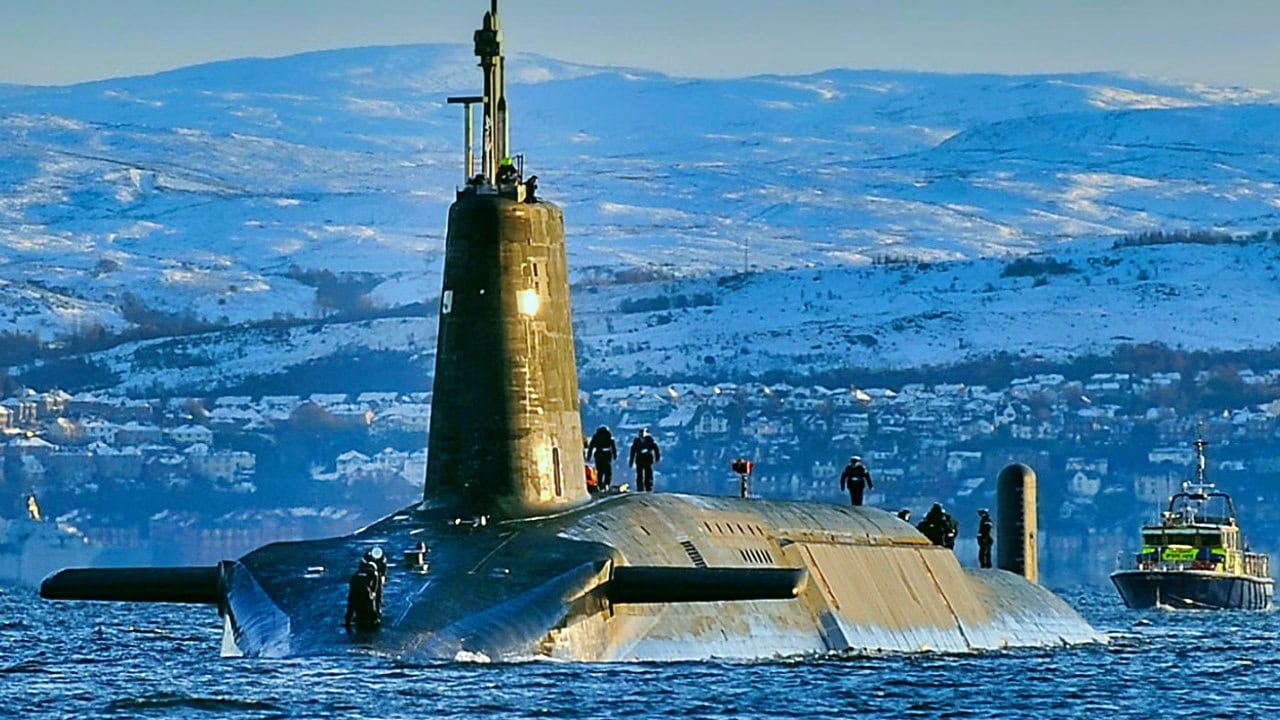
Vanguard-Class SSBN. Image Credit: Creative Commons.
The episode was, in a backhanded way, a tribute to the boats’ stealth, and its full story and repair bill have been told in detail; for the class’s ledger, it stands as the reminder that even the things the Vanguards do perfectly can go wrong.
Sixteen Years From Steel to Patrol
Every thread in the file leads back to the replacement that has not arrived. The Dreadnought class, the Vanguards’ successor, had its first steel cut at Barrow in 2016, and the lead boat will probably not conduct her first deterrent patrol before about 2032, a span of some sixteen years, roughly double the time it took to build Vanguard and four times what the first Resolution required in the 1960s.
The new boats are formidable on paper, built around the PWR3 reactor and a common missile compartment shared with the US Navy’s Columbia class, carrying the life-extended Trident II that will arm both fleets for decades.
None of that helps the force holding the line now.
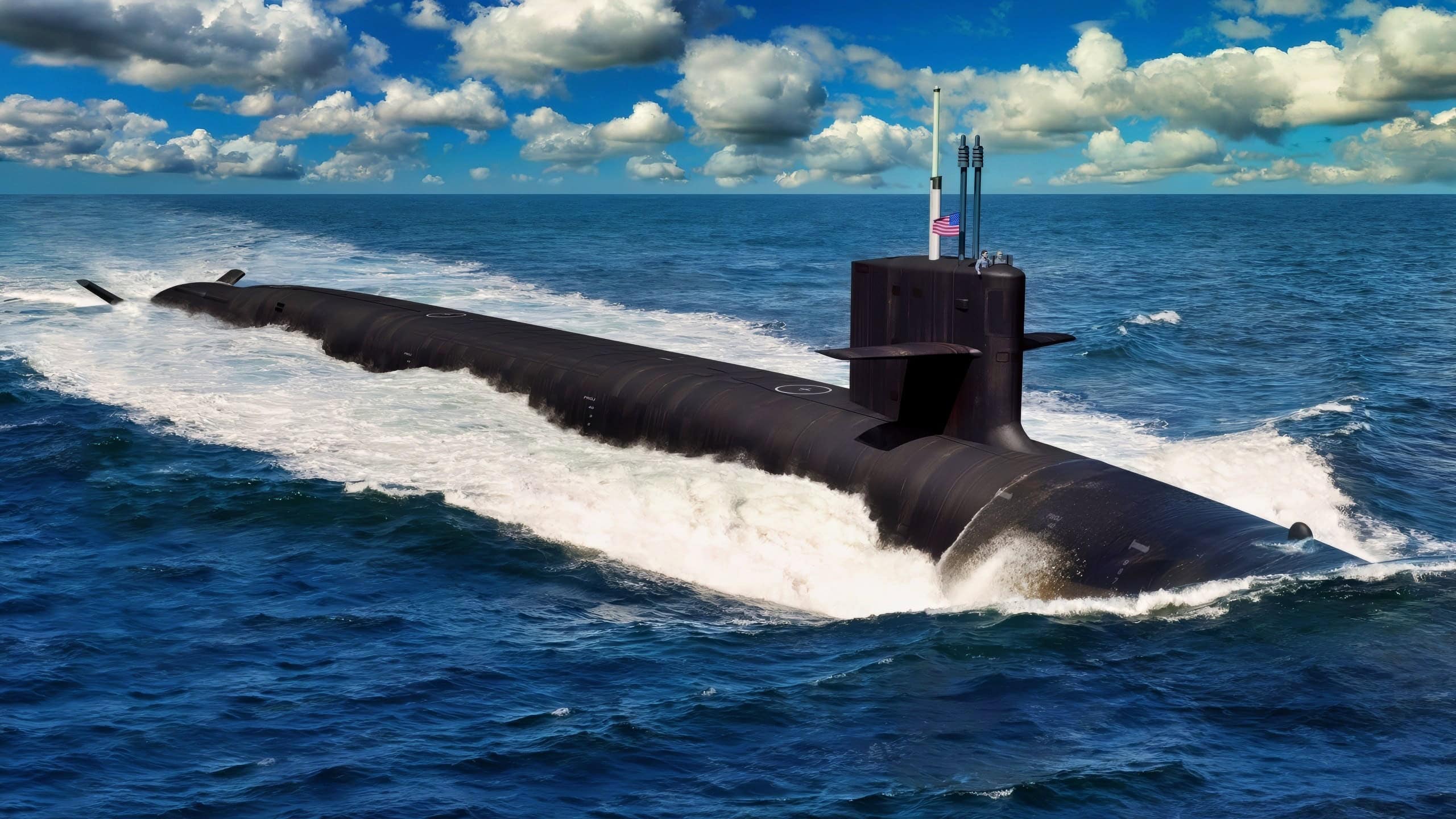
Columbia-Class Submarine SSBN Rendering U.S. Navy Photo
The oldest Vanguard is 33 against a 25-year design life, the class will push toward 37 years before relief arrives, and each additional year of Dreadnought schedule risk converts directly into another year of overhauls on worn boats, longer patrols for tired crews, and a thinner margin under the one military mission Britain has never allowed to lapse.
The Line That Never Broke
Through the seven-year refit, the glued bolts, the two failed launches, the collision, the scandals, and the 204-day patrols, the line itself has never broken.
A British ballistic missile submarine has been at sea, hidden and armed, every single day since 1969, and the record-length patrols that symbolize the crisis are simultaneously the proof that the crews have refused to let the system’s failures become the mission’s failure.
The boats have not failed Britain, and neither have the sailors inside them; the structure around them has, through a replacement program running sixteen years, an industrial base that turned a four-year overhaul into seven and a half, and a four-boat bet that left no room for any of it to go wrong.
What remains is a race the Ministry of Defence does not describe in those terms but runs every day regardless, between how long four aging submarines can keep doing the impossible and when their successors finally take the watch.
The gap between those two dates is the risk window at the heart of British security, and as of this year it is still widening.
About the Author: Harry J. Kazianis
Harry J. Kazianis (@Grecianformula) was the former Senior Director of National Security Affairs at the Center for the National Interest (CFTNI), a foreign policy think tank founded by Richard Nixon based in Washington, DC. Harry has over a decade of experience in think tanks and national security publishing. His ideas have been published in the NY Times, The Washington Post, The Wall Street Journal, CNN, and many other outlets. He has held positions at CSIS, the Heritage Foundation, the University of Nottingham, and several other institutions related to national security research and studies. He is the former Executive Editor of the National Interest and the Diplomat. He holds a Master’s degree focusing on international affairs from Harvard University.

