
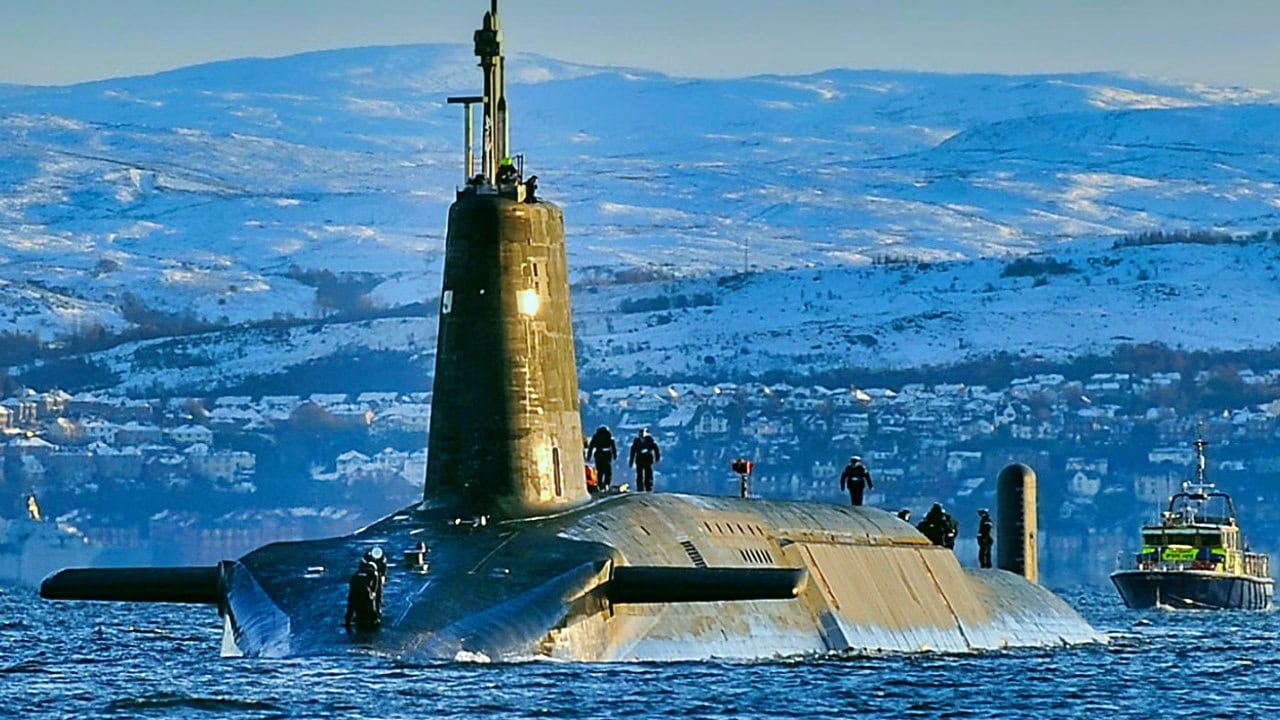
Key Points and Summary – In February 2009, Britain’s HMS Vanguard and France’s Le Triomphant—both ballistic-missile submarines—collided while submerged in the Atlantic during routine deterrent patrols.
-Moving at low speed, the boats avoided injuries and any nuclear-safety incident, but both suffered costly damage: Vanguard to its outer casing near the missile compartment and Le Triomphant to its bow sonar dome.
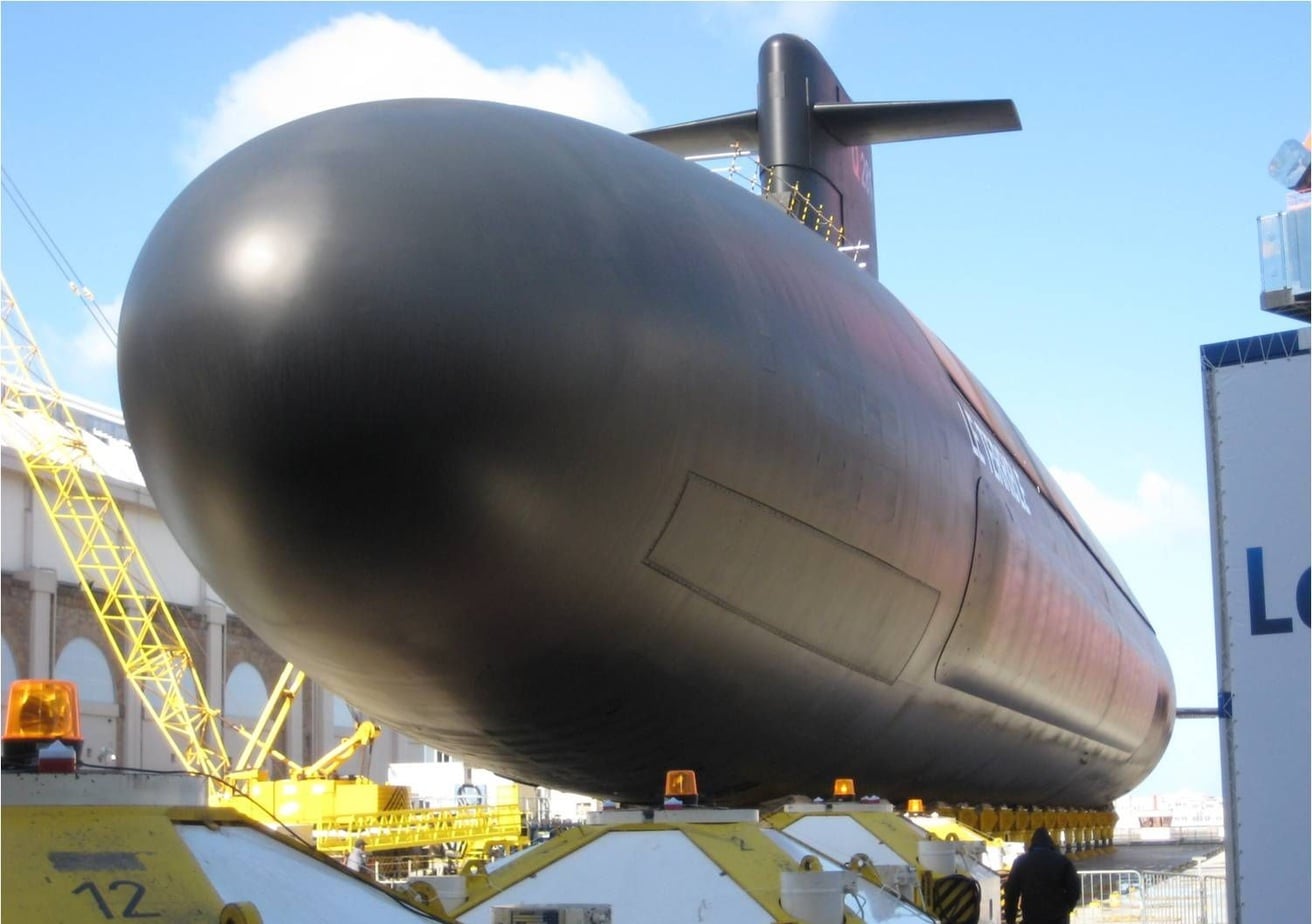
France SSBN Submarine. Image: Creative Commons.
-Because each relied on passive sonar and ran quietly for stealth, neither detected the other in time.
-Governments initially downplayed the collision, then confirmed it, repaired both boats, and tightened coordination. The crash underscored waterspace-management gaps and the limits of silent operations in peacetime patrols.
When Two Nuclear Submarines Collided Underwater—and Neither Detected the Other
In February 2009, a British and French submarine collided with each other whilst on patrol.
The HMS Vanguard of the British Royal Navy was on a routine patrol while the Le Triomphant of the French Navy was returning home from its patrol.
Neither submarine was able to detect the other until they had already collided with one another.
Fortunately, both subs were traveling at low speeds, and neither crew sustained significant injuries; however, the event cost both parties a fortune in repairs. Both nations brushed off the event as a simple mistake and a miscommunication between the two countries.
The Vanguard-Class and Le Triomphant
HMS Vanguard is one of the United Kingdom’s four Vanguard-class submarines, commissioned in the 1990s to carry the Trident II D5 ballistic missiles.
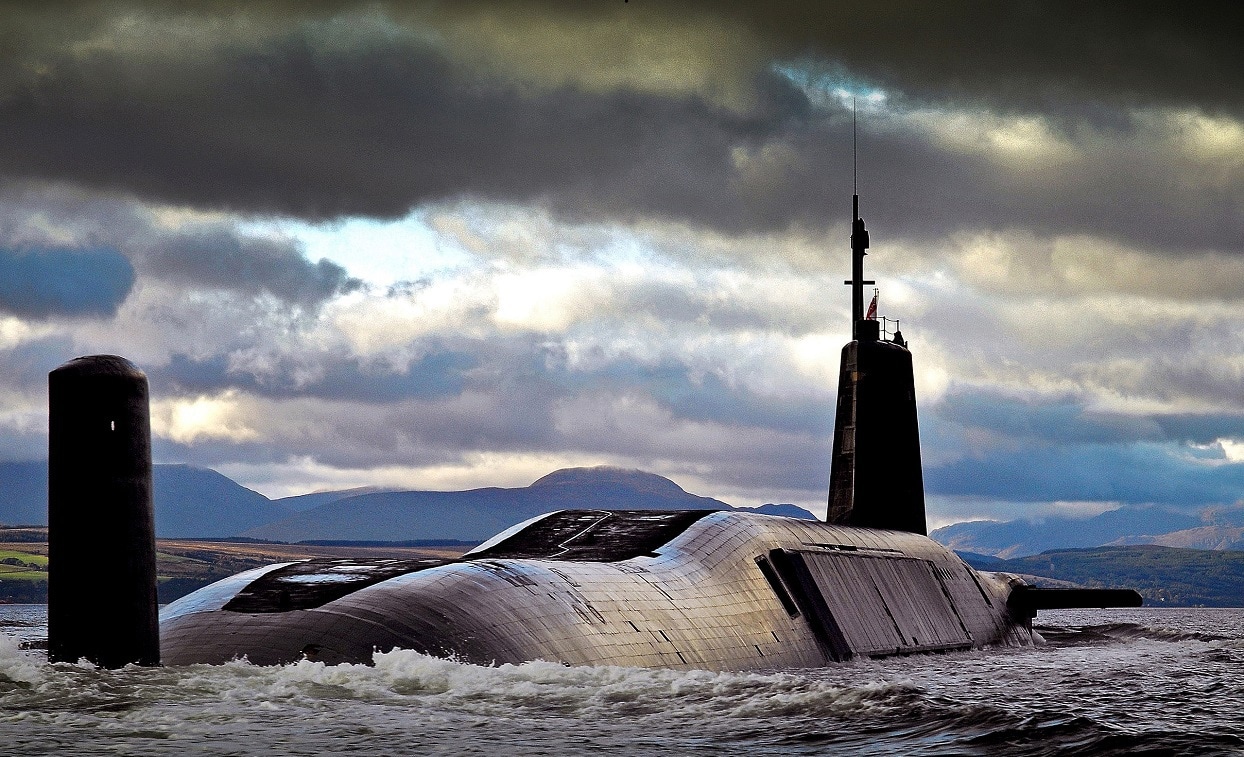
Vanguard-Class Submarine of Royal Navy. Image: Creative Commons.
These submarines form the backbone of the UK’s Continuous At Sea Deterrent (CASD), a policy that ensures at least one nuclear-armed submarine is always on patrol.
Each Vanguard-class submarine can carry up to 16 Trident missiles, each with 48 nuclear warheads.
The submarines operate out of HM Naval Base Clyde in Scotland and typically carry a crew of around 135 personnel.
On the other side of the collision was Le Triomphant, the lead boat of France’s Triomphant-class submarines.
These vessels are similarly tasked with maintaining France’s nuclear deterrent, equipped with M45 ballistic missiles and capable of carrying up to 48 nuclear warheads.
Operating from the Île Longue naval base in Brittany, Le Triomphant is a key component of France’s Force de dissuasion, the country’s strategic nuclear force.
Two Nuclear Submarines Collide
The collision occurred during the night of February 3–4, 2009, somewhere in the Atlantic Ocean. Both submarines were submerged and conducting routine patrols at low speeds.
Despite their sophisticated sonar systems, neither submarine detected the other in time to avoid a collision.
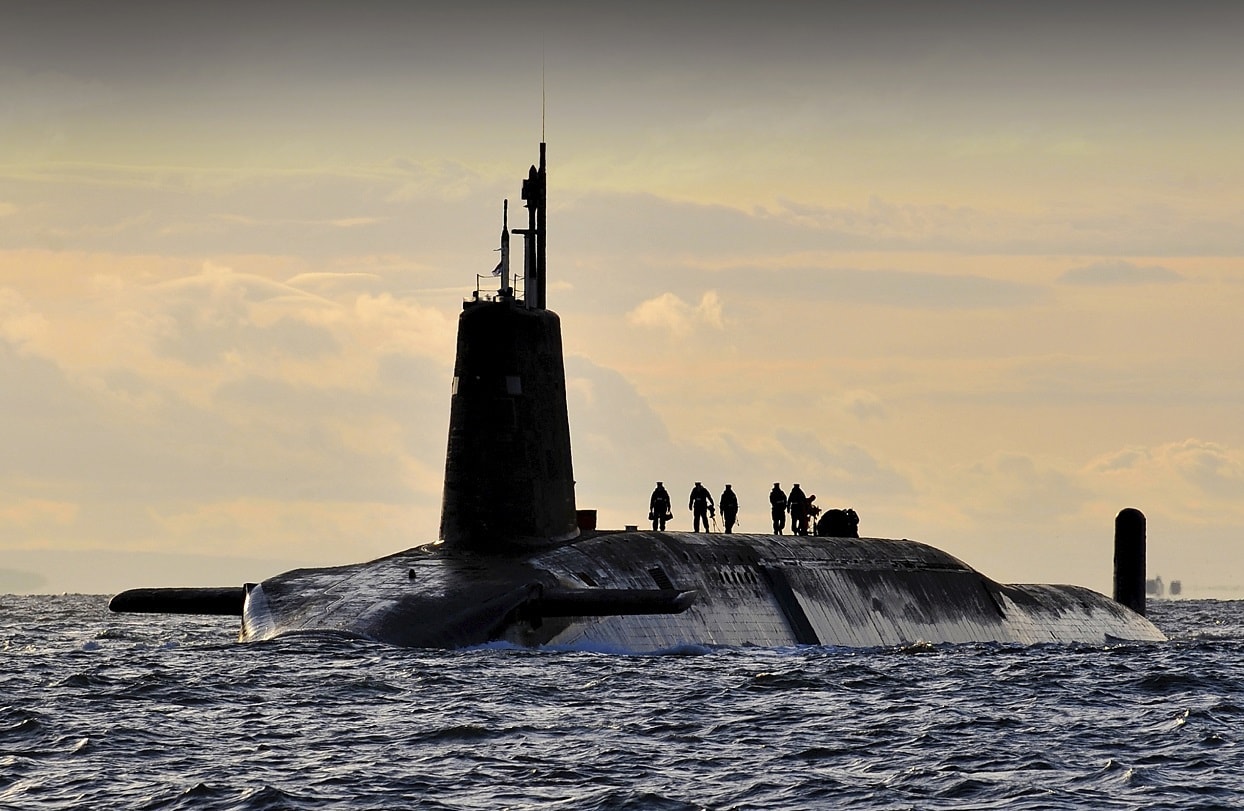
Nuclear submarine HMS Vanguard arrives back at HM Naval Base Clyde, Faslane, Scotland following a patrol.
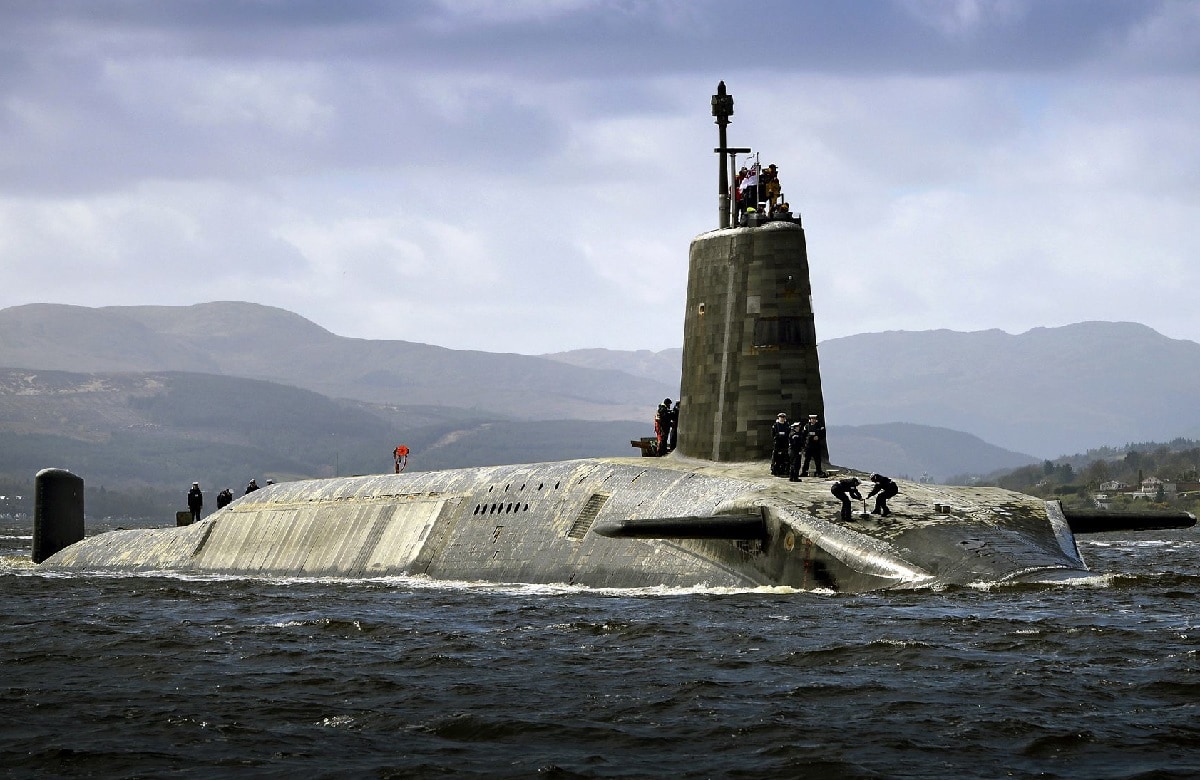
Vanguard-class. Image: Creative Class.
This is primarily attributed to the use of passive sonar, which listens for sounds rather than emitting signals.
Passive sonar is preferred for stealth operations, as it allows submarines to remain undetected. However, when both vessels are operating silently, the chances of detection drop dramatically, increasing the risk of accidental encounters.
The impact caused significant damage to both submarines. HMS Vanguard suffered damage to its outer casing, particularly near the missile compartment on the starboard side.
Le Triomphant sustained damage to its sonar dome, located beneath the bow, indicating that it likely struck Vanguard from above and amidships.
Additional reports suggested that Le Triomphant also experienced deformation of its conning tower and starboard sailplane.
Despite the severity of the collision, both submarines were able to return to their respective bases under their own power.
HMS Vanguard headed back to Faslane in Scotland, while Le Triomphant returned to Brest in France, escorted by a French frigate as a precautionary measure.
Initial Reactions and Aftermath
Initially, both parties tried to downplay and cover up the situation as much as possible. The French MoD stated that Le Triomphant had collided with a “submerged object, probably a container.”
The UK Ministry of Defence initially remained silent, refusing to comment. It wasn’t until February 16, nearly two weeks after the incident, that the British First Sea Lord, Admiral Sir Jonathon Band, confirmed the collision. He described it as a low-speed impact with no injuries and no compromise to nuclear safety.
The delay in acknowledging the event, along with the vague initial statements, led to public speculation and concern. Many questioned whether the governments were attempting to conceal the true nature of the incident to avoid political fallout or public panic.
All things considered, the collision could have been much worse, but the event still required a significant amount of funds for repairs. Repairs to both submarines were estimated to cost up to £50 million (adjusted for inflation, that’s around £90 million in today’s currency), a significant expense for both navies.
Despite the damage, the UK government assured the public that the CASD was not disrupted and that nuclear safety was never compromised. The submarines’ robust design and safety protocols were credited with preventing a more serious disaster.
Lessons Learned
In the aftermath, both the UK and France conducted internal reviews of their submarine operations. While the details of these reviews remain classified, steps were taken to enhance communication and coordination, particularly regarding patrol zones.
The incident served as a wake-up call, emphasizing the need for robust safety measures and international cooperation in the realm of strategic deterrence.
People ran wild with speculation as to what happened; however, it is widely held that one of the biggest causes was the lack of coordination between the UK and France regarding submarine patrol zones. While NATO has established protocols for waterspace management to prevent such incidents among member states, France was not part of NATO’s integrated military command structure at the time. This meant that the two countries did not share information about the locations of their submarines, leading to an unfortunate overlap in patrol areas.
The incident also highlighted the limitations of current sonar technology. Passive sonar, while essential for maintaining stealth, is not foolproof.
When two submarines are both operating silently, the chances of mutual detection are minimal.
This raises concerns about the safety of submarine operations, especially in regions where multiple nations conduct patrols. The collision between Vanguard and Le Triomphant demonstrated that even the most advanced submarines are not immune to accidents, particularly when operating in secrecy.
About the Author: Isaac Seitz
Isaac Seitz, a Defense Columnist, graduated from Patrick Henry College’s Strategic Intelligence and National Security program. He has also studied Russian at Middlebury Language Schools and has worked as an intelligence Analyst in the private sector.