
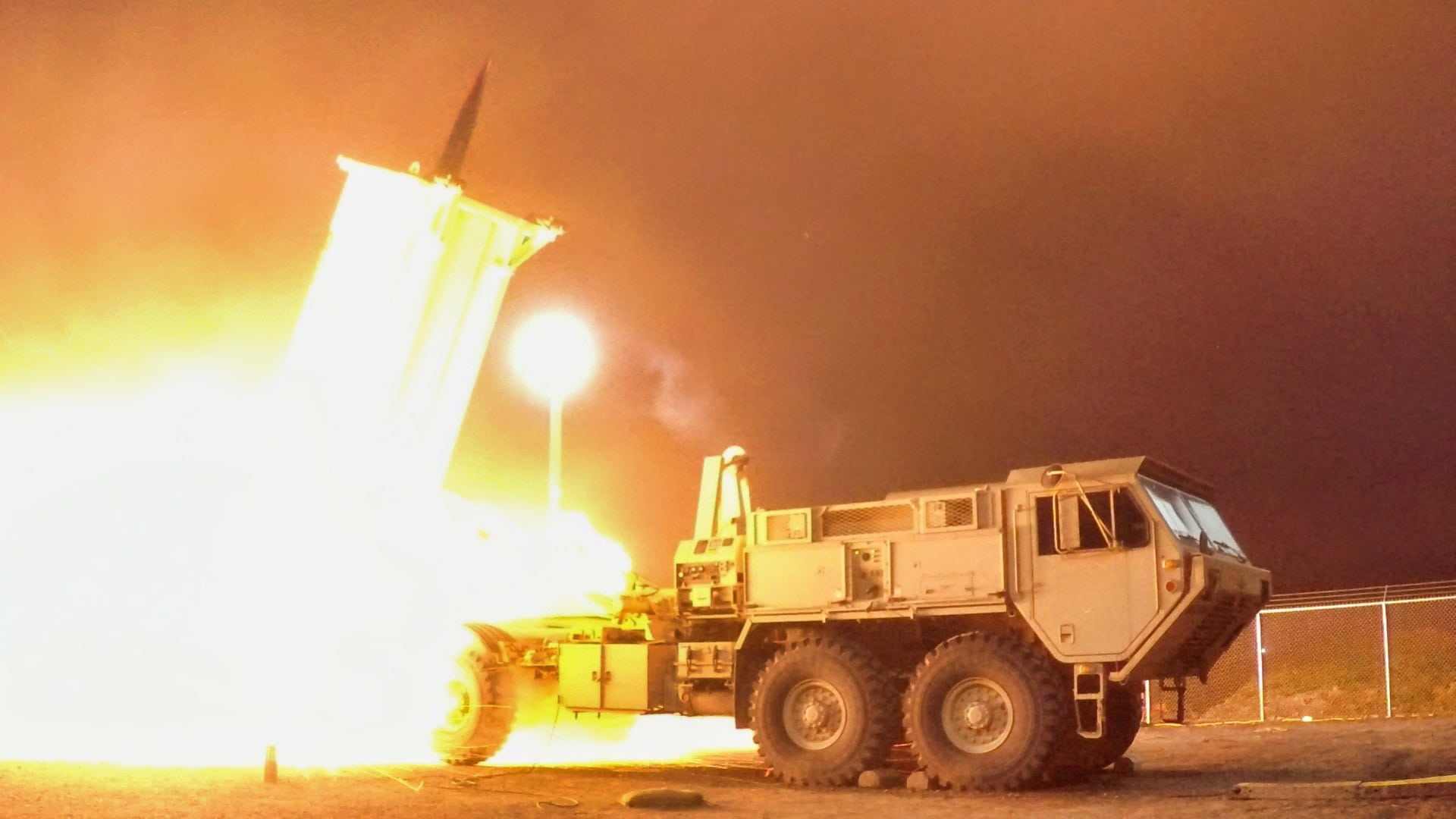
Yesterday morning, the IRGC fired a dozen ballistic missiles at bases hosting American fighter aircraft across the Gulf, the latest salvo in a war that has thrown more ballistic missiles at American defenses than every previous conflict in history combined. Standing under a large share of those trajectories is a system that spent the 1990s as the Pentagon’s favorite punching bag: Terminal High Altitude Area Defense, THAAD, the interceptor that failed six consecutive flight tests, got redesigned in semi-disgrace, and then ran off two decades of perfection just in time for the largest missile war ever fought.
The arc from laughingstock to linchpin is one of the great untold procurement stories in American defense — and it ends, as every munitions story in this war ends, with a magazine running down faster than the country can refill it.
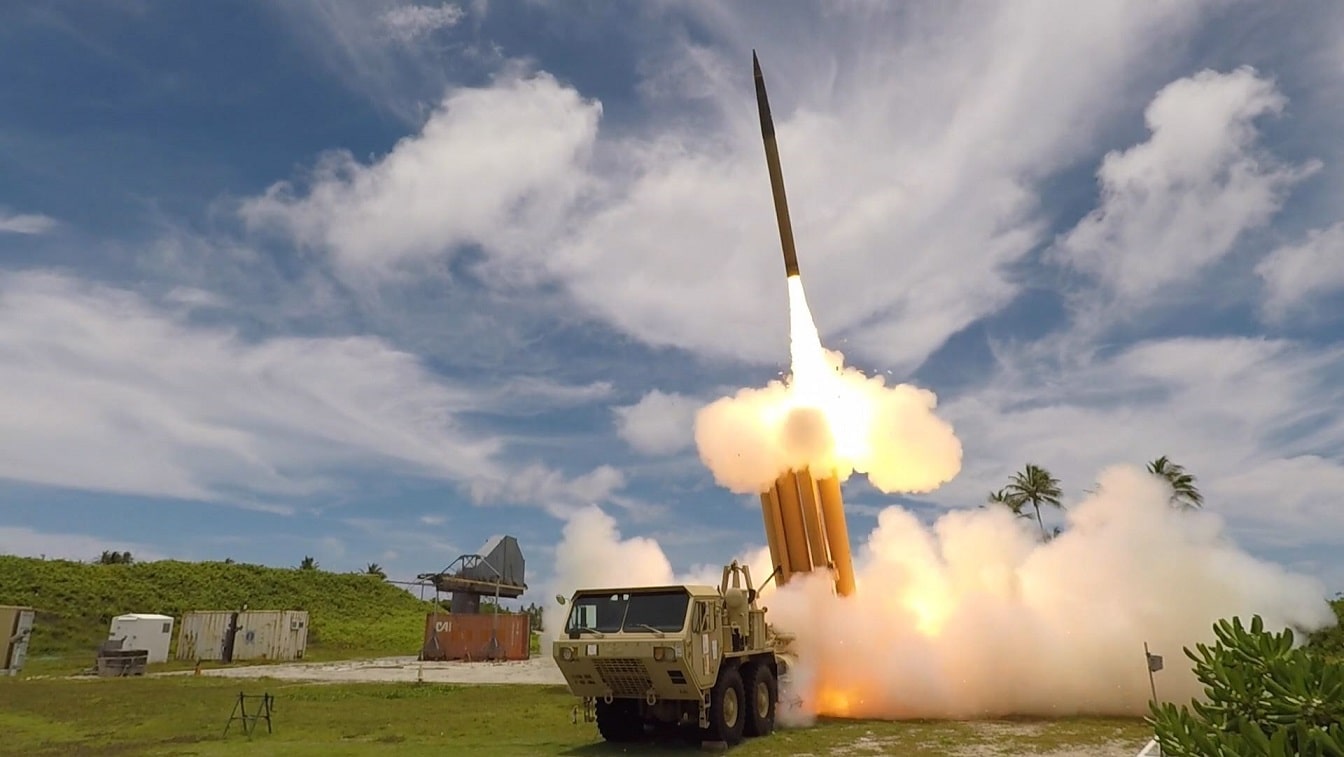
THAAD Missile Defense Battery Firing. Image Credit: Lockheed Martin.
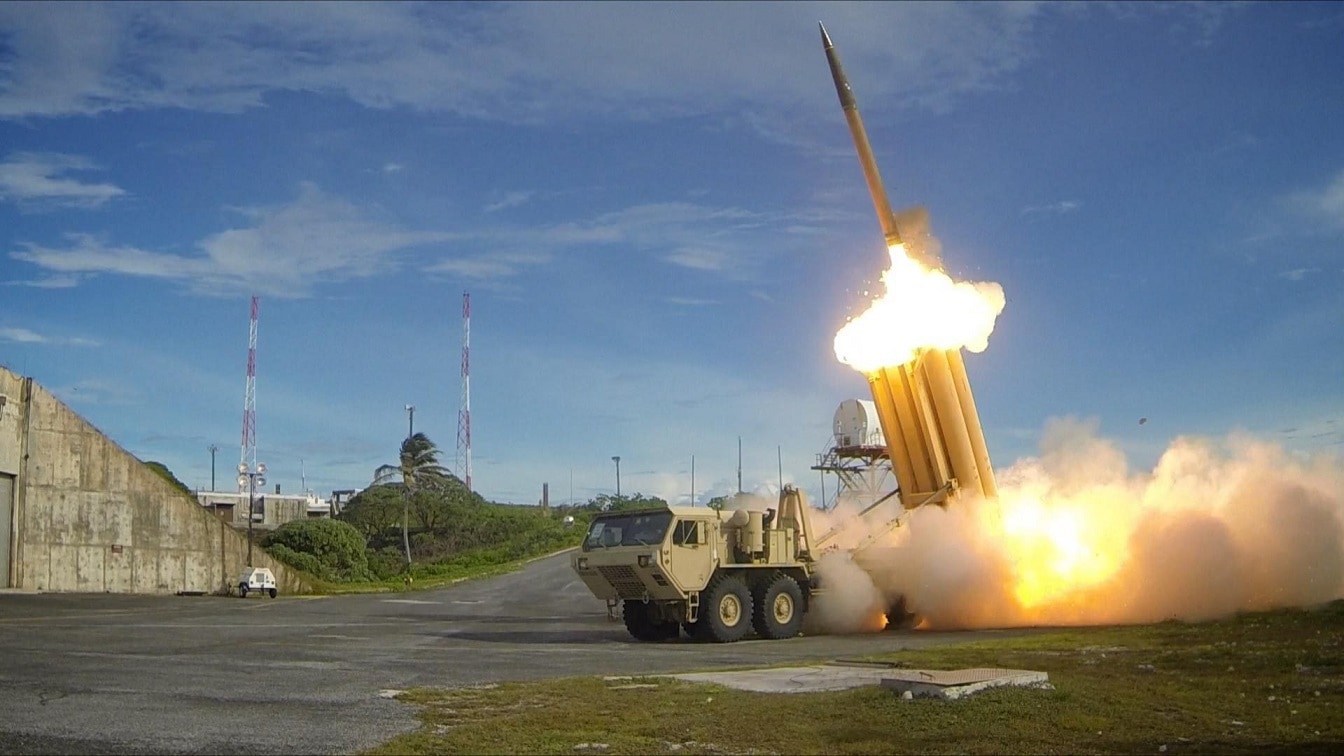
The first of two Terminal High Altitude Area Defense (THAAD) interceptors is launched during a successful intercept test. The test, conducted by Missile Defense Agency (MDA), Ballistic Missile Defense System (BMDS) Operational Test Agency, Joint Functional Component Command for Integrated Missile Defense, and U.S. Pacific Command, in conjunction with U.S. Army soldiers from the Alpha Battery, 2nd Air Defense Artillery Regiment, U.S. Navy sailors aboard the guided missile destroyer USS Decatur (DDG-73), and U.S. Air Force airmen from the 613th Air and Operations Center resulted in the intercept of one medium-range ballistic missile target by THAAD, and one medium-range ballistic missile target by Aegis Ballistic Missile Defense (BMD). The test, designated Flight Test Operational-01 (FTO-01), stressed the ability of the Aegis BMD and THAAD weapon systems to function in a layered defense architecture and defeat a raid of two near-simultaneous ballistic missile targets
THAAD from 1992 To 1999: The Program That Could Not Hit Anything
THAAD was born from the Gulf War, where Iraqi Scuds exposed the Patriot’s limits and convinced the Army it needed a layer that killed ballistic missiles higher, farther out, inside the atmosphere, or above it.
Development began in 1992 under Lockheed, built around an idea that sounded like science fiction: no warhead at all, just a kinetic kill vehicle striking the target directly, destroying it with the physics of the collision.
For most of a decade, the physics refused to cooperate. The Army’s first intercept attempt in December 1995 failed, and five successive test flights from 1996 through 1999 failed after it — six straight misses on national television, a record that made THAAD shorthand for everything wrong with missile defense. The program was redesigned, requirements for low-altitude intercepts were relaxed, and Lockheed went back to engineering school on its own airframe. Critics reasonably asked whether hit-to-kill was a physics problem money could not solve.
Through 2006, the program’s cumulative testing record stood at a dismal 2 successes in 16 attempts.
From 2-For-16 To 16-For-16: The Turnaround Nobody Expected
Then the record flipped, completely and permanently. From 2006 onward, THAAD has gone 16-for-16 in intercept testing — by the CRS accounting, 18 intercept tests between 2006 and 2019 produced 14 successes with the other four canceled before launch for target malfunctions, not interceptor failures. The redesigned missile, which could not hit anything, became the only system in the American inventory that had never missed. Lockheed signed its first production contract in early 2007 and delivered the first battery to Fort Bliss in 2008, years ahead of the 2012 target — a program once five years behind its promises, finishing ahead of them.
The mature system is formidable on paper and in practice: a battery of six launchers with eight interceptors each — 48 missiles ready — cued by the AN/TPY-2 radar that sees ballistic targets hundreds of miles out, killing in the terminal phase where decoys have burned away, and the target is committed.
The fine print carried warnings nobody read at the time. Production quality wobbled — a single faulty part halted interceptor deliveries for four months, the Army quietly replaced every interceptor stationed on Guam in 2015 for unexplained readiness reasons, and Lockheed delivered less than half its planned interceptors in a fiscal year. A system this complex was always going to be built slowly, in small numbers, at high cost. In peacetime, that read as a footnote.
Guam, South Korea, And The First Combat Kill
THAAD’s middle chapters were geopolitical. The 2013 deployment to Guam answered North Korea’s Musudan. The 2016–17 deployment to South Korea triggered the most consequential THAAD story of the decade — Beijing’s economic retaliation campaign against Seoul, a sustained punishment of a US ally for hosting a defensive radar, which previewed exactly how China views American missile defense at its doorstep.
The combat record opened in January 2022, when a UAE THAAD battery conducted the system’s first wartime intercept, killing a Houthi ballistic missile aimed at Abu Dhabi. And in October 2024, a THAAD battery deployed to Israel with roughly a hundred American soldiers — US troops standing inside another country’s air defense network for the first time, a tripwire that became a precedent.
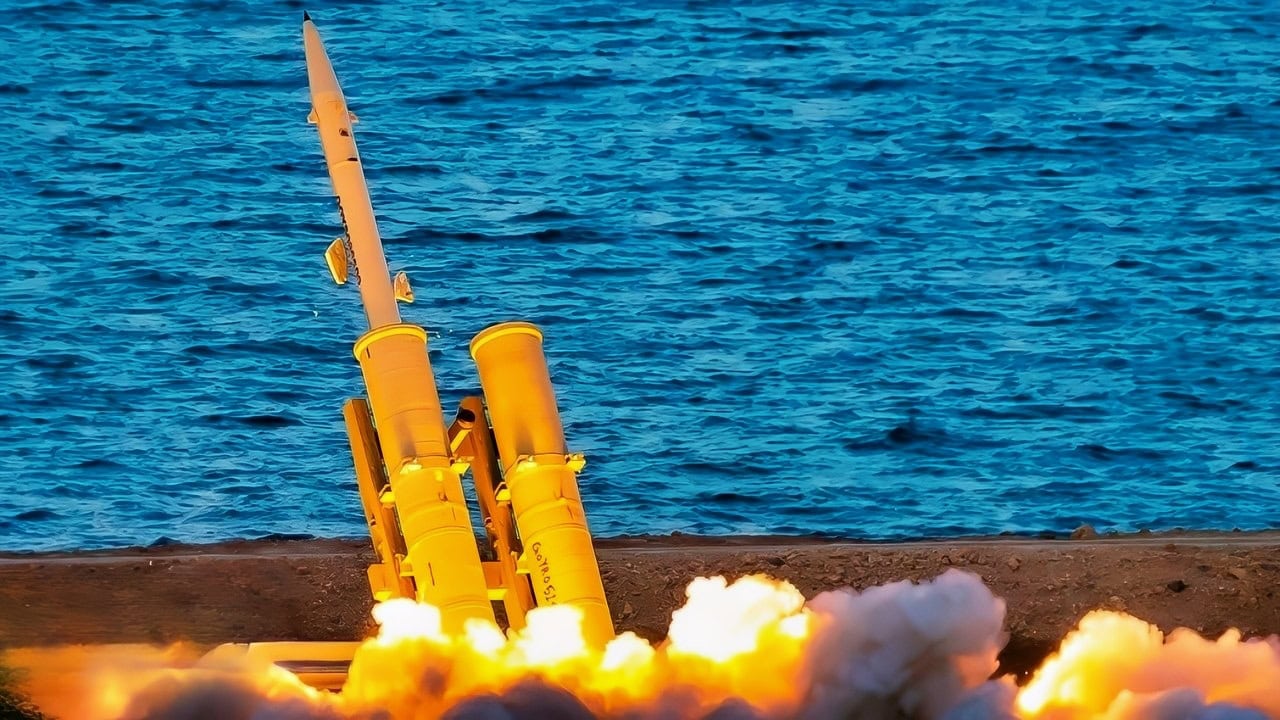
Iran Missiles. Image Credit: Creative Commons.
By then, the pattern was set: every Middle East crisis pulled THAAD deeper in, and the CRS notes that, with the Israel deployment, at least half of the Army’s eight batteries were committed to operations — a force structure built for deterrence that discovered it was sized wrong for actual war. The June 2025 twelve-day Israel-Iran conflict made the discovery expensive, with estimates of THAAD expenditure running from roughly 90 to 150 interceptors in less than two weeks, on the order of a quarter of everything in the inventory, burned defending one ally in one short war.
Operation Epic Fury: 90 Percent Intercept Rates And Wrecked Radars
The current war is THAAD’s vindication and its crisis in the same breath. The CRS assessment of the air war credits THAAD, operating alongside Patriot and other systems, with interception rates above 90 percent against Iranian missiles and drones, with UAE coverage specifically cited — performance against real salvos at scale that no missile defense system in history has matched.
The same assessment carries the costs: Iranian strikes have reportedly damaged or destroyed some of THAAD’s AN/TPY-2 radars, degrading the system’s eyes, and the interceptor usage rate has further depleted a stockpile the report describes as limited.
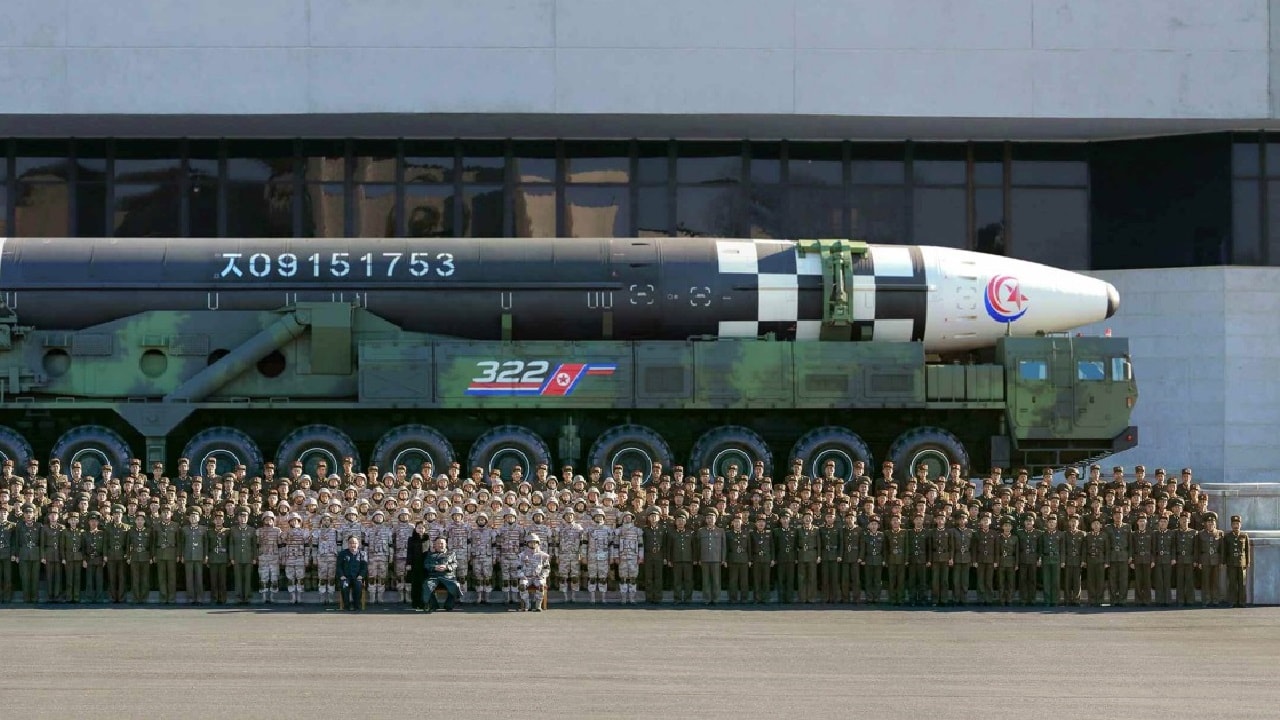
North Korea ICBM. Image Credit: KCNA.
Additional batteries deployed for the war, including elements pulled from Korea to the Gulf — the Pacific theater stripped to feed the Middle Eastern one, with North Korean missiles unchanged and Golden Dome’s homeland-defense plans expecting batteries the force lacks. Analysts estimate that roughly half the interceptor stockpile has been spent across the past year of fighting, and yesterday’s twelve-missile salvo drew the count down further, as tonight’s will.
Tom Karako of CSIS, whose team documented the depletion in December, compressed the whole arc into one observation: they used to say you couldn’t hit a bullet with a bullet, and now, in his words, “we’re doing it so frequently, we’re afraid we don’t have enough of them.”
The April 2027 Problem: Interceptors Bought In 2021 Still Have Not Arrived
The production side of the ledger is where the story stops being a triumph. The CSIS analysis identified a delivery gap that should be read twice to be believed: THAAD interceptors purchased in 2021 are not scheduled to arrive in the inventory until April 2027 — a projected delivery hole running from mid-2023 to that date, spanning the precise years in which the system fought the two largest missile defense battles ever.
Each interceptor costs $12 to $ 15 million and takes years to build; a full battery costs $2.73 billion, including 192 interceptors; and replenishment timelines for today’s expenditures stretch from three to eight years under production constraints the program has carried since the faulty-part era. The ramp now planned would lift annual output from under a hundred interceptors toward several hundred — the right answer, on the same multi-year timeline as every other ramp in the American munitions complex, purchased after the shooting started rather than before.
The institutional churn continues around the hardware: the Army is working with the Missile Defense Agency to take full control of THAAD by fiscal 2027, Congress is being asked whether eight batteries can cover Korea, the Gulf, Israel, Guam, and a homeland-defense initiative simultaneously, and the obvious answer has the National Guard standing up THAAD units under active discussion.
Every one of those debates concedes the same point — the system works, the force is too small, and the magazine behind it was never sized for the wars it is now fighting.
THAAD’s thirty-four years teach the lesson cleanly. The program survived six straight failures because the requirement was real, matured into the most reliable interceptor America owns, and proved itself over the Gulf this spring at intercept rates its 1990s critics would have called fantasy.
The failure that remains was never technical: the country built a perfect rifle and a small box of ammunition, planned production as if the system would deter wars rather than fight them, and is now buying back at crisis prices the depth it declined to buy cheaply across two decades of peace.
The interceptors purchased in 2021 are scheduled to arrive in April 2027, and until they do, the batteries on watch over the Gulf tonight defend it with the magazine they have.
About the Author: Harry J. Kazianis
Harry J. Kazianis (@Grecianformula) was the former Senior Director of National Security Affairs at the Center for the National Interest (CFTNI), a foreign policy think tank founded by Richard Nixon based in Washington, DC. Harry has over a decade of experience in think tanks and national security publishing. His ideas have been published in the NY Times, The Washington Post, The Wall Street Journal, CNN, and many other outlets worldwide. He has held positions at CSIS, the Heritage Foundation, the University of Nottingham, and several other institutions related to national security research and studies. He is the former Executive Editor of the National Interest and the Diplomat. He holds a Master’s degree focusing on international affairs from Harvard University.

