
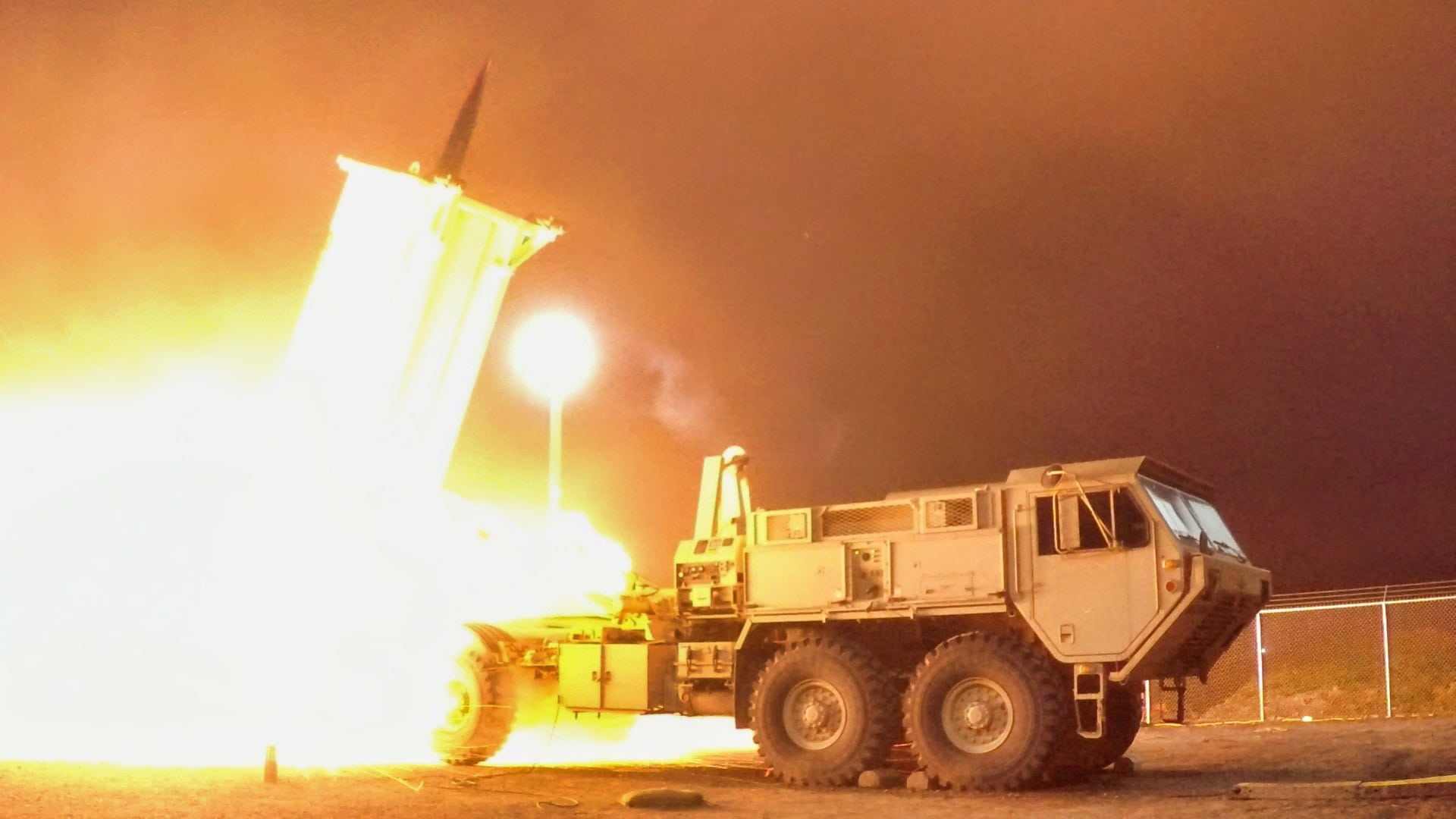
Summary and Key Points: THAAD is a mobile, land-based missile defense system built to intercept short- and medium-range ballistic missiles in their terminal phase, often at high altitude.
-It uses hit-to-kill interceptors guided by an infrared seeker and is anchored by the AN/TPY-2 X-band radar, which provides high-resolution tracking and discrimination.
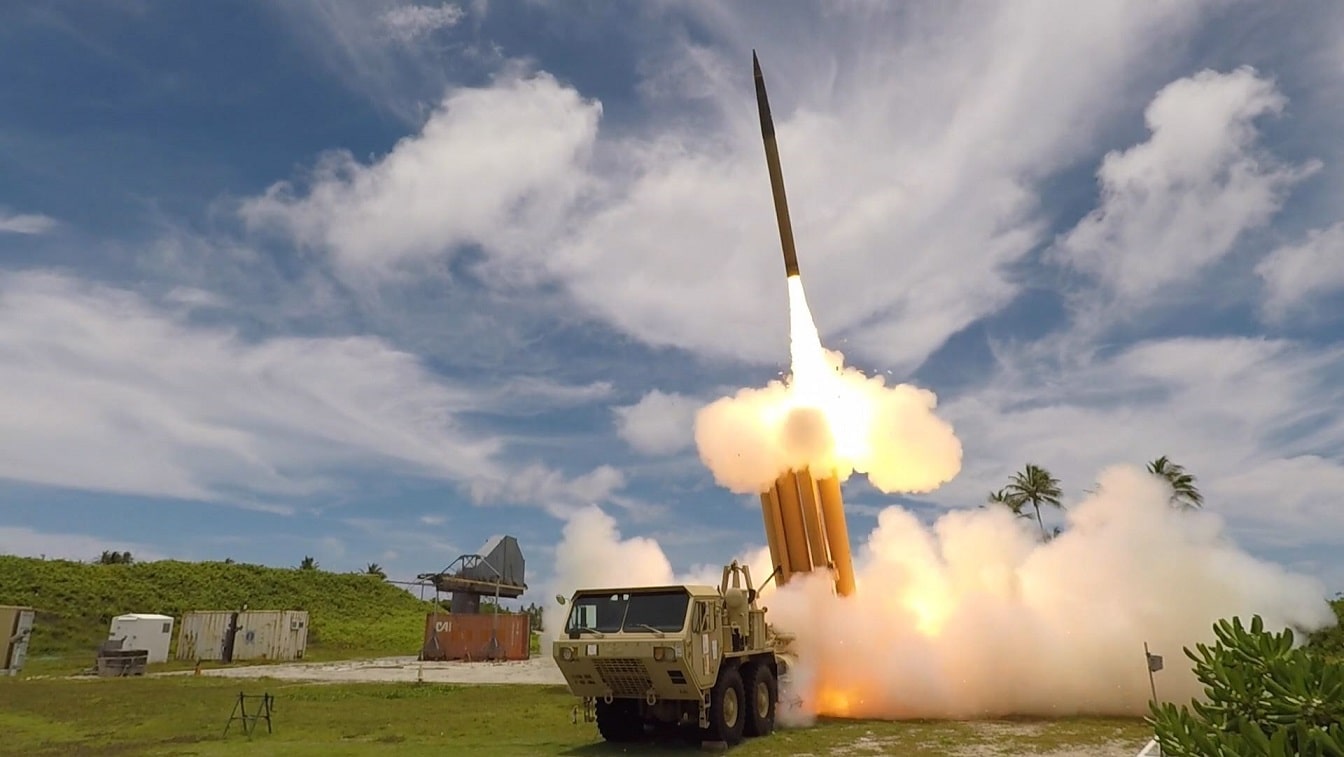
THAAD Missile Defense Battery Firing. Image Credit: Lockheed Martin.
-Integrated into wider networks, THAAD adds a crucial layer between Patriot and Aegis, defending cities, bases, and critical infrastructure while forcing adversaries to adjust tactics and expand salvos.
-The geopolitical friction comes from perception: although THAAD is defensive, its radar reach and layered integration can be viewed as destabilizing, complicating planning and enabling intelligence advantages. Its impact is as political and strategic as it is technical.
THAAD’s Hidden Power: It Doesn’t Make Attacks Impossible—It Makes Them Unreliable
The Terminal High Altitude Area Defense, or THAAD, is one of the most controversial U.S. missile-defense systems. The system is officially defensive, but in the eyes of some adversaries it is strategically destabilizing. What does THAAD do that generates so much geopolitical friction?
THAAD Origins
THAAD was developed in response to the proliferation of ballistic missiles. It incorporated lessons learned during the Gulf War and the response to the threat posed by Saddam Hussein’s Scud missiles. Designed to fill the gap between lower-tier systems such as the Patriot, and upper-tier systems such as Aegis, THAAD focuses on terminal-phase interception at higher altitudes.
In plain English, the THAAD is a mobile, land-based missile-defense system designed to intercept short-and medium-range ballistic missiles. The system uses hit-to-kill kinetic interceptors, operating without an explosive warhead. It was built to defend cities, military bases, and critical infrastructure.
Technical Architecture
THAAD features distinct components. The interceptor missile is a kinetic kill vehicle that closes on ballistic missiles at high speeds. Composed of a two-stage solid-fuel booster, the system’s onboard infrared seeker discriminates an incoming warhead from debris during terminal flight. The radar is an AN/TPY-2 X-band with long-range detection and tracking capabilities. The X-band provides extremely high-resolution tracking and can operate in forward-based or terminal-defense modes.
The radar supplies precise targeting data and discrimination cues. The launchers are truck-mounted and highly mobile, making the system more survivable and able to respond to threats. The fire control and communications (TFCC) are integrated within a broader missile-defense network to improve full situational awareness.
Specifically, TFCC fuses radar data with external sensors, assigns interceptors, manages engagement sequencing, and links THAAD into a wider missile-defense architecture.
System integration enables the system to cue and be cued by other missile-defense layers; effectiveness depends on sensor fusion, timing, and shot doctrine rather than on a single intercept.
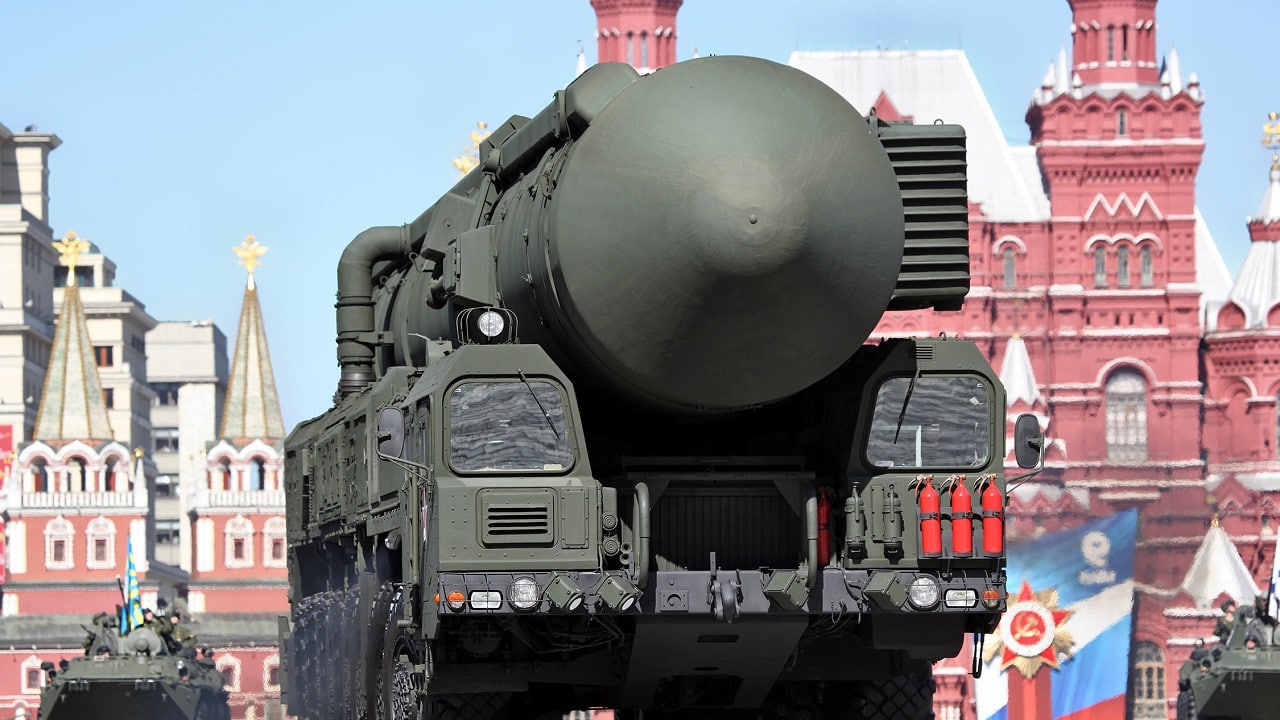
Russian Mobile ICBMs. Image Credit: Creative Commons.
How THAAD Works
First, THAAD detects an incoming ballistic missile and tracks its trajectory during the terminal phase. The incoming missile is then intercepted at high altitude—often outside the Earth’s atmosphere.
Typically, the system allows a second chance if lower-tier defenses fail.
But the system is not designed to intercept intercontinental ballistic missiles in midcourse, or cruise missiles, or hypersonic glide vehicles. THAAD is not a national missile shield. It is useful for theater defense, not strategic defense.
THAAD’s Tactical and Strategic Value
THAAD protects high-value targets during regional conflicts, adding a layered defense alongside Patriot and Aegis. The presence of THAAD forces adversaries to increase missile salvos, adjust trajectories, and accept uncertainty.
Strategically, THAAD complicates adversary planning, raising the cost of missile attacks. This strengthens allied confidence in U.S. security guarantees.
Geopolitical Controversy
Deployments have triggered backlash, especially in East Asia. Critics argue that THAAD undermines strategic stability and enables intelligence collection.
In East Asia, the system was deployed to counter North Korean missile threats and sparked a major diplomatic fallout. In the Middle East, THAAD deployments are seen as protection against regional missile arsenals, with partners showing increasing interest.
Limitations and Critiques
The system does have shortcomings. The units are expensive per interceptor, and adversaries can saturate THAAD by launching large missile salvos, reducing its effectiveness. The effectiveness of the system depends on cueing, integration, and layered defense. THAAD is not a silver bullet against missile threats.
Still, THAAD is likely to remain relevant as part of a layered defense. But the system will need upgrades to address more maneuverable threats, especially as hypersonic systems come online. Increasingly, THAAD will be paired with sensors and space-based cueing.
THAAD is less about offering a perfect defense than it is about shaping behavior—forcing adversaries to adjust. THAAD does not make missile attacks impossible; it simply makes them less reliable. The real impact of the system is often as much political and strategic as technical.
Assertive Defenses
THAAD is a defensive system with offensive strategic consequences. It reassures allies, complicates adversary plans, and reshapes regional security dynamics. In missile defense, uncertainty is often the point—and THAAD delivers reliable uncertainty.
About the Author: Harrison Kass
Harrison Kass is an attorney and journalist covering national security, technology, and politics. Previously, he was a political staffer and candidate, and a US Air Force pilot selectee. He holds a JD from the University of Oregon and a master’s in global journalism and international relations from NYU.