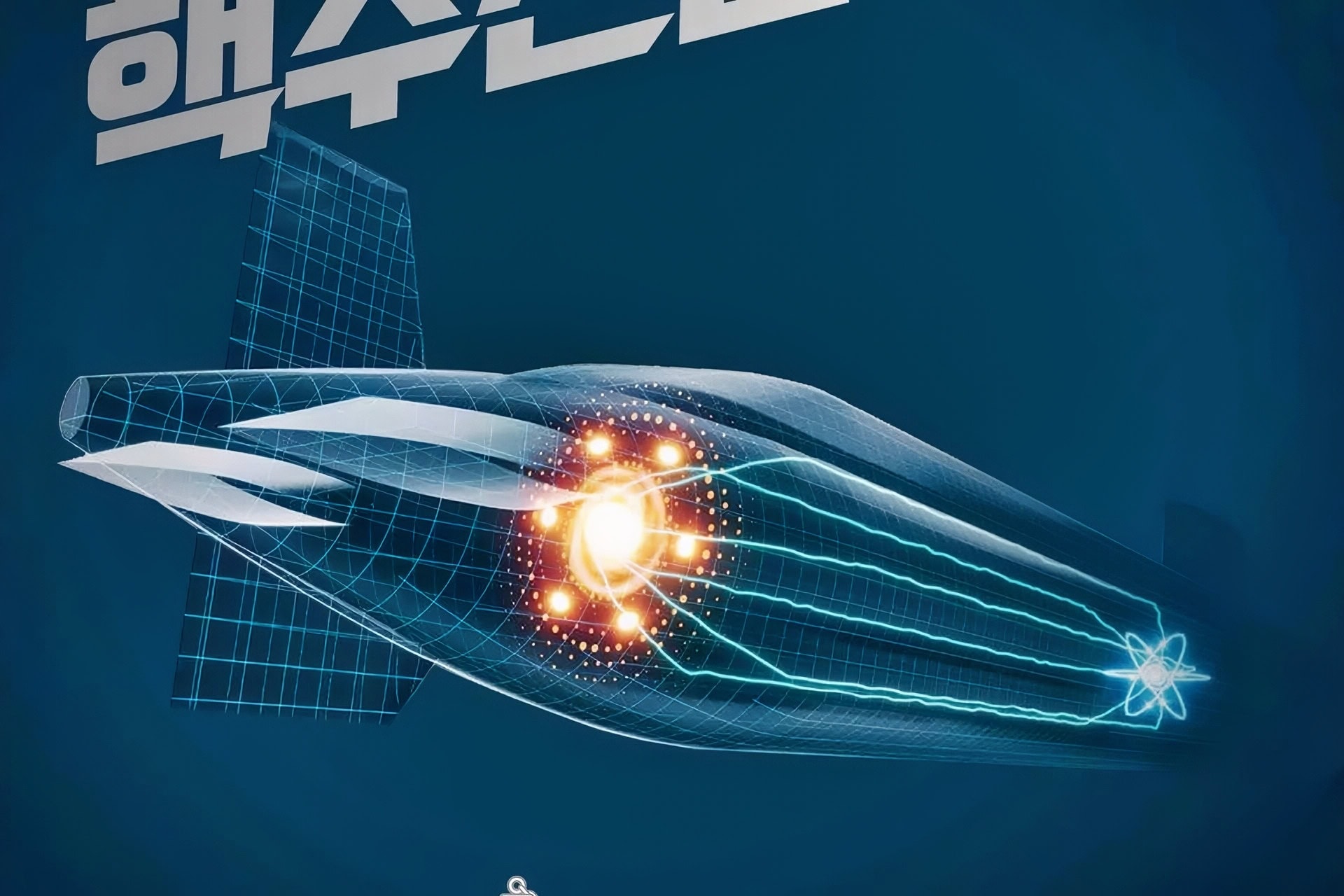
South Korea wants nuclear-powered submarines. And they don’t want to buy them only from the Americans or any other partner. Seoul wants to build its own systems. It couldn’t be a more pressing time for South Korea, too.
Especially as the Russians ply the North Koreans with increasingly advanced military technology–including possibly nuclear submarine technology–in exchange for Pyongyang’s continued support of Russia’s war effort in Ukraine.
The Chang Bogo N Project
South Korea calls its new nuclear submarine program the Chang Bogo N Project. The plan is to launch the first submarine in this new class of nuclear-powered vessels in the mid-2030s.
South Korea’s government has allocated $74.4 million (or 100 billion won) for the early research and design phase of the submarine.
Seoul has also notified the International Atomic Energy Agency (IAEA) that it needs to use nuclear material for marine propulsion, signaling South Korea’s commitment to this course of action.
The South Korean government also issued what appears to be a draft nuclear safety law last month to better regulate reactors, radioactive waste, and personnel.
Seoul has apparently also received Washington’s approval for nuclear propulsion technology.
South Korea will build the Chang Bogo N submarine domestically and also build its small nuclear reactors in South Korea.
They will be powered by low-enriched uranium to ensure that there is no confusion over the South Korean need for nuclear-powered submarines with a potential nuclear weapons capability (highly enriched uranium is required for that).
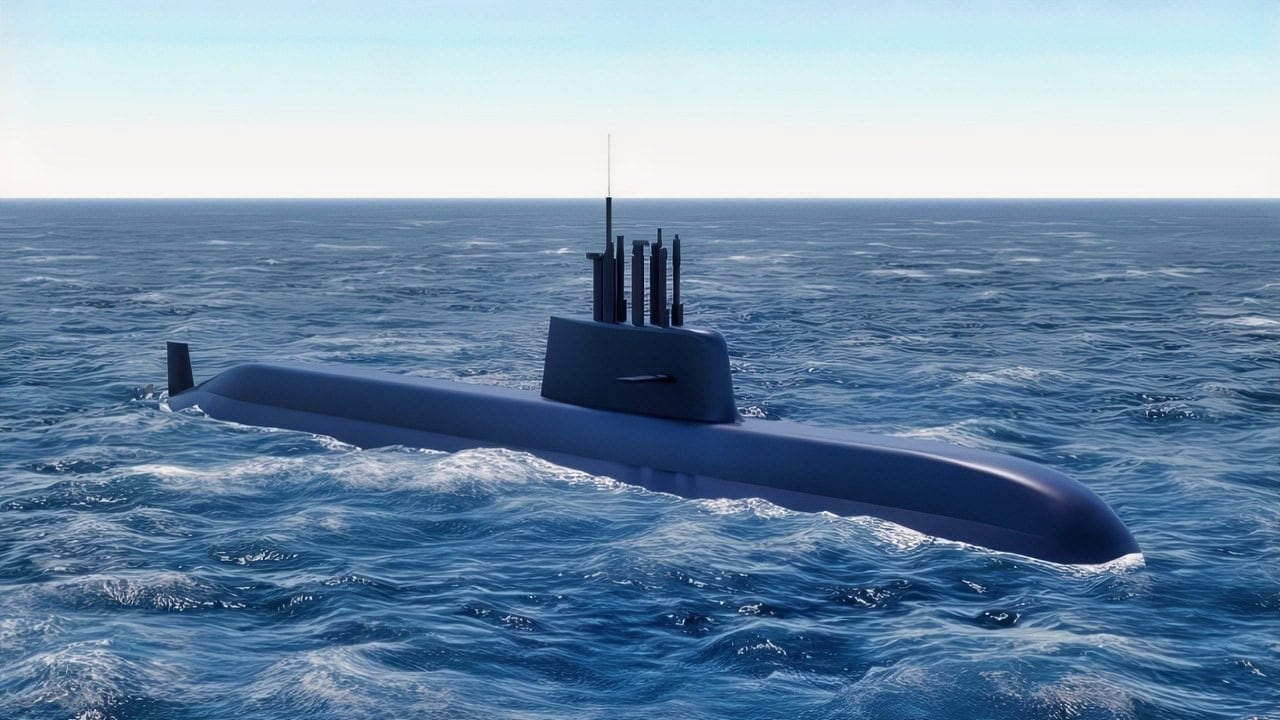
KSS-III. Image Credit: Creative Commons.
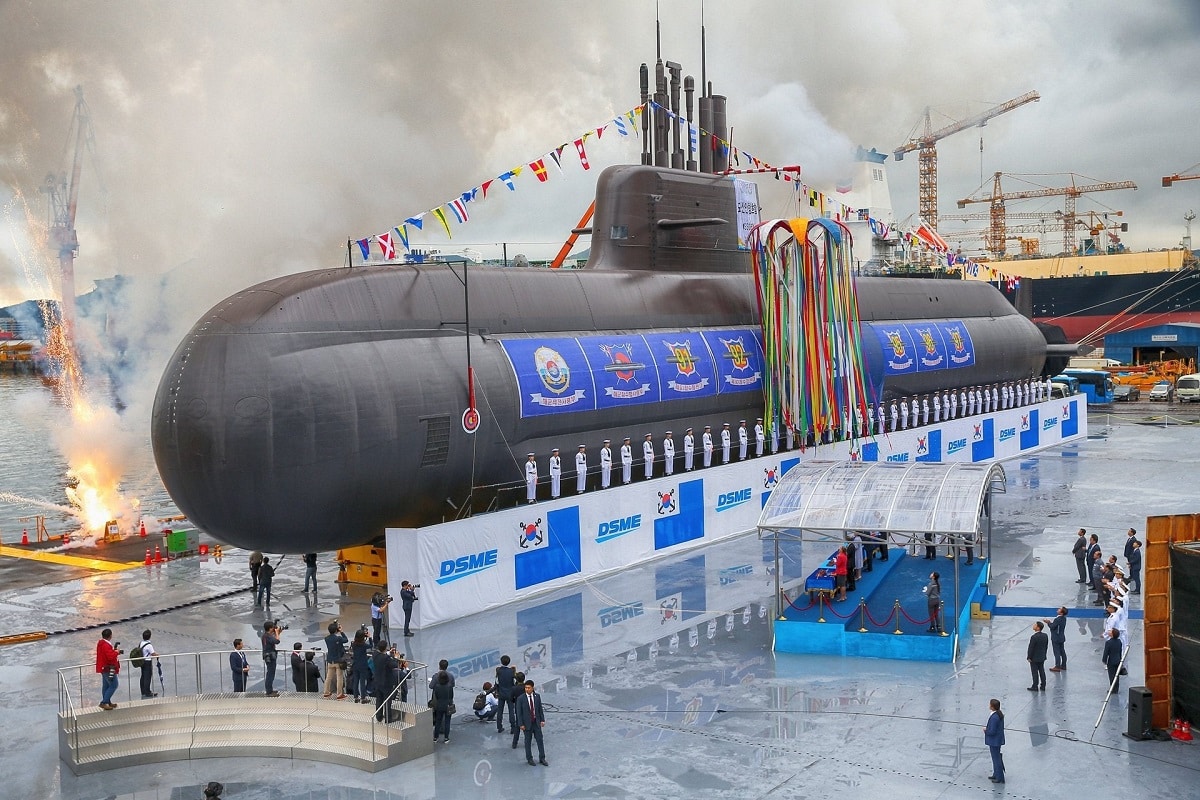
South Korea Submarine-Launched Ballistic Missile. Image: DSME Handout.
This is part of South Korea’s push for greater indigenization.
Indigenization of the South Korean Submarine Force
You see, Seoul fears that its supply chains for foreign-made weapons and platforms could become disrupted either because of a geopolitical crisis likely involving the North Koreans or because of politics in the countries from which the critical supply chains emanate.
By developing indigenous systems and capabilities, South Korea is ensuring it has top-notch weapons and platforms that are less easily disrupted by geopolitical disputes or politics.
South Korean designers intend for the Chang Bogo N submarine to displace around 8,000 tons.
The new submarines will carry conventional precision-strike missiles and torpedoes.
There are no indications that the new nuclear-powered submarines will carry nuclear weapons of any kind.
Indeed, the primary mission that the South Korean navy envisions for its new nuclear-powered submarines will be to monitor potential North Korean submarine and missile threats, while protecting trade sea lanes throughout the Indo-Pacific.
South Korea’s Sejong Institute believes combat conditions will complicate structural stability and other aspects of the Chang Bogo N submarine’s mobile marine reactor.
These complications cannot be fully anticipated in computer modeling and must, therefore, be experienced only under real-world conditions.
Learning New Skills
South Korea also lacks hands-on operational experience with such marine reactors.
One of the biggest reasons to build a nuclear-powered submarine is its enhanced underwater stealth.
Coolant pumps and turbines in a marine reactor are noisier than the silent, battery-powered diesel-electric submarines that were once the norm for navies before the advent of nuclear power.
South Korean engineers building the country’s first indigenous nuclear-powered submarine will need to develop advanced acoustic damping, shock mounts, and natural-circulation cooling loops to reduce the ability of skilled enemy sonar operators to detect the submarine on approach.
All these problems must be worked out while building an LEU-powered nuclear reactor.
Of course, the French Navy uses a similar nuclear reactor for their nuclear-powered submarine fleet.
The main drawback of LEU fuel is that it burns out faster than HEU.
US submarines powered by HEU reactors do not require refueling during their 30-year lifespan, whereas French submarines must undergo a mandatory overhaul every 10 years.
Competing More Thoroughly with North Korea
The South Korean navy is clearly concerned about North Korea’s growing naval capabilities.
Pyongyang’s relationship with Moscow has only strengthened the growth of North Korea’s military capabilities at a time when South Korea was not developing its own capabilities to counter North Korea.
Now, Seoul is engaged in a feverish attempt to counter what it sees as Pyongyang’s growing capabilities. The Chang Bogo N project is Seoul’s attempt to correct a growing imbalance at sea with North Korea.
About the Author: Brandon J. Weichert
Brandon J. Weichert is the Senior National Security Editor at 19FortyFive.com. He also manages The Weichert Brief on Substack. Weichert also hosts “National Security Talk” on Rumble. He is the author of four bestselling national security books, the most recent of which is A Disaster of Our Own Making: How the West Lost Ukraine (Encounter Books). Follow him via Twitter/X @WeTheBrandon.