
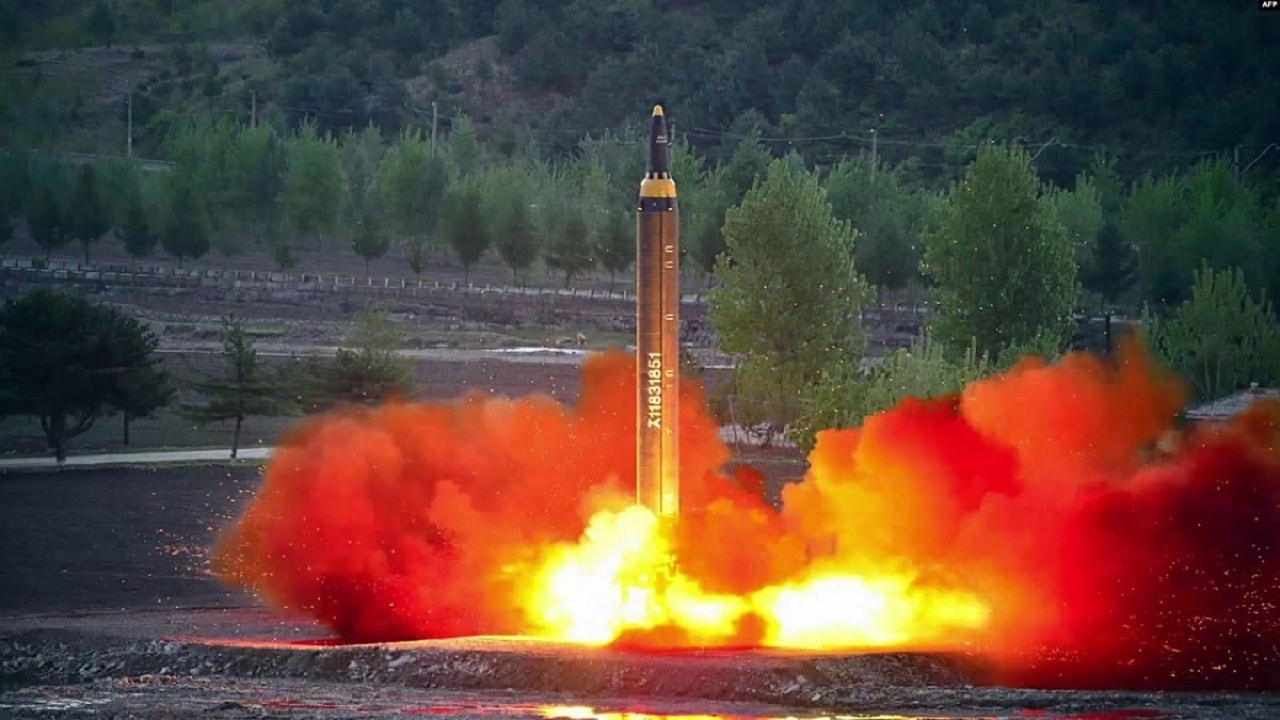
Iran and North Korea’s missile relationship is nothing new.
Rather, the cooperation stretches back to the Iran-Iraq War in the 1980s and has played a significant role in the development of Iran’s ballistic missile arsenal.
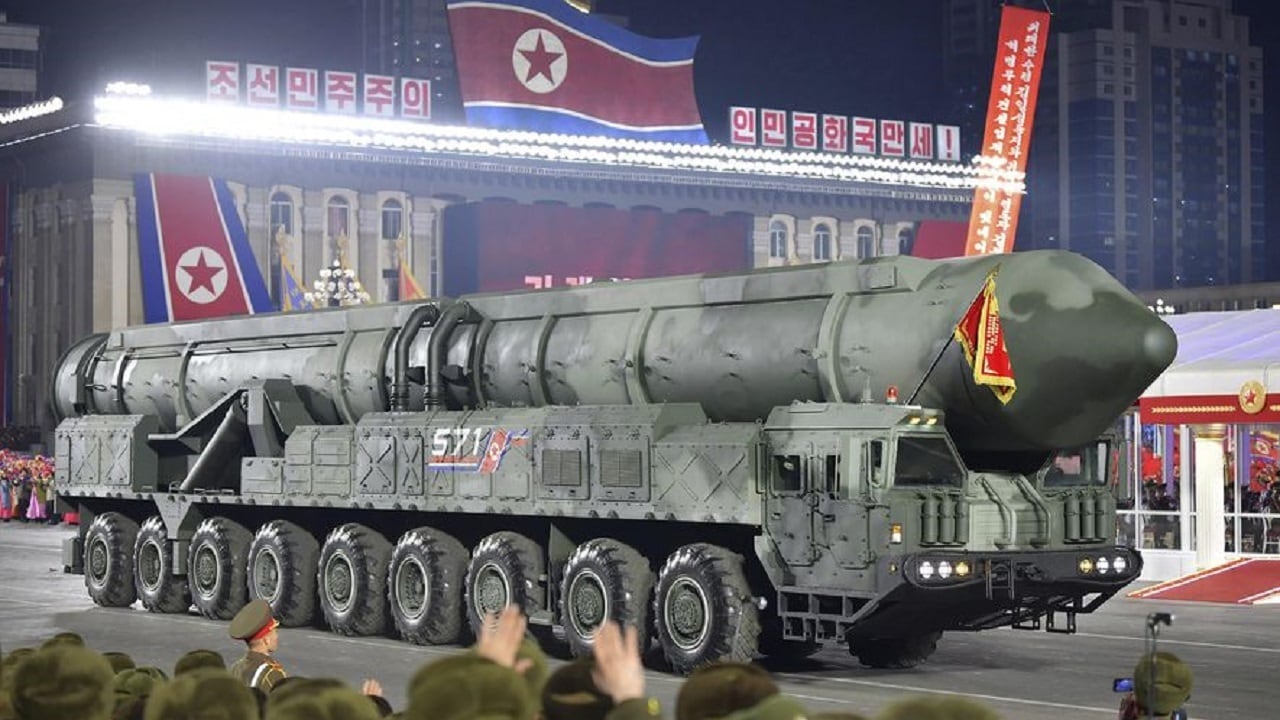
Image Credit: KCNA/North Korean Government.

North Korea’s New ICBM
The relationship initially began as a straightforward transaction, with North Korea trading its missiles and expertise for Iran’s money to satisfy Iran’s need for an urgent wartime long-range strike capability.
Over time, however, Iran has developed its own domestic missile industry, which has changed the relationship with North Korea from a simple buyer-and-seller arrangement to a more cooperative one, including technology exchange, engineering assistance, and possibly complementary research and development.
The Scud Connection
During the 1980s Iran-Iraq War, Tehran desperately needed a way to retaliate against Iraqi ballistic missile attacks during the so-called War of the Cities.
During that time, North Korea became an important source of Soviet Scud-B missiles and subsequently Scud-C technology.
These weapons helped to establish the tactical foundation for what would become Iran’s indigenous ballistic missile program, which has yielded the Shahab-1 and Shahab-2.
The Shahab-1 is closely related to the Scud-B/Hwasong-5, while the Shahab-2 is closely related to the longer-range Scud-C/Hwasong-6.
The development of Iran’s domestic program was more consequential than the initial transactions, as it led to a more sustainable ballistic missile manufacturing base.
The Shahab-3 Connection
The clearest symbol of Iran–North Korea missile cooperation is the Shahab-3, which is derived from North Korea’s Nodong medium-range ballistic missile.
Nodong represented a substantial step beyond the Scud family, with a larger airframe, more powerful propulsion, substantially greater range, and the ability to carry a heavy warhead.
The Shahab-3 ultimately gave Iran the ability to threaten targets roughly 1,000 kilometers away (depending on configuration and payload), greatly enhancing Iran’s sphere of influence.
Iran proceeded to develop extensively modified descendants, meaning that Tehran did not simply remain dependent upon imported North Korean missiles.
That’s an important point: Iran did not complacently just import North Korean technology—instead, North Korean technology helped bootstrap an Iranian missile ecosystem that branched off into its own separate thing.
The Khorramshahr Connection
Later Iran–North Korea missile cooperation becomes a little bit harder to document conclusively. Iran’s Khorramshahr missile has frequently been associated with North Korea’s Musudan/Hwasong-10 family.
The two missiles share similarities in propulsion, dimensions, and configuration—which has fueled speculation about technology transfer.
But that does not mean every Iranian missile is a North Korean copy.
Iran has spent decades developing domestic propulsion, guidance, solid-fuel tech, and manufacturing capacity.
It’s certainly possible that North Korea provided important technological stepping stones, but Iran’s current missiles are in large part a result of domestic efforts.
Ongoing Symbiosis
Iran still needs North Korea, however, despite Iran now outpacing North Korea in certain respects, i.e., solid-fueled missile development.
But Pyongyang has simultaneously made major advances of its own in terms of maneuvering ballistic missiles, solid-fuel propulsion, intermediate- and intercontinental-range missiles, reentry vehicles, and large missile transporter-launchers.
And perhaps most importantly, North Korean weapons have now accumulated real combat experience through Russia’s war in Ukraine.
That creates a potentially valuable feedback loop: North Korean missile performance against modern Western-supplied defenses can reveal weaknesses involving accuracy, guidance, reliability, and survivability.
Iran could certainly be interested in lessons gained from combat experience.
The relationship cuts both ways, of course; North Korea also wants things from Iran.
Specifically, Iran has accumulated enormous experience, especially with one-way attack drones, inexpensive precision weapons, massed missile/drone attacks, proxy-force weapons proliferation—and operating under intensive sanctions.
The Iranian Shahed-series drones have gained extensive combat exposure through Russian deployments in Ukraine, so Pyongyang could benefit from Iranian knowledge about fielding inexpensive UAVs (alongside ballistic and cruise missiles) to saturate air-defense systems.
So the relationship has likely grown more symbiotic since the 1980s, when it was mostly about dollars changing hands.
The relationship between Iran and North Korea has evolved significantly since the Iran-Iraq War.
Iran is no longer just a customer; both countries now possess mature weapons industries with different areas of expertise and decades of experience surviving sanctions.
This is potentially a concern for Western nations, as Iranian–North Korean cooperation could shorten development cycles as they learn from one another to field increasingly sophisticated missile systems.
About the Author: Harrison Kass
Harrison Kass is a writer and attorney focused on national security, technology, and political culture. His work has appeared in Tablet, City Journal, The Hill, The Spectator, and The Cipher Brief. He holds a JD from the University of Oregon and a master’s in Global & Joint Program Studies from NYU. More at harrisonkass.com.