
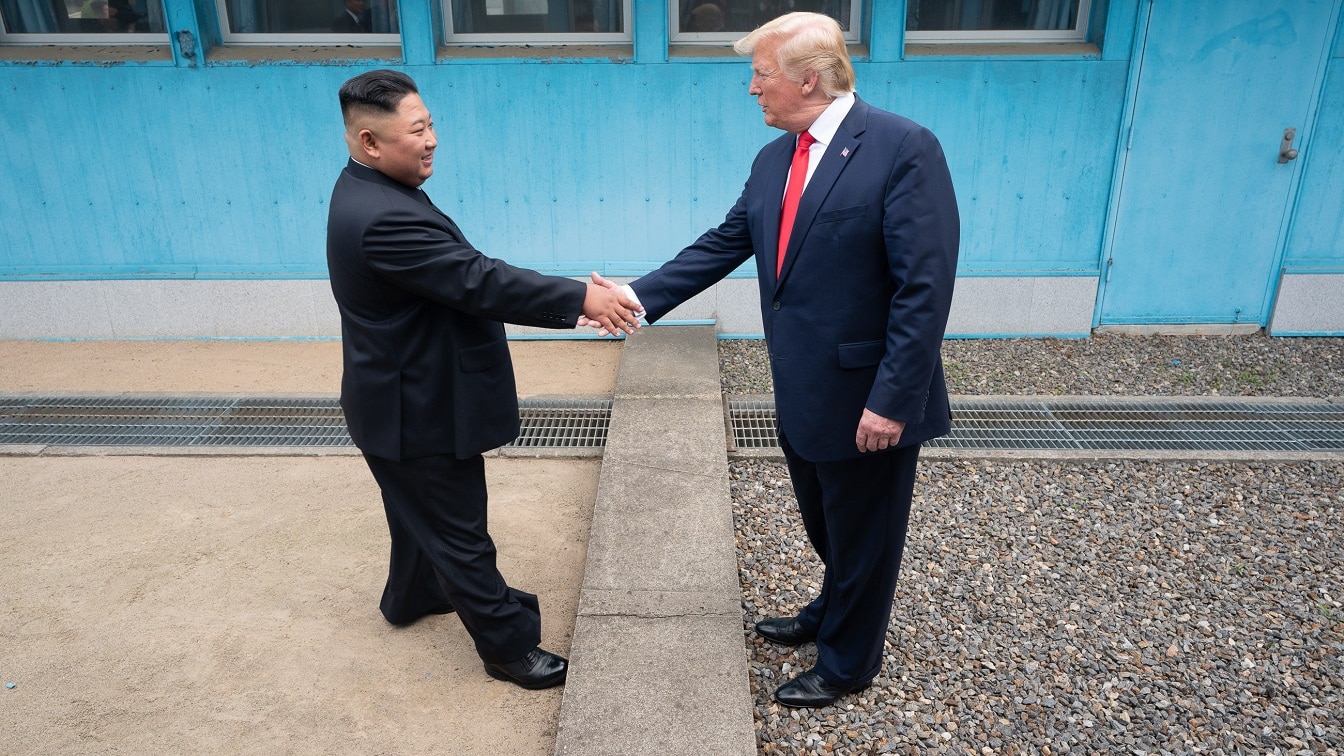
American President Donald Trump is considering meeting North Korean dictator Kim Jong Un again. The two first met in 2018-19. They convened in Singapore, Vietnam, and the Korean Peninsula’s demilitarized zone. Hopes were high then that Trump might bring home one of his much-touted deals.
If there is any problem in the world where Trump’s much-hyped skills as a master negotiator could turn around a difficult problem, it is North Korea.
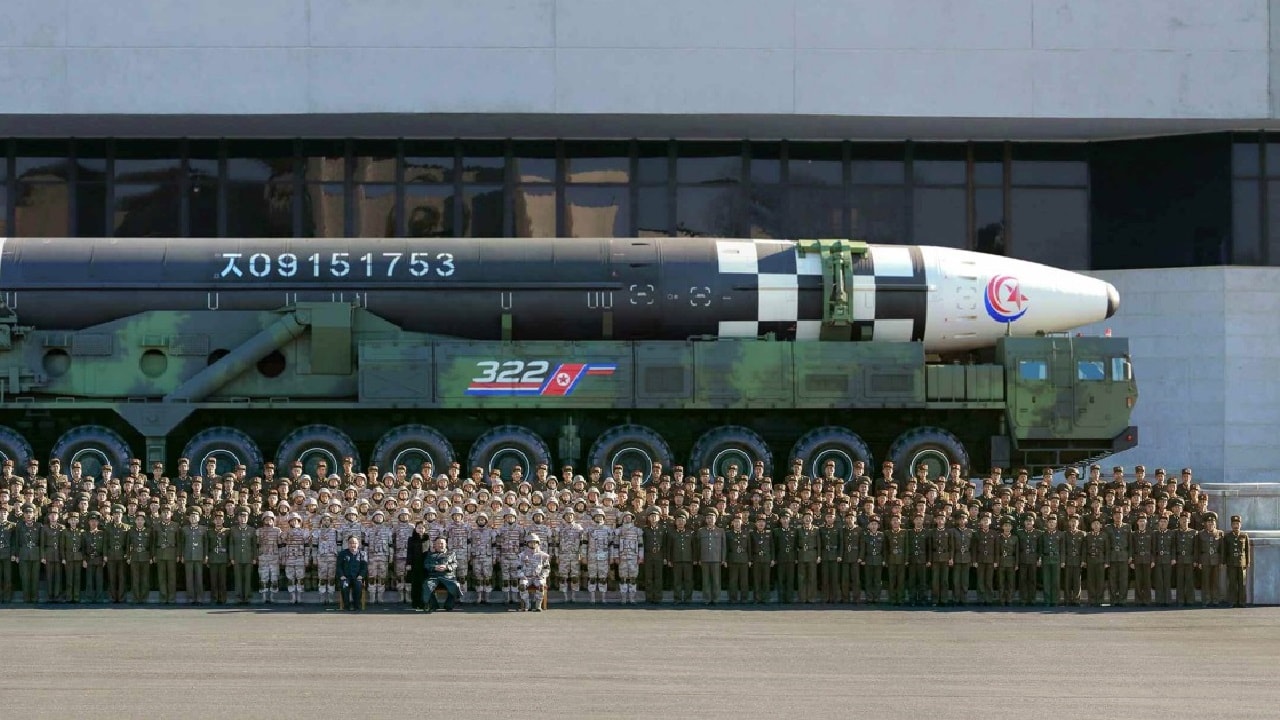
North Korea ICBM. Image Credit: KCNA.
North Korea has long been a thorny problem for its region and the world at large.
Its elite gleefully violates global norms.
It is comfortable using violence and extreme nuclear threats against its opponents. Decades of negotiation with it have failed.
Perhaps Trump would finally break through.
Alas, he did not. Like so many of his predecessors, Trump could not lock Kim Jong Un into binding language. By 2020, the status quo had snapped back.
How to Make This Time Different
North Korea seems indifferent to Trump’s current solicitations.
Its alignment with Russia in the war in Ukraine has been a boon.
Russia is a North Korean patron less picky than China and more prone to give North Korea what it wants because of its stalemated war.
So if Trump is going to get a deal with Kim this time – something real rather than the made-for-TV spectacle of the previous summits – he must bring something meaningful to entice Kim.
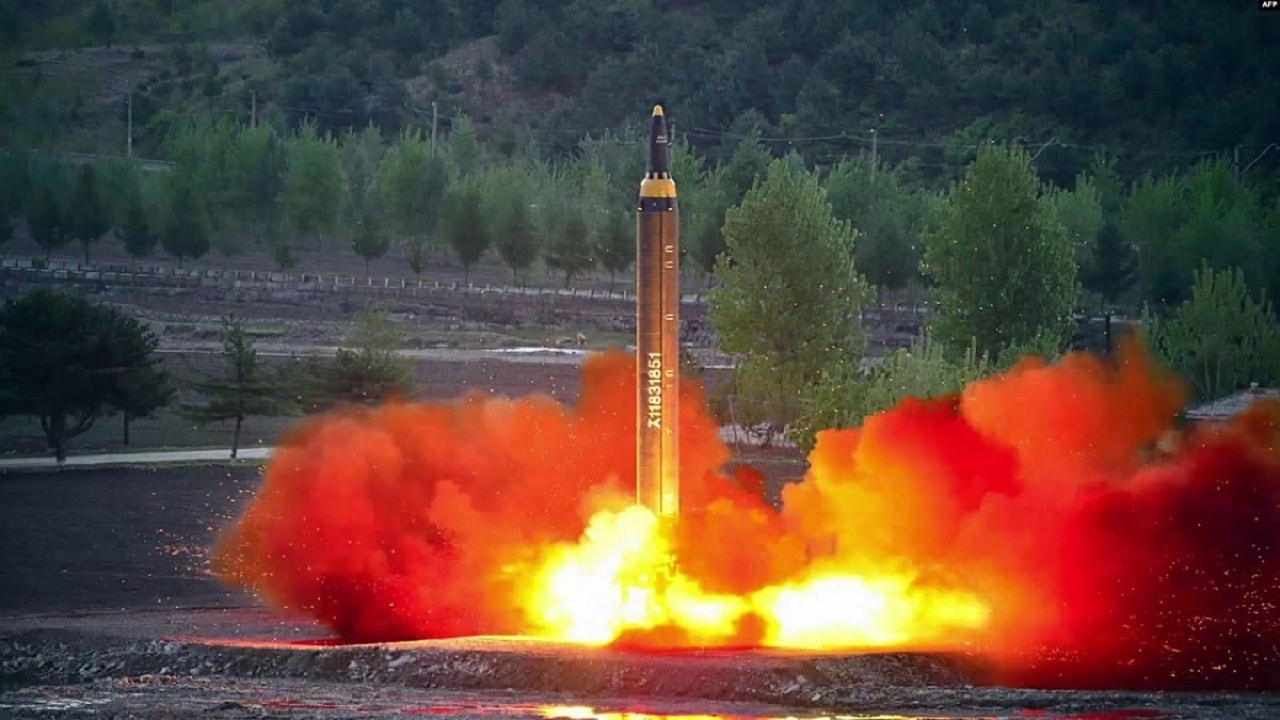
Hwasong-12 IRBM. Image Credit: North Korea State Media.
This problem – what to concede to North Korea in exchange for its concessions – has always been at the core of negotiations with North Korea.
The allied democracies involved – the US, South Korea, and Japan – have never been willing to cough up the major concessions North Korea wants.
Worse, the democracies frequently demand enormous concessions from the North. Effectively, the allies demand something for nothing.
In 2018-19, for example, Trump sought the complete, verifiable, irreversible disarmament of North Korea. This is, of course, a noble goal.
South Korea is non-nuclear; North Korea signed a deal with South Korea in 1992 to mutually remain non-nuclear, and North Korea immediately cheated; and North Korea is the most terrifying, poorly-governed country with nuclear weapons.
Its denuclearization would massively improve regional security.
But as many analysts pointed out at the time, North Korea was extremely unlikely to just hand over its nukes.
It would – quite obviously- demand a lot for them. Trump, surprisingly for a deal-maker, offered almost nothing.
He made some vague comments about development aid and condos on North Korean beaches.
By then, the North Koreans knew Trump was not serious about a deal; he just wanted one-way concessions.
Unsurprisingly, North Korea walked away.
Build a Coalition in Support of Concessions to North Korea
The way to avoid this in a new round of summitry is to compile a list of concessions that the allies – the US, South Korea, and Japan – can tolerate surrendering in exchange for serious North Korean counter-concessions.
This will be very painful, because the North Koreans are likely to ask for serious give-aways, such as a reduction of the US military presence in the region or enormous amounts of money.
If Trump simply throws out concessions on the spot at the summits, he will face massive blowback at home and from US allies.
This is what happened in 2018-19.
A perception grew that Trump was so desperate for a deal that he was willing to surrender a lot for a little.
Trump himself even complained that bad media coverage and bureaucratic resistance in the US government hampered his ability to strike a deal.
This time, Trump should give a major speech in which he discusses the difficult choices necessary to secure a serious deal with Pyongyang, and then outline some concessions that Congress and US allies could begin debating.
These will be unwanted and controversial, but without something meaningful for North Korea, no serious deal is possible.
For example, the US military’s on-the-ground presence could be offered as a concession. It is fairly small now, and its military value is limited.
Trump himself does not care for US troops’ commitments to US allies. And he could probably get North Korea to give up something genuine – perhaps some of its warheads – for the exchange.
A second example might be allowing North Korea into the World Bank and the International Monetary Fund with the unstated expectation that it will not repay the loans.
Many analysts committed to the alliance would likely balk at these options.
But this is the scale of concessions the democracies must consider.
Without them, summitry with Kim is pointless.
If we are unwilling to think large like this, then no breakthrough is possible, and we should just accept indefinite nuclear stalemate with North Korea.
Author: Dr. Robert Kelly, Pusan National University
Dr. Robert E. Kelly is a professor of international relations in the Department of Political Science and Diplomacy at Pusan National University in South Korea. His research interests focus on Security in Northeast Asia, U.S. foreign policy, and international financial institutions. He has written for outlets including Foreign Affairs, the European Journal of International Relations, and The Economist, and has appeared on television news services such as the BBC and CCTV. His personal website/blog is here; his Twitter page is here.