
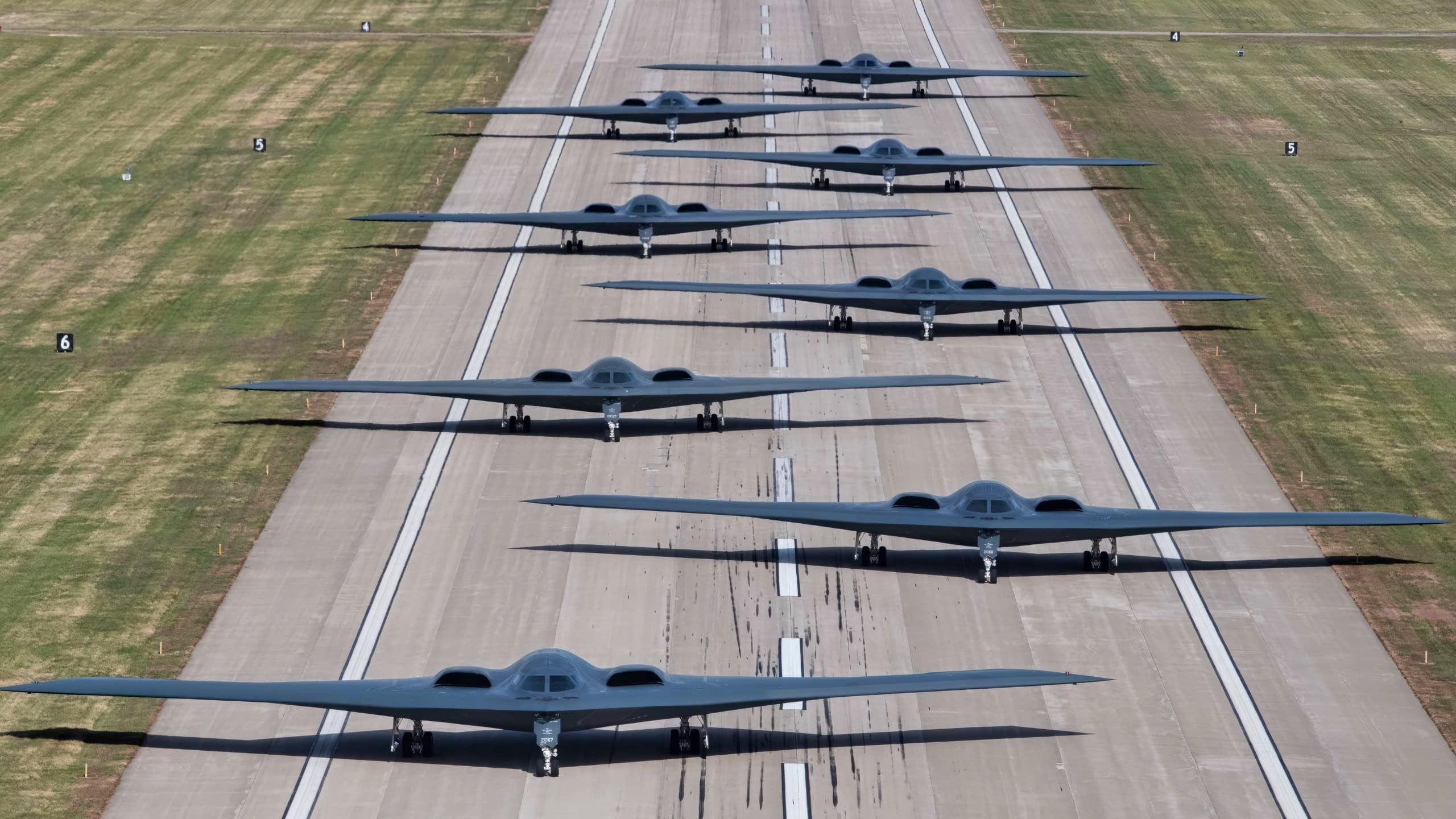
Donald Trump wants another summit with Kim Jong-un, and a November trip to Asia could be the occasion. Assume he gets one. The question worth asking isn’t whether a summit is possible, since it plainly is.
It’s what Washington does with it. Complete denuclearization is no longer a realistic near-term goal, and pretending otherwise wastes whatever leverage the meeting produces.
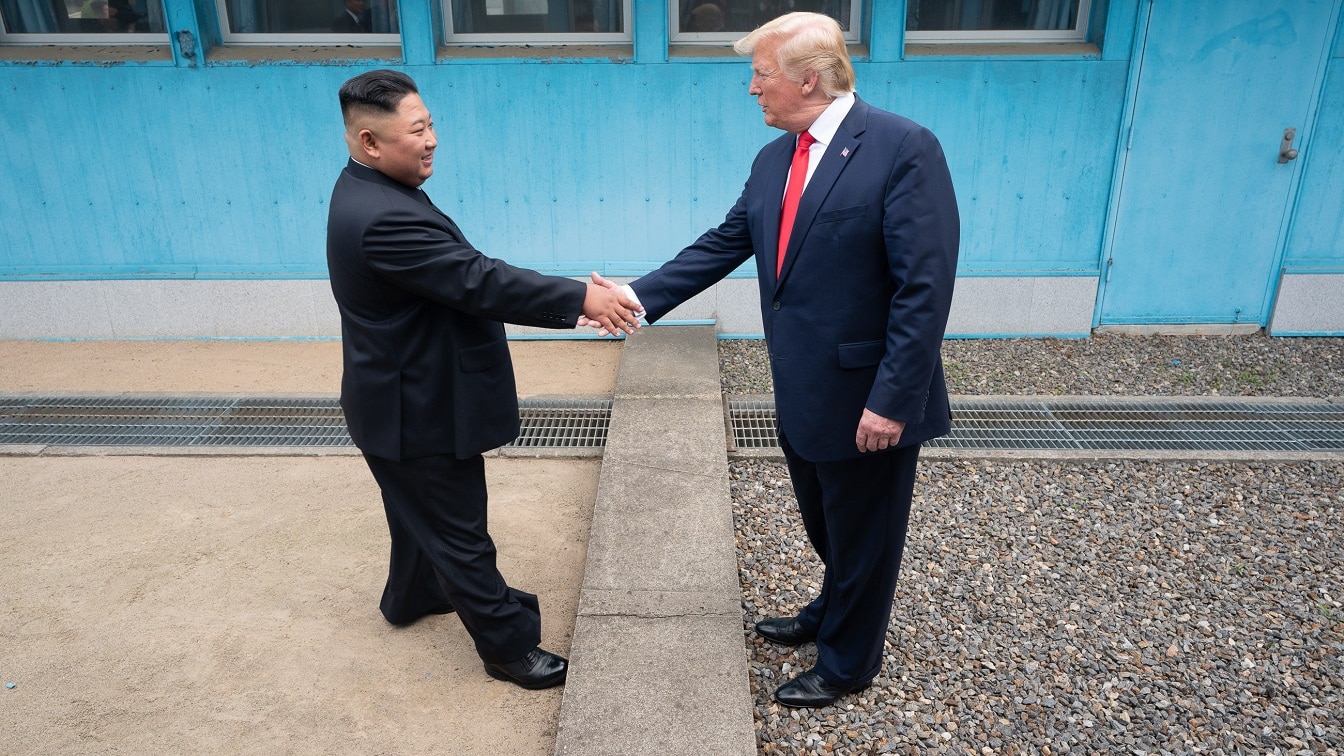
President Donald J. Trump shakes hands with Chairman of the Workers’ Party of Korea Kim Jong Un Sunday, June 30, 2019, as the two leaders meet at the Korean Demilitarized Zone. (Official White House Photo by Shealah Craighead)
But the alternative to demanding everything isn’t settling for a working relationship and calling it a policy.
It’s deciding, deliberately, which North Korean capabilities the United States can live with and which ones it has to constrain, and figuring out what it is prepared to give up to get there.
That concession is easier to make than the one that follows it. Kim has spent years building an arsenal his regime treats as permanent, and American intelligence assessments agree.
An agreement centered on the threat to American cities could leave South Korea and Japan more exposed while ignoring a Russia relationship that is making North Korean forces more capable.
That would not contain the North Korean problem.
It would move part of the risk elsewhere and let another part keep growing.
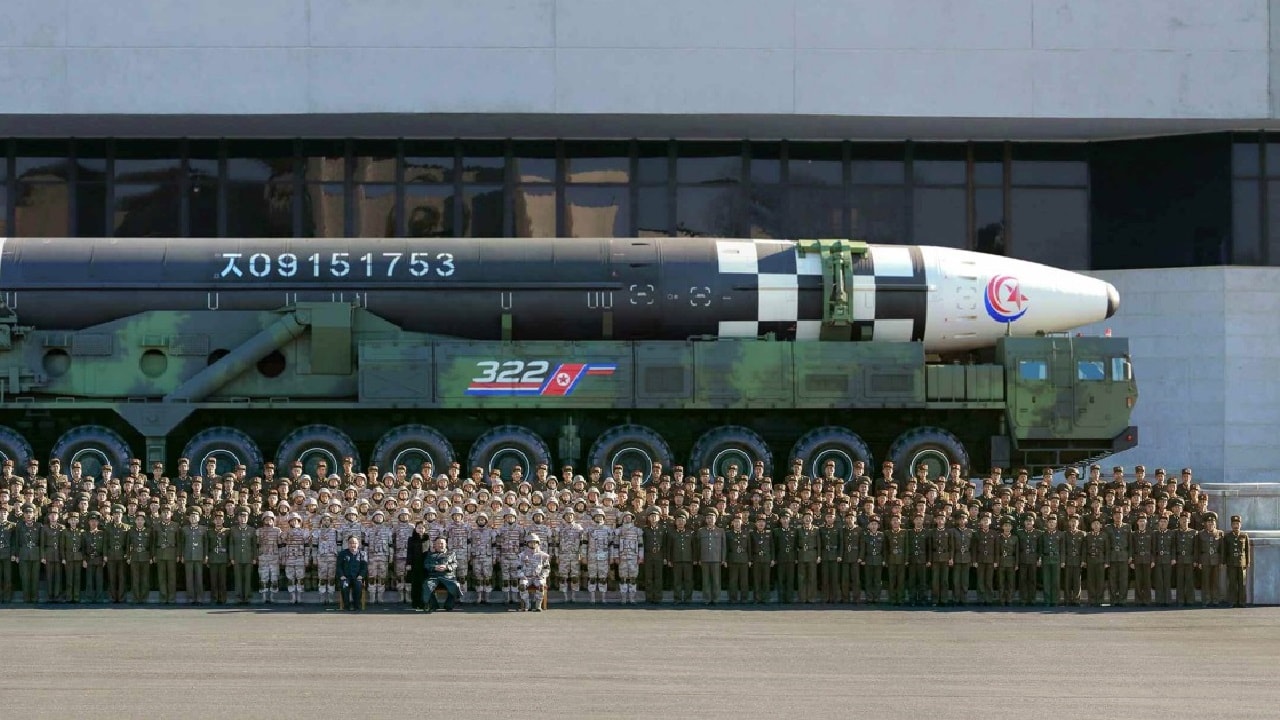
North Korea ICBM. Image Credit: KCNA.
This week offered a preview of how easily the harder work gets skipped in favor of a gesture.
Trump ordered Ulchi Freedom Shield cut from eleven days to five before Kim had agreed to anything in return. Kim Yo-jong dismissed the move within two days, calling it cosmetic, and North Korea fired roughly ten short-range ballistic missiles into the East Sea anyway.
Whatever goodwill Trump hoped the cut might buy, Pyongyang gave little in return. It is a small, low-stakes version of what a summit without a clear negotiating position could produce at much higher stakes.
The Deal That Would Be Easiest to Sell
The politically easiest deal for Trump to sell is the one built around the systems that can reach the United States. Nobody has proposed that bargain in public.
But the attraction is obvious.
An ICBM ceiling lets Trump say he reduced the nuclear threat to American cities, and it is potentially much cheaper for Kim than denuclearization: he could accept limits on his longest-range systems while keeping the much larger regional arsenal that gives him coercive leverage over Seoul and Tokyo, and collect sanctions relief without Washington ever saying nuclear state.
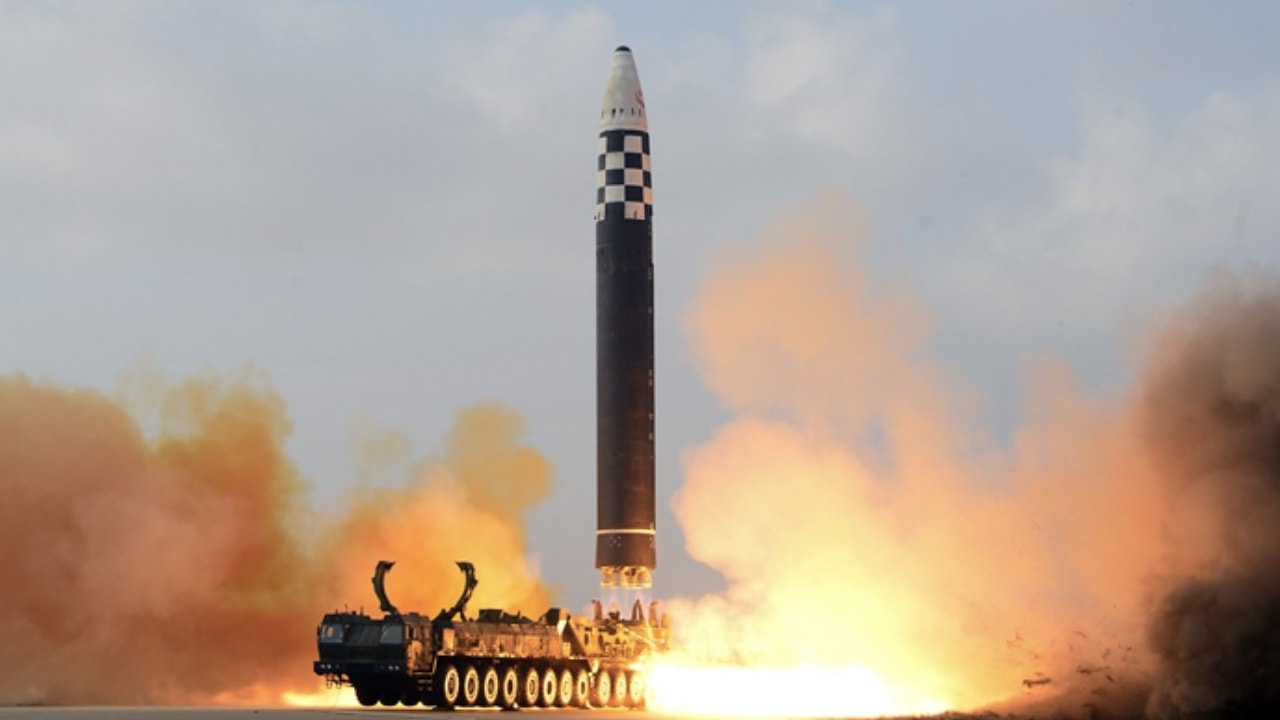
Hwasong-17 North Korea ICBM. Image Credit: North Korean State Media Release.
The Congressional Research Service‘s own assessment names North Korea’s short- and medium-range systems, not its ICBMs, as the more acute near-term threat to South Korea, Japan, and U.S. forces in the region. This week’s launch was exactly that category of weapon.
Here is the part that should worry a reader more than the sentiment about the alliance.
The classic decoupling question in extended deterrence is whether Washington would really risk Los Angeles to defend Seoul.
An ICBM-only deal would sharpen that question by visibly buying down the threat to American cities while leaving the threat to South Korea unconstrained.
South Korean support for building an independent nuclear deterrent hit a record 80 percent this spring, according to the Asan Institute’s annual poll. A deal that looks like Washington protecting itself first only strengthens Seoul’s pro-bomb case.
The Arsenal Growing Somewhere Else
The second failure has nothing to do with where risk gets distributed. It is about growth, and it is happening while Washington’s attention is fixed on the ICBM number.
Ukrainian military intelligence says a North Korean missile unit has begun deploying to Russia’s Voronezh region, folded into a Russian missile brigade, with a planned ceiling of up to 120 ballistic missiles and six launchers once configuration talks wrap up next month, on top of roughly 150 KN-23 and KN-24 missiles North Korea has already sent Russia since late 2023.
Ukrainian reporting put some of the early misses at a kilometer or more. Analysts at 38 North regard subsequent reports of 50-to-100-meter accuracy as plausible and judge Russian help overcoming Ukrainian interference with satellite guidance a likely explanation.
The stakes are not abstract. Zelensky said Russian forces used North Korean ballistic missiles in the August 11 strike on a Zaporizhzhia steel plant that killed seven workers.
The analysts’ broader judgment matters more than any single strike: North Korea’s road-mobile theater-range missile force is likely to leave the Ukraine war more effective than it entered it, in damage capability and survivability, even if nobody can pin down the exact margin yet.
An ICBM ceiling freezes a number on paper. It does nothing about a Russia relationship that is making the regional missile force, which the agreement leaves untouched, more capable.
What Washington Should Actually Ask For
Restraint, if Washington is serious about it, cannot stop at the line between missiles that reach the United States and missiles that reach its allies.
It also cannot be a snapshot of Kim’s arsenal today.
A working relationship with Pyongyang matters for one reason: it would make restraints like these negotiable now and durable later.
That argues for fissile-material limits, which constrain growth across the whole force rather than one delivery category, and for caps on regional nuclear-capable systems, since extended deterrence is an American interest and not a favor Washington does its allies.
It also argues for restrictions running both ways in the Russia relationship: limits on North Korean military transfers to Moscow, paired with restrictions on the Russian technical assistance Pyongyang receives through that relationship.
Those are obligations Kim can undertake himself, unlike a promise requiring Putin’s compliance.
Washington should also stop spending leverage before it knows what it is buying. It has already made a concession on the exercise schedule without any commitment from Kim in return, and it should not make any more just to secure a summit.
None of this comes free.
The Russia restriction is worth testing, even if it proves to be the hardest part of the bargain.
Washington cannot match everything Moscow now offers Kim, but it can offer something Moscow cannot: relief from American sanctions and a path toward normalization with the United States.
Another Trump-Kim summit is entirely plausible. A deal is a different matter, and this week gave considerably less reason to think the two governments are close to one.
Watch for the mistake Washington is likeliest to make regardless: judging the summit by whether it happens and how the handshake photographs, rather than by the terms it actually secures.
The United States no longer has a plausible path to a non-nuclear North Korea.
It can still decide which of Kim’s capabilities it is prepared to live with.
The open question is whether Washington negotiates for those constraints before signing anything or discovers only afterward what it left off the table.
MORE: How the Iowa-Class Battleship Made the Ultimate Comeback
About the Author: Dr. Andrew Latham
Andrew Latham is a professor of international relations and political theory at Macalester College in Saint Paul, MN. You can follow him on X: @aakatham.