
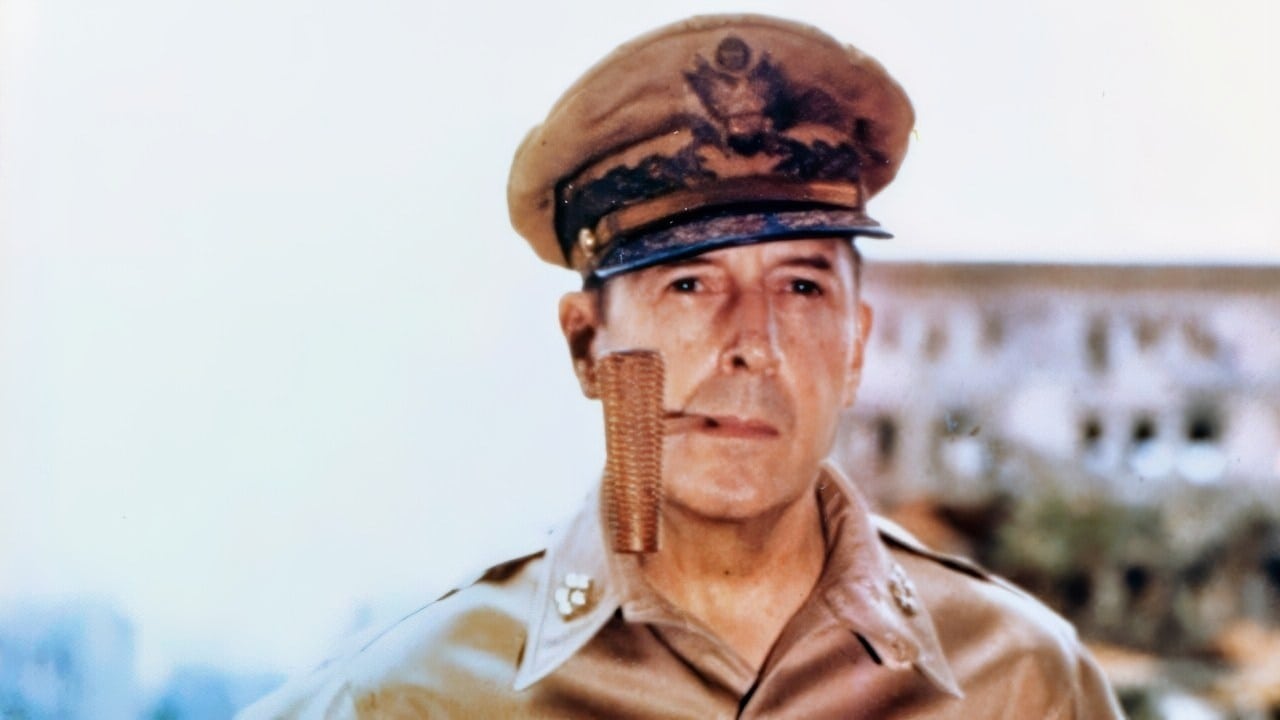
Summary and Key Points: “Old soldiers never die; they just fade away.” Douglas MacArthur said it to a joint session of Congress on 19 April 1951, and the most interesting thing about the most famous sentence of his life is that he told the room it was not his. He attributed it to a barracks ballad he had learned as a cadet — a song that itself appears to have begun as a parody of a Victorian gospel hymn.
US Army General Douglas MacArthur: What History Tells Us
“Old soldiers never die; they just fade away.” US Army General Douglas MacArthur
Gen. Douglas MacArthur was one of the most notable American military leaders of the 20th century and a career Army officer.
According to his biography on the National Museum of the United States Army website, he was a rare five-star general who served in both World Wars and the Korean War.
His 18 medals included the Medal of Honor.
Famously, MacArthur remained in Asia for 14 years, from 1937 to 1951, covering all of World War II and several years on both ends.
MacArthur accepted Japan’s surrender, and between the end of World War II and the start of the Korean War, he served as Japan’s military governor, presiding over war-crime trials and the creation of the new Japanese constitution. Japanese sovereignty was restored in 1951.
MacArthur in Korea
In 1950, the National Museum of the United States Army biography said that MacArthur was appointed commander-in-chief of United Nations forces in Korea during the Korean War.
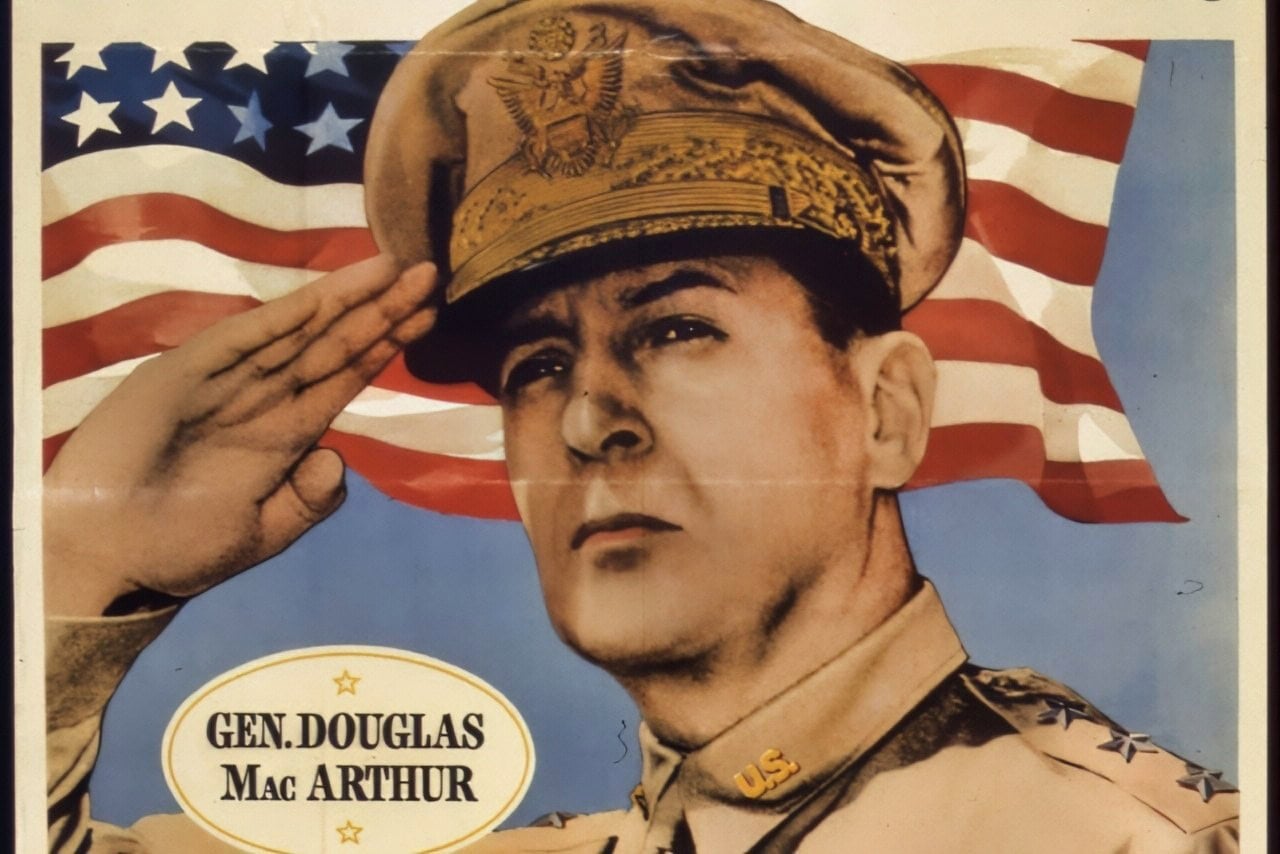
Douglas MacArthur. Image Credit: Creative Commons.
Famously, MacArthur repelled North Korean forces at Inchon, securing a major battlefield victory, though once he brought his troops north, China soon entered the war.
President Harry Truman had called MacArthur’s actions at Inchon a “brilliant maneuver.” But soon after that, the president and general were at odds.
According to the account on the website of Truman Presidential Library website, the two had different views of what the war was about.
“President Truman’s main concern was saving as many lives as possible, even if that meant signing a ceasefire along the 38th parallel. General MacArthur did not think a ceasefire was an appropriate solution.
The two men clashed,” the Truman Library account said. Truman wanted to stop communism from spreading to South Korea, while MacArthur wished to “liberate the North from communist control, and aggressive action was required.”
Because, according to that account, Truman believed MacArthur was disobeying direct orders, the president fired the general on April 11, 1951.
“Word of his firing spread quickly, and the American public found the news upsetting,” the Truman Library account said. “Truman felt that his decision was just because MacArthur had overstepped his authority, defied direct orders from his superior, and interfered with Truman’s hope of ending the Korean War quickly.”
MacArthur would tell his side of the story in his famous farewell address, delivered just over a week after his firing, during his dispute with Truman over Korea.
MacArthur’s visit to Washington marked his first time back in the United States in 14 years, since before World War II.
The Quote
Gen. MacArthur said, “Old soldiers never die; they just fade away,” in his farewell address to Congress on April 19, 1951. But as MacArthur said that day, the expression didn’t originate with him.
“The world has turned over many times since I took the oath on the plain at West Point, and the hopes and dreams have long since vanished, but I still remember the refrain of one of the most popular barracks ballads of that day which proclaimed most proudly that old soldiers never die; they just fade away.”
According to one account, that old “barracks ballad,” also called “Old Soldiers Never Die,” came from the 1930s and originated as a parody of the gospel song “Kind Thoughts Can Never Die,” which dates back to the Victorian era.
But regardless of its origin, the phrase has come to be associated with Gen. MacArthur and his farewell.
Rethinking MacArthur’s Legacy
In 2014, 50 years after MacArthur’s 1964 death, author Mark Perry called for a reassessment of the general’s legacy in Politico.
Perry, the author of a book about battles between civilian leaders and the Joint Chiefs of Staff, acknowledged MacArthur’s mistakes but called for a greater appreciation of him.
“What about his near-flawless command during World War II, his trailblazing understanding of modern warfare, his grooming of some of the best commanders this country has ever seen?” Perry wrote.
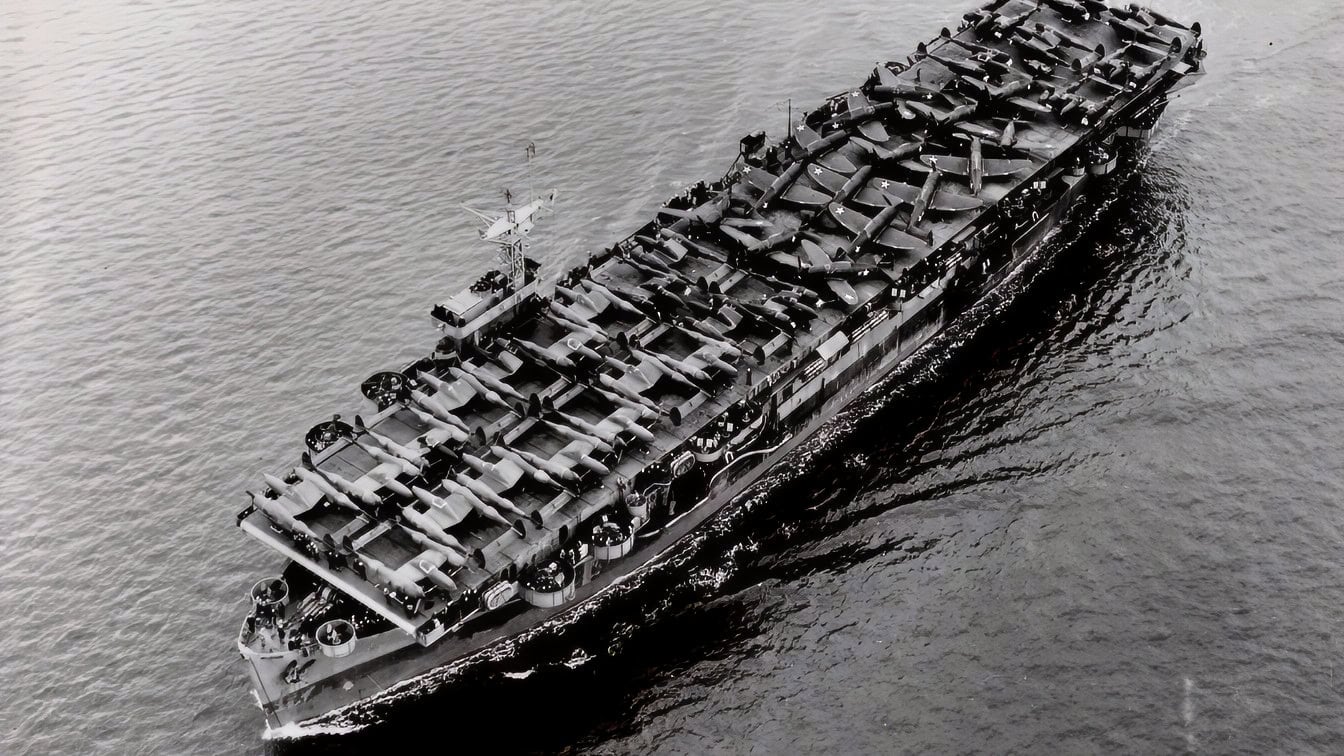
Escort Aircraft Carrier from World War II
“What about the fact that he is—as much as any other general in the war—responsible for the Allied victory?”
Perry argued that if MacArthur had retired at the end of World War II, rather than continuing his career, he would likely be remembered as America’s greatest general and as a less controversial figure.
About the Author: Stephen Silver
Stephen Silver is an award-winning journalist, essayist, and film critic, and contributor to the Philadelphia Inquirer, the Jewish Telegraphic Agency, Broad Street Review, and Splice Today. The co-founder of the Philadelphia Film Critics Circle, Stephen lives in suburban Philadelphia with his wife and two sons. For over a decade, Stephen has authored thousands of articles that focus on politics, national security, technology, and the economy. Follow him on X (formerly Twitter) at @StephenSilver, and subscribe to his Substack newsletter.