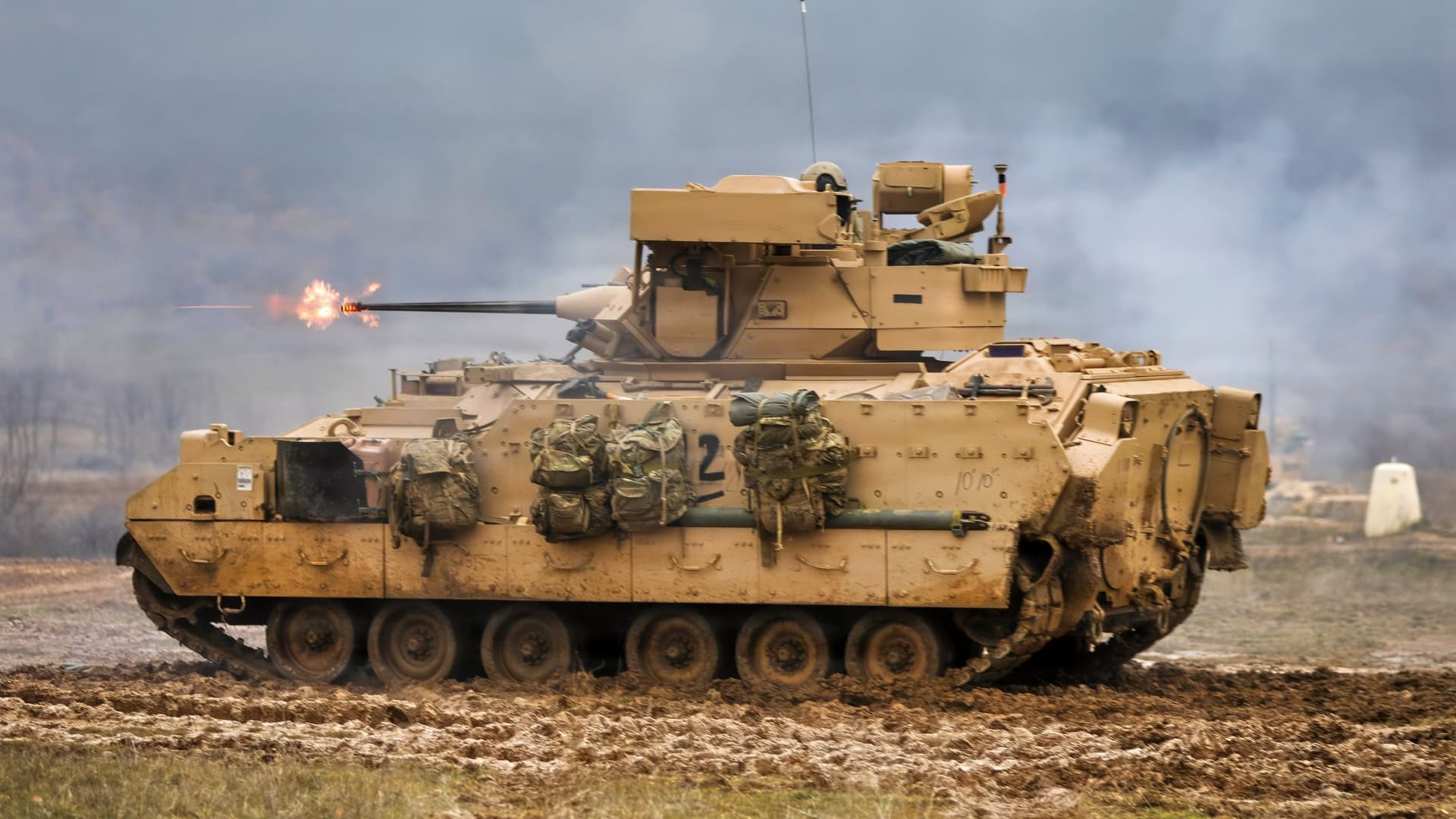
Summary and Key Points: The Bradley Fighting Vehicle was approved for production in 1980, named for Gen. Omar Bradley in 1981, and was never meant to serve for 45 years. More than 6,700 have been built, and the M2A4 the Army is fielding today, roughly 700 vehicles at about $4.35 million each through 2029, shares little but a name with the original: new armor, digital fire control, and second-generation thermal sights.
The Bradley Fighting Vehicle Is Reaching the End of the Line
The United States Army began seeking out a mechanized infantry combat vehicle as far back as the 1960s.
The M113 armored personnel carrier wasn’t cut out for what the Army required.
That became especially evident when the Soviets introduced the BMP-1 in 1967.
After multiple design iterations, cancellations, and requirement changes, the Army’s XM2 infantry fighting vehicle and XM3 cavalry vehicle were developed in the late 1970s.
These prototypes were ultimately designated M2 and M3, respectively, and approved for production in 1980.
In 1981, they were named after World War II-era US Army Gen. Omar Bradley.
The Background

M2 Bradley. Image Credit: Creative Commons.
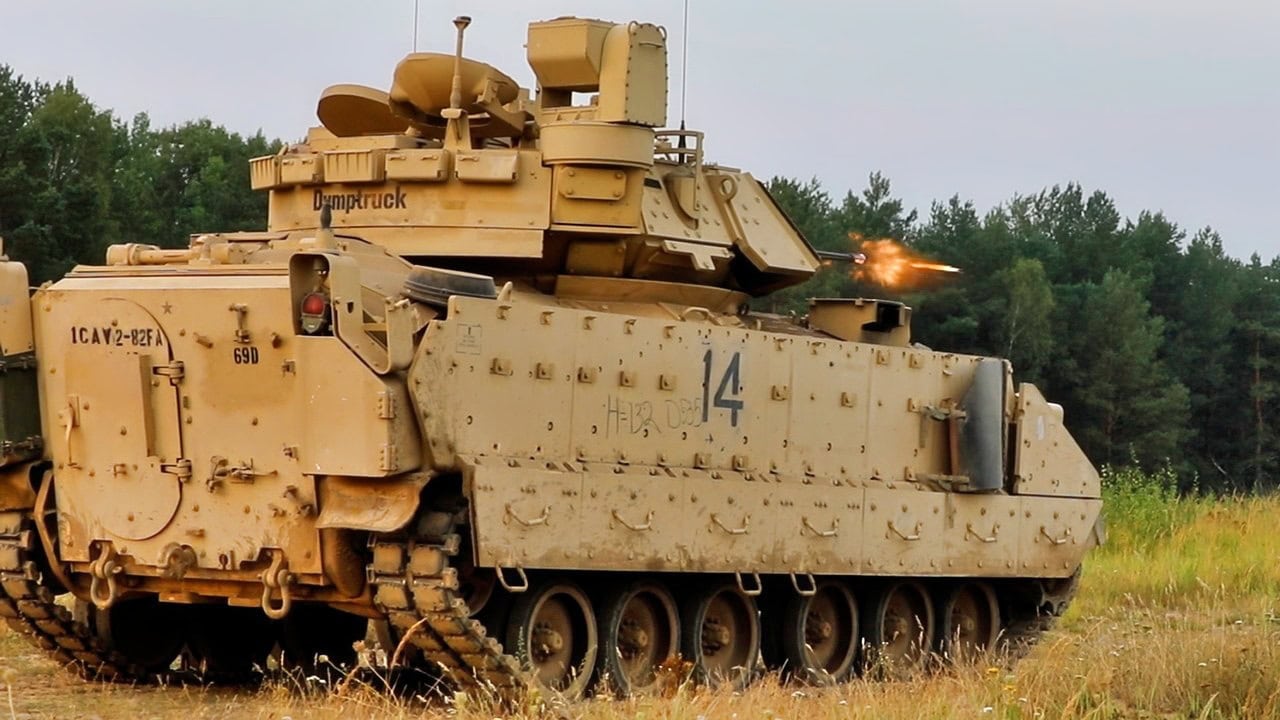
Troopers with 3rd Armored Brigade Combat Team, 1st Cavalry Division firing the 25mm canon on a Bradley fighting vehicle in order to zero the vehicles weapons systems at a range in Poland. Ranges such as these familiarize troopers with the vehicles systems in order to ensure combat readiness.
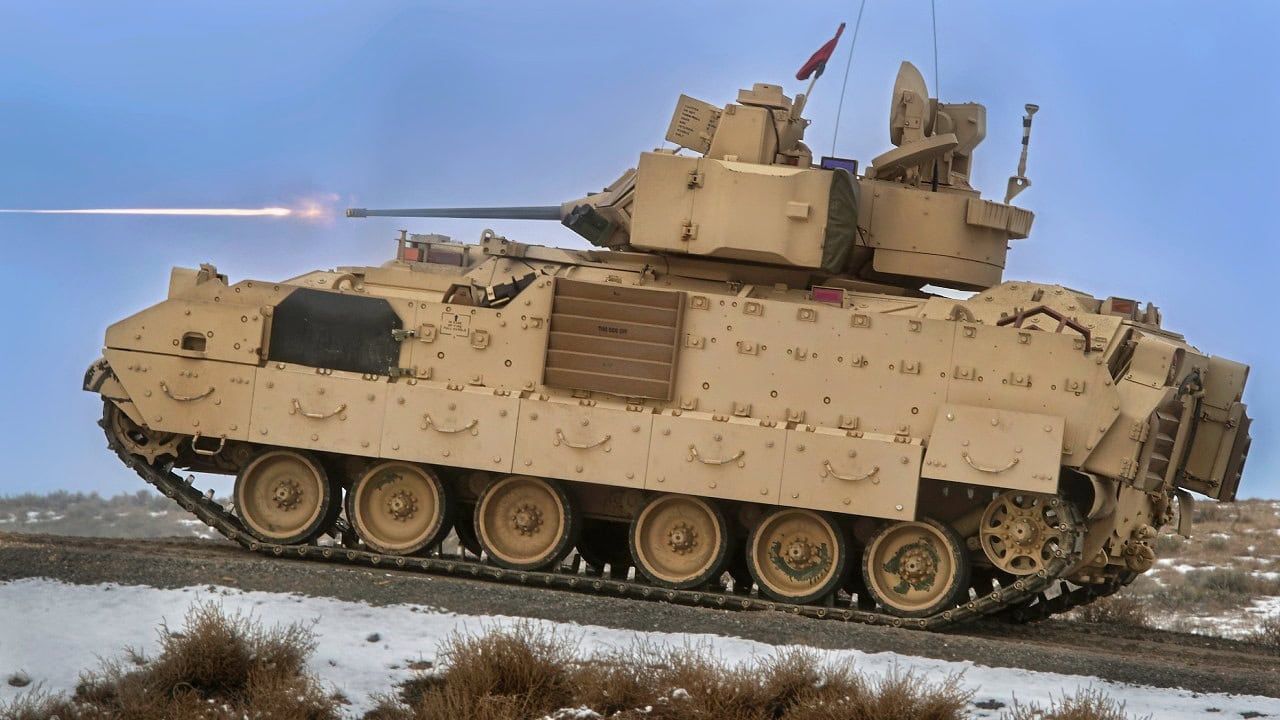
The Bradley Fighting Vehicle cuts loose several rounds from the 25mm main gun on the orchard Combat Training Center Range.
Soldiers completed training this week of the Bradley Commanders Course with the 204th Regional Training Institute, (RTI), of the Idaho Army National Guard on Gowen Field. The course is designed to train active duty, reserve and national guard officers and non-commissioned officers in combat critical M3 Bradley Fighting Vehicle Commander Skills. Field exercises were conducted on the newest Range 10, the Digital Air Ground Integrated Range (DAGIR), on the Orchard Combat Training Center grounds.
Forty-five years after it first entered service, and after multiple upgrades, the Bradly Fighting Vehicle remains one of the most important armored vehicles in the world.
Not only has this system served the US Army, but it has also helped in some of the world’s key hotspots — notably in Ukraine.
More than 6,700 Bradleys have been produced since 1981, making it one of the most successful post-World War II armored platforms in US Army history.
When the Army first sought a new infantry fighting vehicle, the requirements were straightforward.
Big Green needed a tracked vehicle capable of keeping pace with the new M1 Abrams Main Battle Tank while carrying infantry.
The Army needed enough firepower to fight, not just transport soldiers (to counter the growing Soviet inventory of infantry fighting vehicles).
Nearly 50 years later, the Army clearly got (mostly) right.
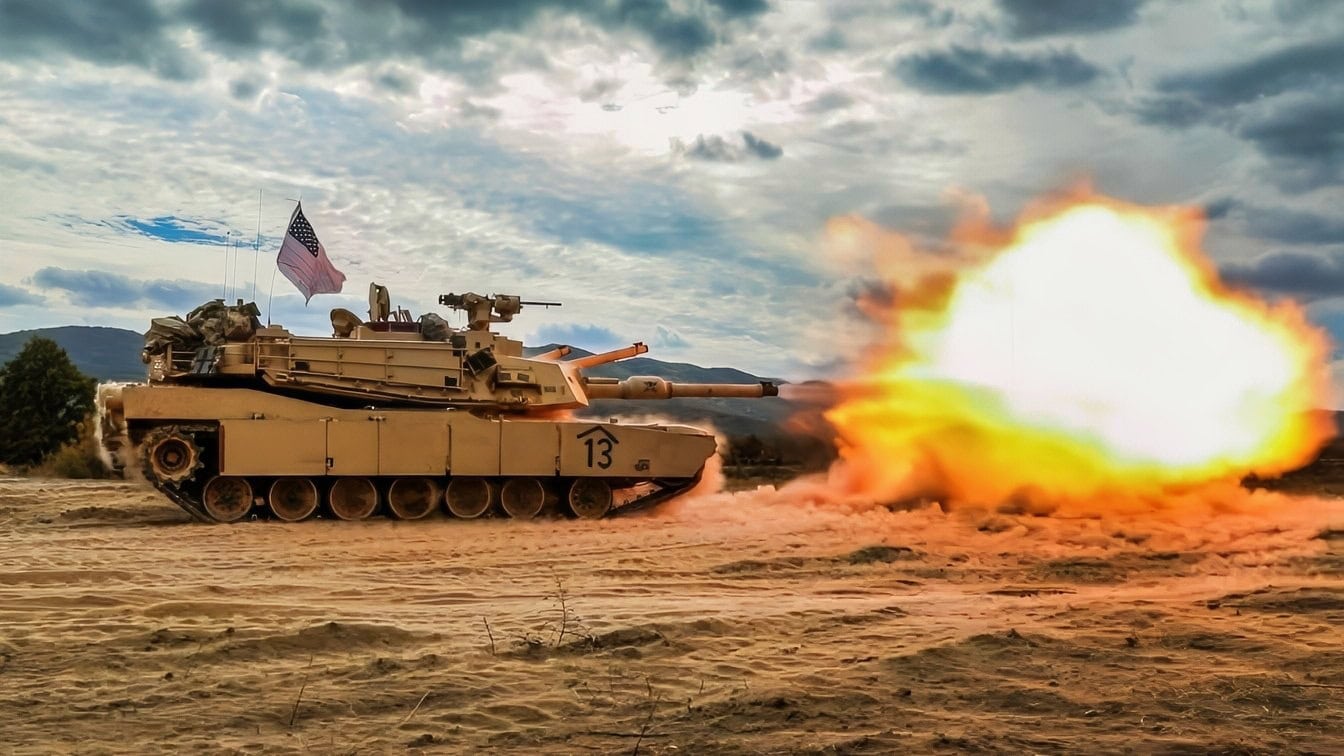
An M1A2 Abrams main battle tank with 1-16th Infantry, 1st Armored Brigade Combat Team, 1st Infantry Division, conducts a Live Fire Accuracy Screening Test Sept. 28, 2025, on Novo Selo Training Area, Bulgaria. The LFAST is used to assess and confirm the accuracy of its firing system before live fire gunnery, ensuring the tank is ready for combat and its firing control systems are functioning correctly. Abrams live fire exercises increase the lethality of crews on collective tables while generating warfighting readiness and combat credible forces along NATO’s Eastern Flank. (U.S. Army photo by Sgt. 1st Class Richard Perez)
Possessing a three-man operating crew (a commander, gunner, and driver), the vehicle carried an infantry squad.
Its defining weapon was the M242 25mm Bushmaster chain gun, backed by a coaxial 7.62mm machine gun and a twin launcher for BGM-71 TOW anti-tank guided missiles.
So, the Bradley was much more than just an armored troop carrier like its M113 predecessor.
This platform could pack a punch, too.
That 25mm cannon could obliterate enemy infantry positions and engage light armored vehicles, while the TOW lets the Bradley destroy enemy tanks from miles away.
In fact, during Operation Desert Storm, Bradley crews reported destroying Iraqi Soviet-made MBTs at ranges up to 3,700 meters.
That’s an impressive feat for a system considered lightly armored, compared with a heavily armored MBT.
In Operation Desert Storm, more than 2,200 Bradleys were deployed into combat.
The Army claims it lost only three to enemy fire.
Bradleys were even credited with destroying more enemy armored vehicles than the M1 Abrams tank!
Until that point, the Bradleys had been the source of much consternation within the military establishment, as criticism had been leveled at the system’s aluminum construction and its weaker armor — all of which raised concerns about the platform’s survivability in combat.
Endless Upgrades
Because of the platform’s popularity, the Army never stopped upgrading the Bradley.
Indeed, the system has been so heavily upgraded that it is a fundamentally different machine from the one that hit the production lines in 1981.
The M2A2, for example, emerged in the 1980s and offered much greater armor protection than its predecessor.
Concomitant changes to the powertrain and suspension made it an even more useful platform for the Army.
During Desert Storm in 1991, the Army made additional enhancements.
These upgrades included GPS navigation, a laser rangefinder, improved driver thermal sight, missile countermeasures, and redesigned seating, along with changes to ammunition and equipment, ensuring the platform’s lethality in the campaign was unmatched.
That was the A2 modification.
Next came the A3 modification, which added digital architecture, improved fire control, second-generation forward-looking infrared sensors, and a commander’s independent thermal viewer.
Then came the networked capacity, allowing the Bradleys to share battlefield data with upgraded Abrams MBTs.
The latest iteration of the Bradley is the M2A4, which overcame the complications of previous modernization rounds: increased weight and electrical demand.
The A4 configuration addressed the suspension, electrical power generation, and mobility issues that arose from the A2 and A3 modernization rounds.
The Army intends to field more than 700 M2A4 Bradleys through 2029 at about $4.35 million per vehicle.
During the Iraq War that began in 2003, the Bradleys encountered a whole new set of problems arising from the conflict’s unique nature.
Because of the prevalence of urban warfare, along with the threat of improvised explosive devices (IEDs), as well as increasingly potent anti-armor weapons, the Army faced a different threat in Iraq at that time than it did in 1991.
So, the vehicle required additional armor and survivability improvements as threats to the platform evolved.
Irreplaceable
In essence, the Bradleys have proven to be a highly adaptable asset, which helps explain why the Army has used this platform for nearly 50 years.
By 2019, though, the Army publicly said the platform had reached its physical limits.
Now, the Army is seeking a newer system that incorporates the hard lessons learned over the last 50 years into the system’s basic structure and design rather than as a tack-on.
It remains to be seen whether the Army can create a replacement anywhere near as adaptable as the Bradley.
That’s why the platform has lasted for 45 years. It wasn’t meant to. But it was simply too good to be replaced.
About the author: Brandon J. Weichert
Brandon J. Weichert is the Senior National Security Editor at 19FortyFive.com. He also manages The Weichert Brief on Substack. Weichert also hosts “National Security Talk” on Rumble. He is the author of four bestselling national security books, most recently A Disaster of Our Own Making: How the West Lost Ukraine (Encounter Books). Follow him via Twitter/X @WeTheBrandon.