
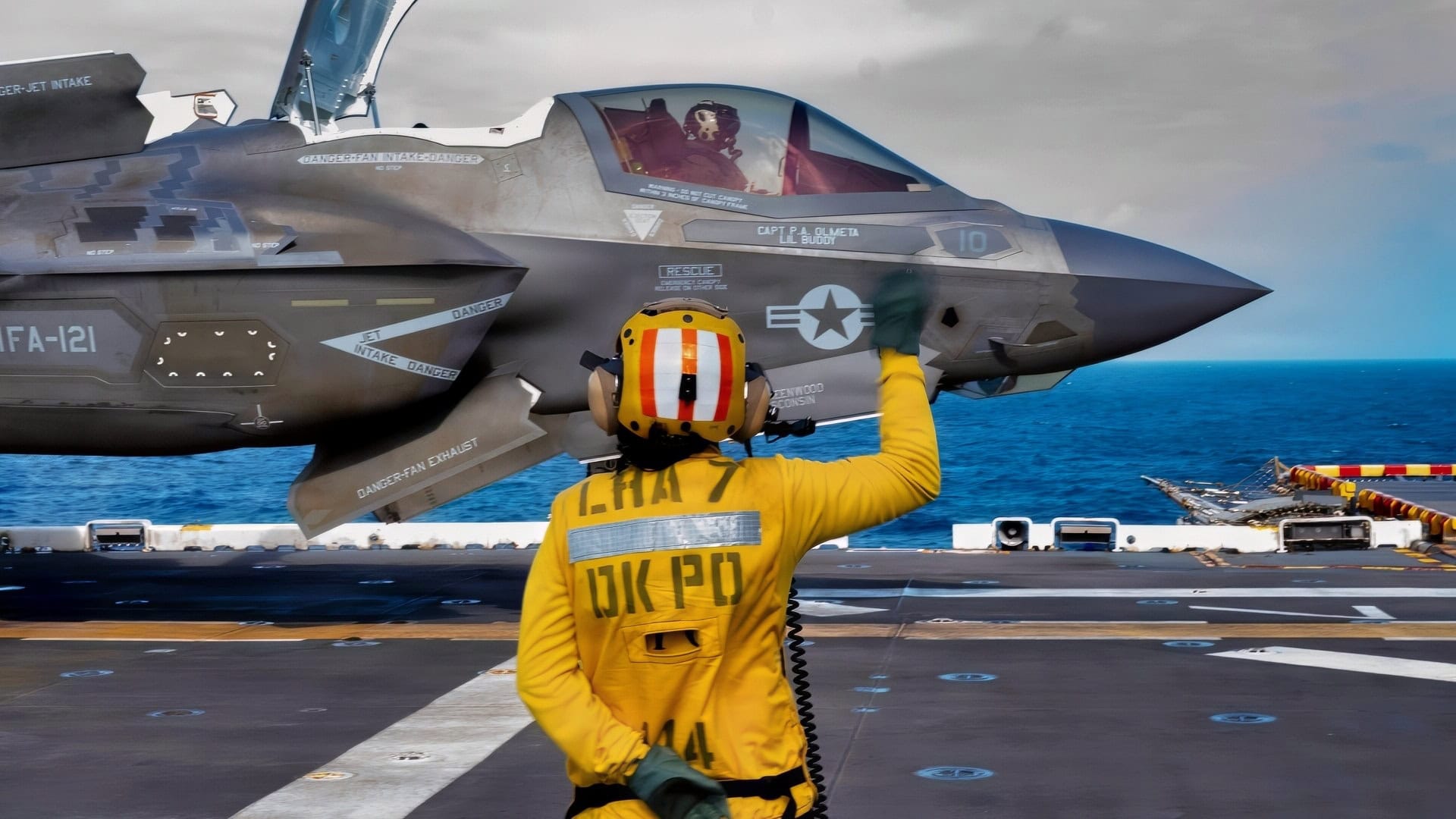
Summary and Key Points: The Queen Elizabeth-class can only fly the F-35B, which lands vertically. Britain tried to change that in 2010, chose the F-35C and catapults, watched the conversion estimate climb toward £2 billion, and reversed course in May 2012.
The Queen Elizabeth-Class Aircraft Carrier Is Stuck with the F-35B
Britain’s largest warship, aircraft carrier Queen Elizabeth, hit headlines when it returned to sea this month, but the carrier remains constrained by a decision made years before it entered service: it can operate only a very specific variant of the F-35.
Queen Elizabeth left Portsmouth on September 5 for three months of operations and training across Northern Europe and Britain.
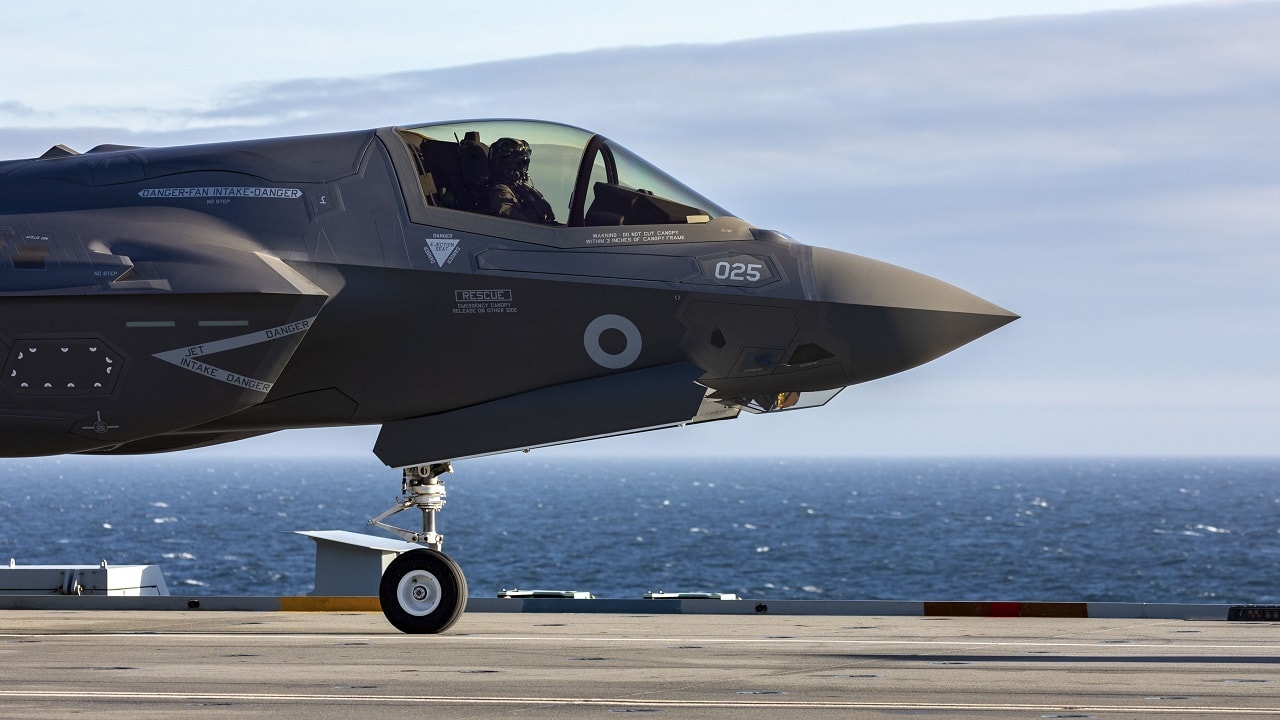
Image Credit: Royal Navy.
This marks the early stages of preparations for the carrier to replace HMS Prince of Wales as Britain’s top carrier in late 2027.
The deployment comes after a long maintenance period that began in late 2024.
As Britain prepares its carrier fleet for the next decade of operations, it is also investing heavily in uncrewed aircraft, with £240 million in preparations underway to ensure its new carriers can launch the most advanced drones and aircraft.
Incredibly, though, despite their enormous flight decks, the Queen Elizabeth-class carriers cannot operate conventional carrier fighters, and the only fixed-wing combat aircraft they can handle is the F-35B.
Why Britain’s Queen Elizabeth-Class Aircraft Carriers Need the F-35B
The two Queen Elizabeth-class ships, Queen Elizabeth and HMS Prince of Wales, are 65,000-ton vessels designed to accommodate short takeoff and vertical landing, or STOVL, aircraft.
Looking at one of these carriers from above, the difference compared to an American carrier is immediately obvious: they don’t feature steam or electromagnetic catapults to accelerate aircraft along their decks, and they also lack arresting wires to catch aircraft on landing.
That creates a limitation whereby some aircraft simply don’t have the room to take off, lest they dive into the ocean before becoming airborne.
But the F-35B can operate on the carriers because it is designed to accelerate along the deck and launch over a six-meter-high ski-jump.
When returning, the aircraft can use its swiveling engine nozzle and lift fan to perform a vertical landing. It is, therefore, uniquely suited to Britain’s newest aircraft carriers.
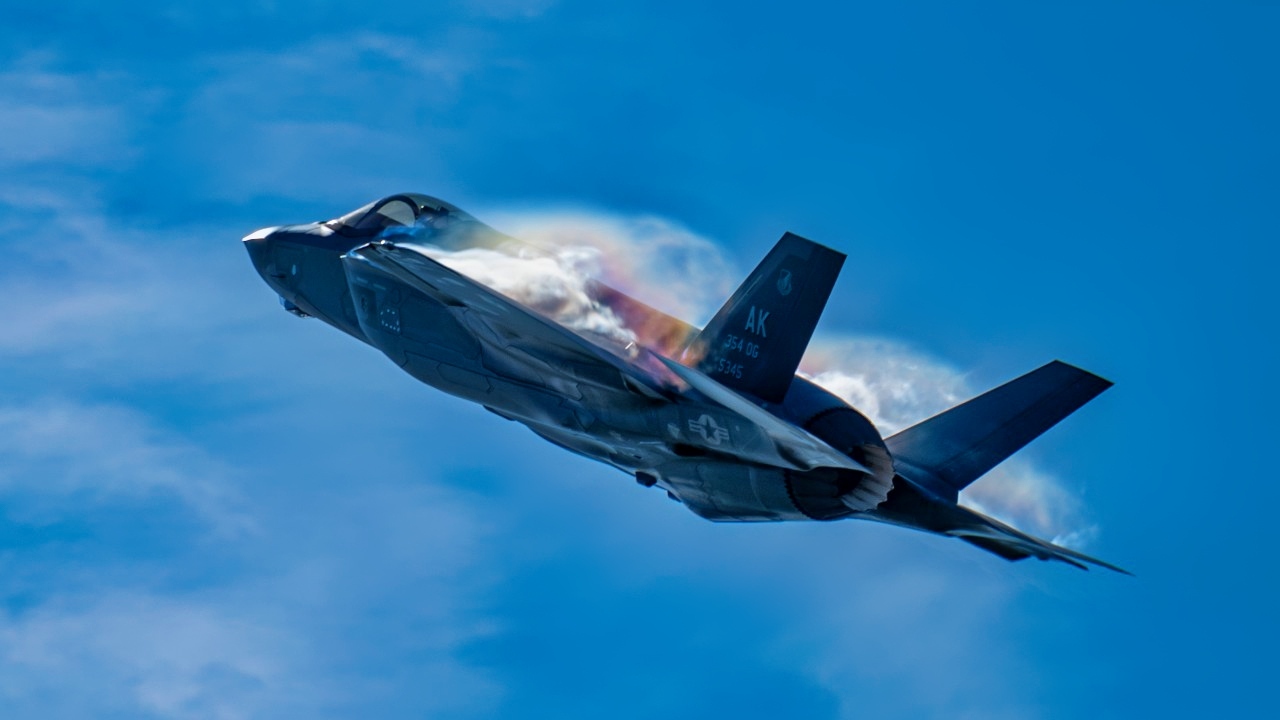
U.S. Air Force Maj. Kristin “BEO” Wolfe, F-35A Lightning II Demonstration Team pilot and commander, flies an aerial performance for the 2021 Arctic Lightning Air Show, July 30, 2021, Eielson Air Force Base, Alaska. The F-35 Demonstration Team utilized F-35s from the 354th Fighter Wing in order to showcase the combat capability of the Pacific Air Force’s newest F-35 units. (U.S. Air Force photo by Capt. Kip Sumner)
The F-35A, meanwhile, is primarily operated from conventional air bases and requires a standard runway.
The naval F-35C operates from CATOBAR aircraft carriers and features larger wings and stronger landing gear. It also has a larger internal fuel capacity.
However, it was designed for catapult launches and arrested landings aboard conventional aircraft carriers.
Britain Did Try to Change Course
The decision behind the Elizabeth-class’s design was not exactly straightforward.
Originally, Britain planned to use the F-35B, but the government reversed course in the 2010 Strategic Defence and Security Review and announced that it would acquire the F-35C instead.
That decision would have required installing catapults and arresting gear aboard the new carriers, and the government argued that it would be worth it because the F-35C features a greater range and payload and would also allow British aircraft to operate more easily from allied carriers.
But the plan quickly ran into trouble.
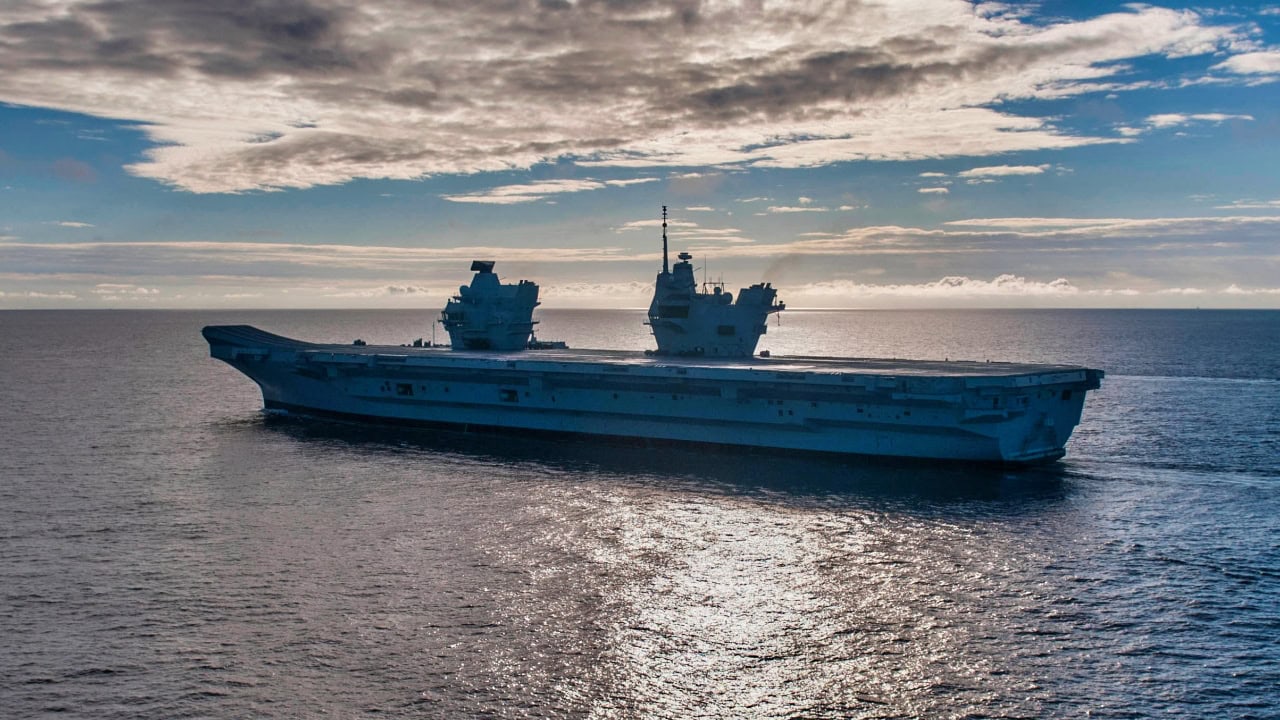
(Aug. 8, 2017) The Royal Navy aircraft carrier HMS Queen Elizabeth II sails in formation alongside the Nimitz-class aircraft carrier USS George H.W. Bush (CVN 77) during exercise Saxon Warrior 2017, Aug. 8. Saxon Warrior is a United States and United Kingdom co-hosted carrier strike group exercise that demonstrates interoperability and capability to respond to crises and deter potential threats. (U.S. Navy photo by Mass Communication Specialist 3rd Class Tristan B. Lotz/Released)
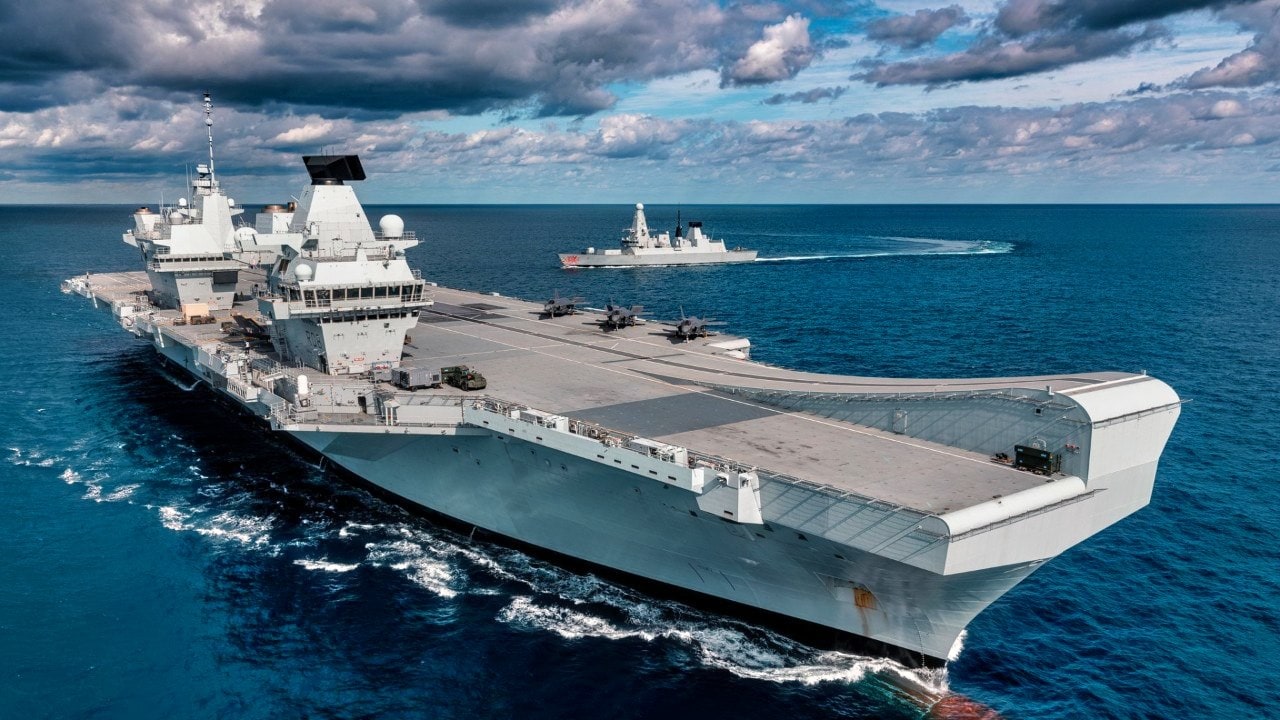
Queen Elizabeth-Class Royal Navy Aircraft Carrier. Image Credit: Creative Commons.
The initial conversion estimate was somewhere between £500 million and £800 million.
By early 2012, that forecast increased significantly to around £2 billion – an increase of 150%.
A parliamentary investigation later found that the original estimate relied on immature information and omitted predictable expenses, including VAT and inflation.
The conversion of the carriers would also have delayed Britain’s return to carrier strike operations until 2023. So, in May 2012, the British government reversed course and returned to the F-35B plans.
What Britain Gave Up
The decision to save money and avoid further delays was necessary, but it obviously came at a price.
The F-35B’s ability to land vertically is not easy to achieve—it requires machinery that the other variants do not.
Behind the cockpit is a large lift fan, and the other engine also incorporates a swiveling exhaust nozzle.
That gives Britain enormous capability, but the equipment also takes up space and adds weight that could otherwise be devoted to fuel and weapons.
It also requires specific maintenance.
The F-35C offers greater range and payload and would have given the British carriers better strike capability.
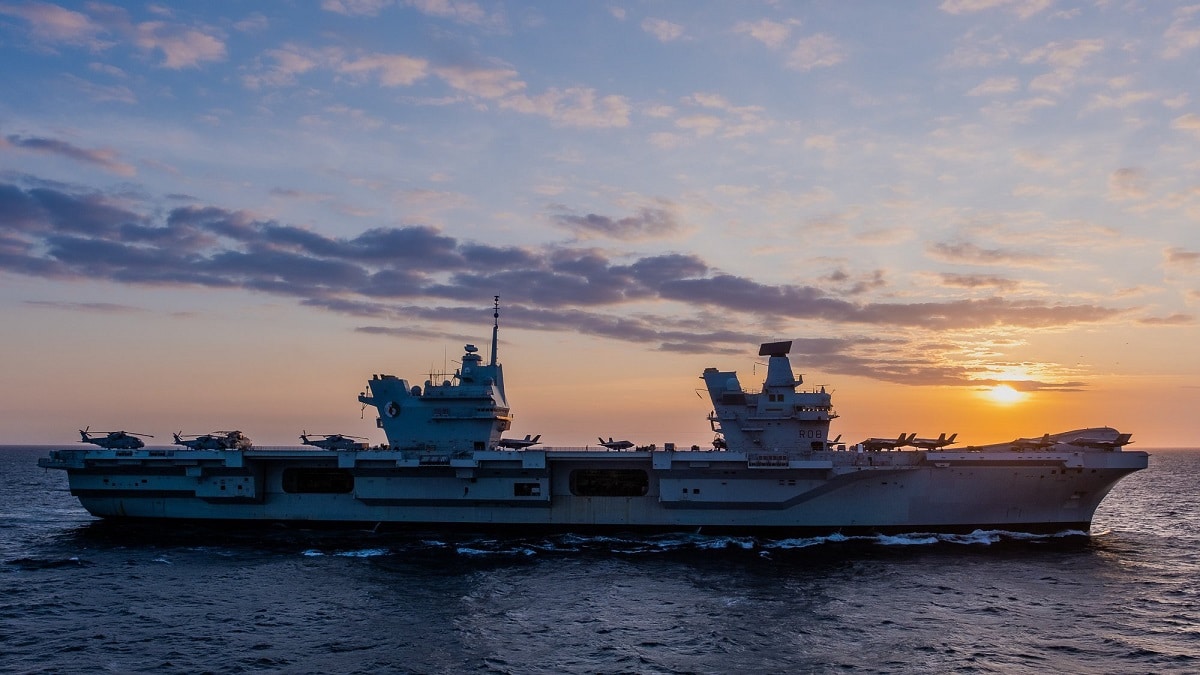
HMS Queen Elizabeth. Image: Creative Commons.
The F-35C carries almost 20,000 pounds of internal fuel and has a stated range exceeding 1,200 nautical miles. Its larger wing also provides characteristics specifically optimized for carrier operations.
The carrier design also poses another limitation: conventional carrier aircraft, including fixed-wing airborne early-warning aircraft and tankers, cannot simply be deployed from British ships.
Instead, Britain must use Merlin helicopters carrying the Crowsnest surveillance and control system for airborne surveillance.
If Britain wants to use fixed-wing airborne surveillance aircraft, it will need to build carriers that can support them, or rely on allies to do so every time they’re used.
The Prince of Wales is expected to begin the second phase of Operation Firecrest this autumn.
The Queen Elizabeth, meanwhile, is preparing to assume the role of Britain’s high-readiness carrier by late next year.
About the Author: Jack Buckby
Jack Buckby is a British researcher and analyst specializing in defense and national security, based in New York. His work focuses on military capability, procurement, and strategic competition, and he produces and edits analysis for policy and defense audiences. He brings extensive editorial experience, with a career output spanning over 1,000 articles at 19FortyFive and National Security Journal, and has previously authored books and papers on extremism and deradicalization.