
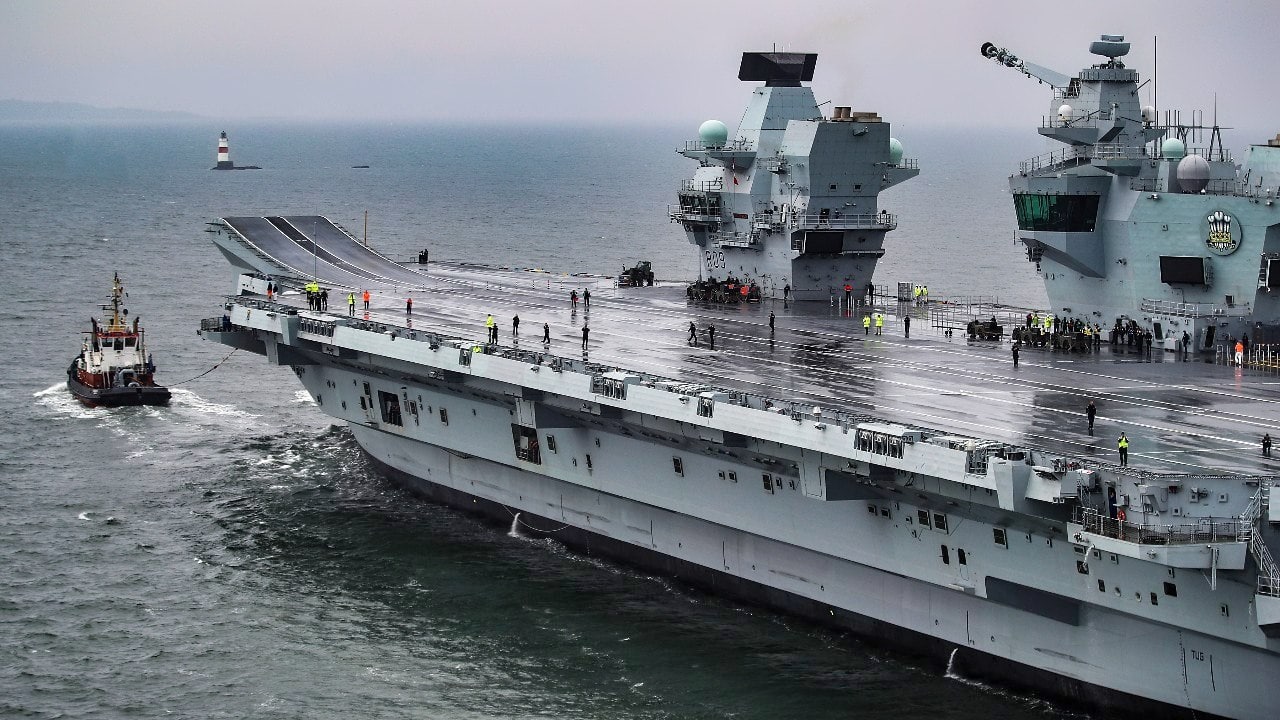
Summary and Key Points: As of February 2026, the Royal Navy’s carrier power is under intense scrutiny with both the HMS Queen Elizabeth and HMS Prince of Wales sidelined.
-Despite the Prince of Wales’ successful 2025 Indo-Pacific deployment, persistent propeller shaft malfunctions and a critical shortage of escort vessels—only half the fleet is currently mission-ready—have led Former First Sea Lord Admiral Lord West to label the situation a “disgrace.”
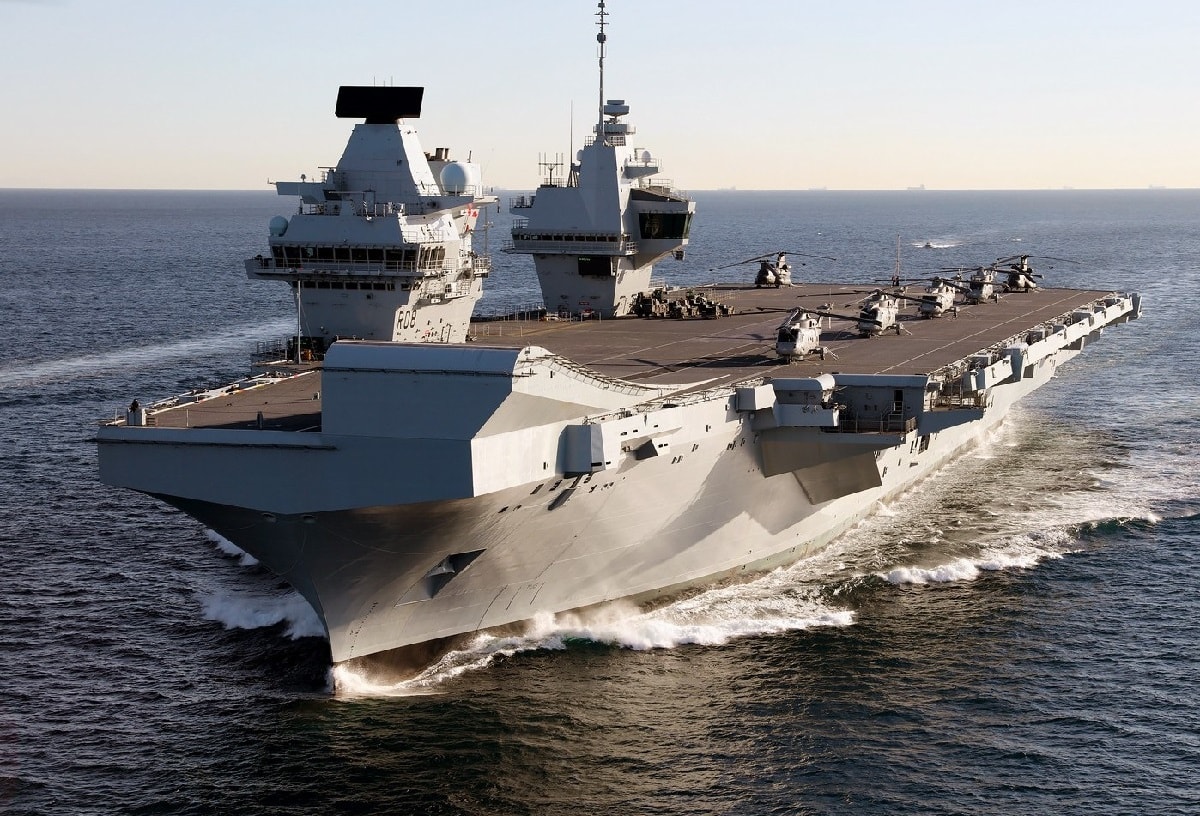
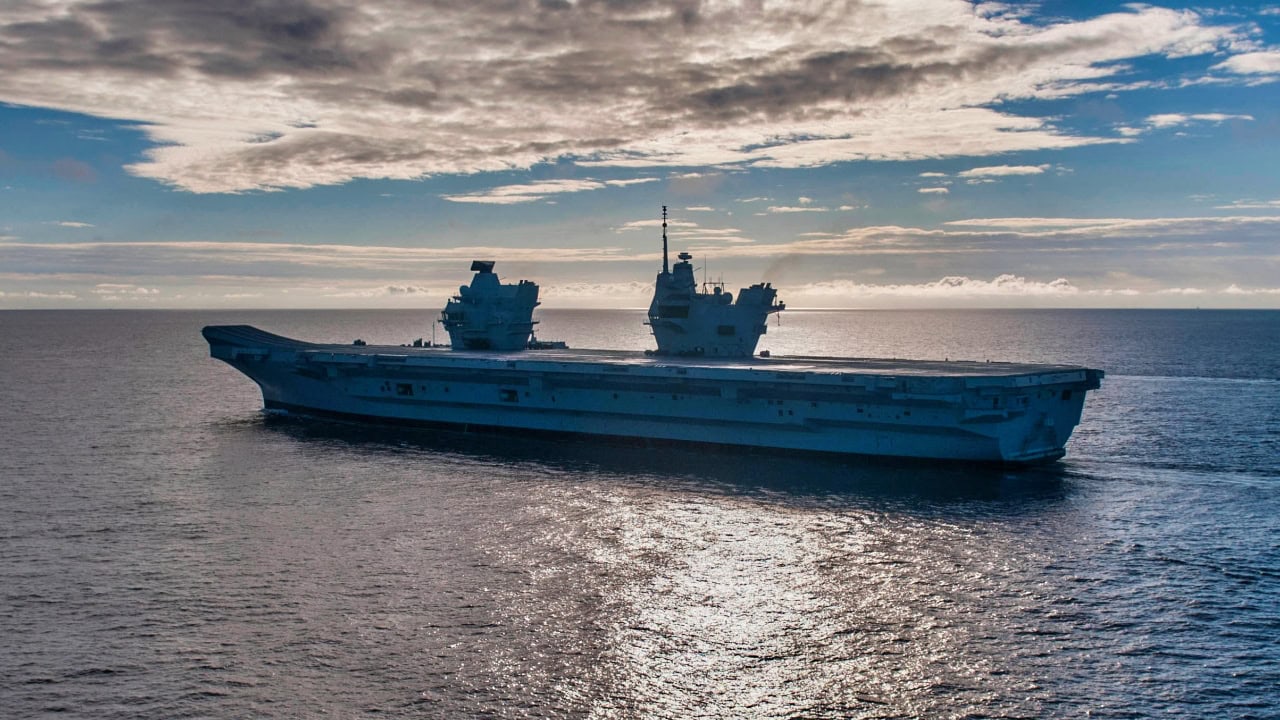
HMS Queen Elizabeth-Class Aircraft Carrier.
-With the Queen Elizabeth remaining in dry dock and F-35B aviation wings languishing, Britain’s ability to project global “Blue Water” power and meet NATO commitments remains severely compromised.
What Is Going on With the United Kingdom’s Two Aircraft Carriers?
19FortyFive has extensively covered the plight of the two British aircraft carriers that were supposed to form the vanguard of the Royal Navy fleet for the next 20 to 30 years. But the belief that the carriers will lead the Royal Navy and return it to past glory is under scrutiny. The two carriers are out of action as of late January 2026.
This is problematic because the Royal Navy has fewer warships on deployment this year. In addition to the HMS Queen Elizabeth and the HMS Prince of Wales carriers on the sidelines, the low overall number of other ships on deployment is concerning.
Many Carrier Strike Group Support Vessels Are Out of Action
Only three of the six Type 45 Daring-class destroyers are available for service, and just six of the eight Type 23 Duke-class frigates can wage warfare on the high seas at this point. Just one in five Astute-class submarines is in the water. Of the total fleet of 63 ships, only about half are available for duty.
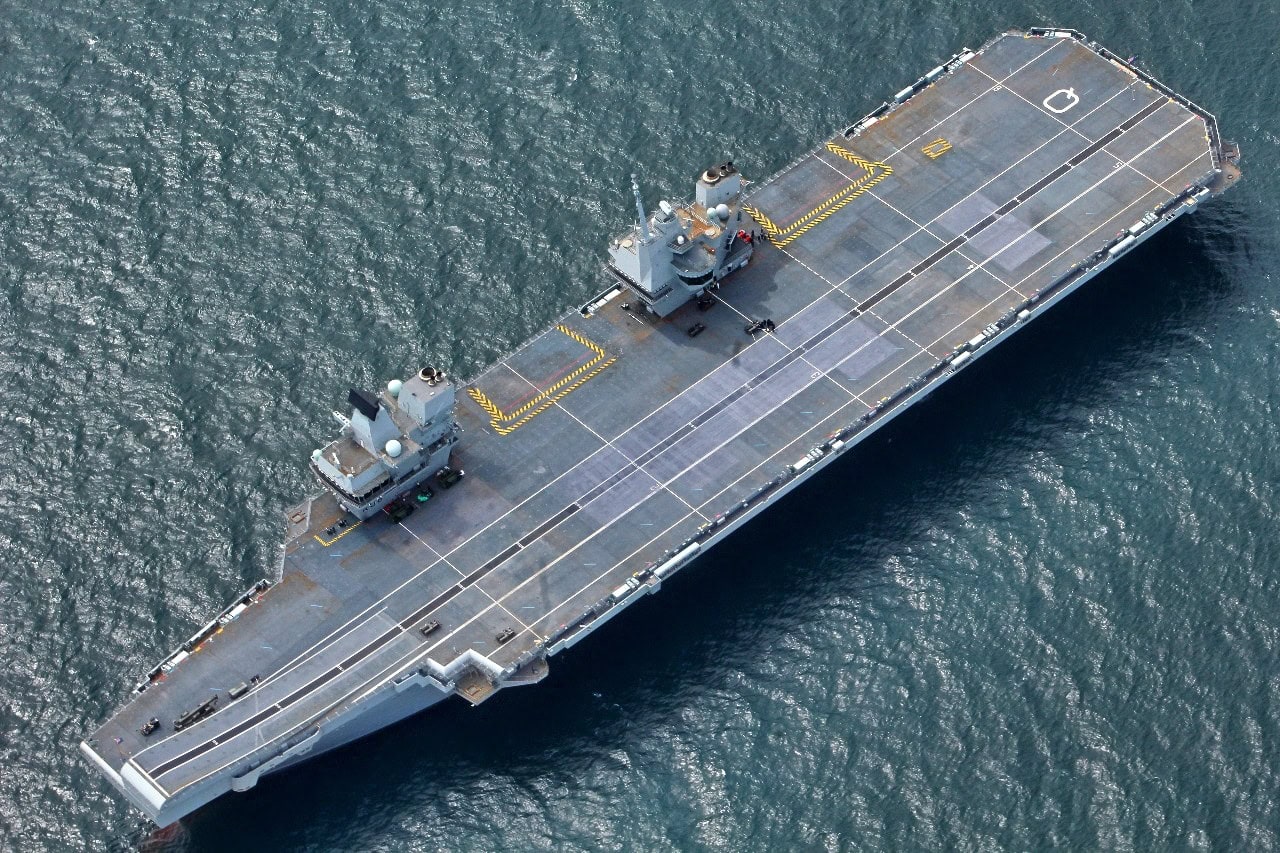
Pictured is an aerial view of HMS Queen Elizabeth as she conducts vital system tests off the coast of Scotland. Image Credit: Creative Commons.
The HMS Queen Elizabeth and the HMS Prince of Wales strike groups were supposed to alleviate the naval force readiness problem. The two carriers have emerged from many mechanical and technical issues. They are seen as warships that could withstand some negative press while still getting back into the fight to counter Russia and China.
Unfortunately, this year has seen an inauspicious start by the carrier force and its escort ships. Many military analysts and observers have maligned the situation.
Former Admiral Is Sounding the Alarm
The British Sun news outlet interviewed the Former First Sea Lord, Admiral Lord West, and the flag officer was concerned that this is a worrying sign for the Royal Navy. The number of operational ships was “a disgrace,” West said.
“We are so weak at the moment. No wonder President Trump laughs at us all in Europe. We used to have a bloody powerful Navy, which gave us clout and fighting power. Now the Royal Navy is a bit of a joke – we haven’t even got a full admiral in the Navy, and that’s extraordinary. We now have insufficient ships and submarines operating in our economic waters to secure our security,” West exclaimed.
Queen Elizabeth-Class: When Will These Carriers Dominate?
The British aircraft carriers were supposed to usher in a new era of naval superiority, but that has yet to happen. They have endured problems with the initial construction and cost overruns. There have been issues with the propulsion systems. The deck size is limited, making the operations of F-35B Lightning II STOVL jump jets difficult.
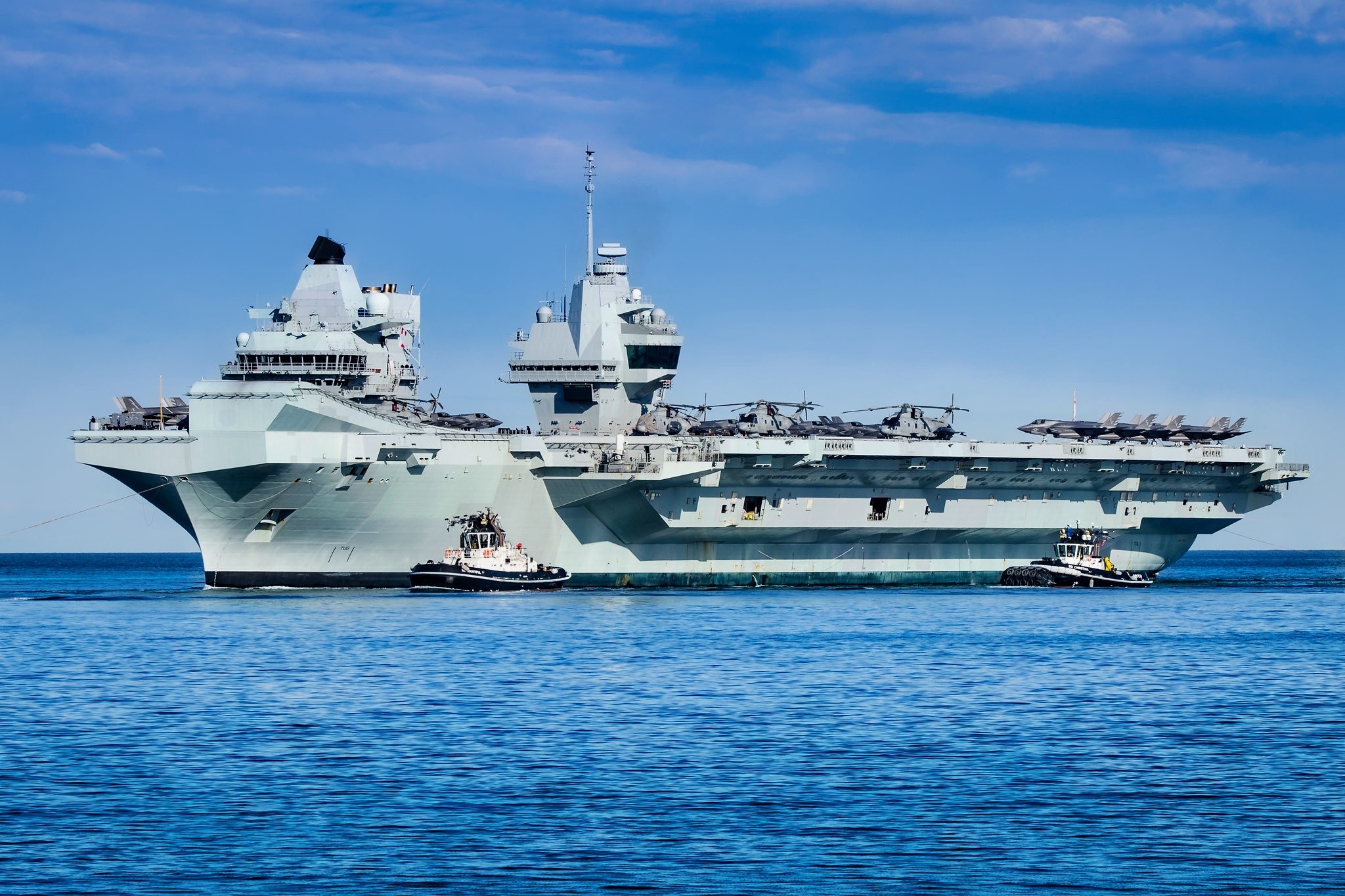
HMS Queen Elizabeth Royal Navy. Image Credit: Creative Commons.
(Aug. 8, 2017) The Royal Navy aircraft carrier HMS Queen Elizabeth II sails in formation alongside the Nimitz-class aircraft carrier USS George H.W. Bush (CVN 77) during exercise Saxon Warrior 2017, Aug. 8. Saxon Warrior is a United States and United Kingdom co-hosted carrier strike group exercise that demonstrates interoperability and capability to respond to crises and deter potential threats. (U.S. Navy photo by Mass Communication Specialist 3rd Class Tristan B. Lotz/Released)
There have also been high maintenance expenses that have kept the carriers docked for unacceptable periods of inaction. For example, the starboard propeller shaft on the HMS Prince of Wales necessitated a lengthy repair, forcing the carrier out of service for months.
The Ministry of Defense has tried to adopt a more optimistic tone regarding the carrier situation and the overall state of the Navy. “All Royal Navy vessels rotate through planned operating cycles, including routine maintenance, and we continue to operate in accordance with Defence requirements and priorities,” a spokesperson said in January.
At Least the Prince of Wales Has Seen Action
The Prince of Wales has a successful deployment under its belt. It returned from the Indo-Pacific region after an eight-month cruise in late November 2025. This shows that the Royal Navy is a Blue Water force with global reach.
The HMS Queen Elizabeth has remained in dry dock for most of 2025. It has also suffered from propeller shaft problems. However, the Royal Navy plans to make it available this spring for extended duty.
But with all of the frigates, destroyers, and submarines out of action, there may not be enough warships for two carrier strike groups to be deployed at the same time. That hurts overall readiness and keeps the critics supplied with more grist for their mill. The carriers have not been a total failure, but they are seen as a program under strain with problematic ships that have not lived up to their potential.
Carrier Aviation Wings Are Languishing
The Royal Navy is thus suffering with its two troubled carriers. This year should see at least two longer deployments, but there is a laundry list of obstacles to hurdle. The most frustrating issues are probably the propeller shafts and the overall lack of a successful group of fighter jets that form the backbone of any carrier. The F-35Bs should be flying with no trouble since the Royal Navy spent such a large amount of pounds on these stealth warplanes.
When Will Detractors Stop Complaining?
The only thing that the Royal Navy can do now is plead for patience. The readiness problem is apparent to opponents of carriers that do not answer the call when needed. The support ships in the carrier strike groups are mostly unavailable, and the Royal Navy has seen better days.
Let’s hope the British can resolve this. This is an era of diminished naval power for Britain, and more current and former officers will be sounding the alarm to the government to rectify the problem by improving the fleet’s and carriers’ operational readiness, which leaves little to be desired.
About the Author: Brent M. Eastwood
Author of now over 3,000 articles on defense issues, Brent M. Eastwood, PhD is the author of Don’t Turn Your Back On the World: a Conservative Foreign Policy and Humans, Machines, and Data: Future Trends in Warfare plus two other books. Brent was the founder and CEO of a tech firm that predicted world events using artificial intelligence. He served as a legislative fellow for US Senator Tim Scott and advised the senator on defense and foreign policy issues. He has taught at American University, George Washington University, and George Mason University. Brent is a former US Army Infantry officer. He can be followed on X @BMEastwood.