
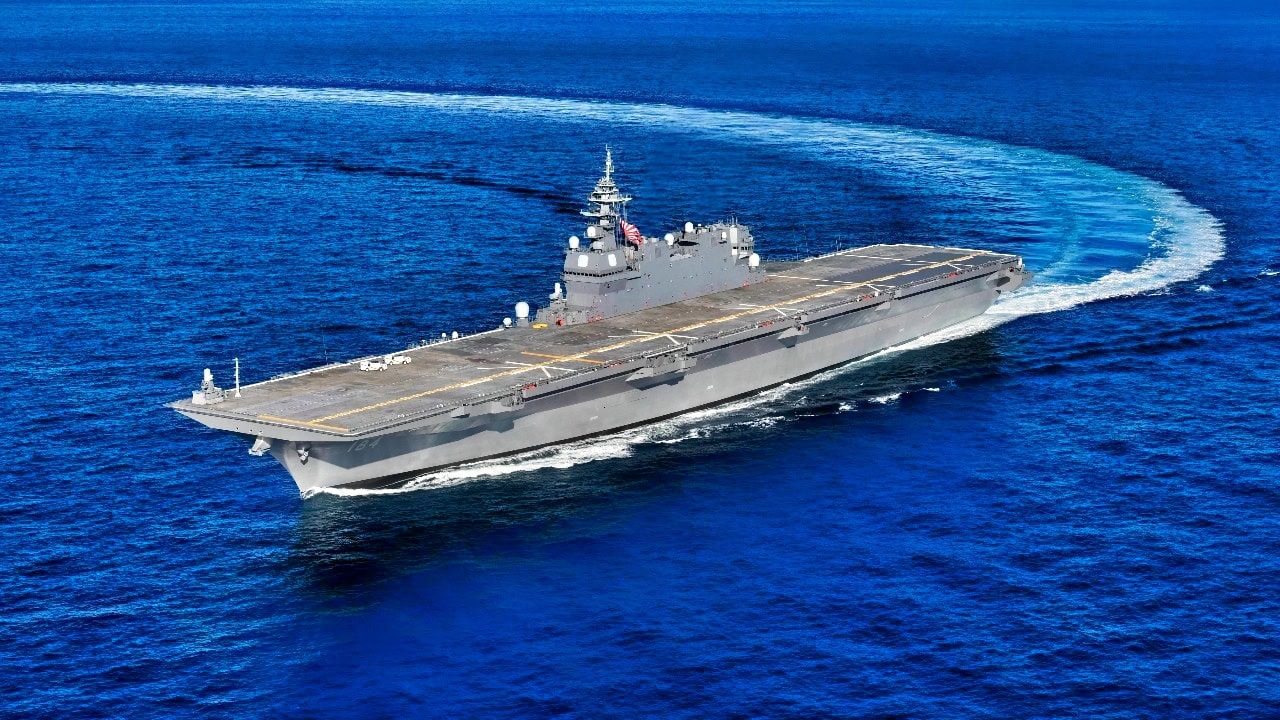
Japan Is Turning Two Helicopter Destroyers Into F-35B Mini Aircraft Carriers: Japan is converting two 248-meter warships already in service into light aircraft carriers instead of ordering a new carrier class. JS Izumo and JS Kaga entered the fleet as helicopter destroyers. Both are now being rebuilt to launch, recover, and support F-35B stealth fighters.
The change became visible on October 3, 2021, when two U.S. Marine Corps F-35Bs landed on Izumo after its first round of modifications. A specially instrumented F-35B landed on Kaga off California on October 20, 2024, beginning trials involving takeoffs, vertical landings, and deck handling.
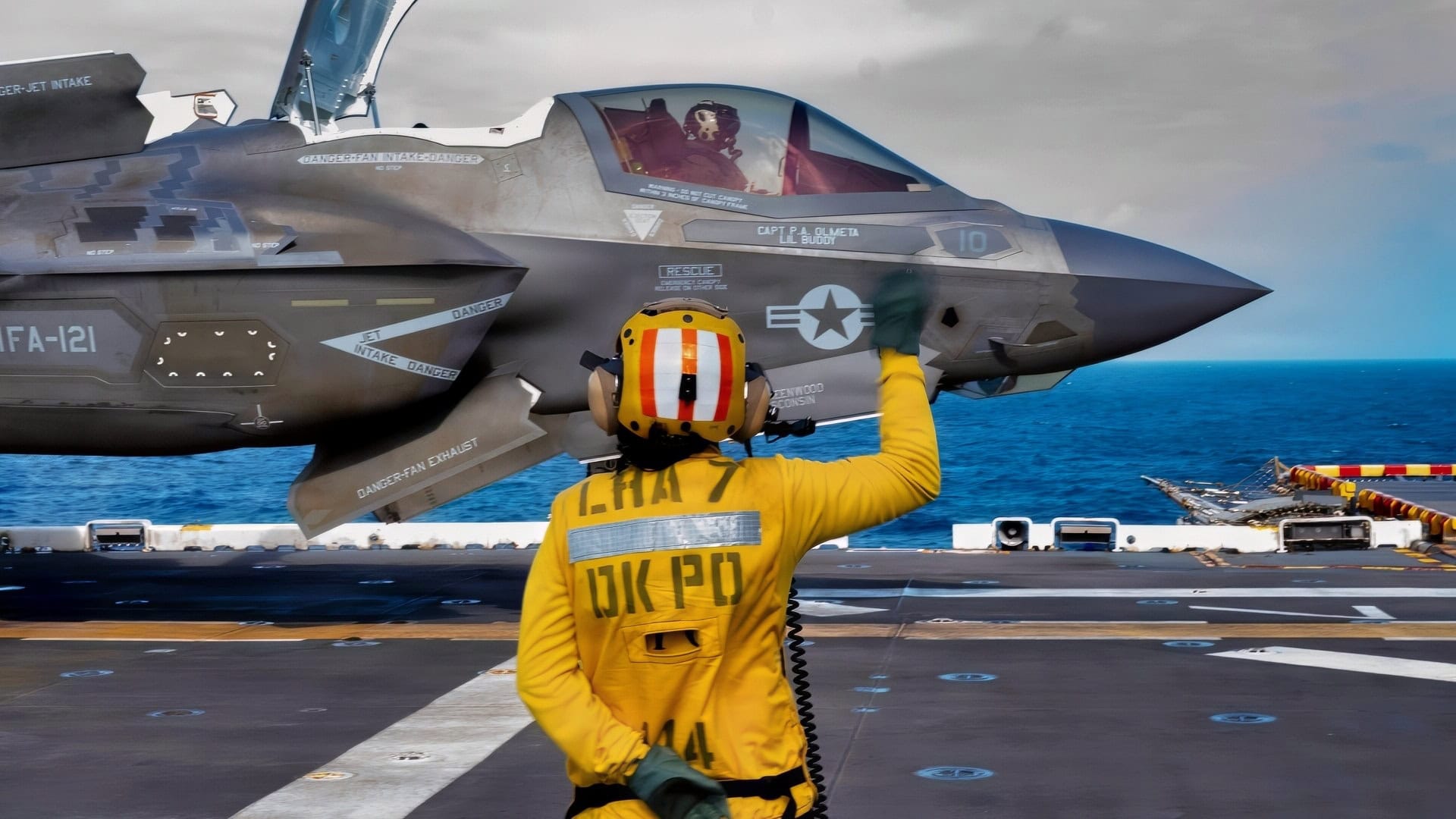
Aviation Boatswain’s Mate (Aircraft Handling) 3rd Class Anika Ramos directs the launch of an F-35B Lighting II, attached to Marine Fighter Attack Squadron 242 during flight operations on the flight deck of the America-class amphibious assault ship USS Tripoli (LHA 7) in the South China Sea, Dec. 11, 2025.
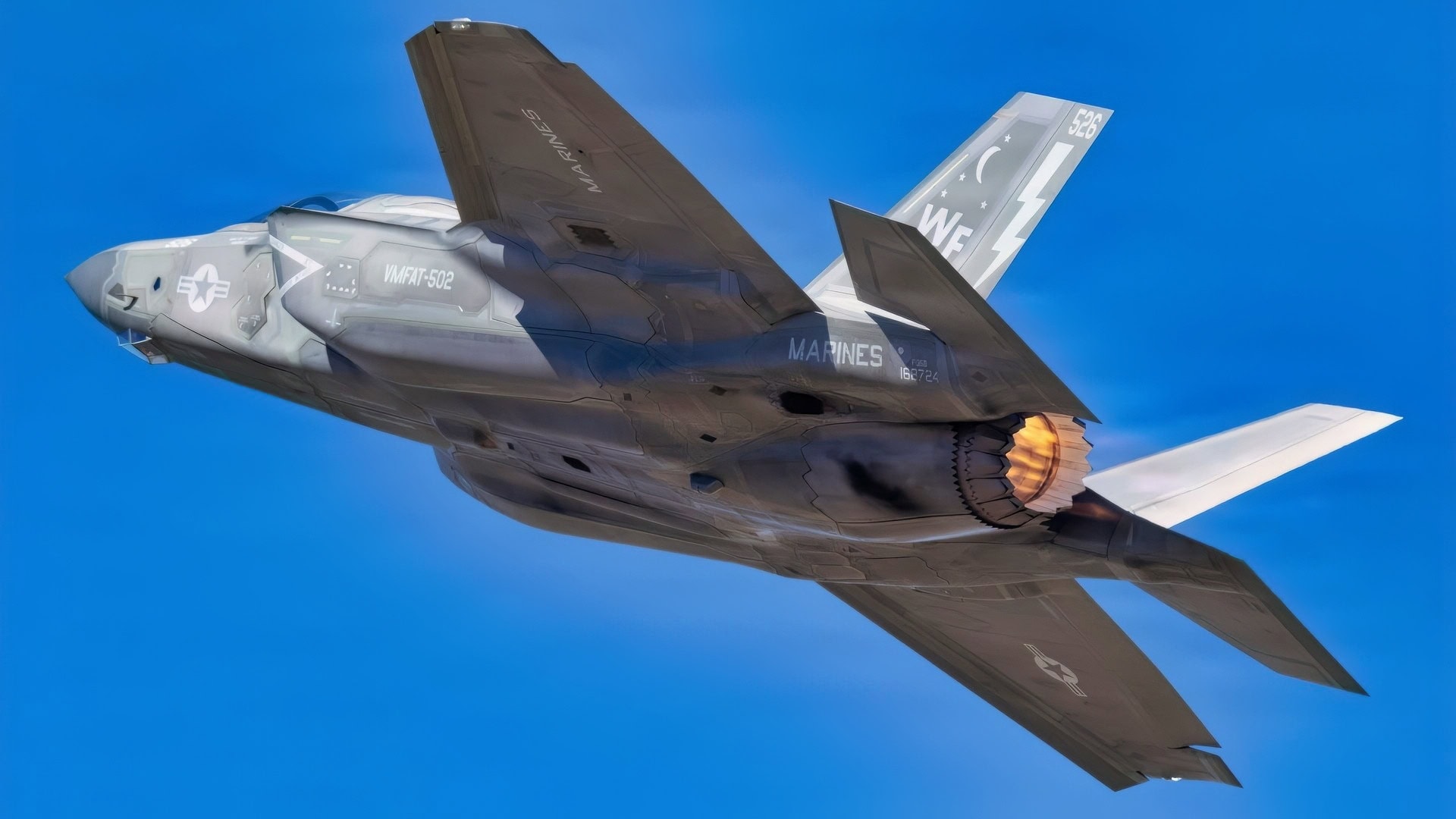
A U.S. Marine Corps F-35B Lightning II lights its afterburner and climbs during the Luke Days 2026 airshow, Saturday, March 21, 2026, at Luke Air Force Base, Arizona. The Marine Corps F-35B Lightning II demonstration showcases the maneuverability and advanced technology of a fifth-generation fighter. Demonstrations like this reflect the cutting-edge capabilities that allow the joint force to maintain air superiority in modern combat operations. (U.S. Air National Guard Photo by Tech. Sgt. Hampton Stramler)
As of late July 2026, neither conversion is finished. Izumo is in Yokohama for its second and final modification stage, with completion scheduled for March 2028. Kaga has completed the first stage and is due to finish its final work in March 2029. Japan had received six F-35Bs by May 2026 and plans to buy 42.
Japan is building the aircraft force at the same time. The fiscal 2026 defense budget assigns 28.5 billion yen to Izumo-class modifications and related equipment, plus 72.5 billion yen for three additional F-35Bs.
The Existing Hulls Already Had Carrier Geometry
The conversion worked because Izumo and Kaga already looked more like carriers than conventional destroyers. Each ship displaces 19,950 tons under Japan’s standard measurement, reaches 30 knots, and has a full-length flight deck, aircraft elevators, and a large hangar. Their original missions centered on helicopters, anti-submarine warfare, command operations, and disaster response.
Japan therefore started with two large hulls, propulsion plants, flight decks, and hangars already afloat. Reusing them eliminated the need to construct a separate carrier class. The work was divided into stages tied to major maintenance periods, keeping at least one ship available for much of the program and producing a light-carrier capability without a new hull.
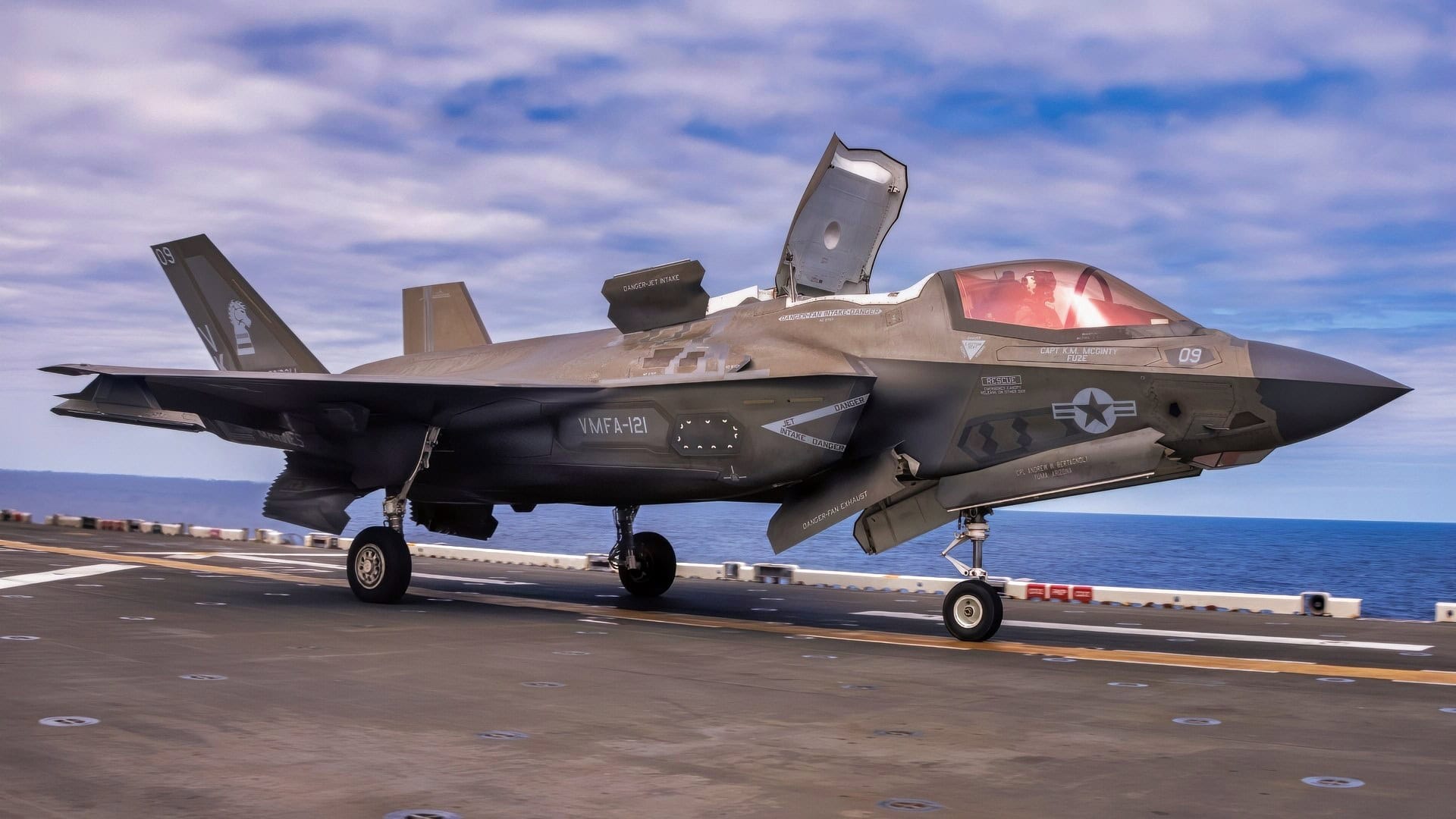
A U.S. Marine Corps F-35B Lightning II assigned to Marine Fighter Attack Squadron (VMFA) 121, 31st Marine Expeditionary Unit, takes off during a joint service flyover in the Philippine Sea, Feb. 26, 2026. Aircraft participated in a coordinated event to demonstrate joint service readiness and maritime capabilities. The 31st MEU is a persistent, combat credible force operating aboard the ships of the Tripoli Amphibious Ready Group in the U.S. 7th fleet area of operations, routinely interacting and operating with our allies and partners to contribute to deterrence, security, crisis response, and combat operations in the Indo-Pacific region. (U.S. Marine Corps photo by Lance Cpl. Victor Gurrola)
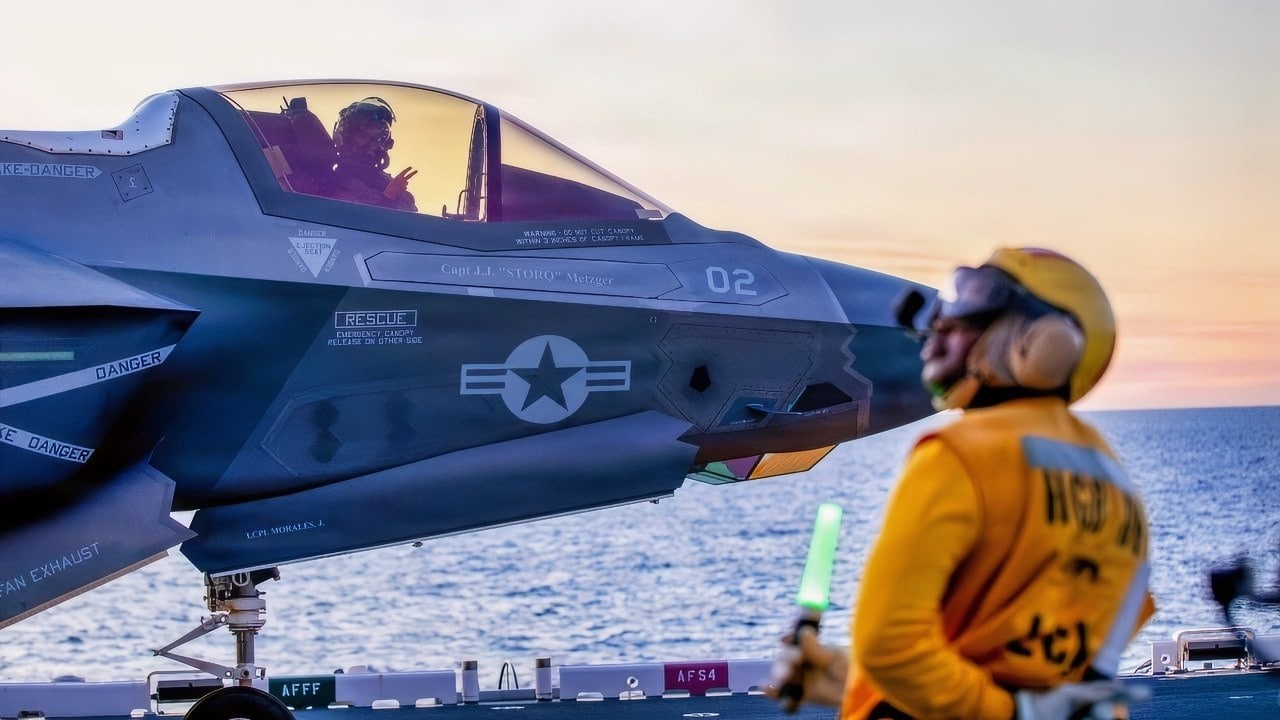
Chief Aviation Boatswain’s Mate (Handling) Stephane Togue, assigned to Wasp-class amphibious assault ship USS Makin Island (LHD 8), prepares to signal an F-35B Lightning II, attached to Marine Fighter Attack Squadron 211, for takeoff, Dec. 4, 2025. Makin Island is currently underway conducting routine operations in the U.S. 3rd Fleet. (Photo by Mass Communication Specialist Seaman Abraham Ramirez)
Kaga’s first stage added a rectangular bow, heat-resistant deck material, and lighting for night operations. The two-stage conversion plan also covers internal spaces needed for aviation fuel, magazines, maintenance, and additional personnel. The result is the practical return of Japanese carrier aviation, although Tokyo continues to classify the ships as multi-purpose destroyers.
The F-35B Gives Japan Two Movable Airfields
The F-35B makes the conversion useful. Its short takeoff and vertical landing system removes the need for catapults and arrested-recovery equipment. Japan’s larger F-35 force gains another place to refuel, rearm, and reposition fighters without depending entirely on permanent air bases.
That flexibility is particularly valuable in Japan’s southwestern islands, where runways are limited and spread across a long chain facing the East China Sea. The buildup at Nyutabaru Air Base strengthens the southern sector, while a ship changes an opponent’s targeting problem by moving between operating areas.
China’s growing carrier force provides the program with a clear strategic context. The Fujian operates electromagnetic catapults and supports a larger air wing, including the J-35 carrier fighter and fixed-wing airborne early-warning aircraft. Japan’s converted ships do not match that scale. They add two smaller decks to a wider Japanese and American network of bases, destroyers, submarines, and aircraft.
The ships also support allied operations. U.S. Marine Corps F-35Bs have flown from both vessels, and British aircraft conducted cross-deck operations with Kaga in 2025. That allows a Japanese ship to support coalition fighters during a crisis even when its own air group is unavailable.
Mini Carriers Still Carry Serious Limits
Izumo and Kaga are light carriers, not replacements for American nuclear supercarriers. They have no catapults, arrested landing system, or ability to launch heavy support aircraft such as the E-2D Hawkeye. Their size is closer to the Lightning carrier concept demonstrated by U.S. amphibious assault ships than to a Ford-class carrier.
Every F-35B embarked occupies space previously used by anti-submarine helicopters. A fighter-heavy load strengthens air defense and strike options while reducing the ship’s original helicopter mission. The vessels also depend on escorting destroyers, submarines, and land-based aircraft for layered protection.
Flight-deck heat imposes another limit. U.S. Navy engineers supporting Kaga’s 2024 trials measured temperatures beneath the deck and set intervals between vertical landings to allow the structure to cool. Landing an F-35B once does not establish the sortie rate of a purpose-built fleet carrier.
Japan Still Has to Build the Carrier Institution
The aircraft belong to the Air Self-Defense Force, while the ships and deck crews belong to the Maritime Self-Defense Force. Regular operations require joint command arrangements, shared maintenance procedures, munitions handling, deck certification, pilot qualification, and a system for moving spare parts between bases and ships.
American assistance has accelerated the process, but Japan needs its own pool of pilots, deck crews, and maintainers. With only two hulls, overhaul or battle damage removes half of the available shipboard fighter capacity.
Japan has not publicly announced a permanent shipboard F-35B detachment. Izumo’s final conversion is scheduled to continue until March 2028, and Kaga’s final work is expected to run through March 2029.
MORE – The US Navy’s Aircraft Carrier Toilet War
About the Author: Harry J. Kazianis
Harry J. Kazianis (@Grecianformula) was the former Senior Director of National Security Affairs at the Center for the National Interest (CFTNI), a foreign policy think tank founded by Richard Nixon based in Washington, DC. Harry has over a decade of experience in think tanks and national security publishing. His ideas have been published in the NY Times, The Washington Post, The Wall Street Journal, CNN, and many other outlets worldwide. He has held positions at CSIS, the Heritage Foundation, the University of Nottingham, and several other institutions related to national security research and studies. He is the former Executive Editor of the National Interest and the Diplomat. He holds a Master’s degree focusing on international affairs from Harvard University.

