
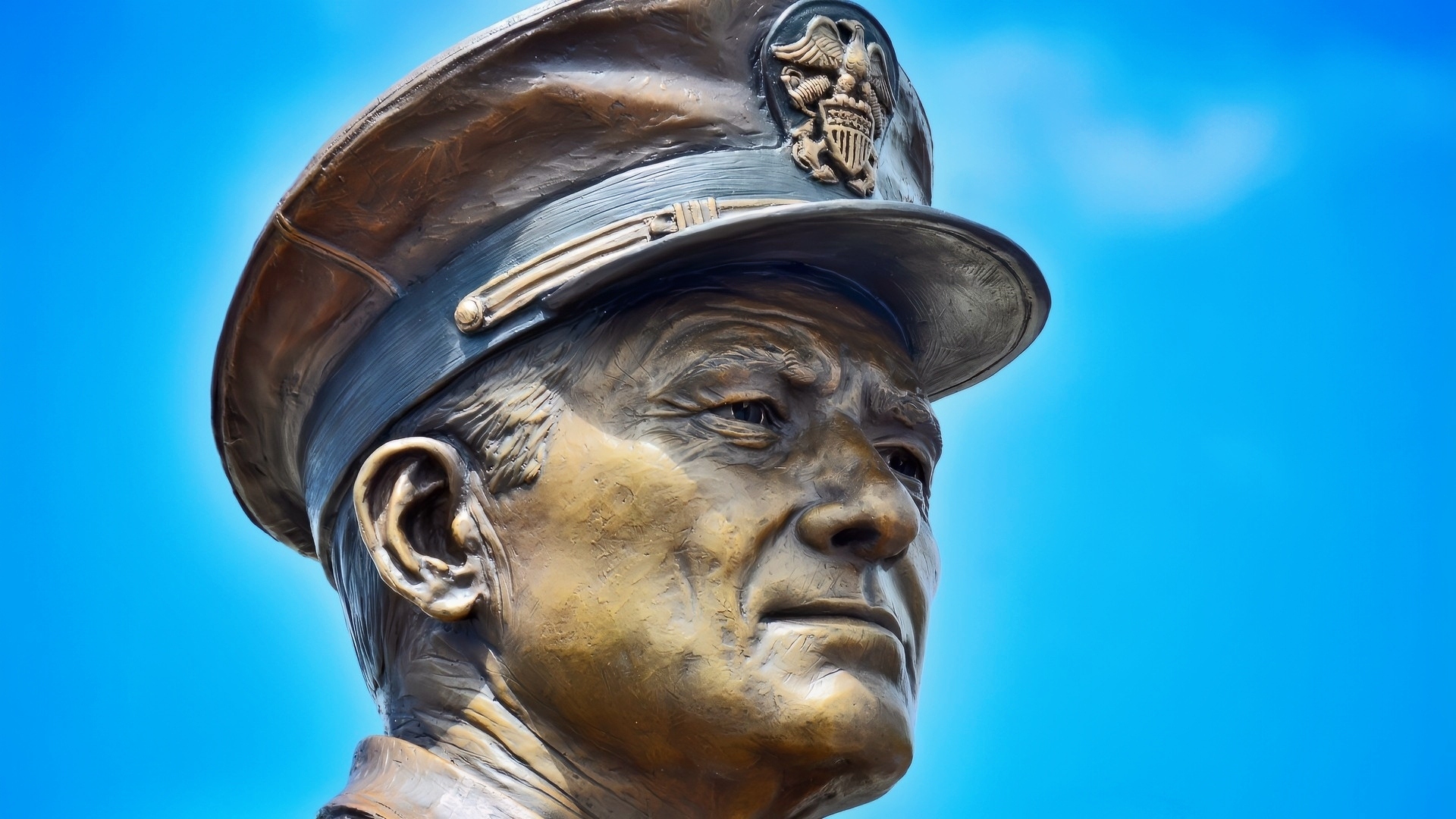
Summary and Key Points: “We shall never forget that it was our submarines that held the lines against the enemy while our fleets replaced losses and repaired wounds.” Fleet Admiral Chester W. Nimitz wrote those words in 1946, in a brief note saluting the officers and men of the submarine force who had not come home. The line carries a specific memory.
Chester Nimitz on the Importance of US Navy Submarines During WWII
Military Quote of the Day: “We shall never forget that it was our submarines that held the lines against an enemy while our fleets replaced losses and repaired wounds.” – Fleet Admiral Chester W. Nimitz
In 1946, the year after World War II ended, Fleet Admiral Chester W. Nimitz wrote a brief note expressing his appreciation for the sacrifices of those aboard submarines who lost their lives in the war, and for the role the men on submarines played in the victory.
“We, who survived World War II and were privileged to rejoin our loved ones at home, salute those gallant officers and men of our submarines who lost their lives in that long struggle,” Nimitz said in the note. “We shall never forget that it was our submarines that held the lines against the enemy while our fleets replaced losses and repaired wounds.”
According to a National Park Service account, the United States lost 52 submarines in World War II, losing 3,506 officers and enlisted men.
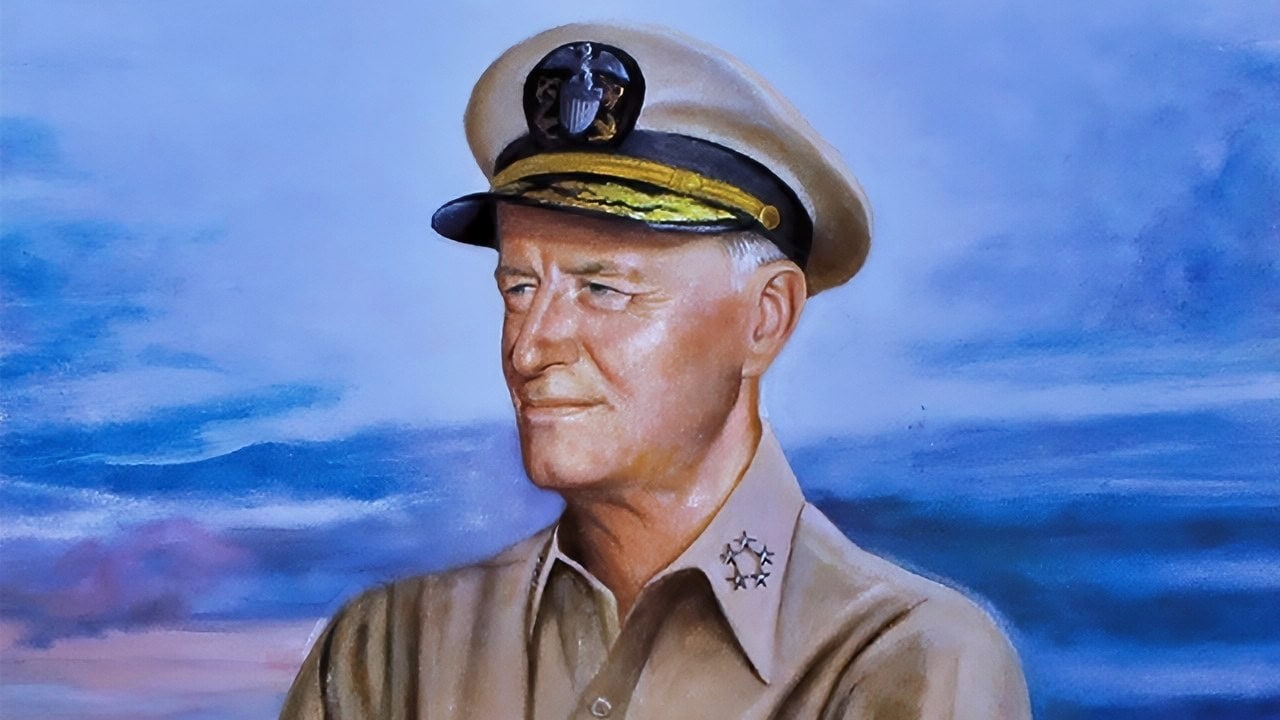
Chester Nimitz Navy Admiral. Image Credit: Creative Commons.

U.S. Navy Admiral Chester W. Nimitz Portrait. Image Credit: Creative Commons.
The Submarine Service, at around 20 percent, had the largest casualty rate of any American forces in that war.
A Crucial Difference
However, as Nimitz pointed out, submarines played a major role in winning the war.
“In all, U.S. submarines destroyed 1,314 enemy warships in the Pacific, representing 55% of all Axis power warships lost and a total of 5.3 million tons of shipping,” Naval historian Gary E. Weir said, per the NPS account.
The National Submarine Memorial looked at the crucial role submarines played in World War II, especially in the period shortly after Pearl Harbor.
Submarines became especially important then because the attack itself cost so many battleships and personnel. As a result, the National Submarine Memorial account said, “U.S. strategic plans and tactics to engage the Japanese military in battle were made obsolete nearly overnight,” just as the United States was entering a World War.
The submarines themselves at Pearl Harbor, however, remained untouched. But when the Japanese attacked Manila Bay, the U.S. suffered its first losses to the submarine fleet, as USS Seadragon and USS Sealion were both damaged.
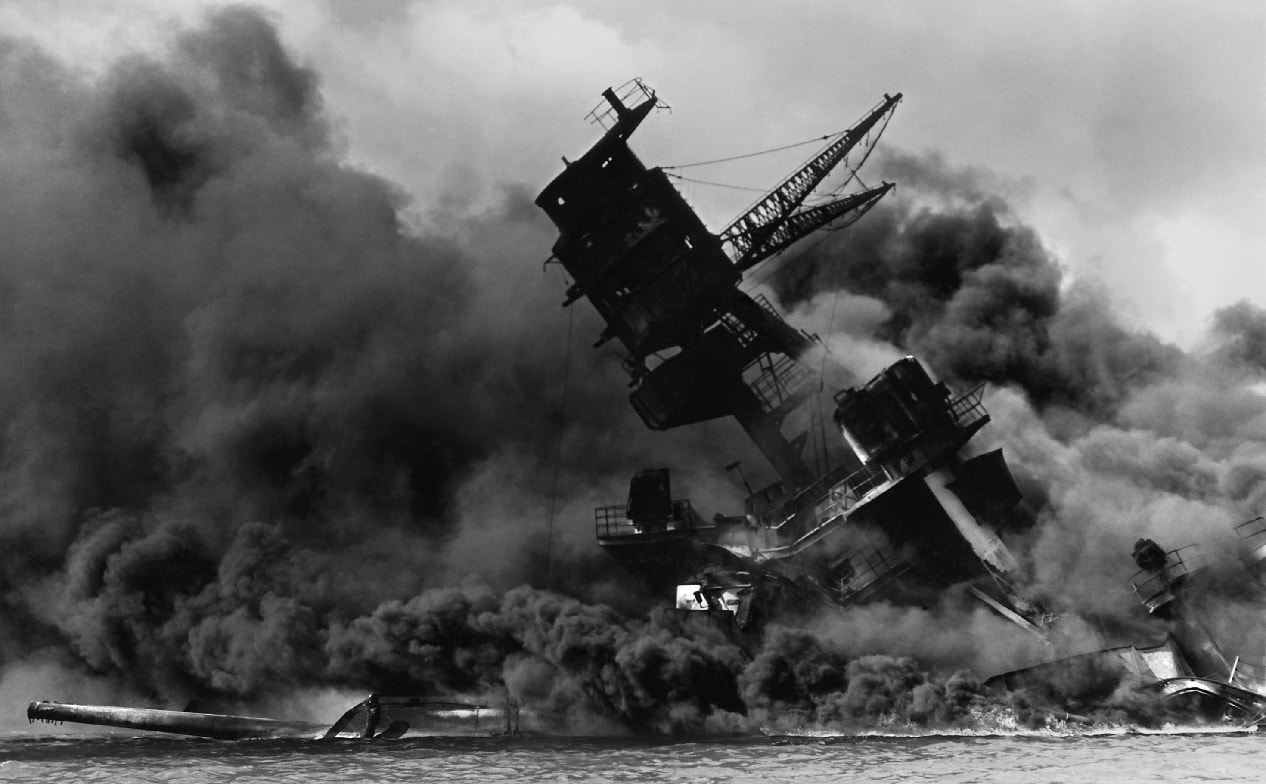
USS Arizona in the aftermath of Pearl Harbor. Image Credit: Creative Commons.
So it was time for a new plan, with submarines as a key part.
“Execute Against Japan”
“The commander of the Pacific Fleet ordered the adoption of a new plan to use our submarine force to find and attack the Japanese across the vast reaches of the Pacific,” the National Submarine Memorial account said. U.S. Chief of Naval Operations Admiral Harold Stark, just hours after Pearl Harbor was attacked, ordered naval commanders to “execute unrestricted air and submarine warfare against Japan.”
That order was the subject of a book, “Execute Against Japan: The U.S. Decision to Conduct Unrestricted Submarine Warfare.” Joel Ira Holwitt wrote it, and it was published in 2013.
Four days after Pearl Harbor, USS Gudgeon departed Pearl Harbor to conduct the war’s first submarine patrol.
“Through the next three years and eight months, as our military forces fought intense, bloody battles to drive the Japanese island by island back to their homeland, our submarines quietly went about the business of destroying the Japanese merchant marine and its ability to supply food, fuel, and industrial raw materials for their war effort,” the Submarine Memorial account said.
Maritime.org, in its own history of submarines in World War II, noted that 51 submarines were at Pearl Harbor, the only ships in the U.S. Pacific Fleet that could retaliate after the attack.
“By good fortune, they had the speed, endurance, and weapon load to make them admirably suited for another role: attacking Japanese shipping throughout the Pacific,” that account said. “As a result they were immediately assigned the new role, and a basic military strategy of strangulation of Japan was fashioned about them.”
The Silent Service
The reluctance of those who served on submarines to talk about their service, along with restrictions on communications about their activities, is why the submarine branch of the Navy has come to be called the “Silent Service.”
That term dates back to at least 1943, when, according to the Naval History and Heritage Command account, Abbott Laboratories supported a traveling exhibition that toured the country and featured submariners’ artwork.
“For the submariner, the battle area is the enemy’s doorstep. In theory, and almost practically, our submarines are in contact with the enemy, from the time they leave their base until they return,” the caption of the 1943 exhibition said.
About the Author: Stephen Silver
Stephen Silver is an award-winning journalist, essayist, and film critic, and contributor to the Philadelphia Inquirer, the Jewish Telegraphic Agency, Broad Street Review, and Splice Today. The co-founder of the Philadelphia Film Critics Circle, Stephen lives in suburban Philadelphia with his wife and two sons. For over a decade, Stephen has authored thousands of articles that focus on politics, national security, technology, and the economy. Follow him on X (formerly Twitter) at @StephenSilver, and subscribe to his Substack newsletter.