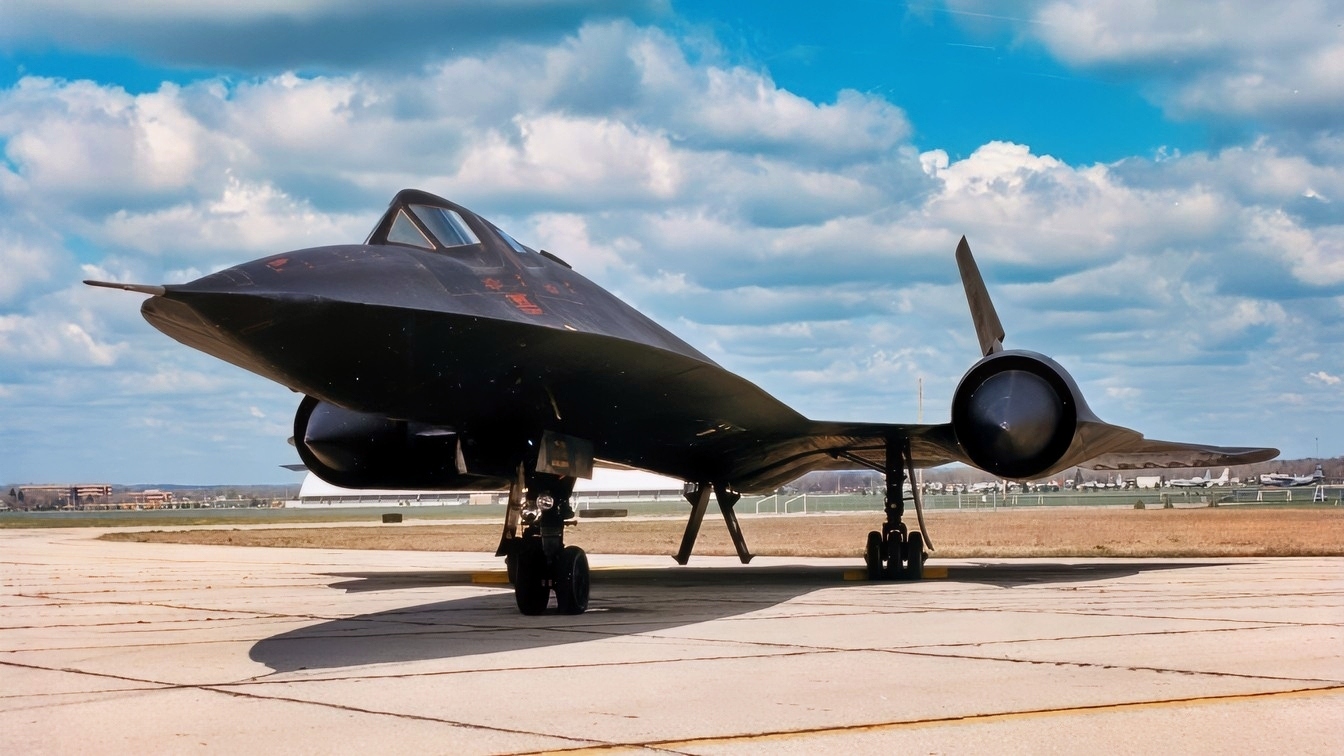
An SR-71’s engine exploded over Maryland, and the pilot probably had only seconds to react. On May 13, 1984, Rick McCrary expected that it would be his last day flying the SR-71 Blackbird; the day almost ended with the loss of an aircraft.
McCrary had taken the SR-71A 61-7960 to Andrews Air Force Base outside Washington for an air show, and it was supposed to return to Beale Air Force Base in California on Sunday afternoon; but shortly after takeoff, the aircraft’s right engine came apart.
Photographs show the damage: a section of the afterburner had detached. McCrary later told Spencer Hall of SB Nation: “As we took off from there and came back around for a pass, the right engine exploded. We had to dump gas, and set about thirteen acres of Maryland on fire as we did that. That was kind of interesting, just spewing flaming fuel and titanium pieces around.”
The Blackbird is now on display at the Castle Air Museum in California and survived the event, was repaired at Andrews, and flew for several more years.
It made its final flight in 1990.
Fire Shortly After Takeoff
Shortly after midday on May 13, the Blackbird set off for California. One witness told The Washington Post that its right engine side had “burst into flames.”
McCrary shut down the engine and turned back toward Andrews; neither of the crew members was hurt during the subsequent landing.
Debris from the aircraft caused a fire near the runway.
The Post called it a “small fire” and said firefighters put it out quickly.
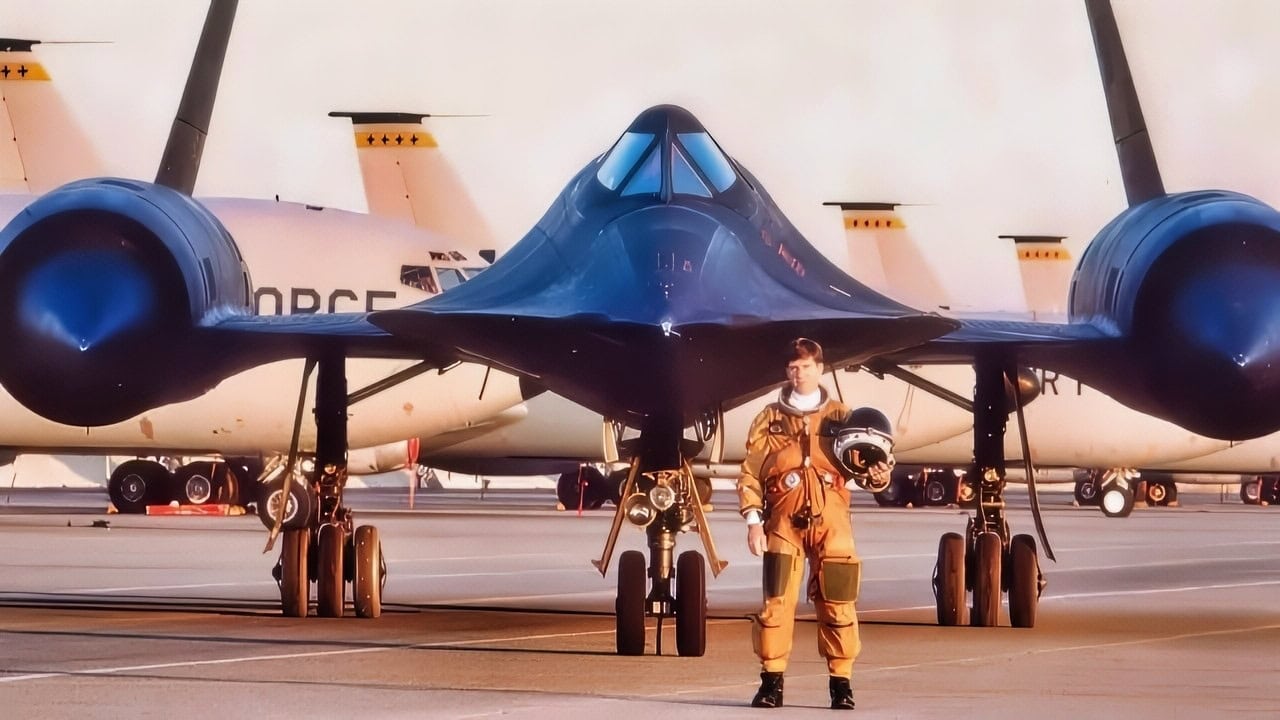
SR-71 Blackbird Creative Commons Photo.
However, the version of events McCrary gave later differs in terms of scale from the account written immediately after the incident. It therefore remains unclear exactly how big the fire was.
The photographs make no doubt about the severity of the mechanical failure; the record concerning airframe 61-7960 shows that the afterburner assembly came off and damaged the aircraft’s right wing.
“Screw It,” Dump the Fuel
When speaking to Spencer Hall of SB Nation decades later, McCrary said the voice-tape recording from the episode had him saying, “Screw it,” before he dumped the fuel. The Post also mentioned a grass fire near the runway.
He did not even experience the full physical impact of the incident until the aircraft had finally stopped. Afterward, he said his legs shook uncontrollably while he remained in the cockpit.
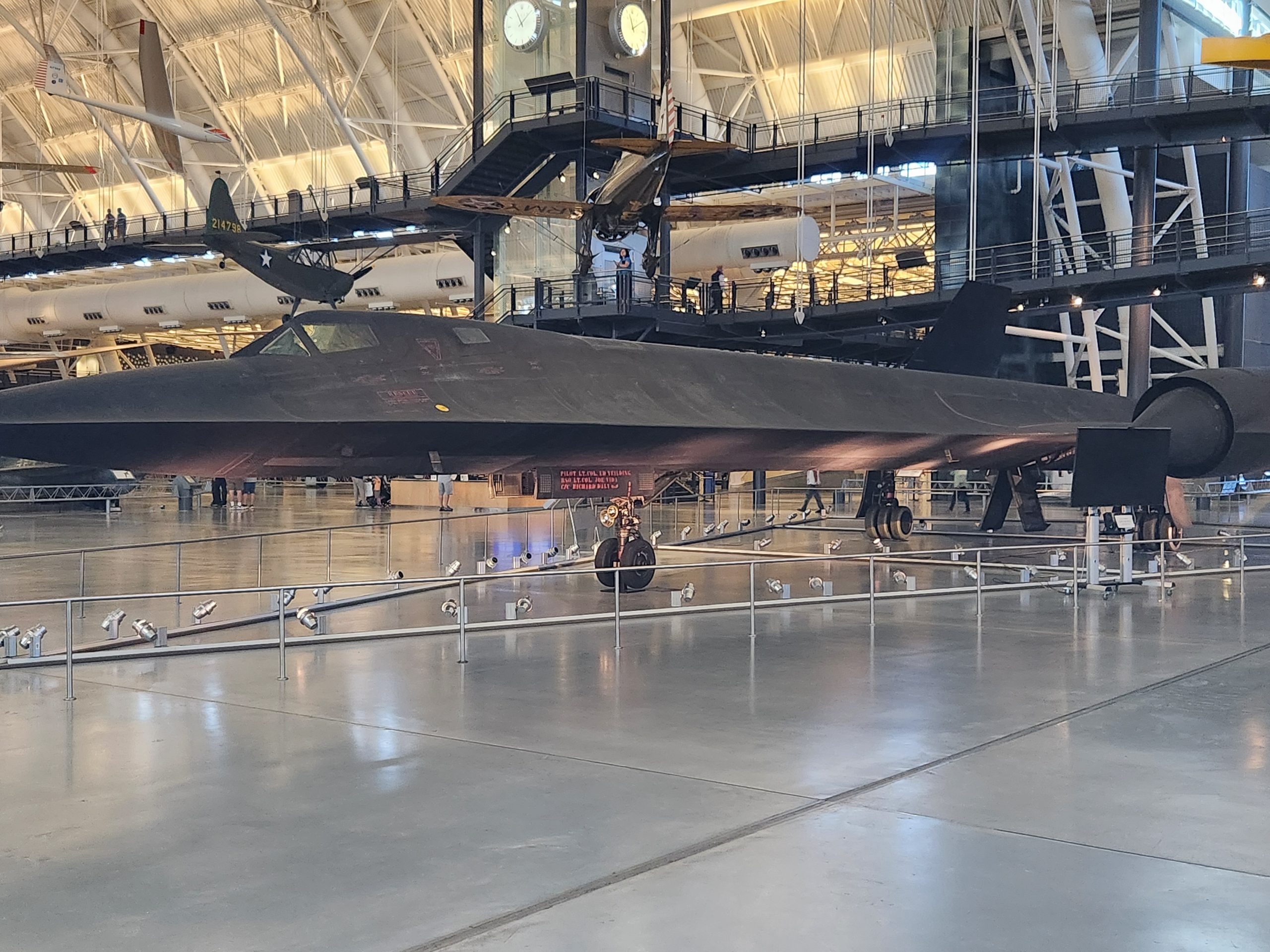
SR-71 Blackbird visit by 19FortyFive.com staff to the Smithsonian.
Although he believed this would be his final mission in the Blackbird, he made another qualification flight after the accident review.
61-7960 Back in Business
As with any complex military equipment, SR-71s have their own unique set of problems.
The Blackbird endured exceptionally high temperatures during sustained flight at Mach 3.
It was capable of carrying over 80,000 pounds of JP-7 fuel, which has a high flash point, and its engines ran in afterburner while cruising at high speed.
The man who helped design the Blackbird for Lockheed, Kelly Johnson, put the challenge down in six words as follows: “Everything had to be invented. Everything.”
50th Anniversary Festivities to Take Place
To mark the half-century since the SR-71A set its 2,193.167 mph record in 1976, a celebration will take place at Warner Robins’ well-known Museum of Aviation in Georgia.
During the “Blackbird Days” festivities from September 24 to 26, visitors can view the cockpit of the storied 61-7958, a different aircraft from McCrary’s 61-7960, but still an iconic SR-71A.
The SR-71A, famously flown not only by McCrary but also by Eldon “Al” Joersz and George Morgan in 1976, remains unrivaled for its speed record.
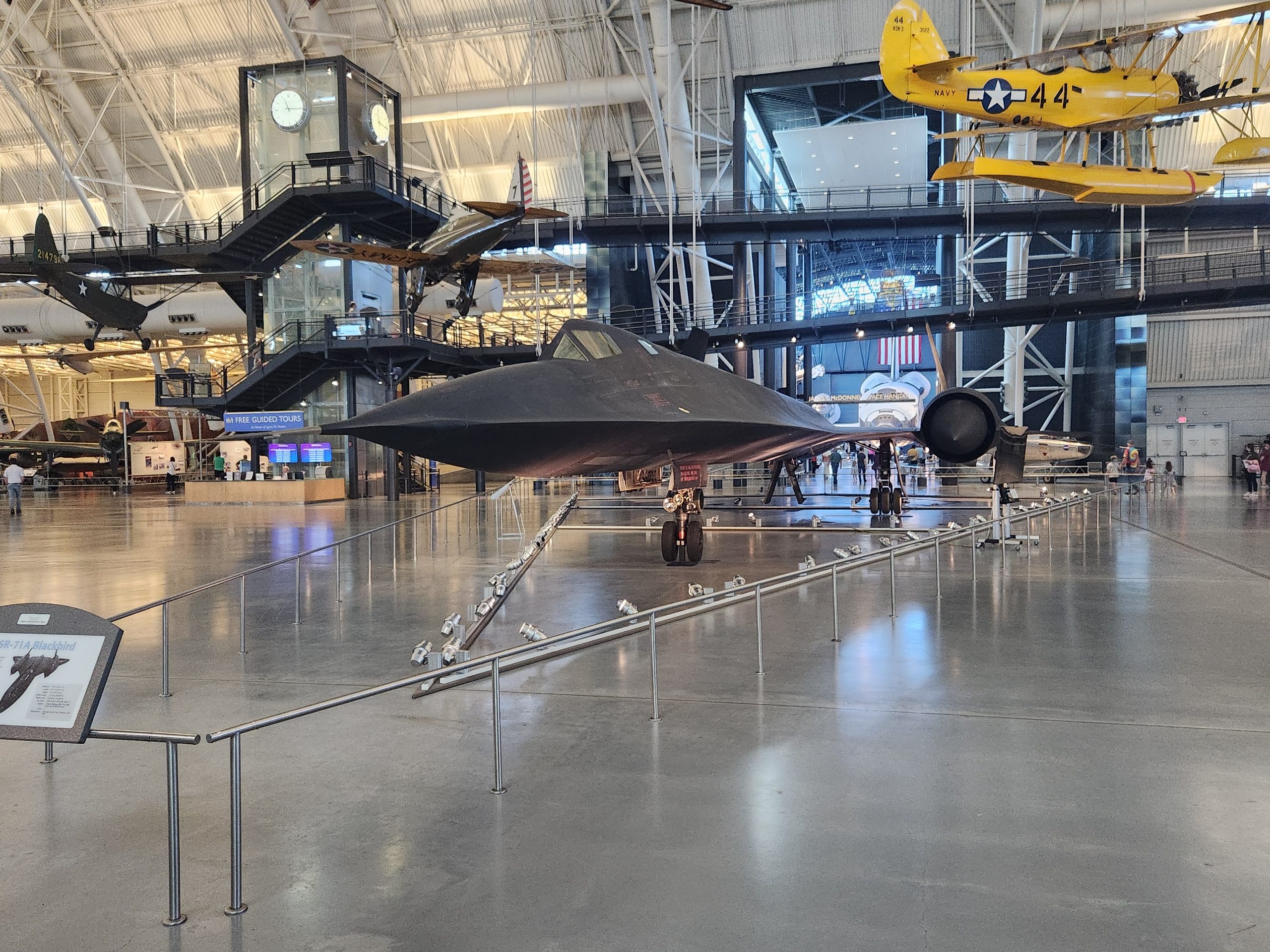
SR-71 Blackbird visit by 19FortyFive.com staff to the Smithsonian.
Obviously, this does not mean that newer aircraft pale in comparison to the SR-71 and its various engines. Defense policy and priorities have evolved, as has technology. Stealth is now often prized over speed in aircraft.
Regardless of the machinations of the defense industry itself, it does seem that the general American public shares some enthusiasm for its history – hence why so many of these retired aircraft are displayed in museums across the country.
About the Author: Georgia Gilholy
Georgia Gilholy is a journalist based in the United Kingdom who has been published in Newsweek, The Times of Israel, and the Spectator. Gilholy writes about international politics, culture, and education. You can follow her on X: @llggeorgia.