
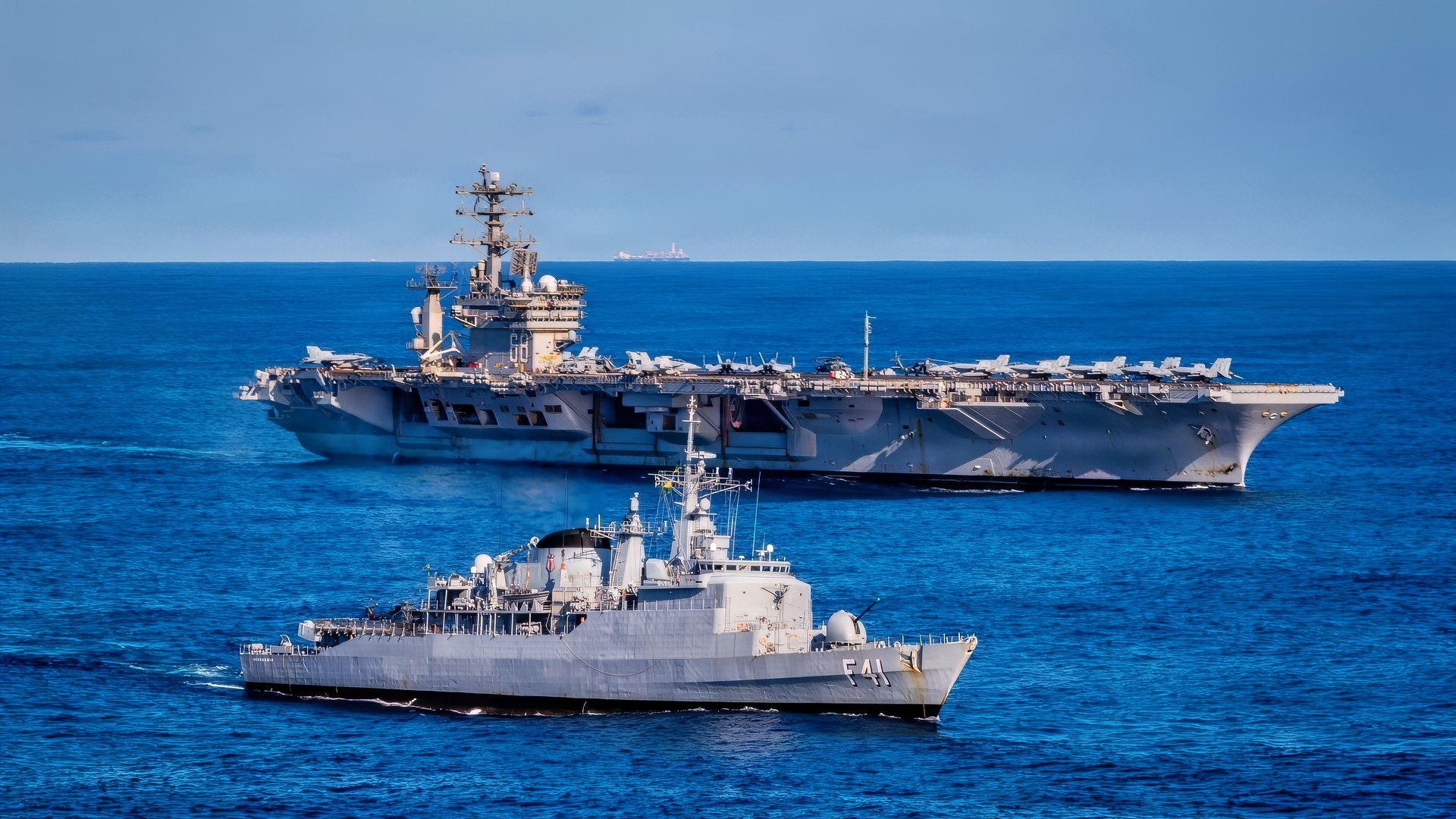
USS Nimitz was due to be decommissioned earlier this year. After more than half a century of service, the aircraft carrier was expected to be decommissioned in May, making way for the USS John F. Kennedy. However, repeated delays have forced Nimitz to serve an additional year, with Kennedy now expected to enter active service next year.
History of USS Nimitz
Construction began on USS Nimitz in 1968, taking seven years and almost $2 billion ($12.5 billion in 2026) to complete before it was commissioned in May 1975. At 1,092 feet long and displacing around 100,000 tons, the carrier helped establish the basic design that would dominate the U.S. Navy’s carrier fleet for the next half-century, with nine more commissioned through 2009.
Each carrier is powered by two nuclear reactors, allowing the ships to remain at sea for extended periods without the enormous quantities of conventional fuel that would otherwise be required to propel vessels of their size. Through its water distillation system, which converts seawater into fresh water, the carrier paved the way for longer deployments, reducing the need for port stopovers and reliance on supply vessels.
The Navy originally planned to deactivate the carrier in May 2026, but earlier this year extended Nimitz’s service life by about 10 months. It is now scheduled to be deactivated in March 2027, around the time the new Gerald R. Ford-class carrier USS John F. Kennedy is expected to enter the fleet.
Construction Delays
USS John F. Kennedy began construction in February 2015 and was laid down four years later, in July 2015, with an intended completion by 2018.
Construction delays beset the vessel early on, prompting then-Secretary of Defense Robert Gates to announce a shift to a five-year building program, citing fiscal sustainability. Further delays pushed commissioning back to 2020 and then to 2022.
The project has been blighted by delays since.
The second of the Gerald R. Ford-class carriers, Kennedy, experienced certification delays for the Advanced Arresting Gear and Advanced Weapons Elevators – two systems central to the carrier’s operations.
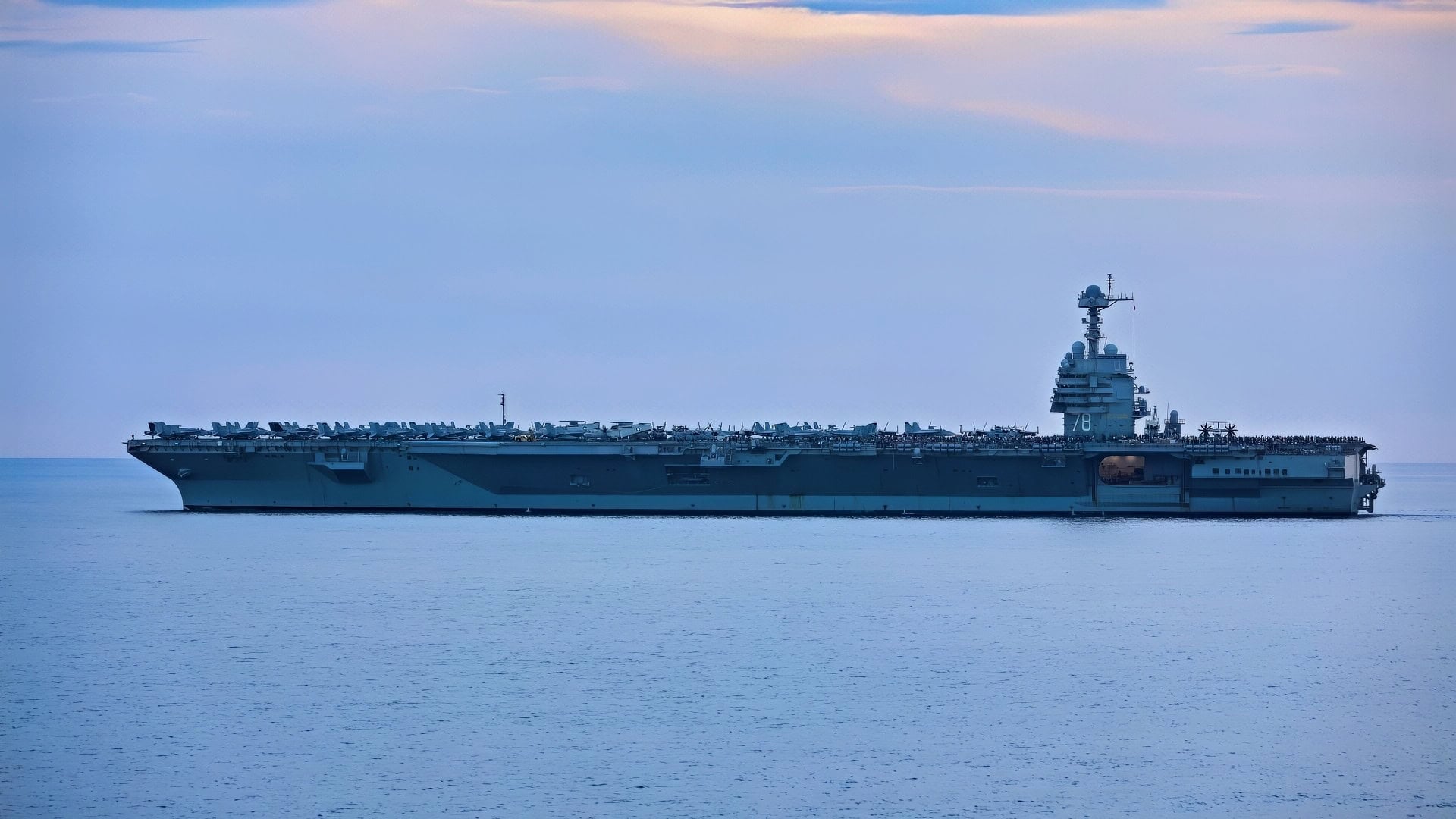
(July 4, 2023) The crew of Ford Class Aircraft Carrier USS Gerald R. Ford (CVN 78) stand on the flight deck to watch a Fourth of July gun shoot from Arleigh Burke-class guided-missile destroyer USS Ramage (DDG 61) (not pictured), July 4, 2023. Ramage is part of the Gerald R. Ford Carrier Strike Group and is on a scheduled deployment in the U.S. Naval Forces Europe area of operations, employed by the U.S. Sixth Fleet to defend U.S., allied, and partner interests. (U.S. Navy photo by Mass Communication Specialist 3rd Class Adriones Johnson)
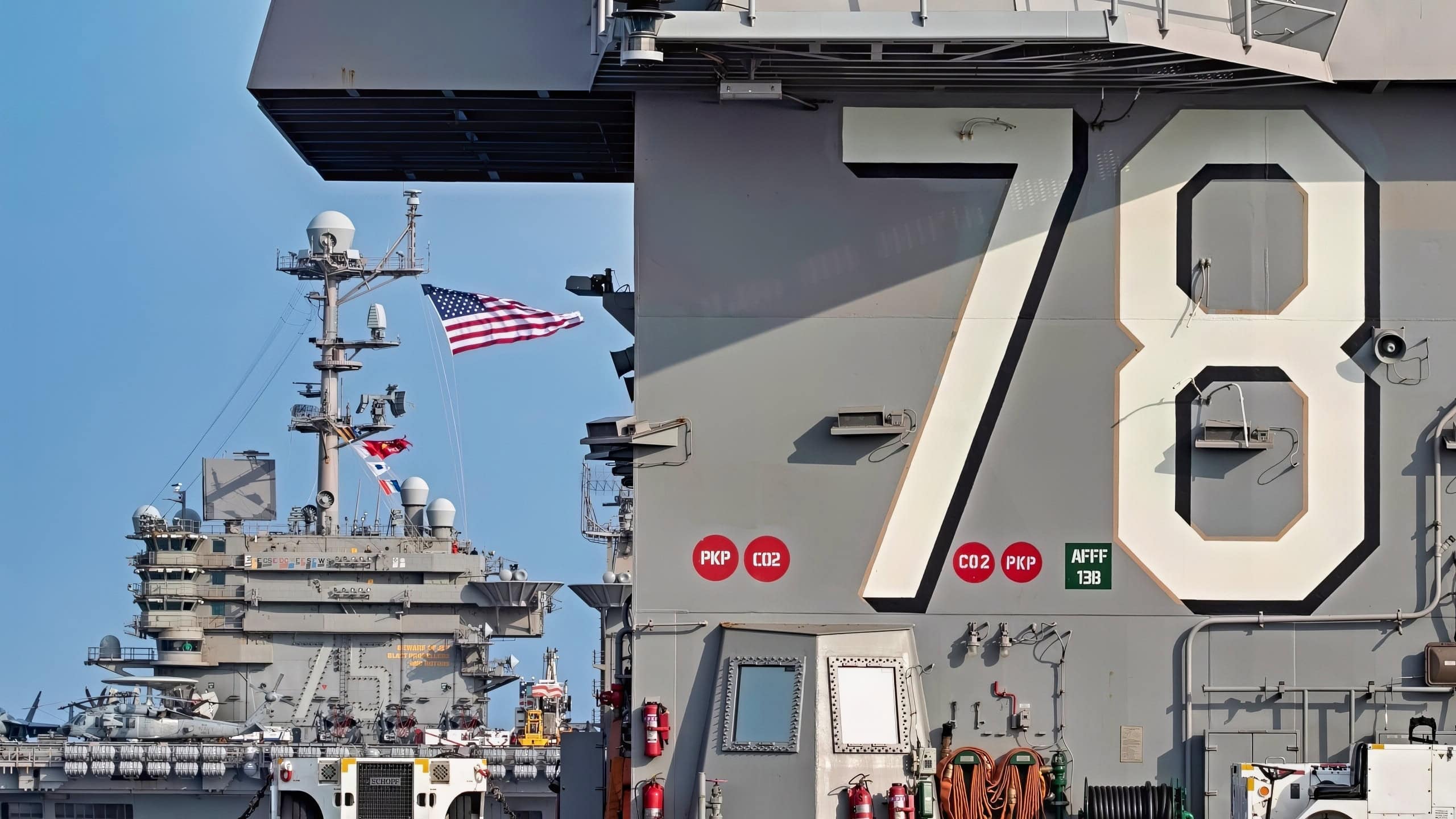
The Ford-class aircraft carrier USS Gerald R. Ford (CVN 78) and the Nimitz-class aircraft carrier USS Harry S. Truman (CVN 75) transit the Atlantic Ocean June 4, 2020, marking the first time a Ford-class and a Nimitz-class aircraft carrier have operated together underway. Ford is underway conducting integrated air wing operations, and the Harry S. Truman Carrier Strike Group remains at sea in the Atlantic as a certified carrier strike group force ready for tasking in order to protect the crew from the risks posed by COVID-19, following their successful deployment to the U.S. 5th and 6th Fleet areas of operation. (U.S. Navy photo by Mass Communication Specialist 2nd Class Ryan Seelbach)
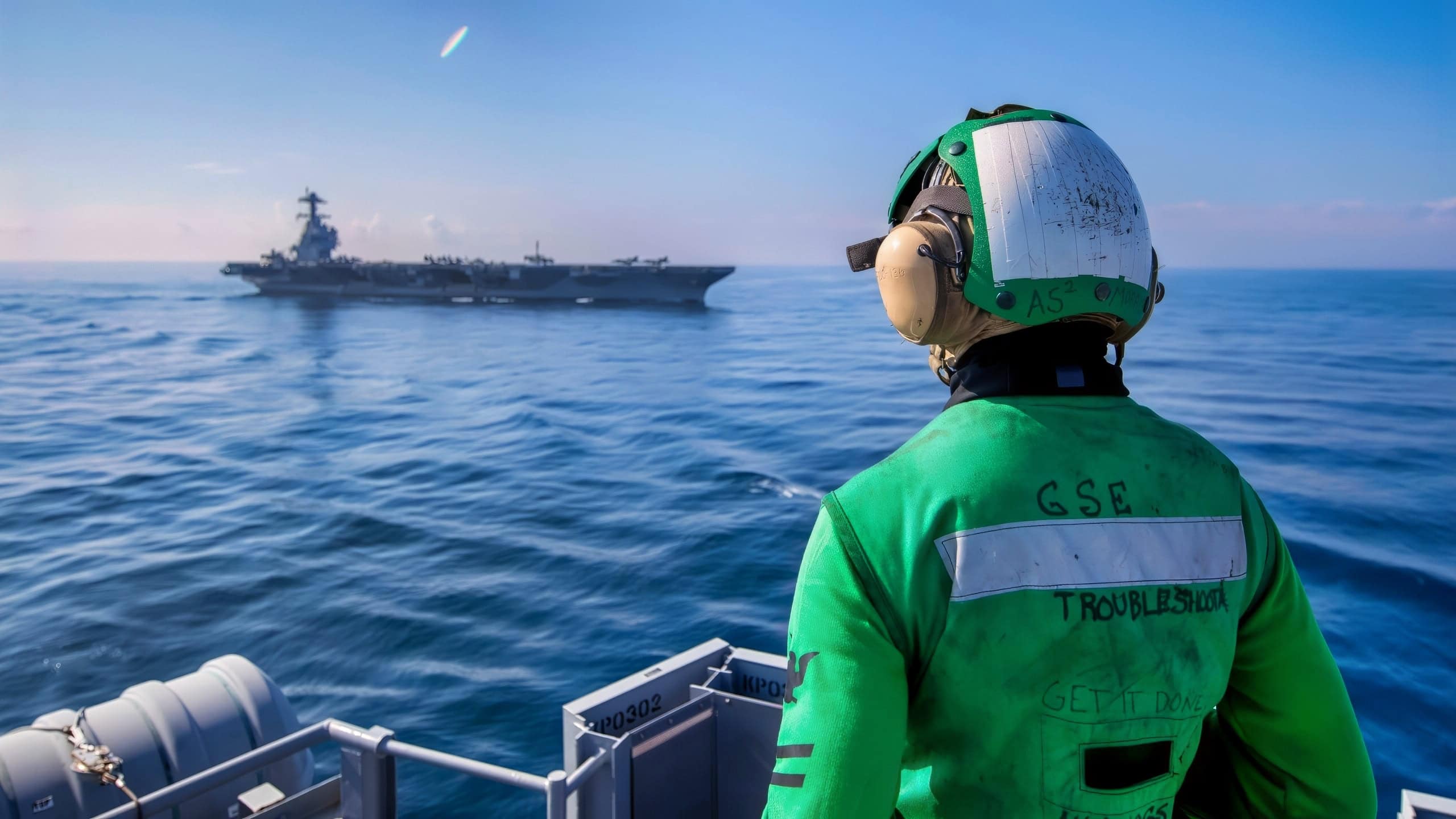
ATLANTIC OCEAN (June 27, 2025) Aviation Support Equipment Technician 2nd Class Jato Morris observes the Ford-class aircraft carrier USS Gerald R. Ford (CVN 78), conduct a vertical replenishment with the Nimitz-class aircraft carrier USS George H.W. Bush (CVN 77). George H.W. Bush is underway conducting Tailored Ship’s Training Availability and Final Evaluation Problem (TSTA/FEP). TSTA/FEP prepares the ship and crew for full integration as a carrier strike group through a wide range of mission critical operations. (U.S. Navy photo by Mass Communication Specialist 3rd Class Jayden Brown)
The former catches aircraft as they land, while the latter moves munitions from storage areas to the flight deck. Both technologies were introduced with the Ford-class program.
A change in delivery also delayed commissioning.
The original two-stage approach was abandoned in 2020, with the latter-stage work, including changes allowing Kennedy to operate the F-35C Lightning II and the installation of the Enterprise Air Surveillance Radar, instead required before delivery.
Kennedy finally completed its builder’s and acceptance trials earlier this year, and is set to enter service next month.
Federal Law
Kennedy’s delays have forced a postponed retirement for Nimitz.
Under federal law, the Navy must maintain at least 11 operational aircraft carriers; if Nimitz had retired earlier this year as scheduled, the Navy would have had only ten.
With the country at war with Iran, retiring as planned would have reduced the Navy’s margin for deployments, maintenance periods, training, and unexpected crises.
Not all 11 carriers are always available for combat, and retaining Nimitz provides additional resources while other carriers undergo scheduled maintenance.
Kennedy is not the only Ford-class carrier behind schedule. USS Enterprise and USS Doris Miller, the third and fourth ships in the class respectively, have suffered similar problems to Kennedy.
Enterprise is not expected to be commissioned until 2031, with Miller due three years later.
Nimitz’s Last Year
Nimitz is on something of a farewell tour.
In March, the ship left Naval Base Kitsap-Bremerton for the final time and eventually arrived at Norfolk, Virginia, in July after sailing around South America.
For the remaining months of its active life, the Navy is using Nimitz largely as a training carrier, allowing naval aviators to complete carrier qualifications.
“She is still a relevant warship today,” Capt. Joseph Furco, commanding officer of Nimitz, told reporters in July.
“My tongue-in-cheek explanation is I am the third ‘last CO’ of USS Nimitz. Six months from now – rhetorically – what is going on in the world? What does our nation’s leadership ask of the military? What will our senior military leadership ask of the Navy down the line?
Nimitz absolutely can have a role.”
After deactivation, the far longer process of dismantling a nuclear-powered aircraft carrier will begin.
About the Author: Shay Bottomley
Shay Bottomley is a British journalist. He has written for the Western Standard, Business Insider, Maidenhead Advertiser, Slough Express, Windsor Express, Berkshire Live and Southend Echo.