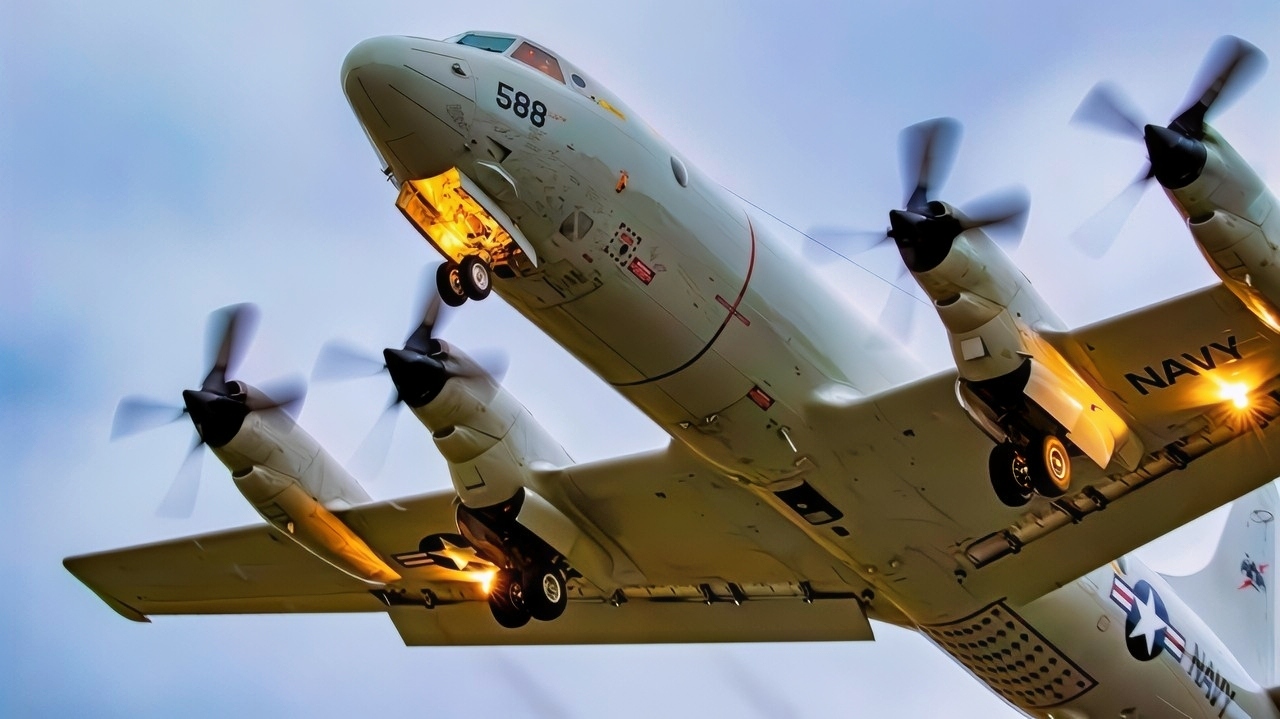
The looks were deceiving. A four-engine, propeller-driven transport plane painted in light gray with “Navy” and the aviation roundel on the fuselage, leisurely making its way through the sky. Beneath that seemingly ordinary exterior was a deadly instrument of war, the Lockheed P-3 Orion.
The Lockheed P-3 Orion Story:
When the Orion was introduced, the US Navy had employed several anti-submarine warfare platforms, both rotary and fixed-wing, but if you were a sub skipper for the USSR during the Cold War, the Orion was your nightmare.
If a P-3 found you, you were as good as dead.
You’d never know it was even there until your own hydrophones picked up the splash and propeller whine of the Mk46 torpedo as it dropped right in front of you.
Your sub had no time or way to evade its active sonar pinging off your hull less than one minute from impact.
The Origin Story:
The P-3 was born of the Lockheed Electra in 1957, when the Navy issued a call for a new Maritime Patrol Aircraft to replace the P-2 Neptune then in service.
By 1958, the first Orion was in the air in a form much altered from the humble transport aircraft from which it was derived.
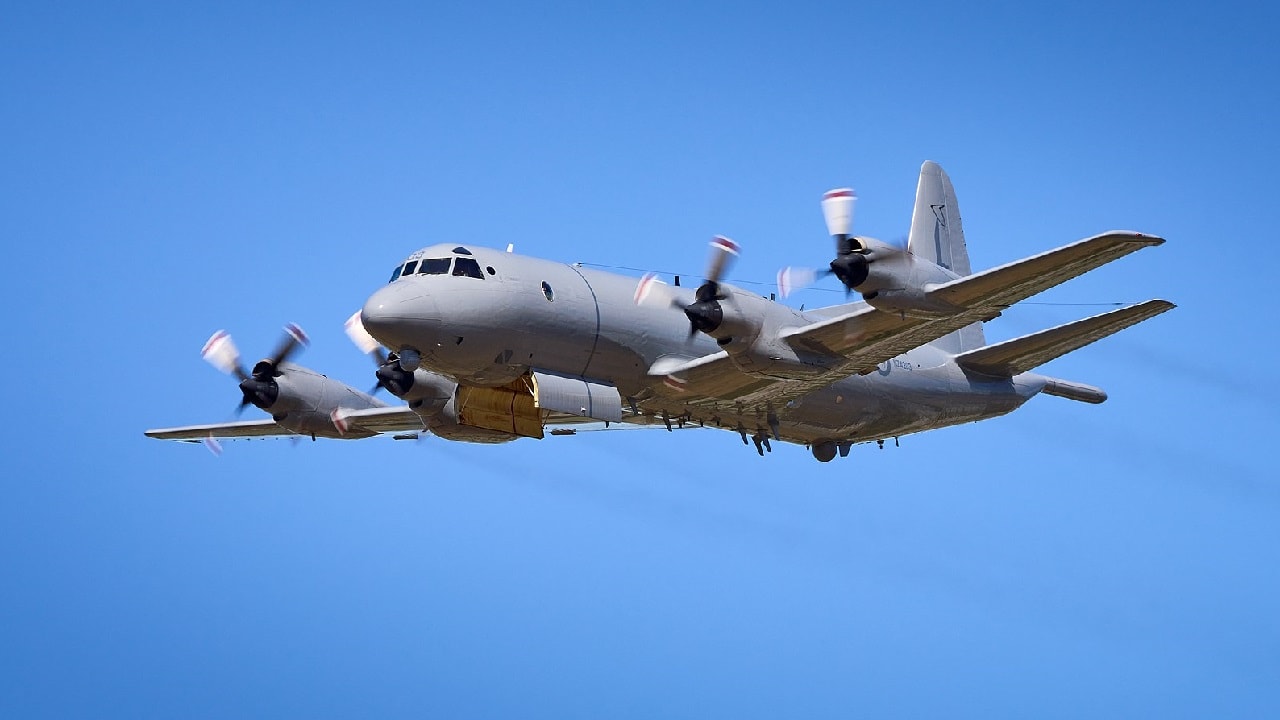
The Airborne Surveillance and Response Force (ASRF) is provided by No. 5 Squadron RNZAF. The Squadron is equipped with a total of six P-3K2 aircraft, each having undergone various airframe and mission system upgrades. The P-3K2 provides airborne surveillance and reconnaissance of New Zealand’s areas of economic interest, exclusive economic zone, the South Pacific, and the Southern Ocean including Antarctica in support of the Commission for the Conservation of Antarctic Marine Living Resources. They provide a range of services to Government agencies (including Ministry for Primary Industries, New Zealand Customs and Police, and Department of Conservation) and the community (including search and rescue missions, humanitarian relief and support in the event of natural disasters).
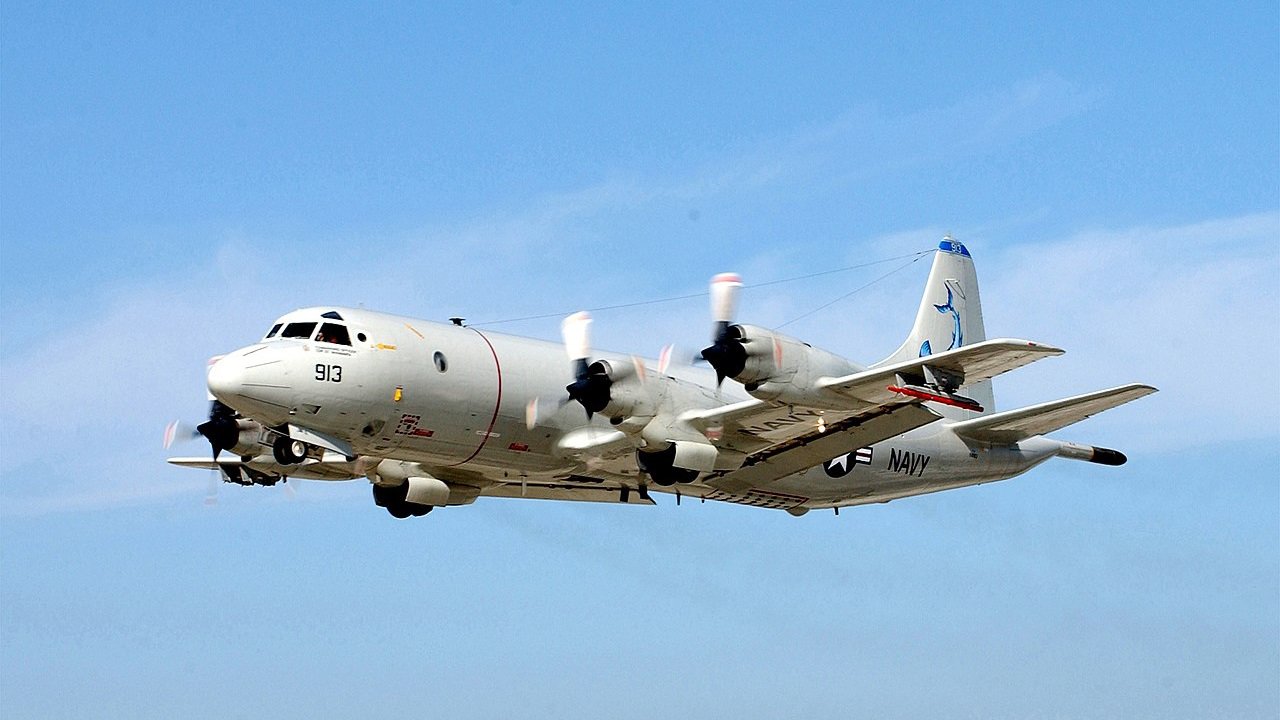
(January 29, 2003) — A P-3C “Orion” from Patrol Squadron FOUR ZERO (VP 40) takes off from NAS North Island during a routine training mission. The Orion, which carries a crew of ten, is a multi-mission, long-range maritime patrol aircraft.US Navy Photo by Senior Chief Photographers Mate Mahlon K. Miller
Lockheed had shortened the fuselage in front of the engines by 7ft, added a bomb bay, and a different nose cone to accommodate a search radar.
At the tail, a MAD (Magnetic Anomaly Detector) was added to precisely determine the location of a submerged target before weapons release. Within the fuselage, the P-3 was chock full of weapons, communications, and sensor stations. It could also launch up to 84 sonobuoys with active, passive, and even directional capabilities for target localization.
To man these stations, the Orion relied on a crew of up to three Naval Aviators, with one acting as a relief on long missions, two Naval Flight Officers, two Flight Engineers, three Sensor operators, and one ordnance technician for the weapons and sonobuoys.
The P-3 still had room for a bathroom, a diner-like booth, a kitchen for in-flight meals, and some seating for additional passengers
Range and Endurance
The result was an aircraft with incredible range and endurance. By shutting down as many as two engines to conserve fuel, the Orion could stay aloft for up to 21 hours.
In terms of hunting submarines, the P-3 could range thousands of miles from its land base and be relieved by other Orions in a continuous relay system, allowing them to maintain contact with a target for days on end.
Most often, the sub being hunted was never aware that an Orion was up there, orbiting above them, tracking them, and recording their sound signature for cataloging and analysis.
Why the US Navy Loved the P-3 Orion
The Orion proved itself to be an ideal ASW platform for the Navy. So successful, in fact, that there were some 24 Fleet squadrons and 13 Reserve squadrons stationed in the US, including Alaska, Hawaii, US territories like Guam and Puerto Rico, as well as overseas bases in places like Sigonella, Sicily, and Keflavik, Iceland.
The Navy would end up ordering some 650 P-3s from Lockheed, while twelve foreign countries also ordered P-3s for the maritime patrol needs of their own navies.
Lockheed Built A Plane That Could Do It All
The utility of the Orion led to its development as a multi-mission role aircraft capable of maritime surveillance of shipping, electronic surveillance, personnel transport, and signals intelligence.
In its ever-expanding role as the Navy’s own Swiss Army Knife, the sub-hunting Orion became a ship killer as well, fitted with the AGM-84 Harpoon, AGM-84K SLAM-ER, and AGM-65F Maverick missiles.
Nuclear Bomber?
Perhaps the P-3s most deadly secret was its nuclear capability. The Orion could carry and employ the B-57 nuclear bomb, a 10-kiloton depth charge to be used against Soviet Ballistic missile submarines.
The P-3 could carry up to three B-57 bombs in its internal bomb bay for those busier days hunting beneath the waves.
During the Cold War, the US would not publicly acknowledge the presence of tactical nuclear weapons on any ship or aircraft, but it is known that the Orion was fitted for this weapon as early as 1963 and was only discontinued with the B-57 being retired from service in 1993.
Over 3,000 of these nuclear bombs were manufactured, giving the P-3s a rather deep magazine to draw from had the US and USSR gone to war.
An Impressive Record
The P-3 Orion also enjoyed an extraordinary safety and reliability record.
Depending on the source used, just twenty-one of the Orions were written off by the Navy as complete losses due to collisions, accidents, and enemy fire. This was while Navy Orions logged some 6 million flight hours over 60 years of operations.
In June of 2023, at Jacksonville Naval Air Station, Patrol Squadron Thirty, the “Pro’s Nest” held a Sundowner Ceremony for its last P-3 Orion before it was sent to the boneyard at Davis-Monthan Air Force Base in Arizona. VP-30 was the East Coast training squadron for P-3 crews.
Following this ceremony, the squadron would turn its efforts to training crews for a new Maritime Patrol Aircraft built on the wealth of experience gained from Lockheed’s P-3 Orion in all its versions and variants.
That plane is the P-8 Poseidon.
Specifications
Primary Function: Anti-Submarine Warfare (ASW) and Anti-surface Warfare (ASuW)
Contractor: Lockheed Martin Aeronautical Systems Company
Propulsion: Four Allison T-56-A-14 turboprop engines (4,600 hp, each)
Length: 116.7 feet (35.57 meters)
Height: 33.7 feet (10.27 meters)
Wingspan: 99.6 feet (30.38 meters)
Maximum Gross Takeoff: 139,760 pounds (63,394 kilograms)
Crew: Three pilots, two naval flight officers, two flight engineers, three sensor operators and one in-flight technician
Armament: AGM-84 Harpoon, AGM-84K SLAM-ER, AGM-65F Maverick missiles, Mk46/50/54 torpedoes, rockets, mines and depth bombs
About The Author: Sean Spoonts
Sean Spoonts is the former Editor-In-Chief of SOFREP.com. He is a military analyst, writer, and commentator whose work has appeared in Newsweek, CNS News, Ukrinform, and various military/veteran media networks and professional publications, including the Military Intelligence Professional Bulletin. He is a U.S. Navy veteran, having served as an Aviation Anti-Submarine Warfare Operator and Search and Rescue Helicopter Aircrewman.