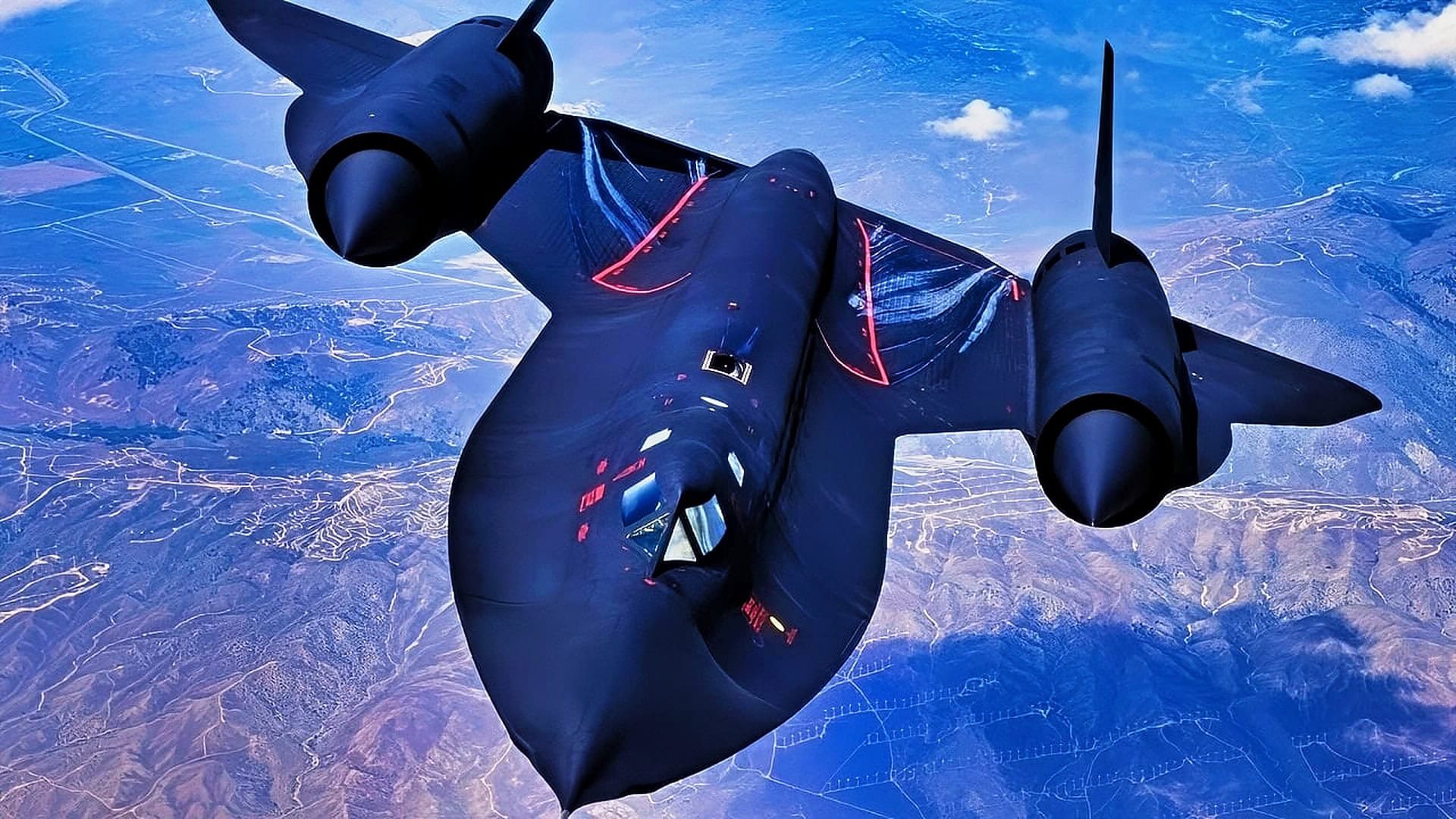
The Lockheed SR-71 Blackbird might have been the greatest plane ever designed for the United States Armed Forces during the Cold War.
It was a high-altitude, long-range reconnaissance plane capable of exceeding Mach 3.2.
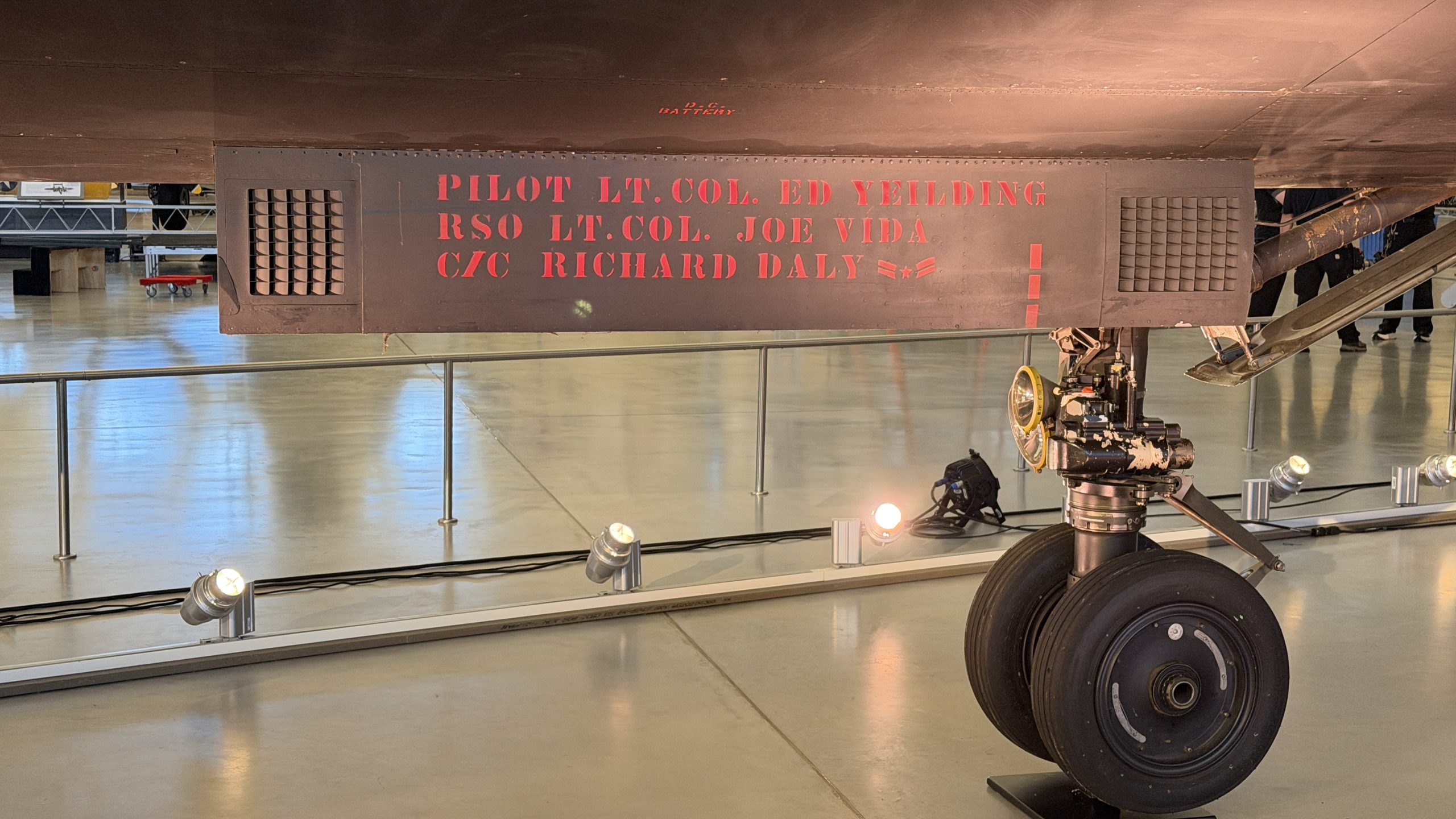
SR-71 Blackbird. Smithsonian Display Photo Taken by 19FortyFive on 9/30/2026.
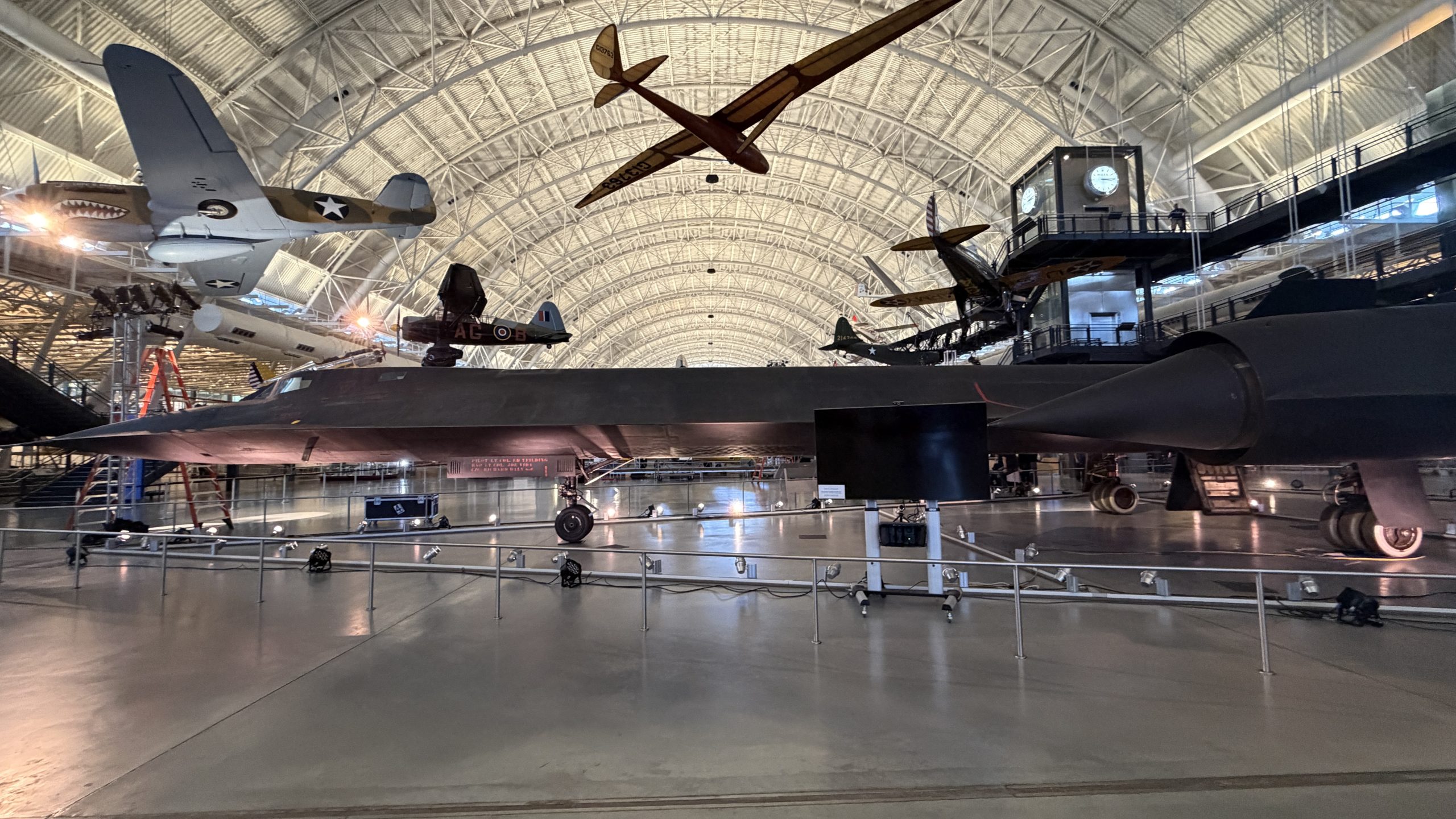
SR-71 Blackbird. Smithsonian Display Photo Taken by 19FortyFive on 9/30/2026.
This bird was so fast and could fly so far that it could easily penetrate well-defended Soviet airspace, photograph whatever secrets lay behind those air defenses, and outfly any advanced air defenses or warplanes protecting that airspace.
Two crewmembers managed the plane: a pilot and a radar systems officer.
This plane had a service ceiling of more than 85,000 feet and a range of about 3,000 miles unrefueled. Two Pratt & Whitney J58 afterburning turbojet engines, producing up to 34,000 pounds of thrust per engine, powered the SR-71.
The SR-71 first flew in December 1964.
The legendary Lockheed Skunk Works division, led by Clarence “Kelly” Johnson, developed it.
These planes established multiple records for speed and altitude.
They ran cover reconnaissance missions from Southeast Asia to the Middle East, along the arc of what was then the Soviet Union at the height of the Cold War.
Extreme Operational Conditions
But they did more than collect data under extreme circumstances.
These planes became part of the mythos of American airpower.
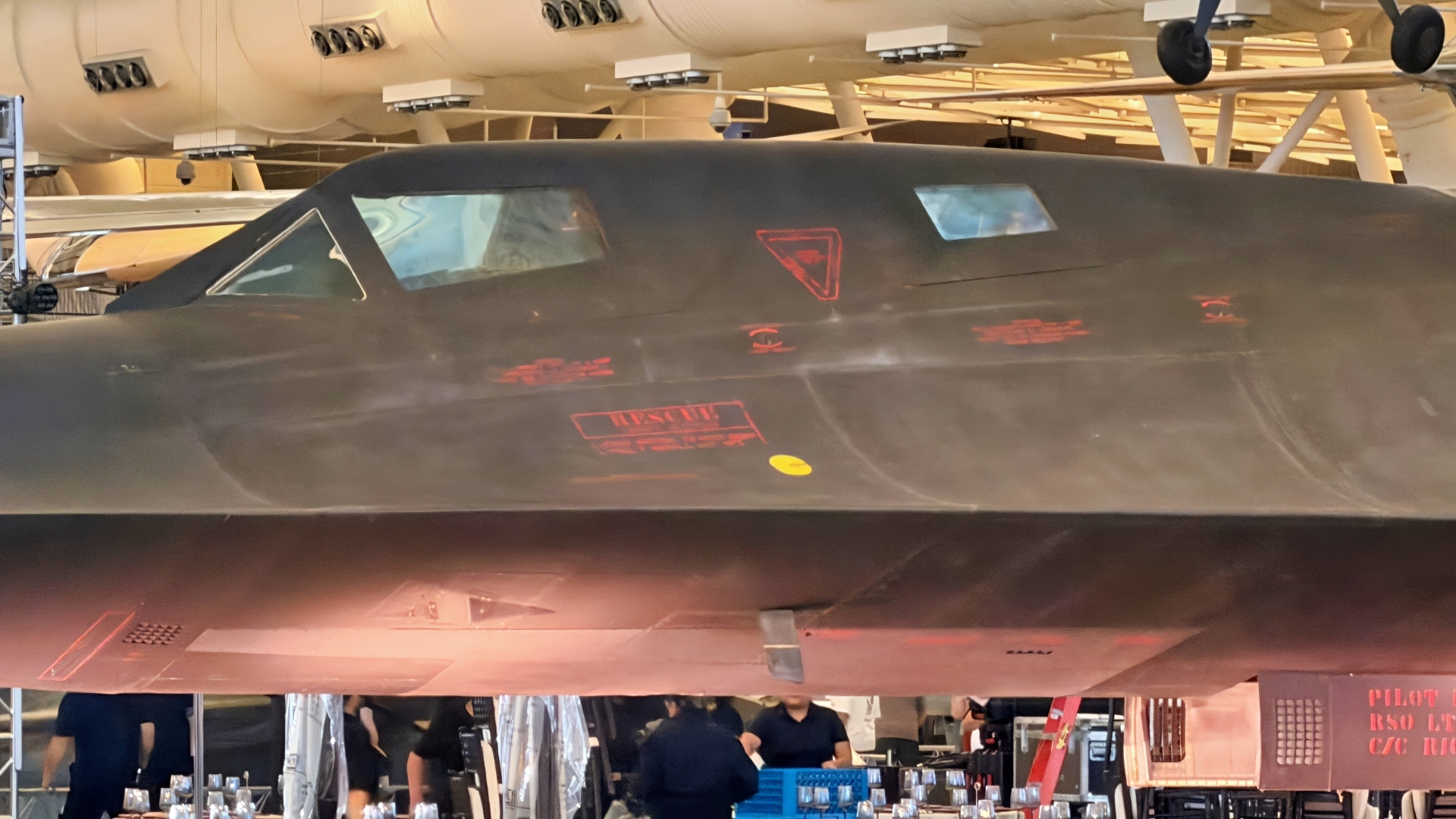
SR-71 Blackbird Sideview. Smithsonian Display Photo Taken by 19FortyFive on 9/30/2026.
Sleek and black, the Blackbird has become a symbol of US military technological prowess.
Multiple stories highlight how the Blackbird became a cultural icon for Americans during the Cold War.
Aviation Geek Club, a prominent online trade publication, recounts one such story.
According to the website, on one flight during the 1980s, an SR-71 pilot used the Cold War-era supersonic plane to buzz the control tower at Sacramento Metropolitan Airport with the afterburners lit.
In other words, it was more of a joyride for the SR-71 crew than a real reconnaissance mission.
An Incredible Joy Ride
This story was recounted to the writers at Aviation Geek Club by retired SR-71 legendary pilot Maury Rosenberg. Rosenberg believed the famous flight occurred around the 1982 Toronto Air Show.
Three SR-71 crews were sent to the airshow.
The first crew delivered the Blackbird itself.
During the second day of the airshow, the second crew flew the plane.
Rosenberg and his crew handled the plane on the penultimate day.
After the airshow, Rosenberg returned the Blackbird to its home at Beale Air Force Base in California.
After the impressive airshow displays, Rosenberg and his comrades headed back to Beale AFB. But as the plane descended into Beale, the Blackbird still carried a heavy fuel load.
So Rosenberg decided to approach Sacramento Metropolitan Airport on his way back to Beale.
Approach control approved the odd request and transferred the Blackbird to Sacramento.
Rosenberg aligned the Blackbird for a standard approach. He lowered the landing gear as the SR-71 descended toward the airport.
Two miles from the runway, controllers switched the aircraft to the airport tower frequency.
Rosenberg contacted the tower and asked whether they preferred a flyby of the runway or a flyby down by the ramp.
The tower opted for the ramp.
Rosenberg then retracted the landing gear and increased power.
Instead of aligning for a conventional landing, the 107-foot-long Blackbird accelerated toward the airport buildings and control tower.
As the aircraft neared the tower, Rosenberg banked the Blackbird away and fired the afterburner.
Those two Pratt & Whitney J58 engines launched the aircraft away from the tower at an incredible speed.
These afterburners were unique because they could run continuously during sustained supersonic flight.
The tower was filled with excitement at the sight and sounds–probably the feeling, too–of the powerful afterburners being activated so close to the facility.
In fact, the tower pleaded with Rosenberg to do another flyby.
Small Miracles
Unfortunately, Rosenberg didn’t want to test his luck. He declined and carried on to Beale.
Despite the plaudits Rosenberg received from civilians at Sacramento’s airport, his commanding officer was waiting for him in the hangar when he returned to Beale.
Unamused by Rosenberg’s stunt, the colonel asked whether any Air Force regulations prohibited pilots from making approaches at Sacramento.
Rosenberg said he was unaware of any.
So, the colonel demanded that Rosenberg have such a regulation on his desk the following morning.
Years later, Rosenberg had another career as a pilot for United Airlines.
In 1987, while serving as a first officer on a Boeing 767 flight between Washington and San Francisco, Rosenberg met an air traffic controller riding in the cockpit.
The controller mentioned she previously worked at Sacramento’s air traffic control.
Remember the Incident Decades Later
When Rosenberg revealed that he had piloted the infamous Blackbird flyby of the Sacramento tower years earlier, the flight controller recounted how the experience frightened people in the terminal.
Some even hit the floor and hid, thinking the Blackbird would crash into the terminal.
Good thing that Rosenberg opted to avoid a second pass of the tower.
If he had, the colonel waiting for him in the hangar might have been more than upset.
Rosenberg’s career might have been jeopardized.
About the author: Brandon J. Weichert
Brandon J. Weichert is the Senior National Security Editor at 19FortyFive.com. He also manages The Weichert Brief on Substack. Weichert also hosts “National Security Talk” on Rumble. He is the author of four bestselling national security books, most recently A Disaster of Our Own Making: How the West Lost Ukraine (Encounter Books). Follow him via Twitter/X @WeTheBrandon.