On September 29, 2026, Northrop Grumman and the United States Air Force announced a major expansion of the B-21 Raider production complex at Air Force Plant 42 in Palmdale, California.
Northrop held a public groundbreaking ceremony on October 6.
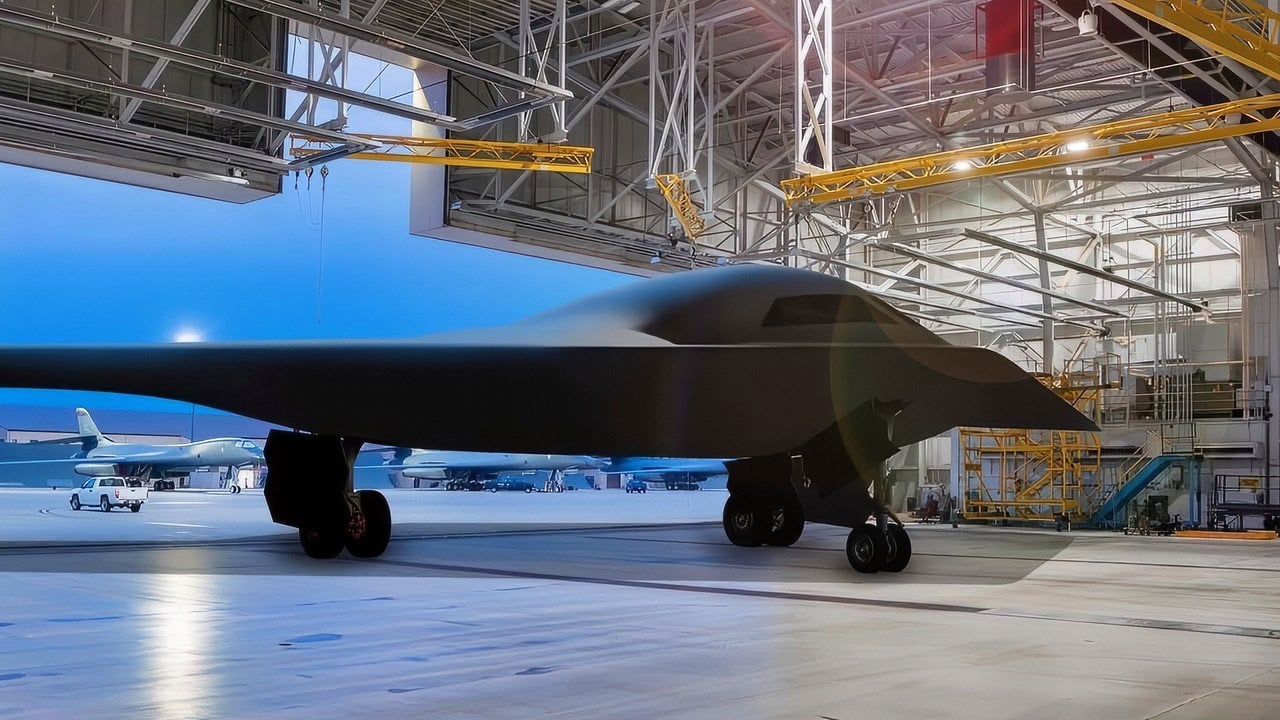
Artist rendering of a B-21 Raider in a hangar at Ellsworth Air Force Base, South Dakota, one of the future bases to host the new airframe. AFCEC is leading a $1 billion construction effort at Ellsworth to deliver sustainable infrastructure to meet warfighter demands for bomber airpower. (U.S. Air Force graphic)
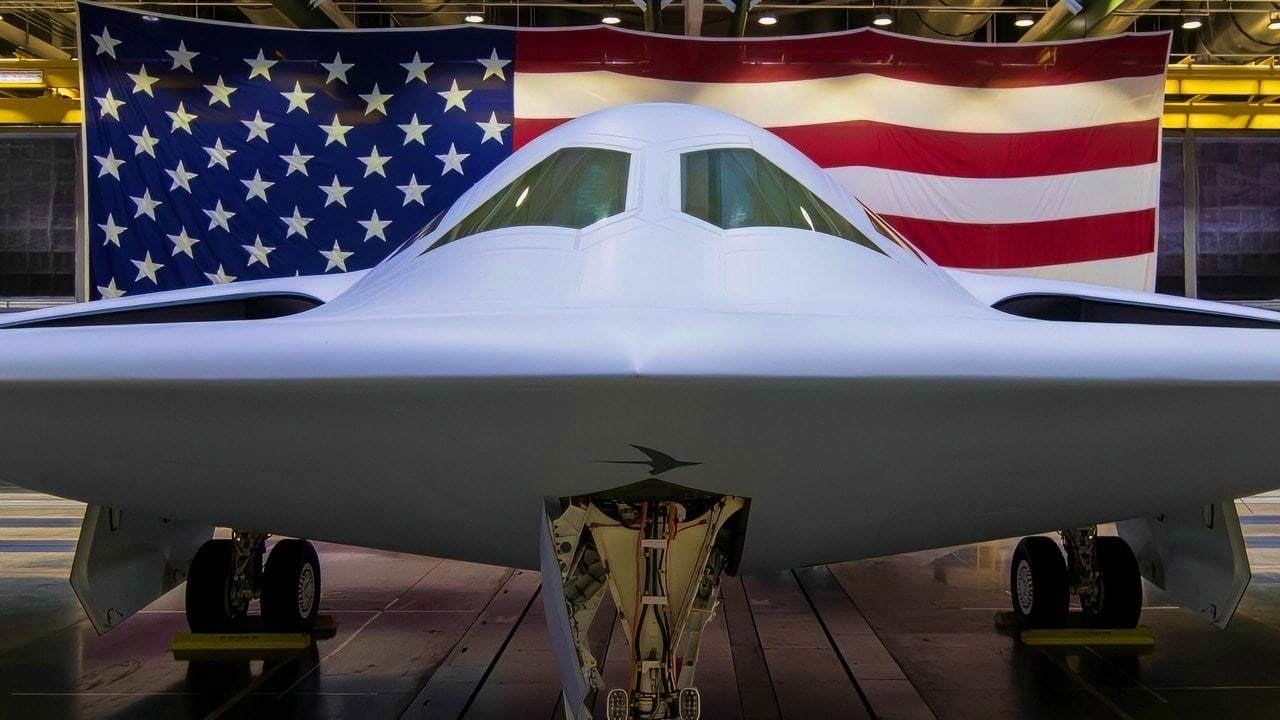
The B-21 Raider was unveiled to the public at a ceremony December 2, 2022 in
Palmdale, Calif. Designed to operate in tomorrow’s high-end threat environment, the B-21 will play a critical role in ensuring America’s enduring airpower capability. (U.S. Air Force photo)
This indicates that the US Air Force is expediting B-21 production ahead of the aircraft’s planned operational service in 2027.
The expansion will add 1 million square feet of manufacturing space, including a new final assembly line for the sixth-generation stealth bomber.
Background
The manufacturing expansion represents a major financial investment by the federal government and Northrop Grumman.
In February of this year, the Air Force confirmed an agreement with the defense firm to increase the B-21’s annual production by 25 percent.
That arrangement is supported by $4.5 billion allocated through the FY 2025 federal budget (known as the One Big Beautiful Bill Act).
Meanwhile, Northrop is contributing around $2.5 billion of its own capital to expand the manufacturing infrastructure at Plant 42 to accommodate the new B-21.
Northrop’s bean counters are spreading those expenditures across several years.
These commitments represent about $7 billion in government funding and planned company investment to accelerate production capacity.
The first B-21 made its inaugural flight in November 2023.
A second plane joined the flight-test program in 2025.
Two B-21 aircraft are participating in the Raider’s testing phases.
This approach integrates operational and developmental processes earlier in production and runs them simultaneously.
Similar methods have been successfully used on the Boeing F-15EX Eagle II and are currently being used to produce the Boeing F-47 sixth-generation stealth warplane.
Pentagon officials believe this new approach lets operational crews evaluate the aircraft’s combat usefulness while engineers examine the flight characteristics, onboard systems, and performance of these planes.
The Air Force has even conducted midair refueling exercises involving the B-21 and KC-135 tankers. These milestones matter for any new aircraft, especially long-range strategic bombers, because midair refueling is key to mission success.
The Air Force is also testing critical B-21 mission systems and integrating the weapons systems. However, these details remain strictly classified.
Northrop Grumman’s B-21 Raider is designed to carry both conventional and nuclear weapons over long distances, penetrate heavily defended airspace using stealth, and strike targets deep inside enemy territory.
Like the older B-2 Spirit, the B-21 is of a flying-wing design.
Yet, the new B-21 incorporates much newer (and better) stealth technology.
The Air Force also used advanced digital engineering to design the B-21. The B-21 also uses an open systems architecture that will streamline future upgrades.
Eventually, the Air Force intends to replace the B-1B Lancer and the B-2 Spirit with the B-21.
The B-21 will operate alongside the newest iteration of the non-stealth B-52J Stratofortress long-range bomber (which will operate until the middle part of this century).
Wants, Doesn’t Get
Air Force planners want 100 B-21 Raiders.
The original goal was higher. But after cost arguments with Congress, the Air Force settled on 100.
To be clear, the Air Force really needs around 300 units.
But the cost, no matter how advanced this plane might be, in the age of drone and missile swarms, and advanced anti-access/area-denial (A2/AD), means this plane might not be worth the $700 million-per-aircraft price tag.
The decision on the eventual fleet size will likely come with the FY 2028 budget request, which should reach appropriators’ desks in Spring 2027.
For now, the additional manufacturing capacity in California won’t lead to a larger fleet.
Moving Forward
The first operational B-21s will likely be based at Ellsworth Air Force Base in South Dakota.
The Air Force wants to station Raiders at Whiteman Air Force Base in Missouri and Dyess Air Force Base in Texas.
At least one developmental test aircraft is expected to transition into operational service, allowing aircrews and maintainers to begin preparing for the bomber’s introduction.
The B-21 is already in low-rate initial production.
Its flight-test program expansion in California is now underway.
The Air Force wants the first operational deliveries next year, even though the final delivery schedule and fleet size will remain unsettled then.
About the Author: Brandon J. Weichert
Brandon J. Weichert is the Senior National Security Editor at 19FortyFive.com. He also manages The Weichert Brief on Substack. Weichert also hosts “National Security Talk” on Rumble. He is the author of four bestselling national security books, most recently A Disaster of Our Own Making: How the West Lost Ukraine (Encounter Books). Follow him via Twitter/X @WeTheBrandon.