
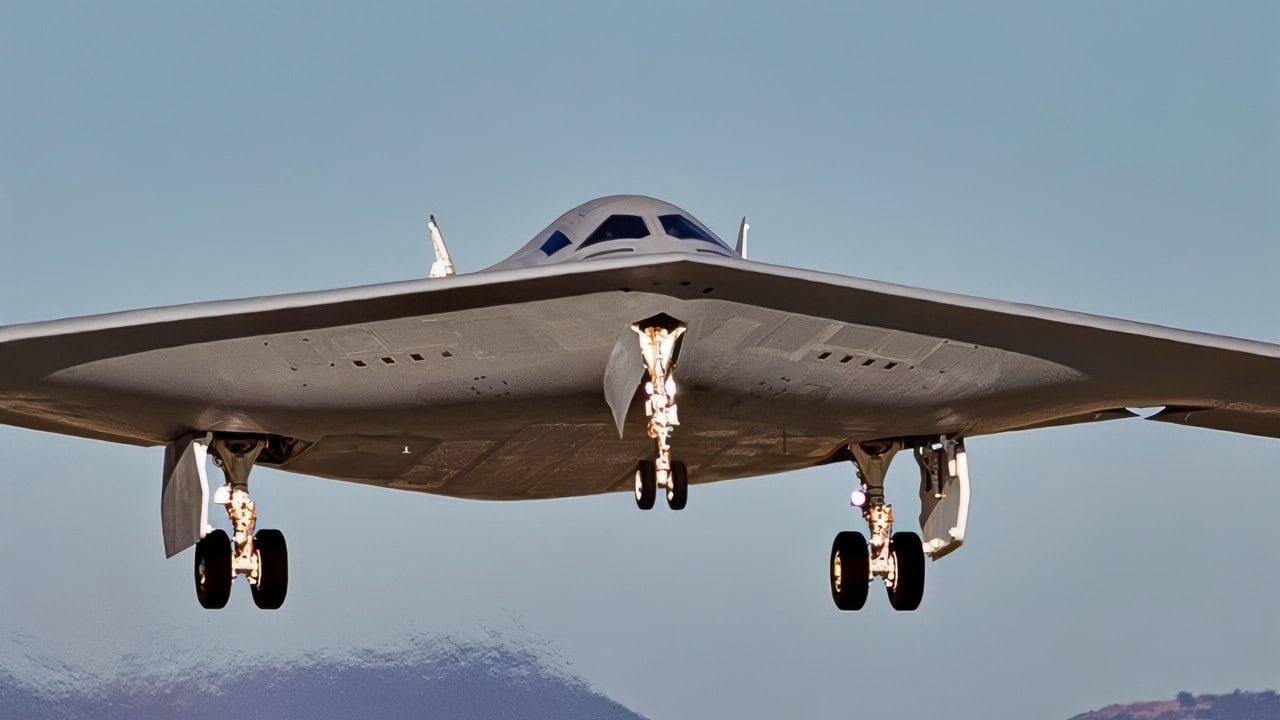
Having made its maiden flight on 10 November 2023, the B-21 Raider continues in its quest to be Northrop Grumman’s 6th-generation direct successor to the original “Stealth Bomber,” the highly battle-tested, 1989-vintage B-2 Spirit.
So then, it’s no longer a question of *if* the B-21 will become America’s newest and most high-tech strategic bomber, but rather *when* and *how many*.
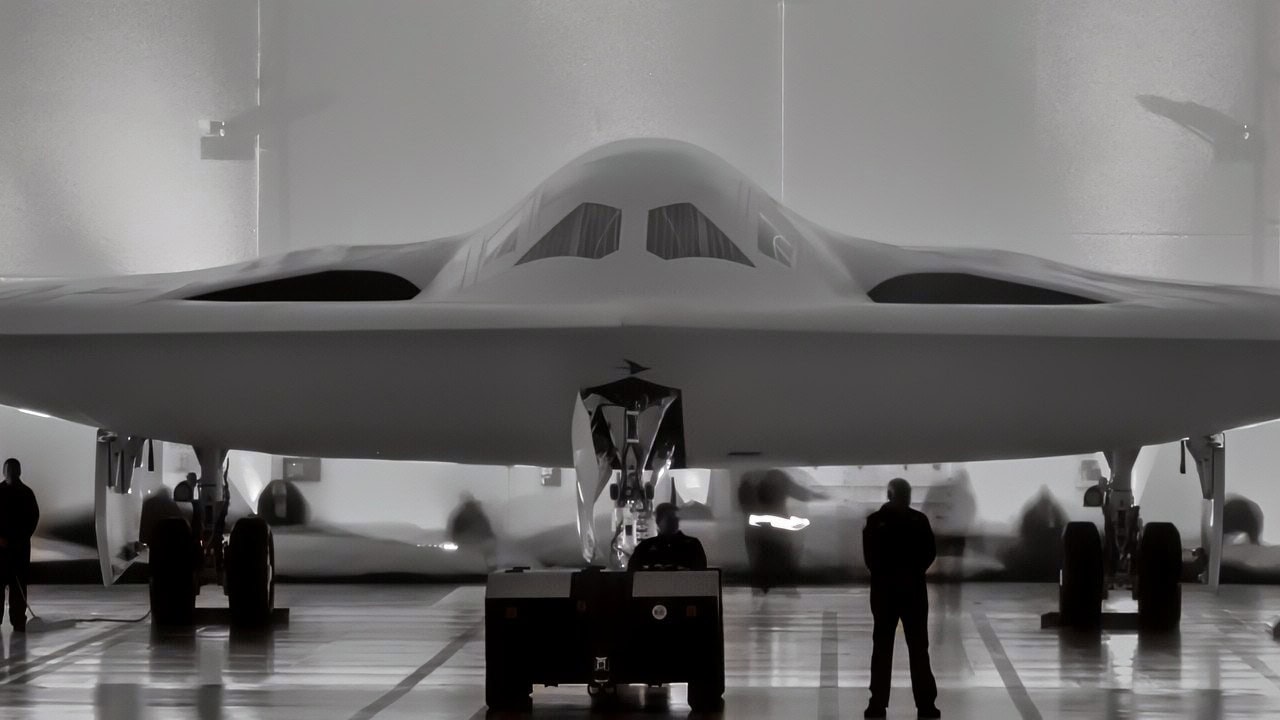
A B-21 Raider is unveiled at Northrop Grumman’s manufacturing facility on Air Force Plant 42 in Palmdale, California, Dec. 2, 2022. The B-21 will be a long-range, highly survivable, penetrating strike stealth bomber capable of delivering both conventional and nuclear munitions. (U.S. Air Force photo by Airman 1st Class Joshua M. Carroll)

U.S. Air Force Airmen with the 912th Aircraft Maintenance Squadron prepare to recover the second B-21 Raider to arrive for test and evaluation at Edwards AFB, Calif., Sept. 11, 2025. The arrival of a second test aircraft provides maintainers valuable hands-on experience with tools, data and processes that will support future operational squadrons. (U.S Air Force photo by Kyle Brasier)
To take a deeper dive into the latter part of that question, how many Raiders does the U.S. Air Force really need, and moreover, how many can Northrop Grumman build, and how many can the American taxpayer really afford to build? Well, it depends on whom you ask.
The B-21 Raider Numbers Question: SECWAR’s Perspective
U.S. Secretary of War (SECWAR) Pete Hegseth hasn’t laid out a specific number of B-21 airframes he—and presumably President Donald John Trump—wants built. However, back on 30 April, the SECWAR told the Senate Armed Services Committee that “We have to invest in more capabilities to include the B-21, which is ahead of schedule. “We believe we will require a lot more—over 100—in the future.”
In that same testimonial, Mr. Hegseth also named the F-47 NGAD (Next Generation Air Dominance) fighter as one of the other “critical” 6th Generation warbirds needed to secure America’s future fighting capabilities, adding that the Pentagon would increase its planned procurement “where necessary.”
The Brass’s Perspective
For their part, the last two heads of U.S. Strategic Command (STRATCOM)—USAF Gen. Anthony J. Cotton and U.S. Navy Adm. Richard A. Correll—have both endorsed increasing the B-21 purchase order to 145 airframes. Meanwhile, the U.S. Pacific Command (PACOM) boss, USN Adm. Samuel Paparo, has eschewed the typical infamous interservice turf wars to become an even stauncher advocate for the Raider. “I would favor 200 B-21 bombers, not just for the nuclear deterrence mission, but for penetrating strike capabilities,” Paparo, a career naval aviator, said during an April 21 congressional hearing.
Thus far, the Air Force has only said its B-21 production target is “at least 100” aircraft; as with SECWAR Hegseth’s statement, note the lack of an exact, hard number.
Crunching the Bomber Numbers
A useful starting yardstick for projecting the Air Force’s numerical needs for Raider specimens would be the current roster of America’s strategic bomber force.
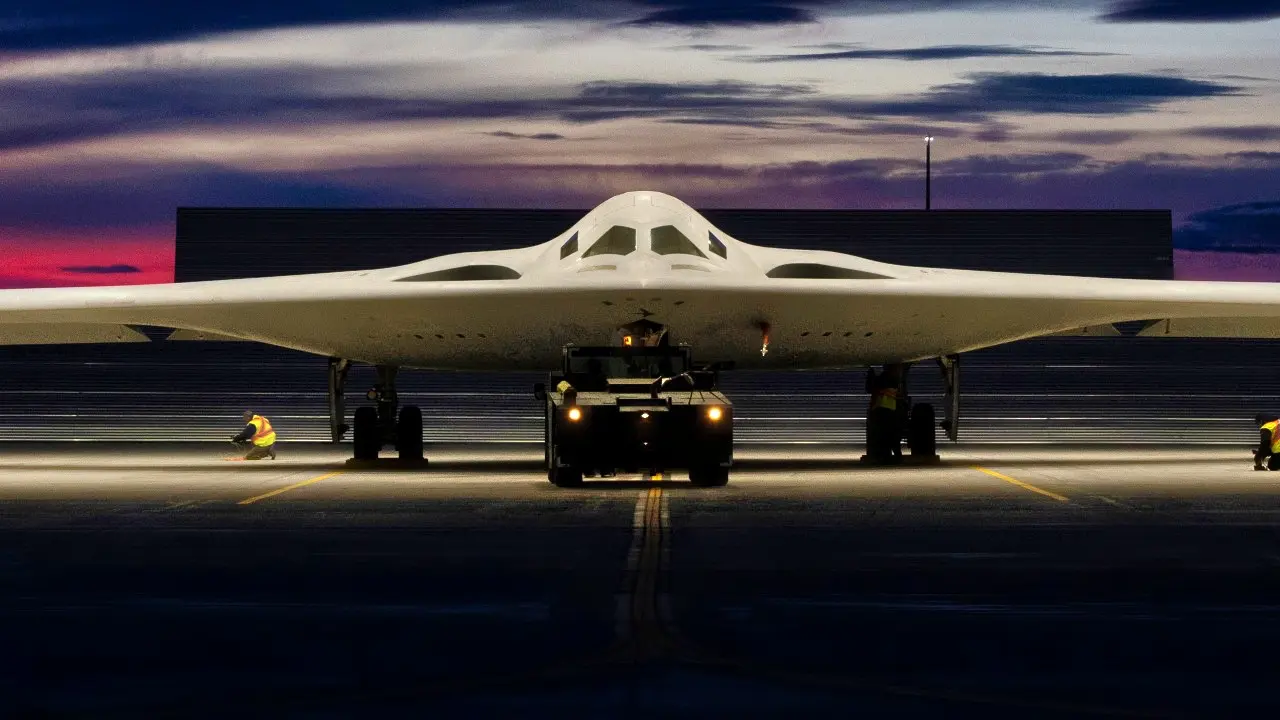
B-21 Raider Stealth Bomber.
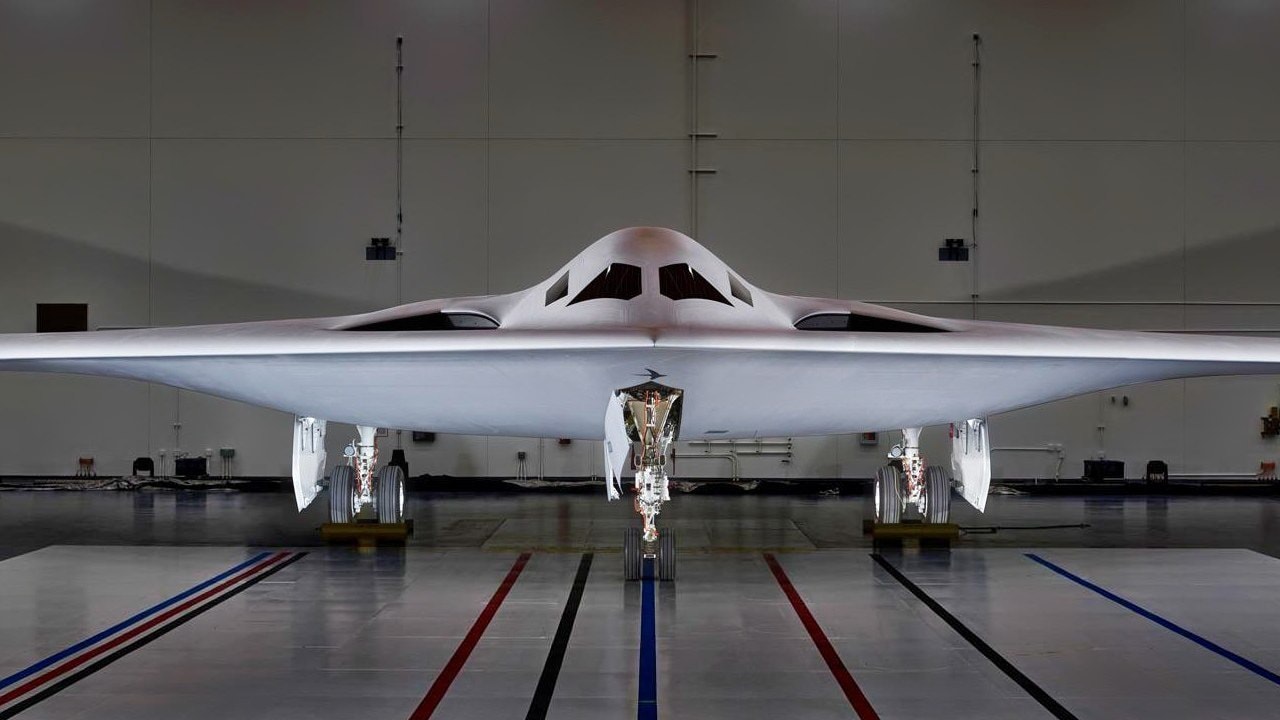
B-21 Raider Bomber U.S. Air Force.
According to the handy-dandy World Directory of Modern Military Aircraft (WDMMA), the USAF currently has:
-19 x B-2 Spirits
-45 x Rockwell B-1B Lancers
-76 x Boeing B-52H Stratofortresses
Assuming a one-for-one swap, that would hypothetically mean that 140 B-21s are needed.
However, this would be an overly simplistic assumption, as the B-21 is *NOT* intended to as a replacement for the B-52, which isn’t going away anytime soon despite its age—the newest iteration, the B-52H, dates back to October 1962—or the fact that it has neither the supersonic speed of the B-1B nor the stealth capabilities of the B-2 and B-21 alike.
Indeed, the “BUFF” is getting upgraded, i.e., the B-52J.
That still leaves us with the combined total of 64 B-1Bs—which first entered service in 1985—and B-2s waiting their turn to be replaced by the Raider.

A B-52 Stratofortress from Barksdale AFB is parked on the flight line at Fairchild Air Force Base, Washington, Aug. 16, 2022. The B-52s landed at Fairchild to conduct their own Agile Combat Employment exercise creating more multi-capable Airmen ready to deploy anywhere, anytime. (U.S. Air Force photo by Staff Sgt. Lawrence Sena)
About That Price Tag…and Other Logistical Challenges
Congress approved the $10.3 billion the US Air Force requested for the B-21 program, a price tag that covers research and development and production.
Of that total, the reconciliation bill earmarks $4.5 billion for expanded manufacturing.
However, none of those budget documents bothered to elaborate on how much faster B-21s will be built, by when, or up to what total.
Given the current state of the American public’s discontent with the economy and the Iran War alike—the B-2 Spirit has continued to prove its combat mettle in the latter—one has to wonder if voters will make manifest that discontent by restoring the Democratic Party in the upcoming midterm congressional elections; such a change could conceivably threaten the future budgetary allocations for the B-21.
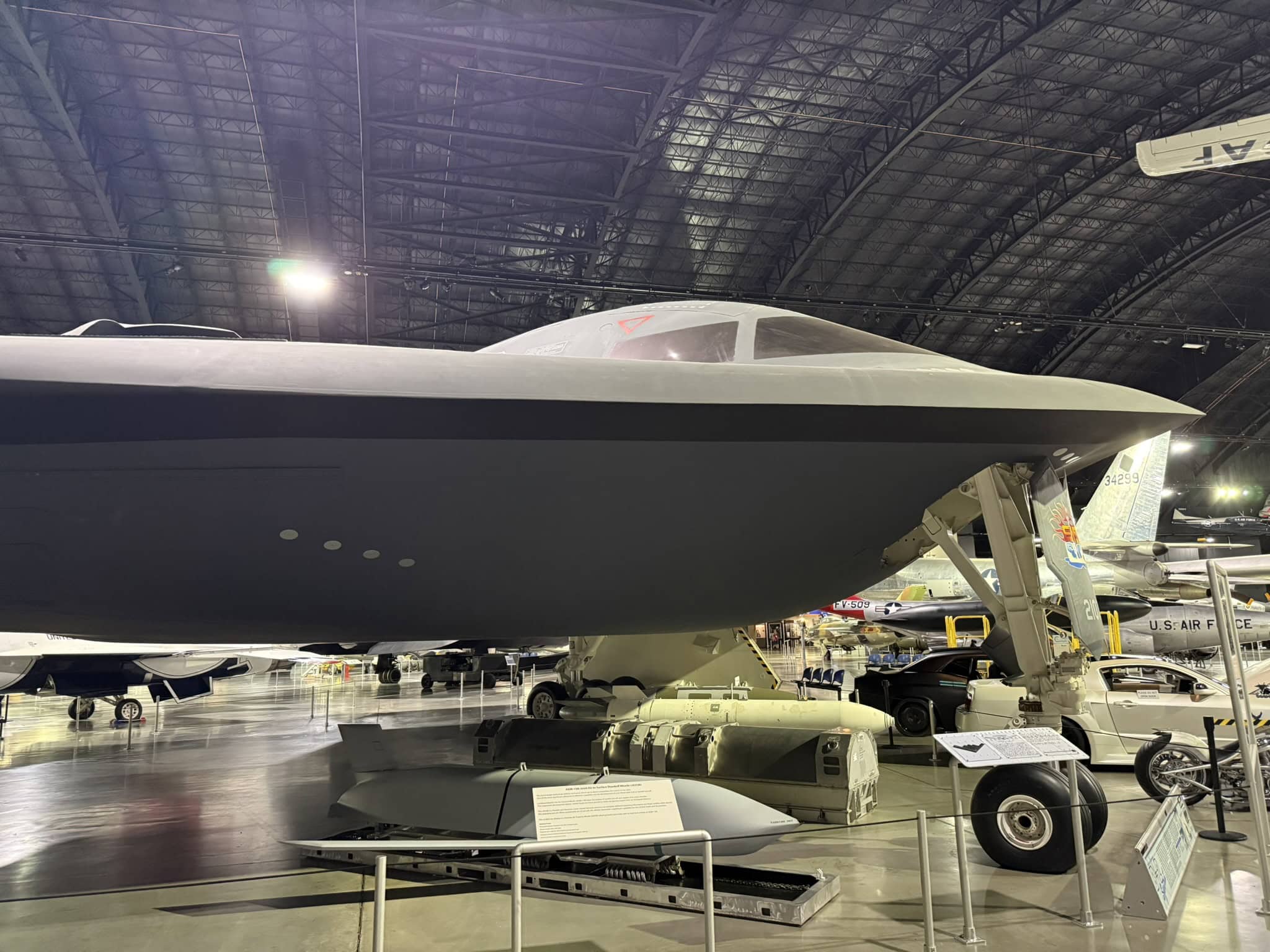
B-2 Spirit Stealth Bomber. 19FortyFive.com Photo from National Museum of the U.S. Air Force Visit in 2025.
There’s also the question of how quickly Northrop Grumman’s production facilities and workers would be able to churn out the necessary number of B-21 airframes.
Only three Raider specimens have been built to date since the contract was awarded back in 2015, under the auspices of what was then known as the Long-Range Strike Bomber (LRS-B) program.
The first test specimen was unveiled to the general public at Northrop Grumman’s production facilities in Palmdale, California, on 2 December 2022.
The current production rate of the B-21 is being kept officially hush-hush, but is believed to be seven to eight planes per year.
Assuming production is maintained at that current pace, it would take 12 to 14 years to produce the additional minimum number of 97 airframes, which would be an eternity given the concern that the People’s Republic of China’s own 6th-generation warplane, the Chengdu J-36, could conceivably be operational as early as 2035.
About the Author: Christian D. Orr
Christian D. Orr is a Senior Defense Editor. He is a former Air Force Security Forces officer, Federal law enforcement officer, and private military contractor (with assignments worked in Iraq, the United Arab Emirates, Kosovo, Japan, Germany, and the Pentagon). Chris holds a B.A. in International Relations from the University of Southern California (USC) and an M.A. in Intelligence Studies (with a concentration in Terrorism Studies) from American Military University (AMU). He is also the author of the book “Five Decades of a Fabulous Firearm: Celebrating the 50th Anniversary of the Beretta 92 Pistol Series,” the second edition of which was recently published.