
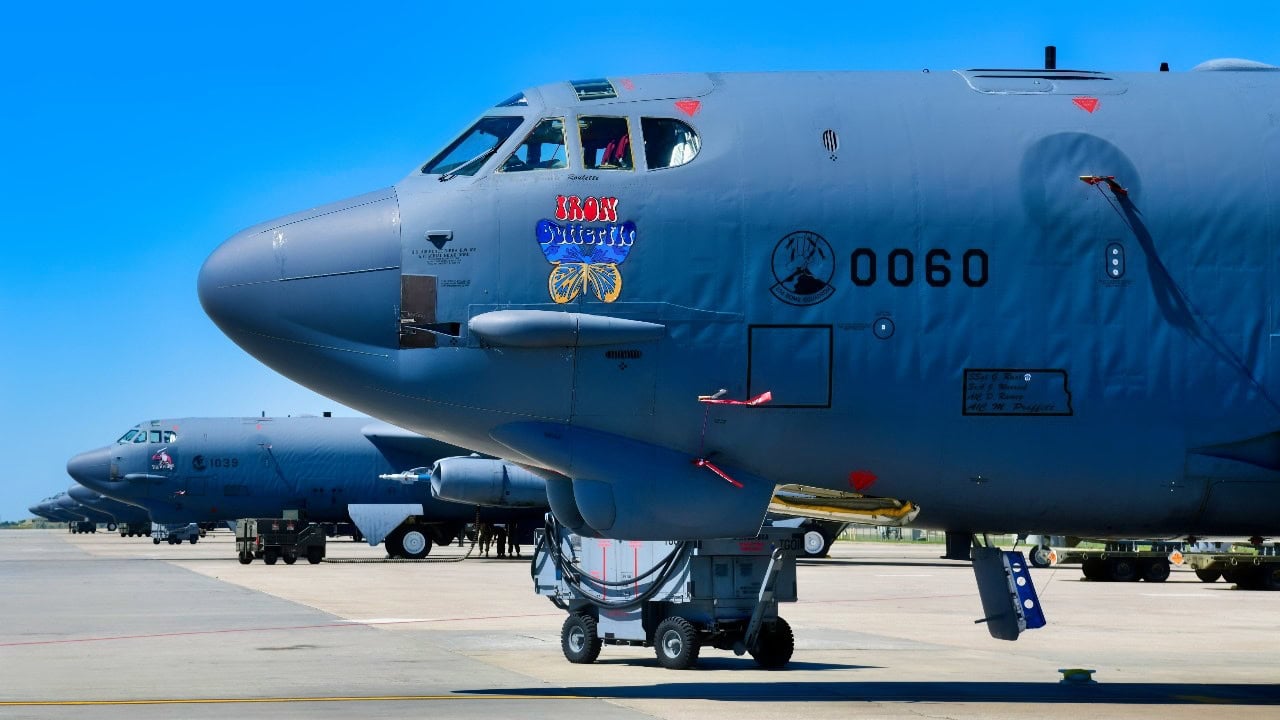
Synopsis: The B-52 Stratofortress remains the Air Force’s most combat-tested bomber, and the upcoming B-52J aims to push the platform into a new era.
-The centerpiece is a radar overhaul replacing the legacy mechanically scanned system with a modern AESA radar, improving speed, tracking, and resilience in contested environments.
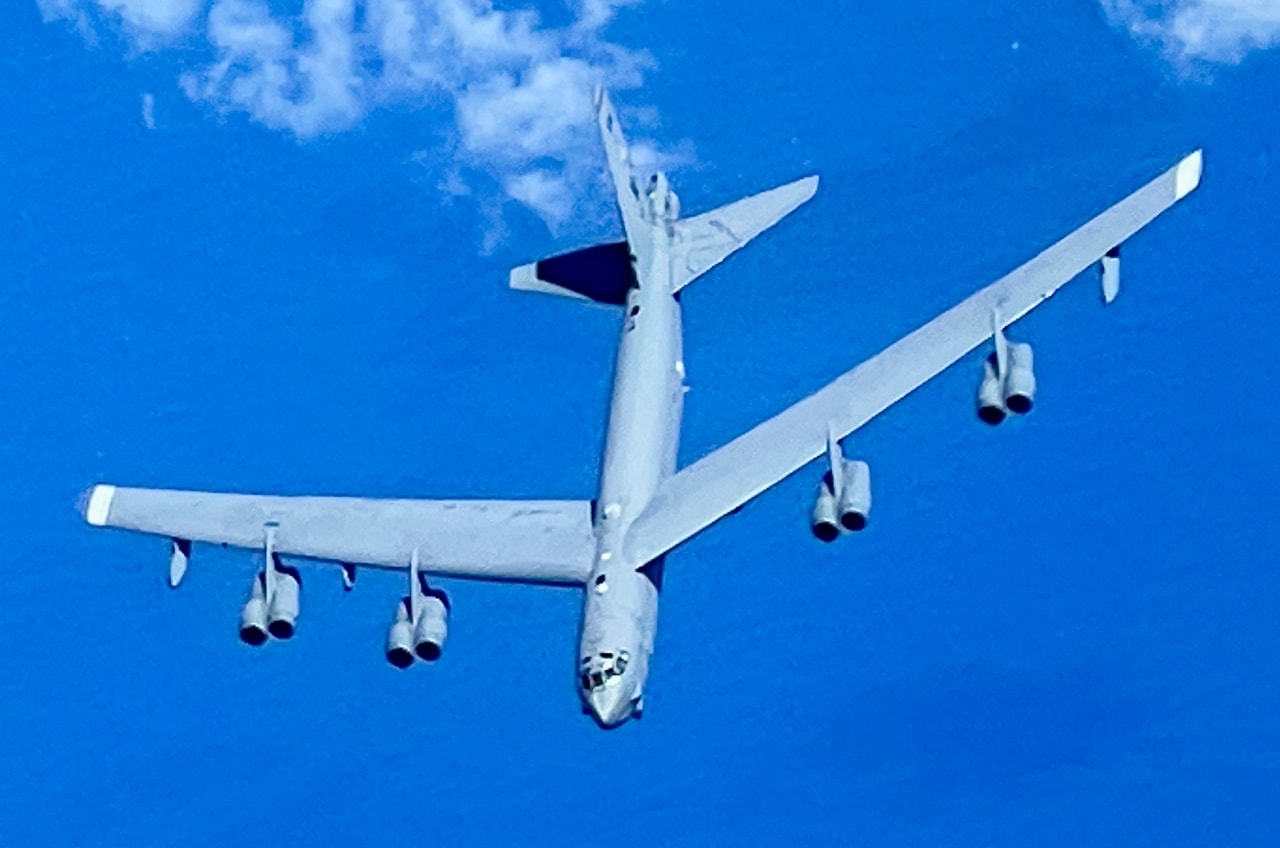
A B-52 Stratofortress assigned to the 2nd Bomb Wing, Barksdale Air Force Base, Louisiana, approaches a KC-135 Stratotanker assigned to the 6th Air Refueling Wing, MacDill AFB, Florida, for fuel over the southeastern United States, Nov. 5, 2024. The B-52 Stratofortress is a long-range, heavy bomber that can perform a variety of missions. As part of the Air Force Global Strike Command, the B-52 enables combat-ready forces to conduct strategic nuclear deterrence and global strike operations in support of combatant commanders. (U.S. Air Force photo by Senior Airman Mia McNeill)
-The upgrade package also includes new crew workstations and new Rolls-Royce engines to replace the aging TF33s, extending performance and sustainability.
-The Problem – But the modernization plan carries risk: potential cost growth tied to the radar program and the practical challenge of upgrading the fleet fast enough to meet a 2033 completion target.
The B-52J Is Coming—and This One Upgrade Changes Everything
Nothing says “Don’t Mess With The U.S. of A” quite like a carpet-bombing raid by the Boeing B-52 Stratofortress. With 63 years of faithful service under its belt, the BUFF is the most battle-proven member of the U.S. Air Force’s strategic bomber triumvirate. From the Vietnam War to the 1991 Persian Gulf War, Operation Allied Force, and the War on Terror, the B-52 has dished out tremendous punishment and outstanding versatility. It is able to carry everything from nukes to unguided conventional gravity bombs and precision-guided cruise missiles,
In other words, the Stratofortress is kind of a big deal. And thanks to a new radar system, the upcoming B-52J variant will be the best version yet.
B-52J Radar Renaissance
The B-52J will include an impressive list of upgrades. First on the list is the venerable warbird’s B-52 Radar Modernization Program (RPM), which will be fulfilled by the AN/APQ-188. This hybrid system of sensors is built by Raytheon and used onboard two other big-name Boeing birds—the F-15 Eagle and F/A-18E/F Super Hornet fighter jets.
The radar system currently in place on the B-52H is the AN/APQ-166, which uses mechanical scanning and—like the B-52H itself—is of 1960s vintage. The new Raytheon product that will replace it is a far more sophisticated active electronically scanned array (AESA) radar.
So, why is this such a big deal?
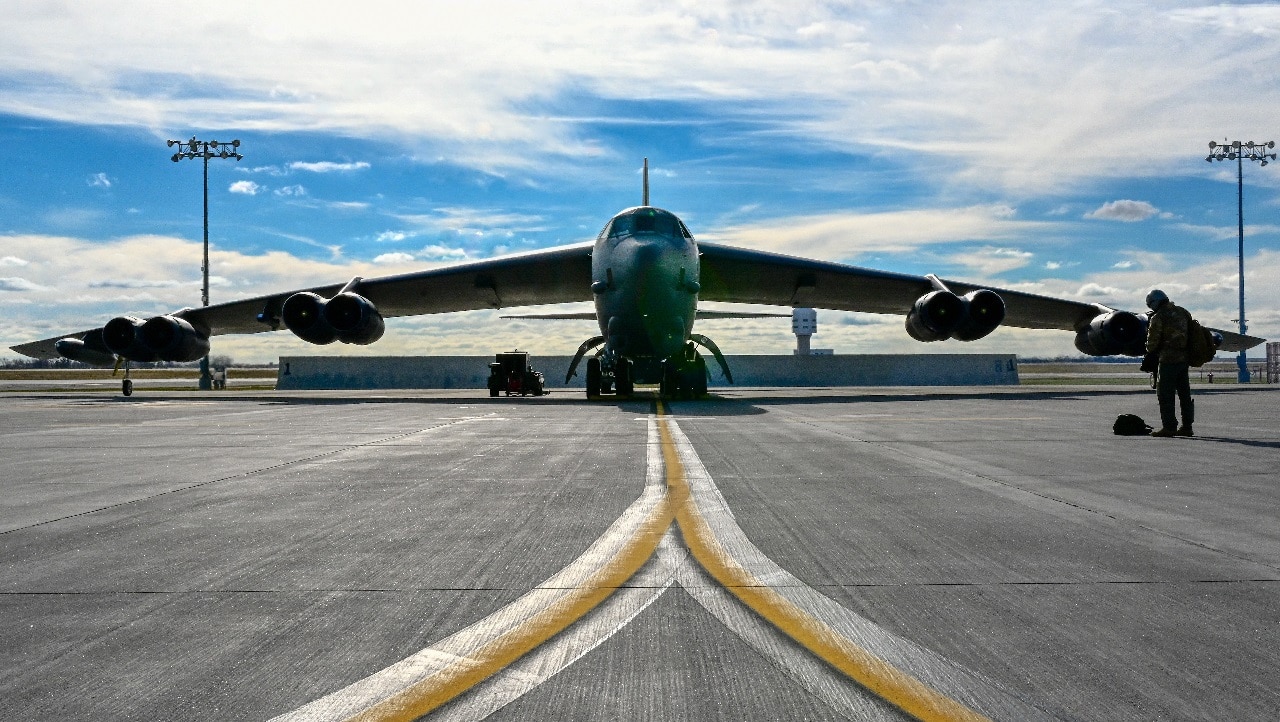
A B-52H Stratofortress is prepared for fight at Minot Air Force Base, N.D., Oct. 25, 2021. The last B-52H built was delivered in Oct. 1962. (U.S. Air Force photo by Airman 1st Class Zachary Wright)
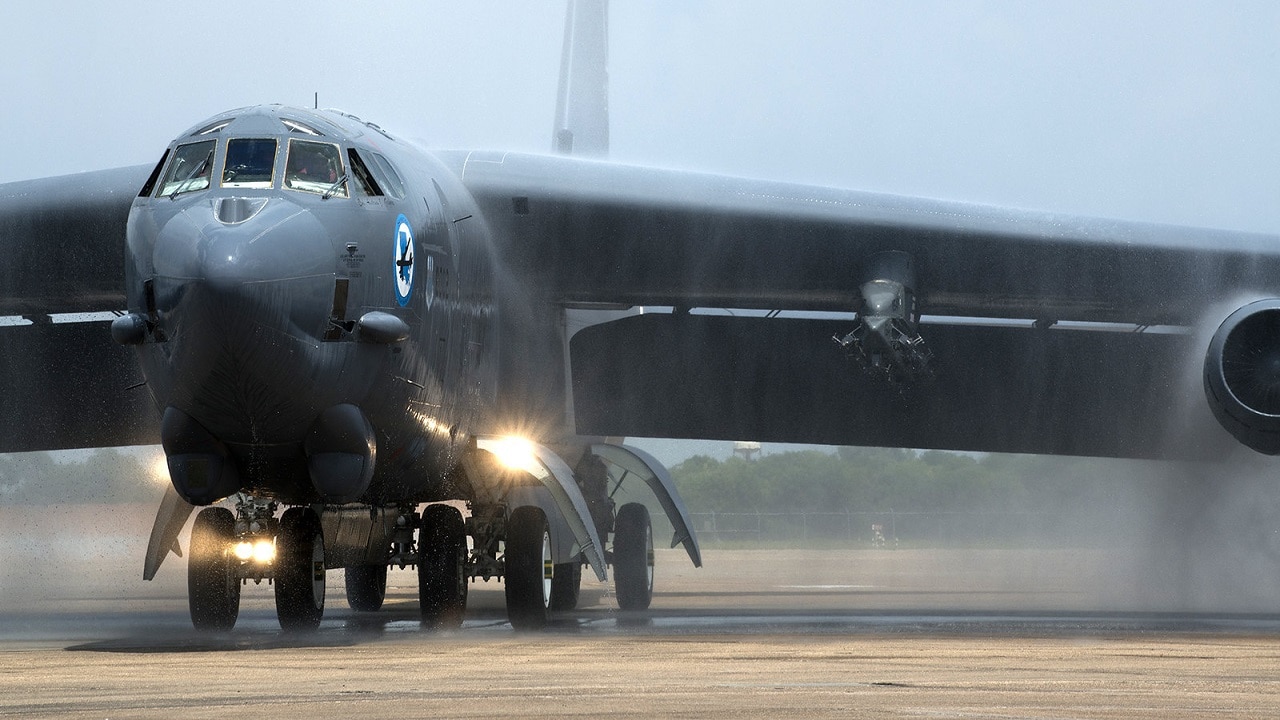
A 2nd Bomb Wing B-52H Stratofortress taxis under a spray of water after returning from a mission July 12, 2014, at Barksdale Air Force Base, La. This marked the last flight for one crew member on the aircraft, Lt. Col. Ronald Polomoscanik, the 343rd Bomb Squadron director of operations, who is retiring after 23 years of service. (U.S. Air Force photo by Master Sgt. Greg Steele/Released)
As explained by Chloe Anderson of DefenseFeeds, “Unlike older radar systems, such as PESA (Passive Electronically Scanned Array), which rely on mechanical rotation or a single large transmitter, AESA operates by electronically steering its radar beam. This allows it to scan faster, track multiple targets simultaneously, and resist jamming more effectively than older radar types like PESA or mechanically scanned arrays.”
Bonus Boosts for the BUFF: Additional B-52J Premise and Promise
Other improvements for this refurbished bomber are to include:
–New workstations for the crew (a five-person crew consisting of the pilot/aircraft commander, copilot, navigator, radar navigator, and electronic warfare officer).
–Rolls-Royce F130 engines to replace the aging Pratt & Whitney TF33 engines
The latter item is a product of the B-52 Commercial Engine Replacement Program. And as any World War II aviation buff knows, there’s more to Rolls-Royce’s proud history than just manufacturing luxury cars. The company built the Rolls-Royce Merlin engine that powered the North American P-51D Mustang, the piston-engine prop-driven fighter that finally gave Allied air forces superiority against the Luftwaffe in the skies over Western Europe as it escorted yet another Boeing warbird—the B-17 Flying Fortress heavy bomber.
These improvements are supposed to be completed by 2033.
Potential Monetary Downside and Other Logistical Challenges
As is true of many promising military technologies, the B-52J faces some challenges. There’s a monetary catch: the Nunn-McCurdy Act. This legislation was born as part of the 1982 Defense Authorization Act, and it requires the armed services to inform Congress when a program’s cost or schedule estimate has increased substantially from the approved level.
It is in fact the highly touted AN/APQ-188 radar that risks breaching Nunn-McCurdy. According to Military Watch Magazine, “[T]he B-52 radar unit cost increase referred to be [sic] sources as ‘significant.’ The extent of the overrun remains unconfirmed…This [radar upgrade] and other cost overruns have fuelled speculation that the Air Force will be forced to make deep cuts to the bomber program.”
Time will tell if the B-52J manages to steer clear of this budgetary tripwire. Meanwhile, according to the World Directory of Modern Military Aircraft, the Air Force currently has 76 B-52Hs in its active inventory.
That means that if the B-52J program gets off the ground, Stratofortresses will have to be upgraded at a rate of eight airframes per year to meet the 2033 target completion date.
About the Author: Christian D. Orr, Defense Expert
Christian D. Orr is a Senior Defense Editor. He is a former Air Force Security Forces officer, Federal law enforcement officer, and private military contractor (with assignments worked in Iraq, the United Arab Emirates, Kosovo, Japan, Germany, and the Pentagon). Chris holds a B.A. in International Relations from the University of Southern California (USC) and an M.A. in Intelligence Studies (concentration in Terrorism Studies) from American Military University (AMU). He is also the author of the newly published book “Five Decades of a Fabulous Firearm: Celebrating the 50th Anniversary of the Beretta 92 Pistol Series.”