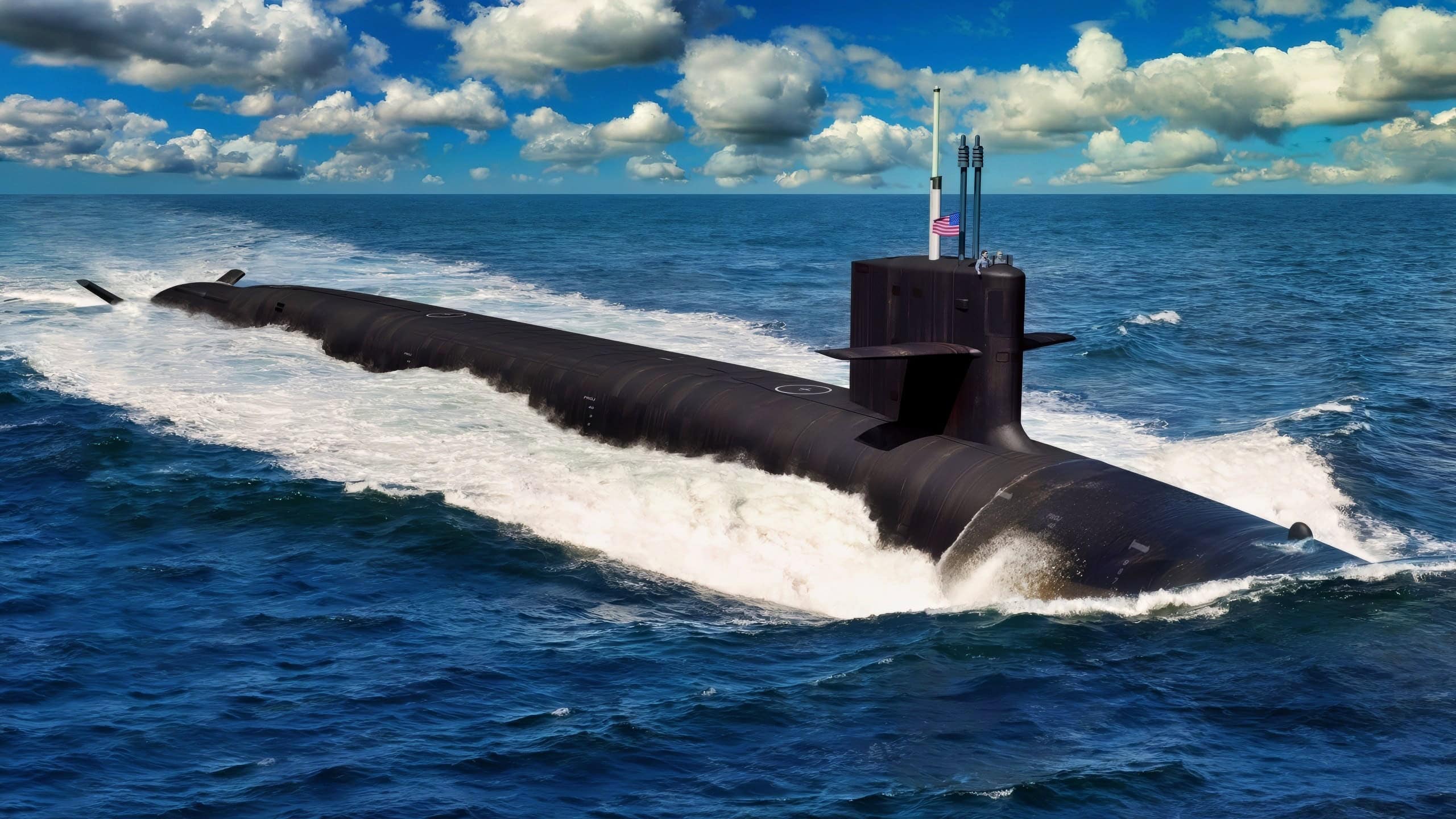
Summary and Key Points: The United States Navy is building twelve Columbia-class ballistic missile submarines for an estimated $139,700,000,000—roughly $11,600,000,000 per boat—making them the most expensive vessels the country has ever ordered. It is also robbing itself to do it. Missile tube components, structural castings, electronic parts, and skilled shipyard workers are being pulled off Virginia-class attack submarine construction and redirected to the Columbia program, because the Columbia cannot be allowed to slip.
The Columbia-Class Submarine Challenge is Military History Unfolding Right Before Our Eyes
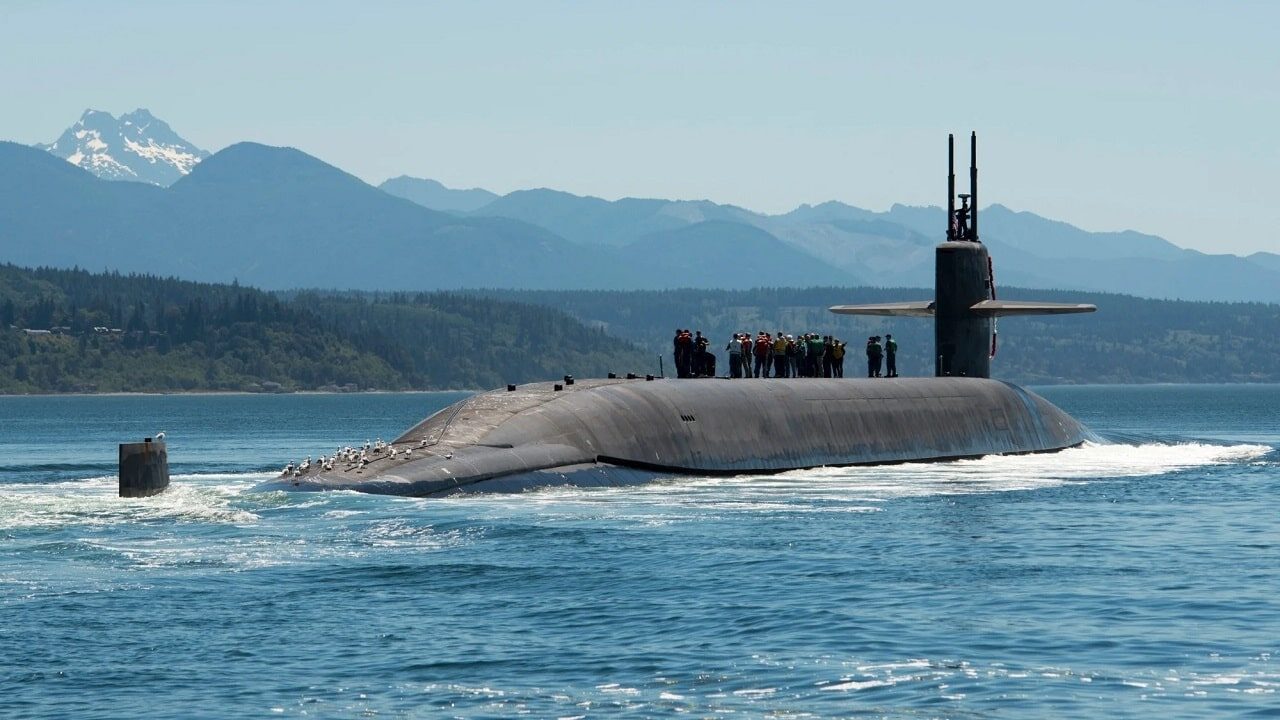
Ohio-Class. Image Credit: U.S. Navy.
America is working feverishly to enhance and modernize its aging ballistic missile submarine deterrent. Part of the critical maritime leg of the nuclear triad, the United States Navy’s nuclear-powered ballistic missile submarines provide the essential second-strike capability if–and when–the world finds itself in a nuclear war.
The Ohio-class SSBNs are aging, and the Navy desperately needs replacements.
The Navy wants the Columbia-class as its top acquisition priority to avoid a gap in the critical nuclear submarine force.
The Navy currently intends to build 12 new ballistic missile submarines.
The China Threat
China, with a shipbuilding capacity 200 times that of the United States, has taken five years to produce two nuclear-powered submarines annually.
Of the ten new nuclear-powered submarines China has produced (with many more on the way), at least two were Jin-class SSBNs. China’s fleet includes six Jin-class SSBNs to date.
As noted above, that number is steadily growing.
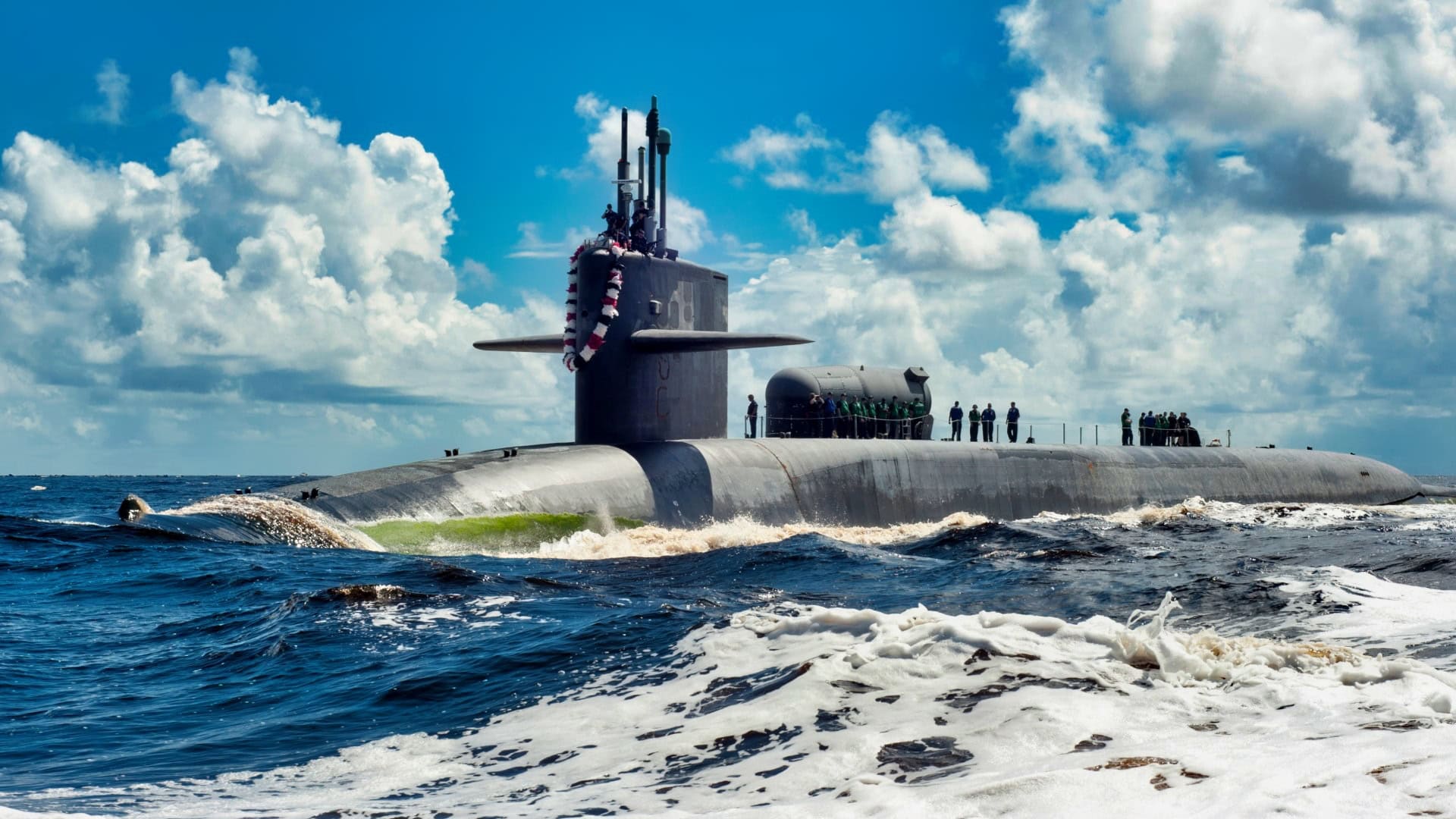
FERNANDINA BEACH, Fla. – The Ohio-class guided missile submarine USS Georgia (SSGN 729) transits the Saint Marys River July 15. Georgia returned to Kings Bay after spending more than a year forward deployed. (U.S. Navy photo by Mass Communication Specialist 1st Class(SW) James Kimber)
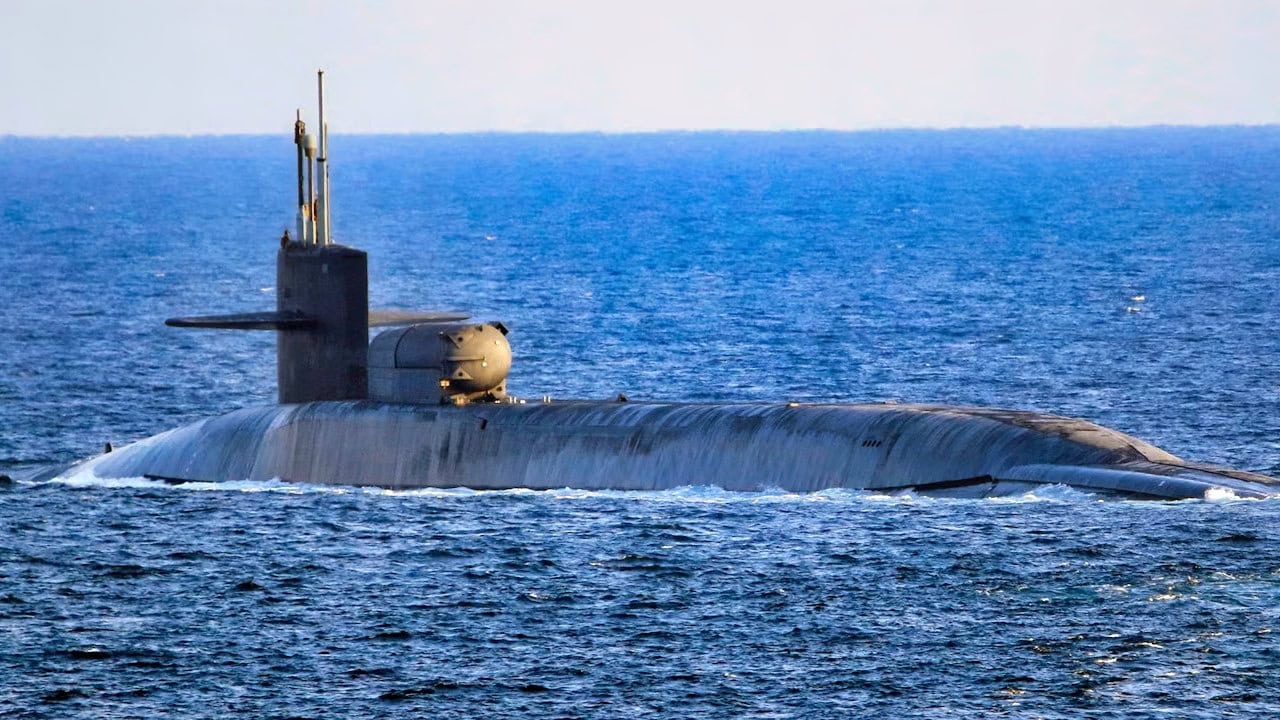
Ohio-Class SSGN Submarine U.S. Navy.
By contrast, the US Navy is retiring all 14 Ohio-class SSBNs between next year and 2040.
Availability of America’s SSBNs will drop 15-20 percent as the Ohio-class SSBNs enter their full retirement swing and the Columbia-class submarines become available.
That’s because the Navy requires a fleet of 14 SSBNs, with at least 12 hulls ready for deployment.
The Navy will be nowhere near that requirement by the 2030s, just as China is achieving that standard with newer, more capable SSBNs of its own.
Building a New SSBN In the Age of Industrial Scarcity
On June 4, 2022, General Dynamics Electric Boat laid the keel for the lead boat of the new Columbia-class SSBN, the USS District of Columbia (SSBN-826).
The Navy expedited its development (following projected component and assembly delays), and it is scheduled for delivery in 2028. Currently, the District of Columbia is about 65 percent complete.
In August of 2025, the second boat in the Columbia-class, the USS Wisconsin (SSBN-827), was laid down.
The Navy wants to keep the build rate for this class of submarine at just one boat per year.
The Navy is doing this on a shoestring, incremental budget instead of allocating the funds needed to ensure there are no gaps in America’s strategic deterrence at sea.
Navy planners are making a massive gamble based on a (flawed) assumption that America’s rivals would never take advantage of the limitations the Navy will soon face, thanks to the absence of 15-20 percent of its sea-based nuclear deterrent.
The Columbia-class SSBN is 560 feet long and has a submerged displacement of around 20,810 long tons. She will carry 16 Trident II D5/D5LE2 ballistic missile tubes (that’s a significant reduction from 24 on Ohio-class boats).
Interestingly, the Columbia-class has fewer ballistic missile tubes because the United States entered the Strategic Arms Reduction Treaty (New START) during the Obama administration, agreeing to reduce the number of ballistic missile launchers on its next-generation nuclear ballistic missile submarines.
Even though the new Columbia-class has fewer ballistic missile launch tubes, that doesn’t mean it’s less capable than the Ohio-class SSBNs.
Modern nuclear missiles are more advanced than they were during the Ohio-class development. Modern nukes can effectively do the same amount of–or more–damage as previous generations did, but with fewer missiles.
Plugging a Hole
For 12 Columbia-class boats, the estimated total acquisition cost is $139.7 billion.
Recognizing the gaps that the Navy’s sea-based nuclear deterrent will encounter starting in the 2030s, the Navy is fighting to both extend the lifespans of some of the Ohio-class SSBNs as well as to prioritize the construction of the Columbia-class SSBN by redirecting finite supply chain flows away from the Virginia-class nuclear-powered attack submarines still under construction toward the Columbia-class SSBNs.
While that move has delighted Columbia-class program managers, it has complicated Virginia-class production, which is now being produced out of sequence because critical supply chains, such as missile tube elements, structural castings, and electronic components, are being redirected to the Columbia-class SSBNs under development.
A Broken System
Further, finite US naval shipyard workcrews are being pulled from Virginia-class construction to Columbia-class, leaving critical gaps in the workforce needed for the Virginia-class and creating another round of cascading delays in that important program.
But these woes get to the very nub of the problem set facing the United States Navy.
It isn’t the threat of an enemy attack.
It’s a lack of shipyards, brittle supply chains, and a shortage of skilled workers.
No military or even budgetary solution addresses those problems.
They can only be corrected over time.
And time, as you’ve read in relation to China’s explosive naval growth, is not on America’s side.
About the author: Brandon J. Weichert
Brandon J. Weichert is the Senior National Security Editor at 19FortyFive.com. He also manages The Weichert Brief on Substack. Weichert also hosts “National Security Talk” on Rumble. He is the author of four bestselling national security books, most recently A Disaster of Our Own Making: How the West Lost Ukraine (Encounter Books). Follow him via Twitter/X @WeTheBrandon.