
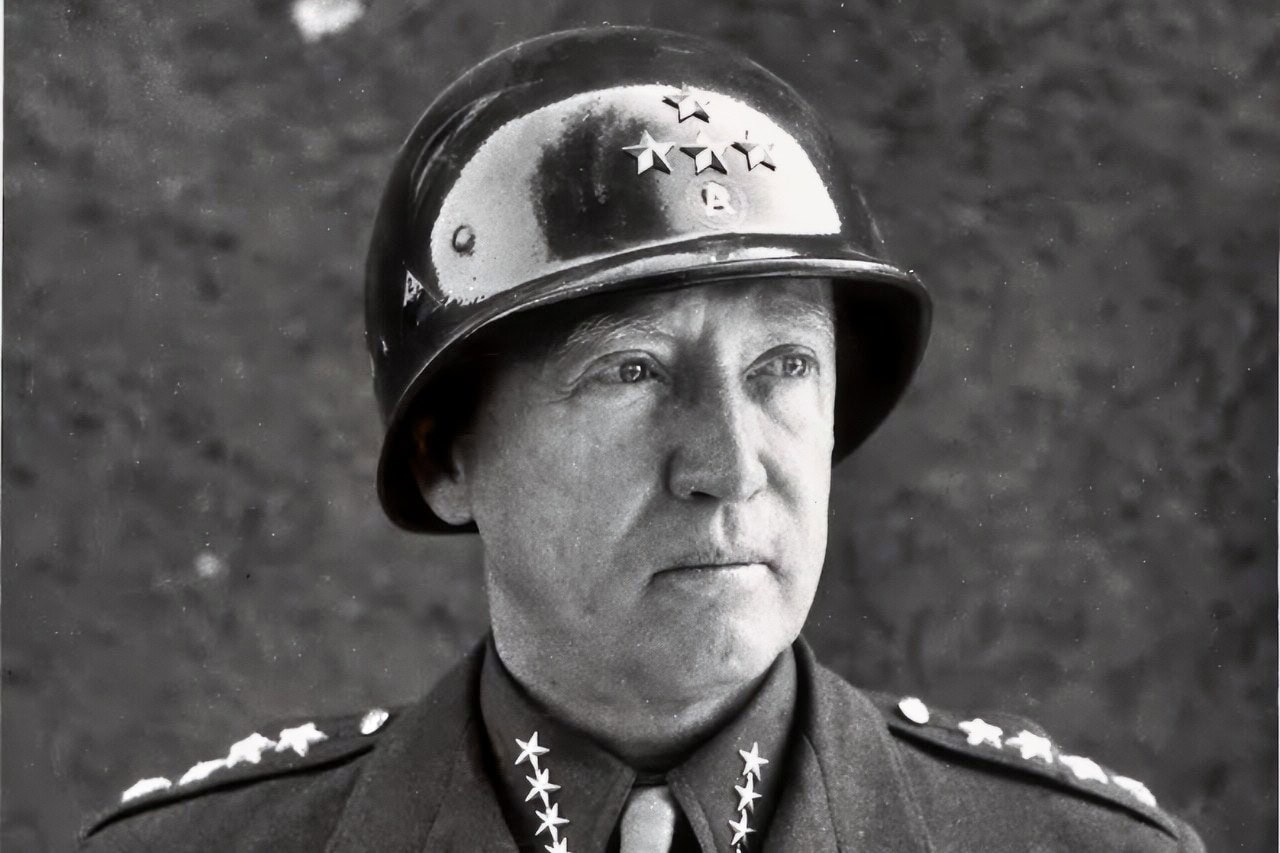
Summary and Key Points: Journalist Stephen Silver builds a piece around George Patton’s line from his posthumously published 1947 memoir War As I Knew It: “The courageous man is the man who, despite his fear, forces himself to carry on.” He sets it against December 1944, when Col. Oscar W. Koch’s December 9 briefing let Patton see the Bulge coming and tell the Verdun conference to let the Germans reach Paris, then chew them up, and flags two unsourced Patton quotes.
US Army General George S. Patton Was US Army History
The great Gen. George Patton was often associated with acts of courage. He also has many quotes attributed to him about courage, some genuine and others less so; more on that below.
One instance in his storied career when the man known as Old Blood and Guts showed uncommon courage came in December 1944, during World War II’s legendary Battle of the Bulge, when Patton saw a new German offensive coming.
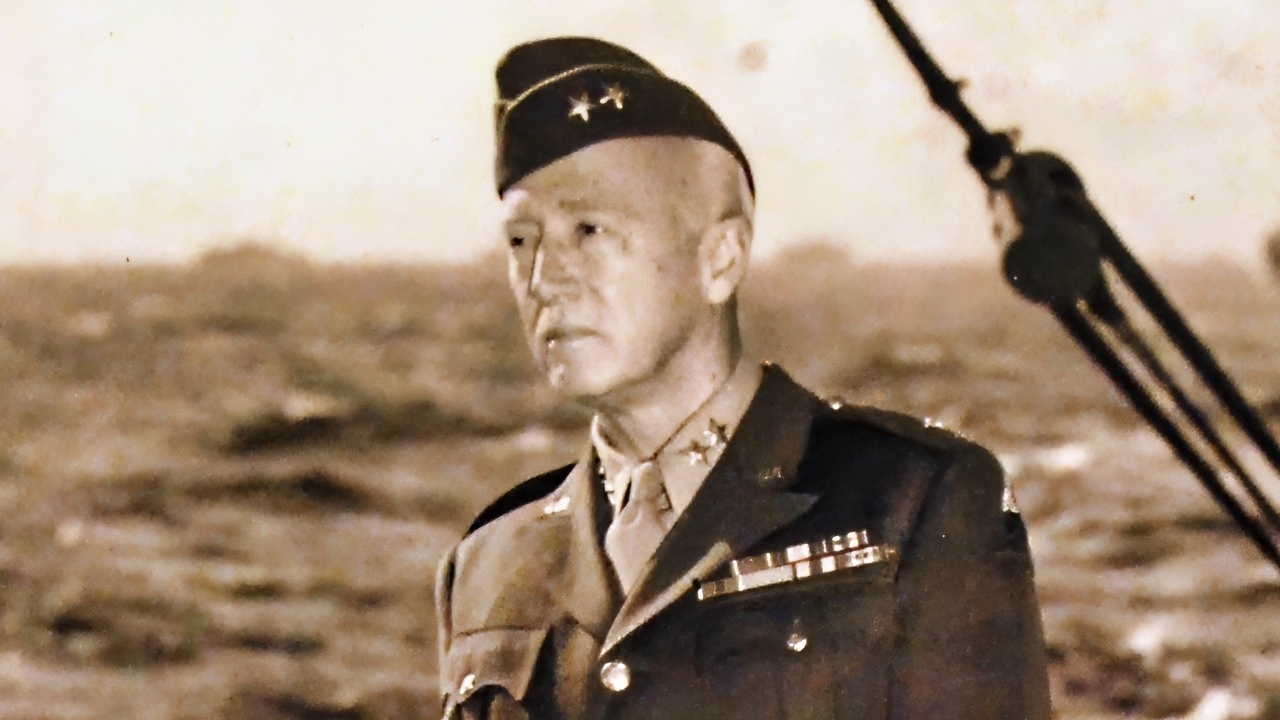
US Army General George S. Patton Creative Commons Photo
As a 2018 HistoryNet account notes, Hollywood’s 1970 movie about Patton made that moment, and Patton’s actions, famous, even if it didn’t tell the story accurately.
That account describes the scene in the movie: Lt. Gen. Omar Bradley calls Patton (George C. Scott) and tells him to move the 10th Armored Division to the First Army’s VIII Corps, and that a meeting is set for the next morning at Verdun, with General Dwight Eisenhower’s chief of staff, Lt. Gen. Walter Bedell Smith.
Patton then says to himself, “There is absolutely no reason for us to assume the Germans are mounting a major offensive…. Therefore, I believe that’s exactly what they are going to do.”
Later, in that meeting, Patton says, “I can attack with three divisions in forty-eight hours,” a plan that includes a 90-degree turn to attack Luxembourg.
As HistoryNet says, this is great cinema, but it’s also “not very good history—and it is even worse military reality.”
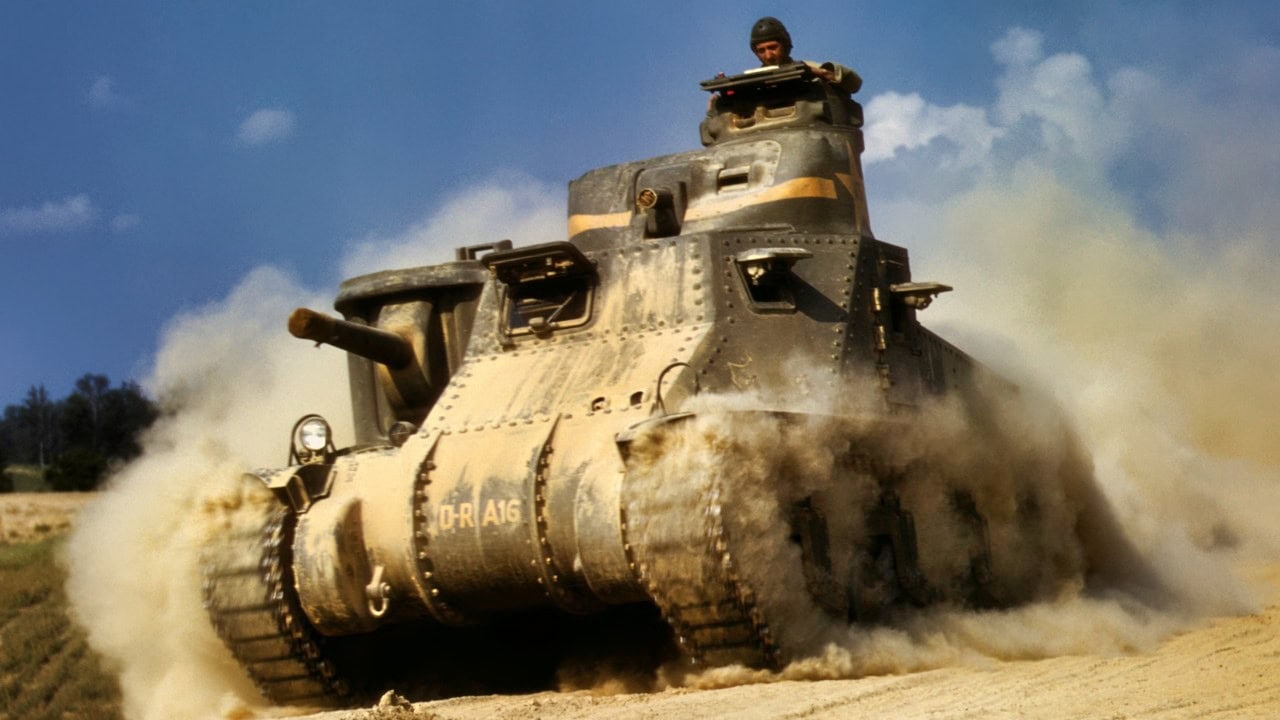
M3 Grant Lee Tank World War II.
The Real Thing
In reality, that account suggests things weren’t quite so simple, as military operations rarely are.
Patton, however, “really did outthink the Germans, with a sophistication whose reality was far more amazing than a mere flash of Hollywood-style inspiration could capture,” the HistoryNet account said. Patton’s real-life planning was a “tour de force of military planning and movement,” even though he didn’t put it together as quickly as the movie version.
Patton did, however, see the German offensive coming, in part because he relied on his chief intelligence officer, Col. Oscar W. Koch.
In late November, Koch spotted German units leaving Westphalia and noted that panzer units had disappeared from the Third Army’s front, suggesting they were headed somewhere.
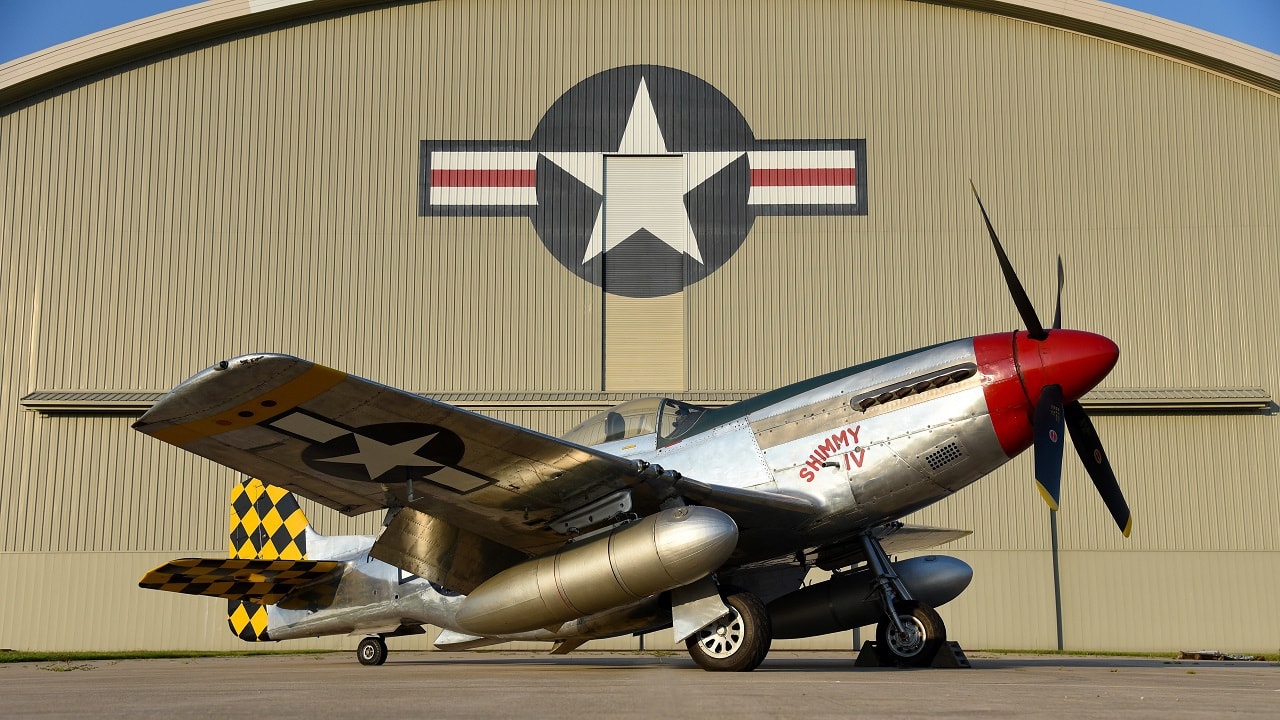
The Mustang was among the best and most well-known fighters used by the U.S. Army Air Forces during World War II. Possessing excellent range and maneuverability, the P-51 operated primarily as a long-range escort fighter and also as a ground attack fighter-bomber. The Mustang served in nearly every combat zone during WWII, and later fought in the Korean War.
On December 9, Koch put together a briefing explaining why he believed a German offensive was coming. Patton told his staff to prepare contingency plans.
When the Verdun meeting took place on December 19, Patton explained the situation, and Gen. Eisenhower replied, “The present situation is to be regarded as one of opportunity for us and not of disaster. There will be only cheerful faces at the conference table.”
Patton replied, “Hell, let’s have the guts to let the bastards go all the way to Paris. Then we’ll cut them off and really chew them up.”
And the rest is well-known military history.
Col. Koch, for what it’s worth, isn’t included as a character in the “Patton” movie, though a character based on him, “Col. Gaston Bell,” appears in the film.
Many years later, Koch was the subject of a book, “Patton’s Oracle.”
The Quote and Military History
The quote about the attributes of the “courageous man” appears in Patton’s memoir, “War As I Knew It,” which was published posthumously in 1947, two years after the general’s death.
The quote in its entirety goes, “If we take the generally accepted definition of bravery as a quality which knows not fear, I have never seen a brave man. All men are frightened. The more intelligent they are, the more frightened they are. The courageous man is the man who, despite his fear, forces himself to carry on. Discipline, pride, self-respect, self-confidence, and the love of glory are attributes which will make a man courageous even when he is afraid.”
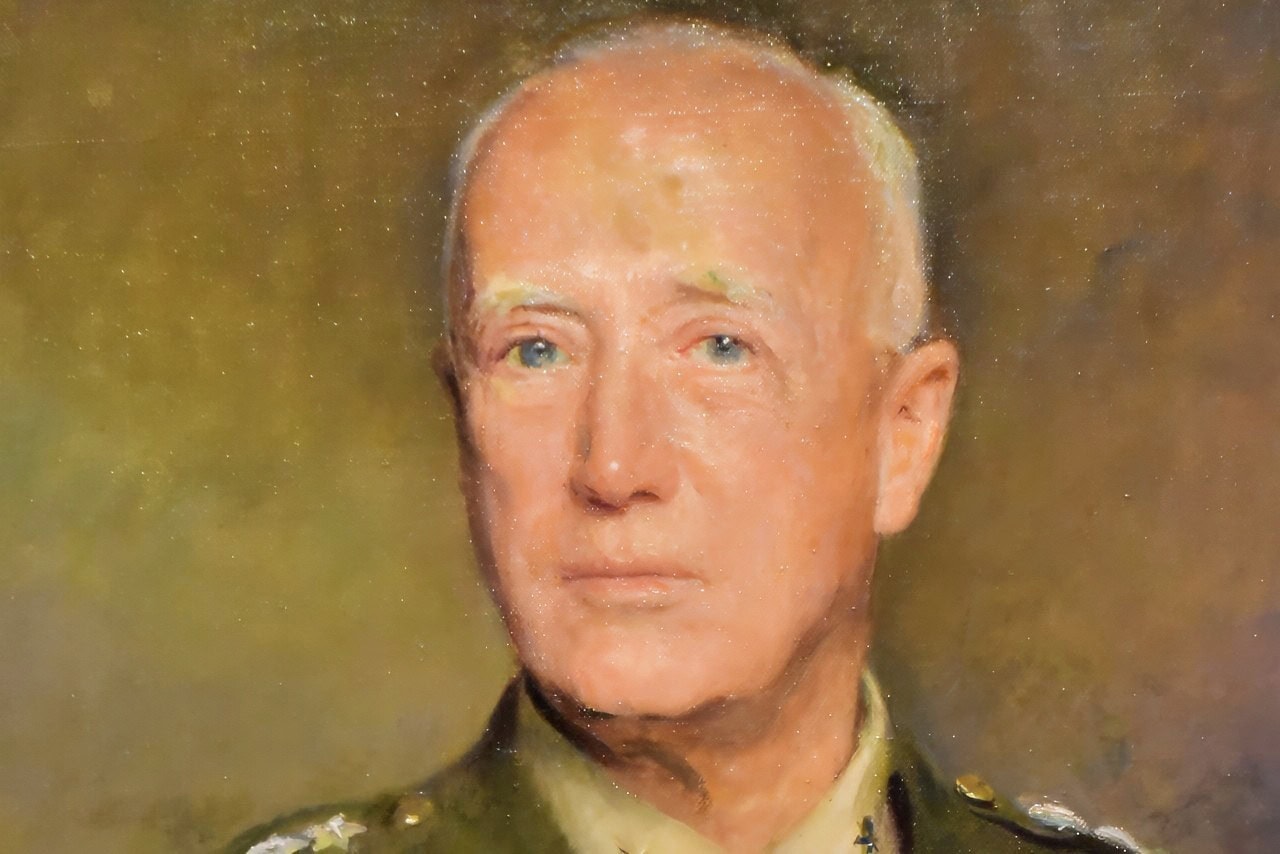
General George Patton National Portrait Gallery Photo. Image Taken by 19FortyFive on 1/23/2026 in Washington, DC.
Less well known than some of Patton’s other quotes, it appears less often in military histories or online and wasn’t featured in the movie about the great general.
Another widely cited Patton quote about courage is “Courage is fear holding on a minute longer,” sometimes presented as “just a minute longer.’ However, that version doesn’t seem to cite any solid source.
Another commonly cited Patton quote is “moral courage is the most valuable and usually the most absent characteristic in Men,” though sourcing for that is also hard to pin down.
About the Author: Stephen Silver
Stephen Silver is an award-winning journalist, essayist, and film critic, and contributor to the Philadelphia Inquirer, the Jewish Telegraphic Agency, Broad Street Review, and Splice Today. The co-founder of the Philadelphia Film Critics Circle, Stephen lives in suburban Philadelphia with his wife and two sons. For over a decade, Stephen has written thousands of articles on politics, national security, technology, and the economy. Follow him on X (formerly Twitter) at @StephenSilver, and subscribe to his Substack newsletter.