
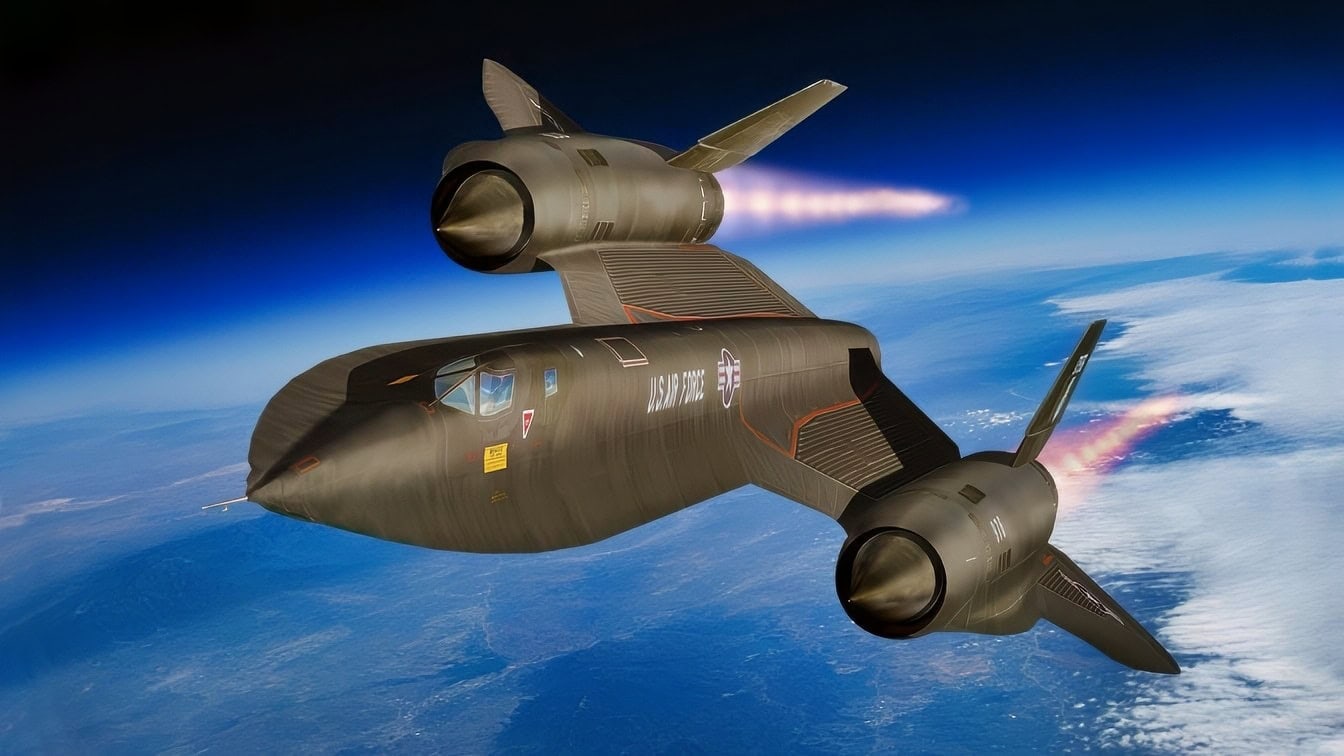
The Lockheed SR-71 Blackbird was distinct from every other aircraft in the Air Force inventory. Capable of cruising above Mach 3 and at altitudes over 80,000 feet, the SR-71 operated in an environment that posed unusual challenges in aerodynamic heating, propulsion management, and human physiology. Flying it required extensive training—far more specialized than the standard training a conventional military aviator receives. To fly the SR-71, a pilot and reconnaissance systems officer (RSO) already needed military pilot or RSO experience. Selection and SR-71-specific training combined classroom instruction, simulators, high-altitude survival, and actual flight operations.
The transition from experienced Air Force pilot to qualified Blackbird crew member could take roughly one year.
Not For Everyone: The SR-71 Made Aviation History
SR-71 pilots weren’t pulled off the street; they were recruited from experienced military aviators already in the ranks. Candidates typically had substantial jet-flying experience and strong operational records.
The selection process emphasized exceptional flying ability, sound judgment, the ability to follow precise procedures, physical fitness, psychological stability, and the ability to maintain security clearances.
The aircraft carried two crewmembers.
The first was the pilot, responsible for flying the aircraft and managing its flight systems, and the second was the reconnaissance systems officer (RSO), responsible for navigation, reconnaissance systems, and mission-related tasks.
Both crewmembers underwent specialized qualification and training, and crew coordination was essential to SR-71 operations, especially during high-speed flight and emergencies.
Because the SR-71 fleet was so small and the operational environment so demanding, mistakes had disproportionate consequences, raising the stakes.
From the Ground Up
Before flying, trainees needed extensive knowledge of the SR-71 systems.
The Pratt & Whitney J58 engine and variable-geometry inlet system were particularly important.
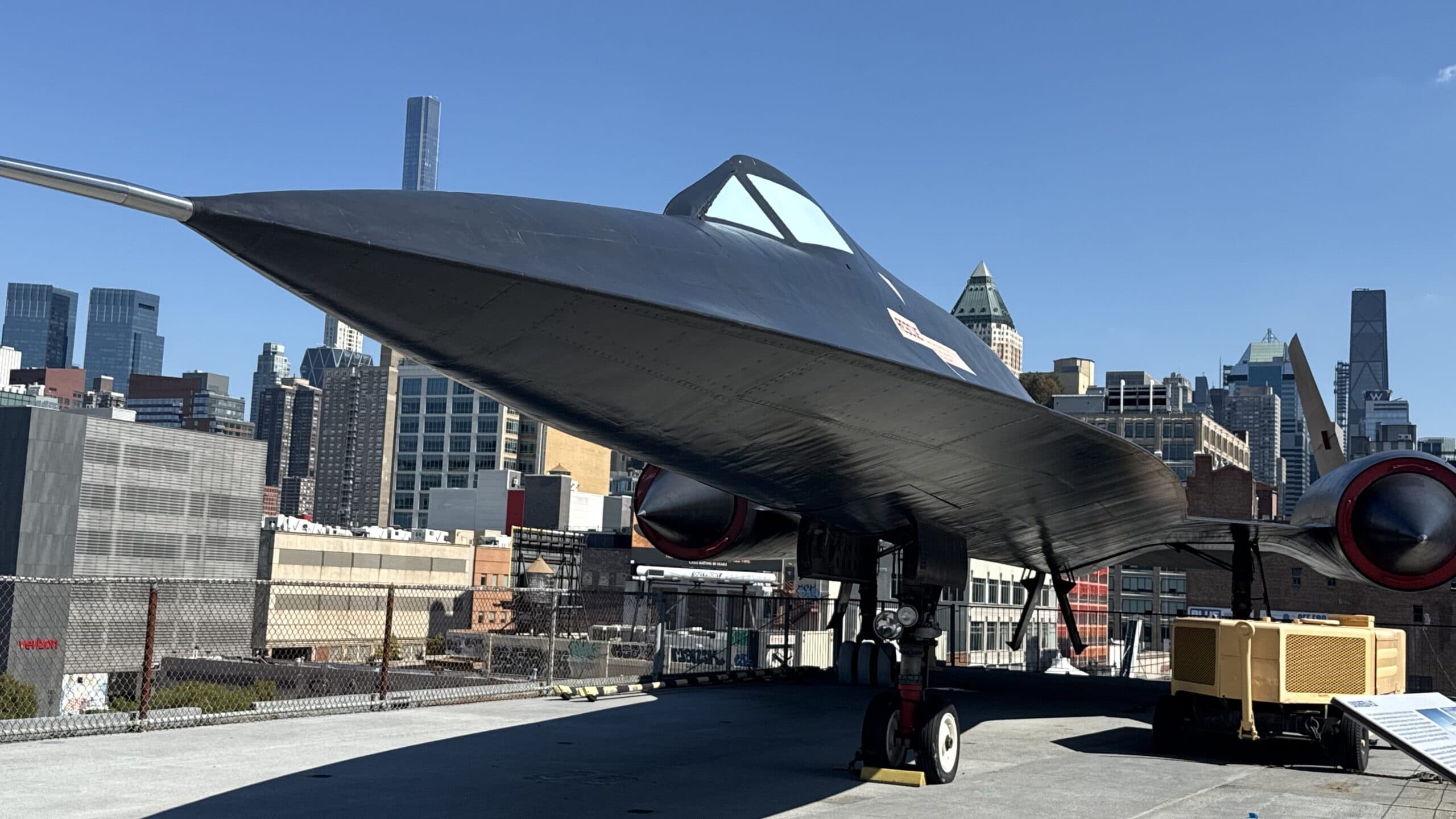
A-12, a plane from the same linage as the SR-71 Blackbird, aboard the USS Intrepid. 19FortyFive Photo.
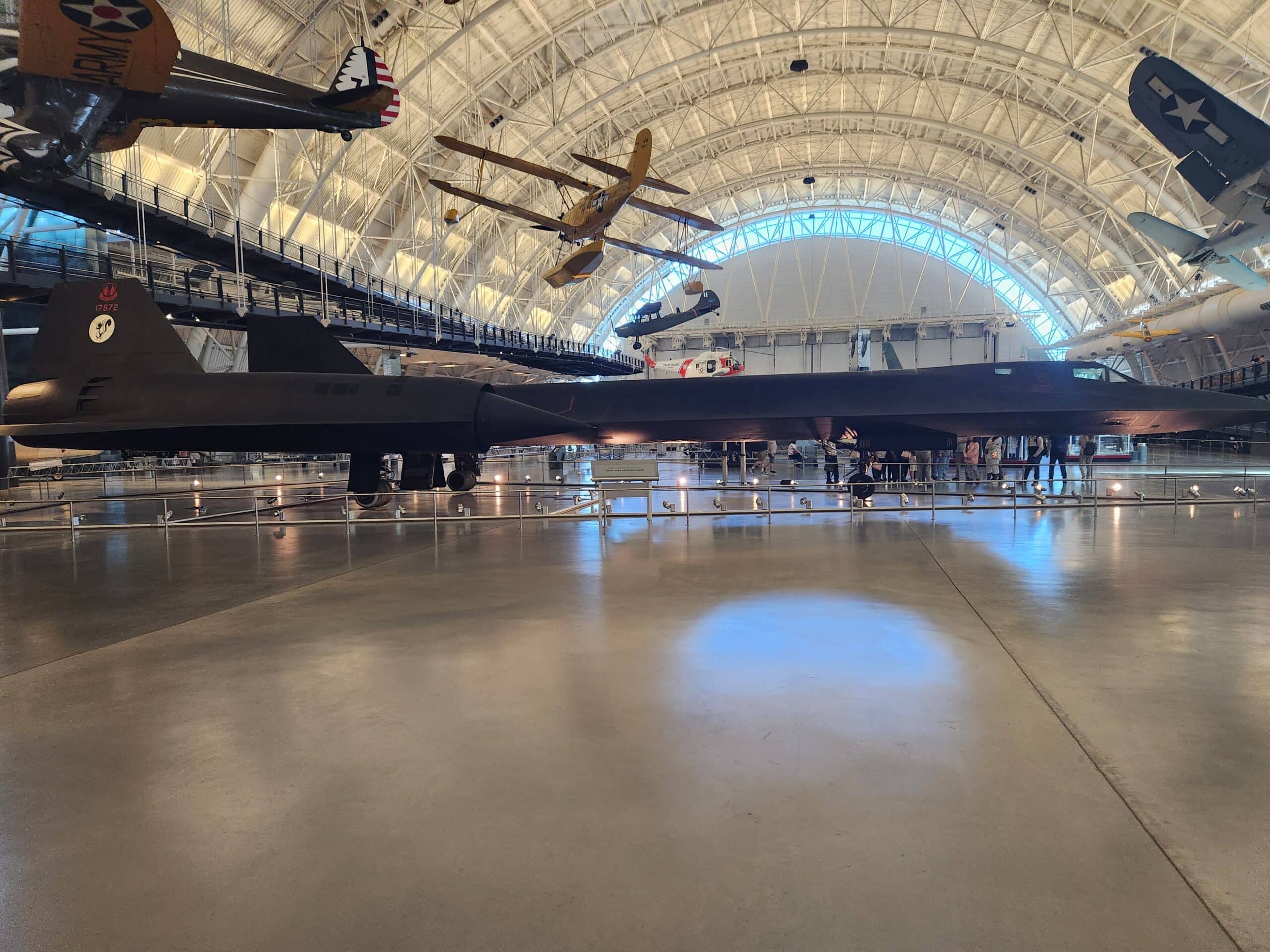
SR-71 Blackbird at the Smithsonian. 19FortyFive image taken back in 2025.
At high Mach numbers, inlet geometry controlled airflow and shockwaves entering the engines.
An inlet malfunction, commonly called an unstart, could cause sudden asymmetric thrust and a violent yaw, so pilots had to recognize an unstart immediately and apply emergency recovery procedures.
Additional training covered specialized JP-7 fuel systems, hydraulic and electrical systems, flight controls, pressurization, environmental controls, emergency procedures, and high-speed flight limitations.
Simulator Training
Simulators were central to SR-71 crew preparation, letting crews practice complex procedures without risking an extremely expensive, irreplaceable aircraft.
This training was particularly valuable for engine failures, inlet unstarts, navigation malfunctions, electrical and hydraulic failures, abnormal flight conditions, emergency descents, and crew coordination.
At Mach 3, for example, an inlet unstart could generate severe asymmetric forces, forcing crews to respond rapidly and properly.
The simulator let crews repeat situations that would be too dangerous to deliberately induce in an actual SR-71.
Flight Training
The Air Force also operated a specialized trainer variant, the SR-71B. Unlike the standard SR-71A, the B-variant featured an elevated second cockpit for an instructor pilot who sat behind and above the trainee, providing improved forward visibility.
The SR-71B let trainees gain experience with takeoff and landing characteristics, handling at different speeds and altitudes, aircraft systems management, aerial refueling procedures, high-speed acceleration, supersonic cruise operations, and emergency procedures.
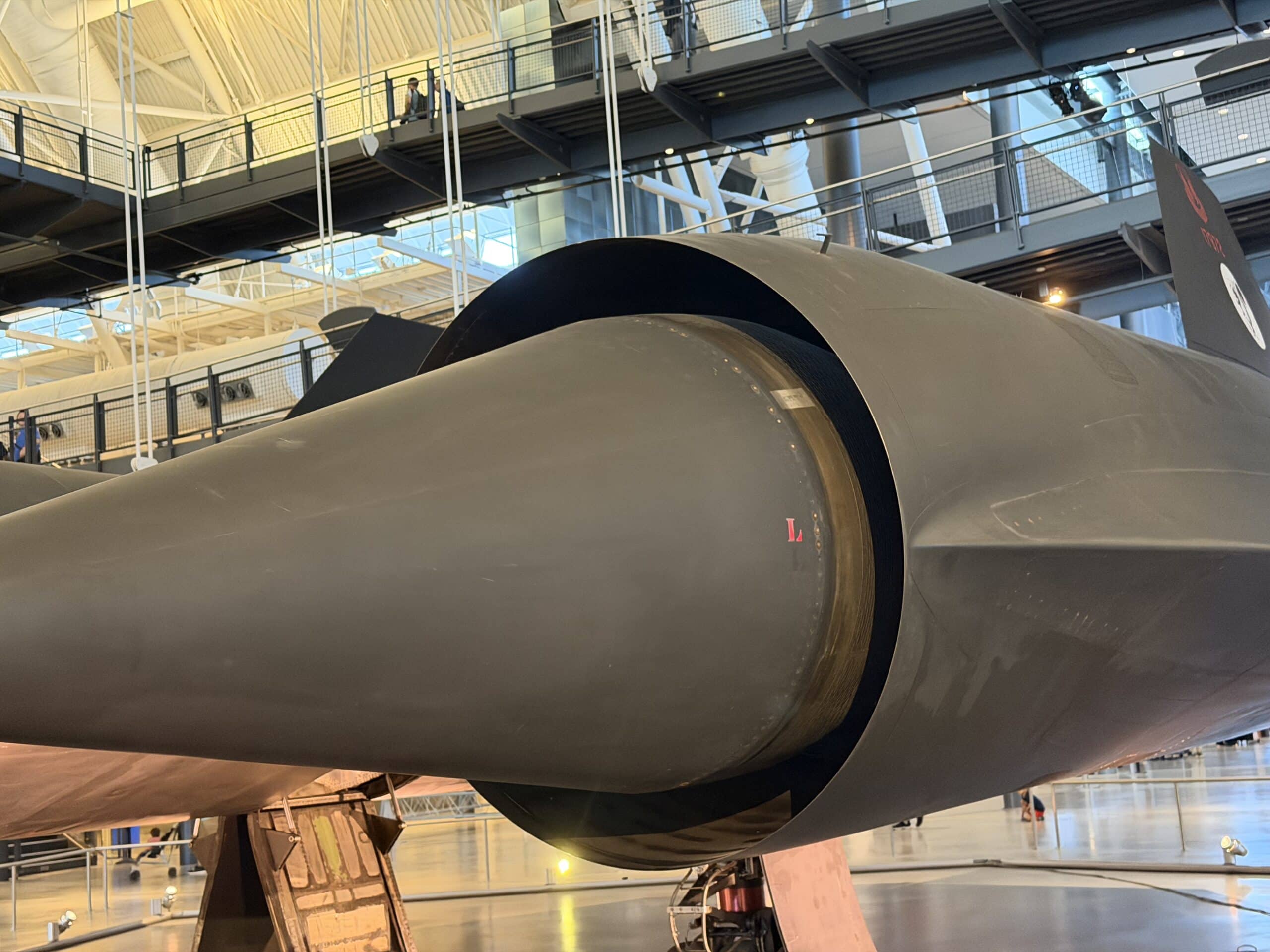
SR-71 Blackbird. Image taken at the Smithsonian on 6/30/2026 by 19FortyFive
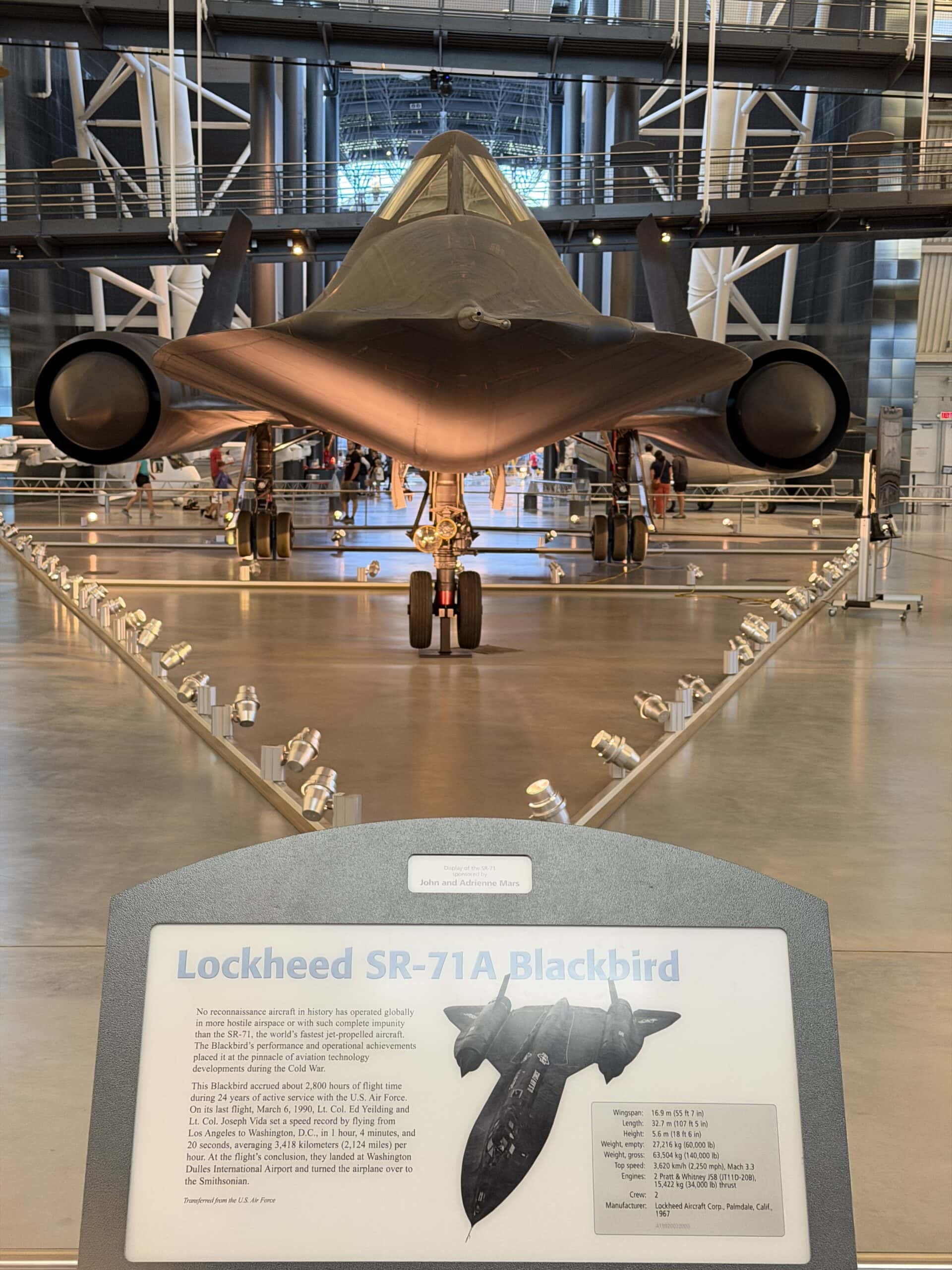
SR-71 Blackbird. Image taken at the Smithsonian on 6/30/2026 by 19FortyFive
Aerial refueling was especially important, as the SR-71 often refueled shortly after takeoff before long-range missions.
The training emphasized precision, which was essential at such high speeds, rather than aggressive maneuvering.
Surviving the Altitude
Operating above 80,000 feet required specialized life support equipment. SR-71 crews wore full pressure suits, similar in principle to those astronauts use.
At such high altitudes, ordinary oxygen masks couldn’t protect against cabin depressurization.
So crews trained in pressure-suit operations, oxygen systems, decompression emergencies, emergency ejection, and survival procedures.
The training also included preparation for physiological hazards like hypoxia and decompression.
Becoming Operational
Earning the qualification necessary to fly the SR-71 did not mean new pilots were ready to inherit a full mission workload.
Operational proficiency required experience with mission planning, specialized recon routes, sensor operations, tanker coordination, and more.
The SR-71 mission often involved long distances and carefully planned refueling sequences.
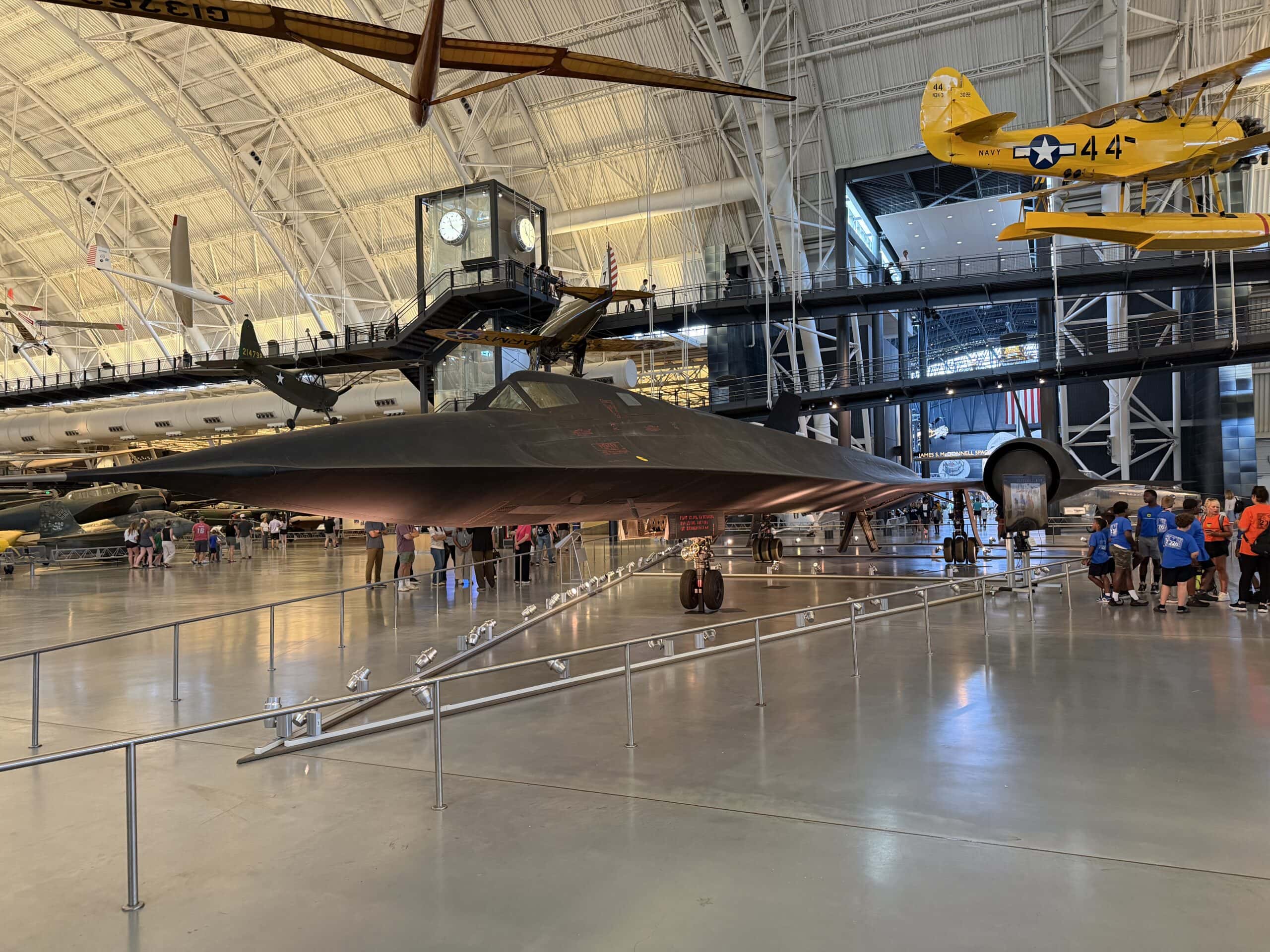
SR-71 Blackbird at the Smithsonian. 19FortyFive Image taken by Christian D. Orr.
Just because a pilot could take off and land in an SR-71 didn’t mean they were ready for the full intercontinental mission sequence.
In sum, becoming an SR-71 pilot required years of prior aviation experience followed by extensive specialized training. The aircraft was a unique engineering marvel, and flying it required a well-honed skill set.
About the Author: Harrison Kass
Harrison Kass is a writer and attorney focused on national security, technology, and political culture. His work has appeared in Tablet, City Journal, The Hill, The Spectator, and The Cipher Brief. He holds a JD from the University of Oregon and a master’s in Global & Joint Program Studies from NYU. More at harrisonkass.com.