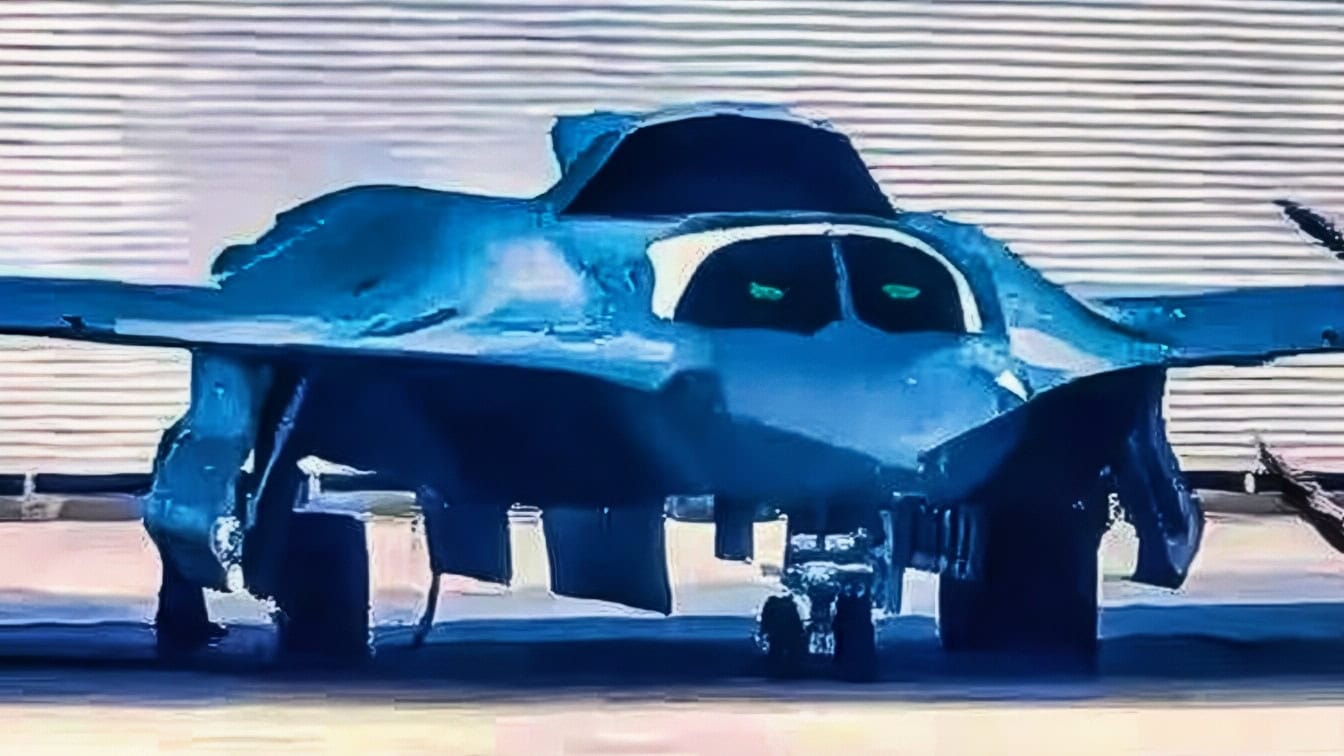
China Might Be Adding Laser Guns Onto Their Sixth-Generation Warplane – At the Fourteenth China International Defense Electronics Exhibition in Beijing from September 15-17, the Aviation Industry Corporation of China (AVIC) displayed a new technology that drew onlookers’ attention. The weapon was described as a laser tracking-and-aiming system for combat aircraft. Per the display, the equipment weighs 838 pounds. The system is believed to put out potentially hundreds of kilowatts. Promotional imagery indicates the weapon will be employed on China’s new sixth-generation warplane, the J-36.
And, yes, as you can imagine, that would be a big deal that would get the US Air Force, Boeing, and Lockheed to all take notice.
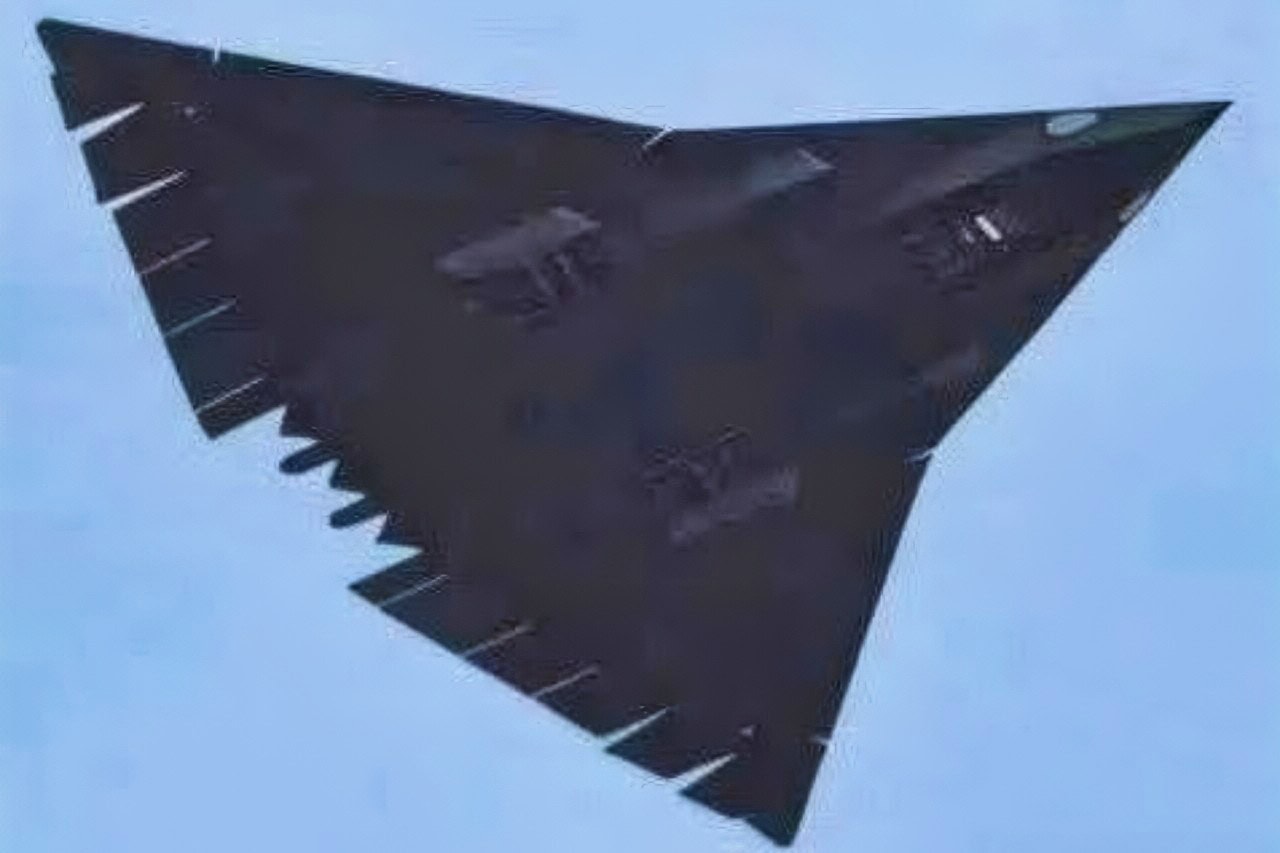
J-36 X Screenshot
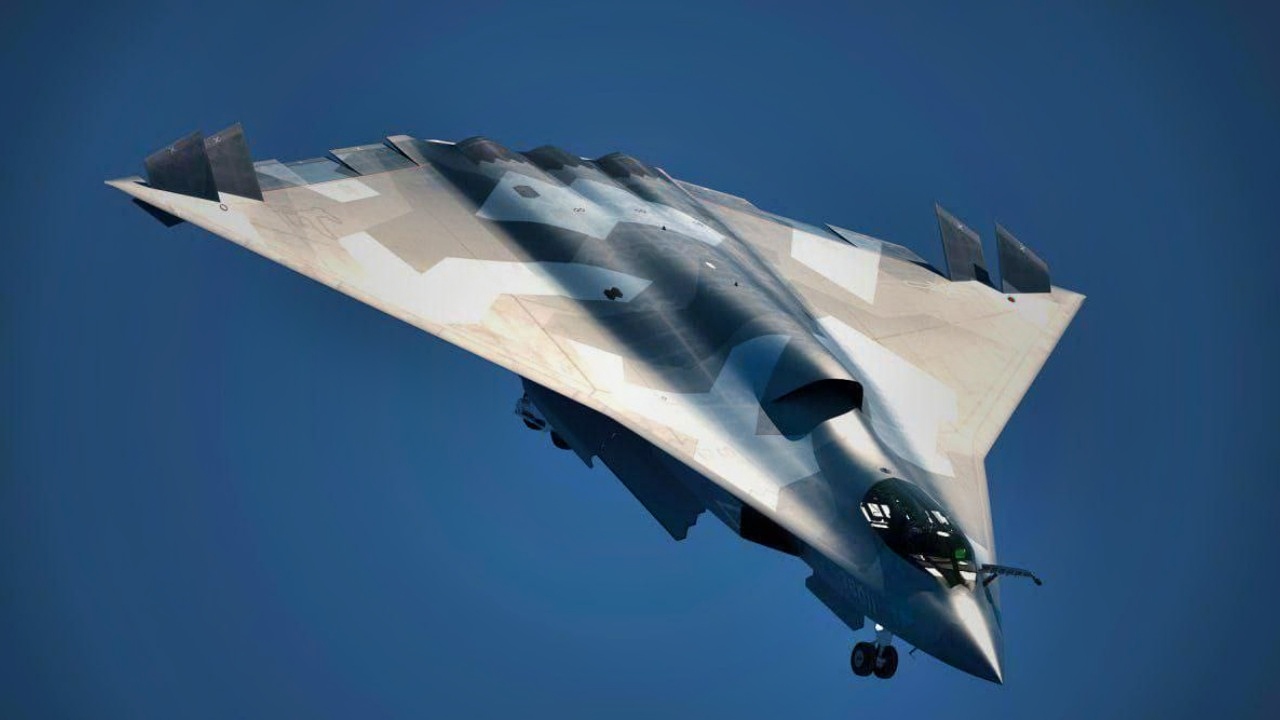
J-36 Fighter Artist Rendition. X Screenshot.
If it works, this laser system could destroy incoming missiles and drones and turn off targeting systems.
The J-36
China’s experimental, three-engine, tailless sixth-generation warplane, the J-36, was developed by the Chengdu Aircraft Corporation (the same firm behind China’s iconic fifth-generation stealth warplane, the J-20 “Mighty Dragon”). The J-36 is believed to have a 20-meter wingspan and a maximum takeoff weight of 50-55 metric tons.
Engineers are especially interested in the J-36’s unique three-engine design because it provides greater electrical-generation capacity than other conventional twin-engine stealth fighters, including the F-22 and J-20.
Despite these impressive designs for the J-36 (and the fact that the J-36 has already been spotted flying around China), many Western experts quibble over whether the J-36 is a true sixth-generation warplane or just a fifth-generation-plus warplane.
Of course, that seems like a distinction without a difference, since Western analysts made many of the same complaints about the J-20 and the Shenyang J-35 (China’s answer to America’s F-35 Lightning II). At the end of the day, given China’s decisive manufacturing supremacy and its willingness to iterate systems through production, Western carping seems like a distinction without a difference.
A Game-Changer
Laser weapons could be a real advantage for this warplane (if China can make these weapons work reliably). The problem is that many countries have experimented with this concept over the decades. None have made the weapons work in a way that lets them scale and apply them across the whole force. AVIC clearly believes it’s made a breakthrough and wants the world to know it.
Still, this is no easy feat for any nation. A high-energy laser must concentrate enough power on a target to damage its structure. The laser must be powerful enough to destroy the target’s sensitive components or interfere with its optical guidance equipment.
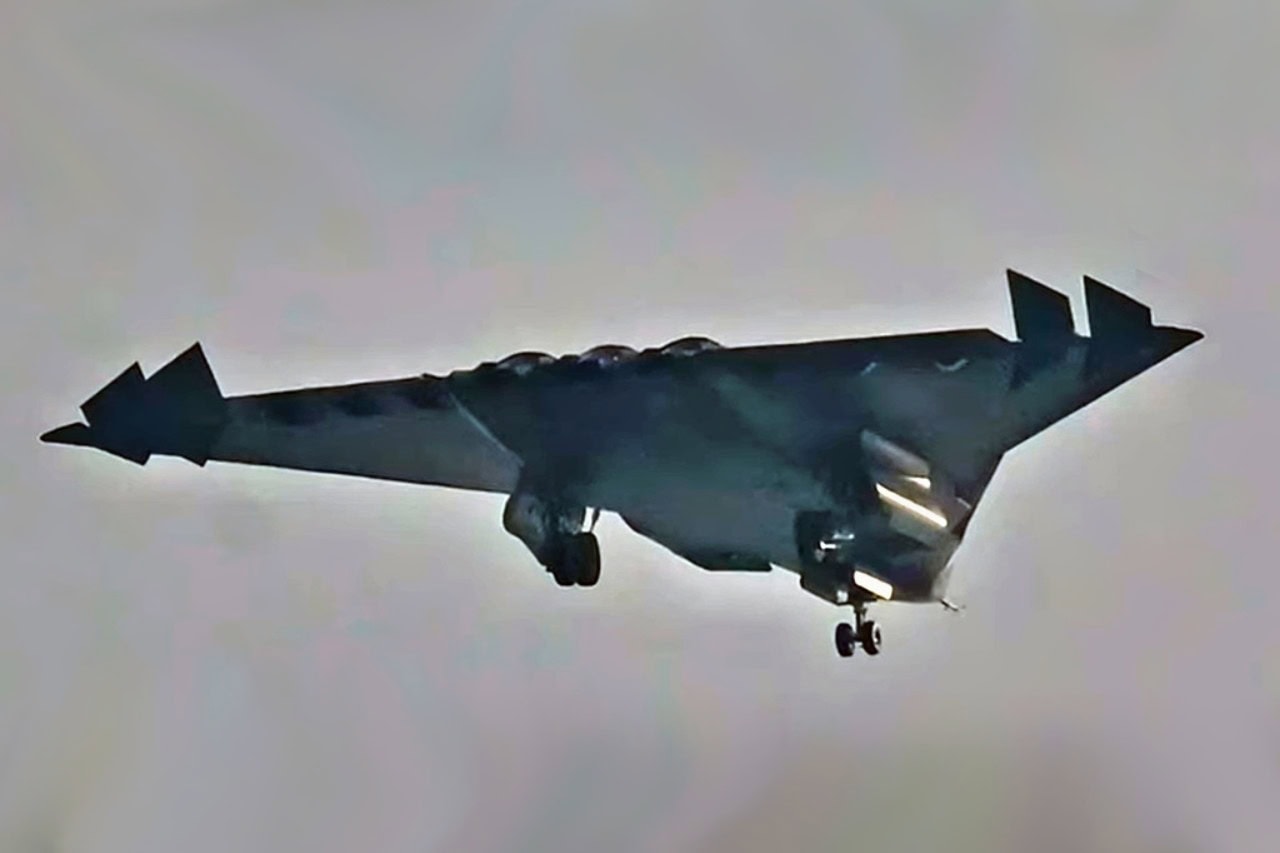
J-36 Fighter from China. Image Credit: Creative Commons.
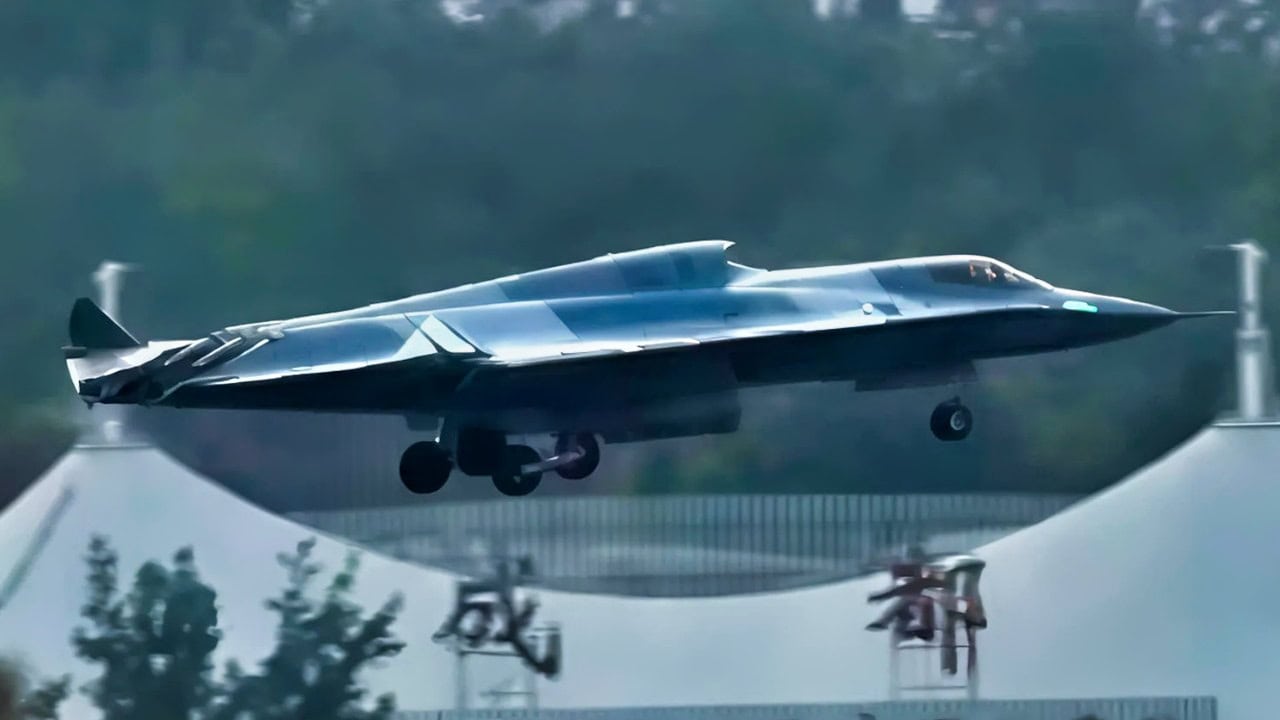
J-36 Fighter from X/Screenshot.
If the J-36 used a combat laser system, it would need sufficient cooling to dissipate the heat a theoretical laser weapon would generate.
America’s Failed Laser Weapon Program
As mentioned above, the United States was developing its own directed-energy weapon system similar to the proposed Chinese one. Known as the Self-Protect High Energy Laser Demonstrator (SHiELD), the program aimed to develop an airborne laser that could protect a warplane against incoming missiles. Lockheed Martin developed the Laser Advancements for Next-generation Compact Environments system (LANCE) as part of this program.
By 2022, Lockheed delivered the laser system to the Air Force for evaluation. It was underpowered.
The Air Force ended the program in 2024 without even conducting the previously planned fighter-mounted laser demonstration.
Major challenges included integrating electricity and managing equipment weight, especially on the warplane itself.
Having a functioning laser weapon was one thing. Getting it to work on an airframe was something else entirely. Although SHiELD was discontinued, the Air Force Research Laboratory (AFRL) continues to investigate how to operationalize aircraft-mounted laser weapons.
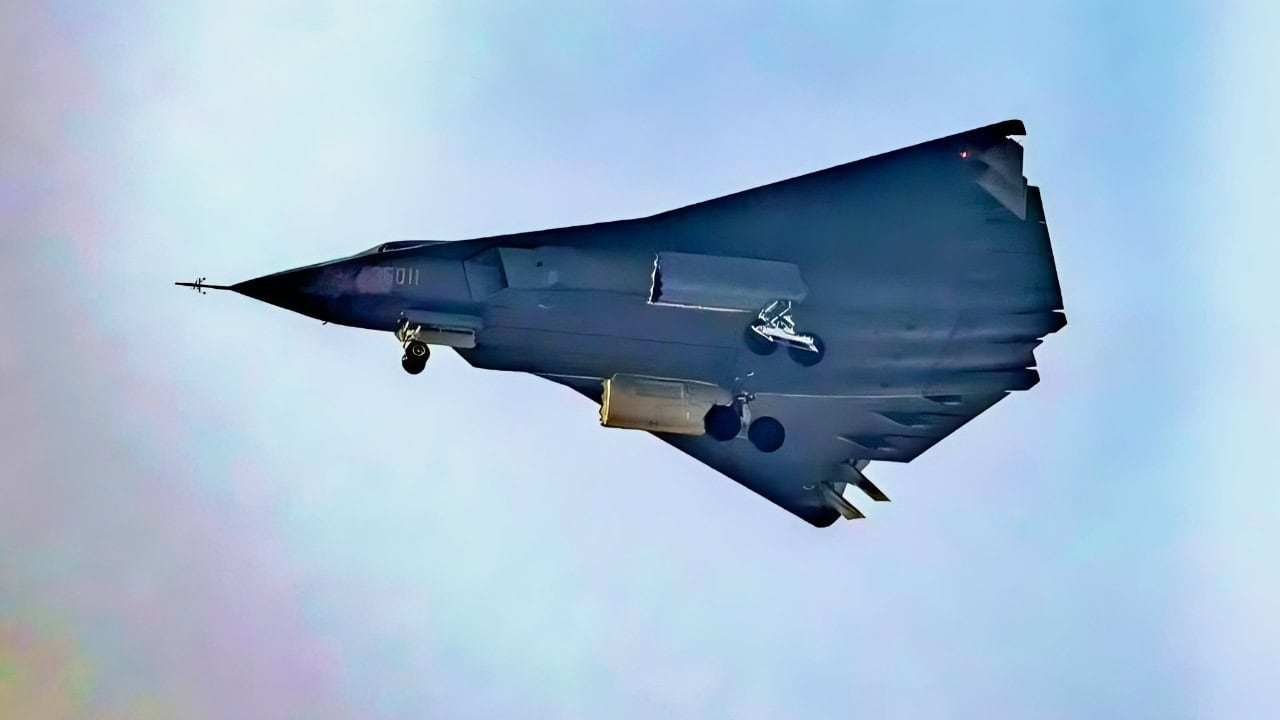
J-36 Fighter from China. Image Credit: X Screenshot.
According to The War Zone, an online trade publication, the AFRL project has improved power generation and thermal management, making future airframe integration more feasible. That project, however, has not moved beyond the experimental phase and is unlikely to do so anytime soon.
Star Wars Gets Real In China?
If laser weapons work as advertised, they will fundamentally change aerial interception. Modern fighters have a finite carrying capacity for air-to-air missiles. These missiles are also expensive to produce.
A laser weapon, on the other hand, consumes electrical energy rather than expendable (limited) ammunition.
The marginal energy cost of a single laser engagement might be only a few dollars (not including the cost of acquiring or maintaining the system).
Against unmanned aircraft, lasers would be cheaper and more efficient than expensive air-to-air missiles because a functioning airborne laser could make repeated strikes on incoming systems without requiring the aircraft to return to base to reload.
Nevertheless, atmospheric interference, target distance, available electrical power, and the aforementioned cooling requirements (which are significant) still constrain the performance of possible laser weapons.
The J-36 Is Going to Be a Real Threat
Washington should be concerned about how China is iterating on its sixth-generation warplane, the J-36.
The plane has been tested extensively in the real world, and observers have noted redesigned engine intakes, altered landing-gear arrangements, and revised exhaust configurations.
Observers also noted changes to the aircraft’s forward fuselage. If the Chinese successfully integrate a laser weapon, that would place their sixth-generation prototype well ahead of Boeing’s F-47.
The F-47 is expected to make its first flight in 2028. The J-36 might have an advantage over the F-47 in integrating a potential laser weapon system because it is smaller than the Boeing bird.

Shown is a graphical artist rendering of the Next Generation Air Dominance (NGAD) Platform. The rendering highlights the Air Force’s sixth generation fighter, the F-47. The NGAD Platform will bring lethal, next-generation technologies to ensure air superiority for the Joint Force in any conflict. (U.S. Air Force graphic)
The J-36’s size and configuration give the airframe enough room to fully integrate the weapon and its supporting components.
America has underestimated China’s advancing military systems for far too long.
Now, China might be getting lasers on its planes.
About the Author: Brandon J. Weichert
Brandon J. Weichert is the Senior National Security Editor at 19FortyFive.com. He also manages The Weichert Brief on Substack. Weichert is the co-host for The Mario Nawfal Show on Twitter/X. He is the author of four bestselling national security books, most recently A Disaster of Our Own Making: How the West Lost Ukraine (Encounter Books). His next book, Fortress Americas: A New Monroe Doctrine (Tucker Carlson Books), is due out December 8. Follow him via Twitter/X @WeTheBrandon.