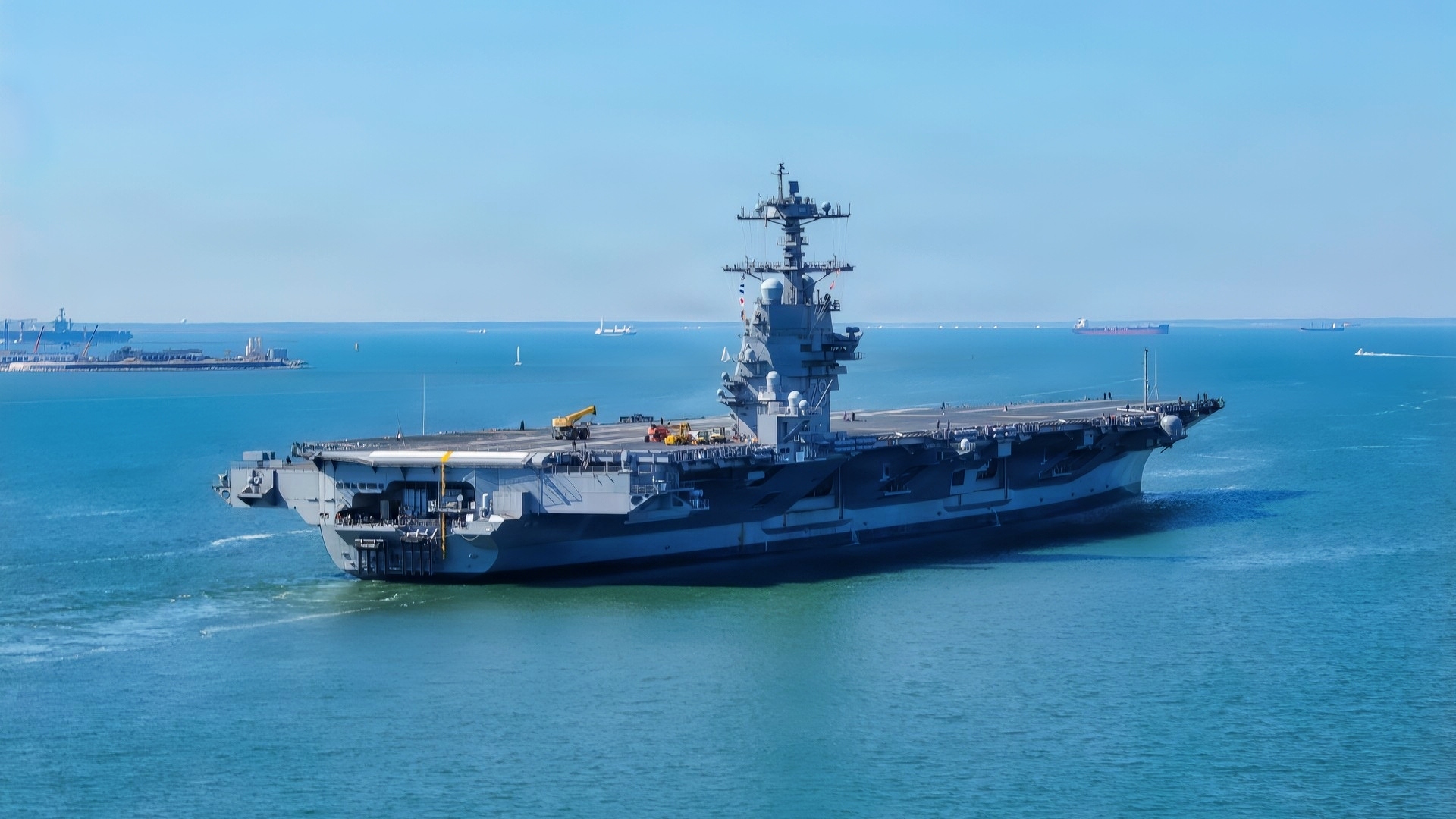
Summary and Key Points: The US Navy says the new Ford-class nuclear aircraft carrier USS John F. Kennedy is 99% complete and due in March 2027. 4 of 11 weapons elevators are in testing; no deployment date yet.
USS John F. Kennedy: Problems Brewing?
The Navy wants you to think the USS John Kennedy (CVN-79) will deploy within the next six months. But you have to read the fine print to understand that the newest Gerald R. Ford-class carrier won’t be available anytime soon.
Yes, it will join the fleet in March 2027, but it will not be ready for frontline deployment anytime soon.
In September, the United States Navy excitedly announced that the USS John F. Kennedy had passed its preliminary acceptance trials.
It’s a big step for the new Gerald R. Ford-class carrier.
The ship left Huntington Ingalls Industries’ (HII) Newport News Shipbuilding Facility in Virginia and transitioned to Norfolk Naval Station.
Preliminary acceptance means that the US Navy can operate the carrier at sea while the shipbuilder finalizes any outstanding work (and conducts further testing).
The Navy claims the JFK is 99 percent complete.
They mean all major ship systems are finished, with final testing still underway.
The Navy’s program manager for the Gerald R. Ford-class production program told USNI News that preliminary acceptance would give sailors more chances to train on and evaluate the new carrier.
But the USS John F. Kennedy is already behind schedule.
Falling Behind
Two of the ship’s most important new technologies have caused all manner of problems in the carrier’s development.
Similar issues plagued the first ship in the new class, the USS Gerald R. Ford. In the case of the JFK, the Advanced Weapons Elevators and Advanced Arresting Gear (AAG) were causing major delays.
The Advanced Weapons Elevators are important because they move weapons from ammunition storage to the planes before warplanes and helicopters launch from the carrier.
Without the elevators, the air operations on the carrier stop.
This system uses electromagnetic elevators to move ammunition quickly between storage magazines and the flight deck.
According to its specifications, the elevator can transport up to 24,000 pounds of ammunition and equipment.
There are 11 Advanced Weapons Elevators.
As of September, seven had been delivered, while the remaining four were undergoing final testing.
Similarly, the AAG is key because it’s how planes landing on the carrier deck get “trapped.” Without this system, a speeding plane would roll right off the deck because a carrier’s flight deck is so much shorter than conventional land-based runways.
The AAG catches the landing plane as soon as it hits the deck and pulls it back as it still speeds forward from landing momentum.
Both systems are major changes from the older Nimitz-class aircraft carriers that populate the Navy’s carrier force today (and are set to be retired).
Another set of delays came from the United States Congress, which had mandated modifications that further stalled progress of getting the ship out to sea by its original deployment year (2025).
The Ford-class carriers have experienced all manner of unintended complications. Like its predecessor, the JFK uses nuclear propulsion and is designed for 50 years of service.
But the Ford-class uses electromagnetic systems rather than conventional steam-powered systems.
One of the biggest headaches has been the Electromagnetic Aircraft Launch System (EMALS), which replaced the older, more tried-and-true steam-powered catapults on Nimitz-class carriers.
EMALS is supposed to provide more precise control over aircraft launches and allows a carrier to deploy aircraft much faster than the older steam-powered system.
Yet, it was hard to get working. The USS Gerald R. Ford was significantly delayed because of it.
In fact, the Trump administration has asked the Navy to investigate whether the USS Doris Miller could revert to the older steam catapult system, a tough request, since the production line for the steam catapult system was shuttered in 2005.
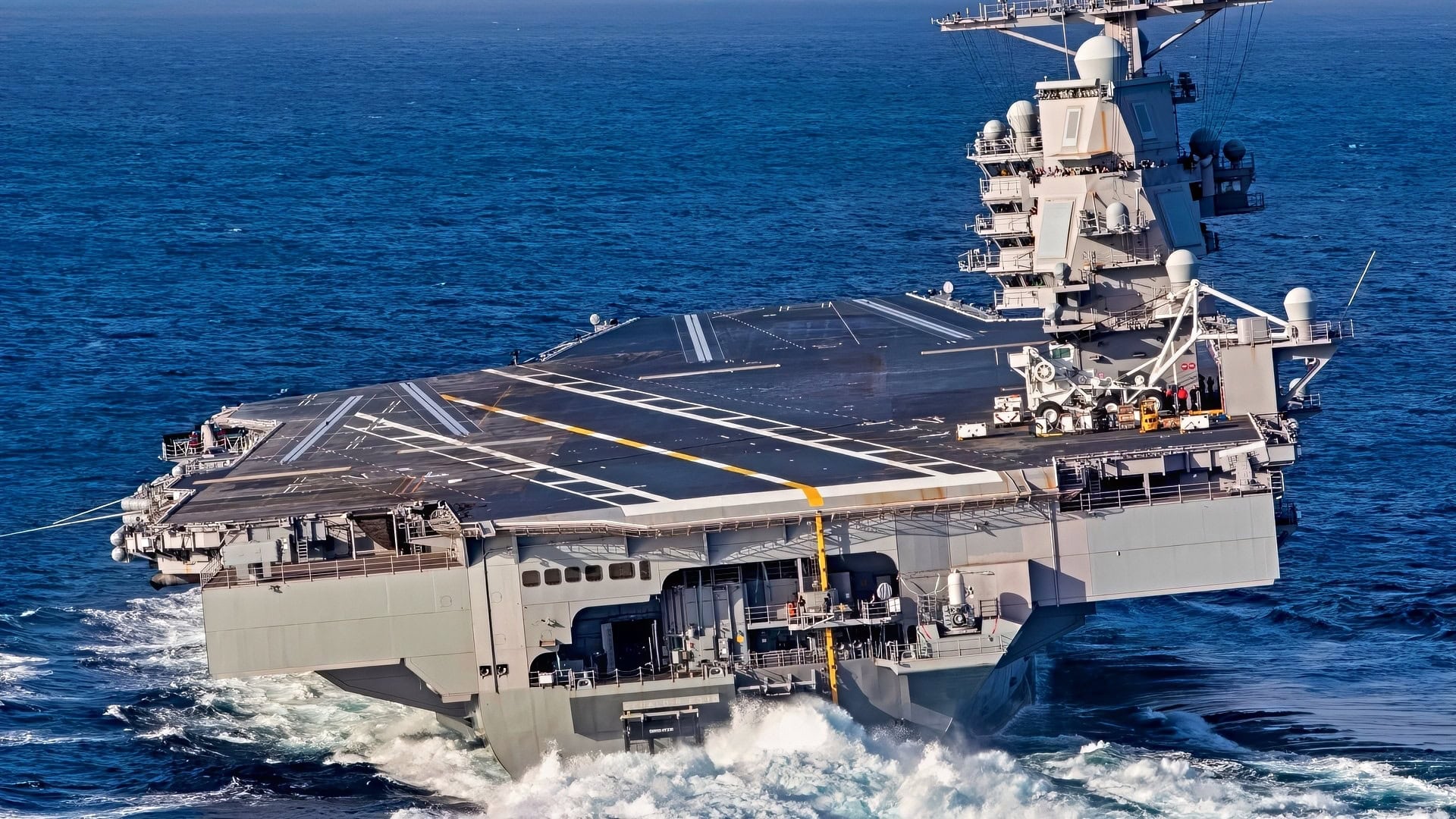
(Oct. 29, 2019) USS Gerald R. Ford (CVN 78) conducts high-speed turns in the Atlantic Ocean. Ford is at sea conducting sea trials following the in port portion of its 15 month post-shakedown availability. (U.S. Navy photo by Mass Communication Specialist 3rd Class Connor Loessin)
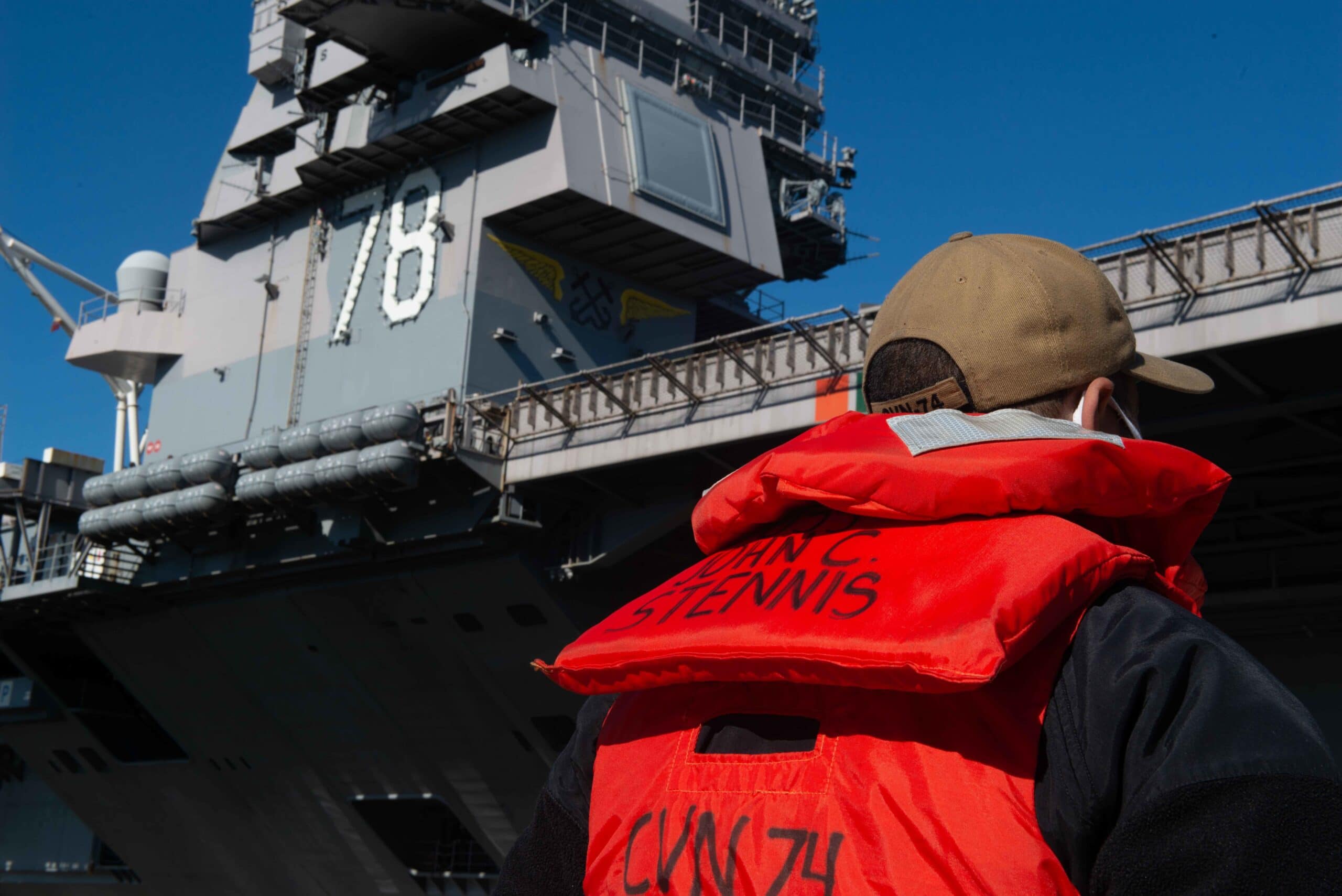
A U.S. Navy Sailor assigned to the aircraft carrier USS John C. Stennis (CVN 74), stands at parade rest as the aircraft carrier USS Gerald R. Ford (CVN 78) pulls into port in Norfolk, Va., Nov. 20, 2020. The John C. Stennis is partnering with Newport News Shipbuilding to complete Refueling Complex Overhaul on schedule with a trained, resilient and cohesive crew. (U.S. Navy photo by Mass Communication Specialist Seaman Apprentice Curtis Burdick)
Plus, that change would make the Doris Miller incompatible with the other Gerald R. Ford-class carriers.
If the Navy made the change Trump wants for the Doris Miller, it would require further changes and add to delays.
Such changes and delays would have knock-on effects for the other Gerald R. Ford-class carrier in development, the USS Enterprise.
If Trump mandated a return to steam-powered systems for the remaining Gerald R. Ford-class carriers, the John F. Kennedy and Gerald R. Ford, that would seriously diminish America’s aircraft carrier capacity.
Too Many Delays
Current Navy projections have the USS John F. Kennedy joining the fleet by March 2027.
That’s if the ship passes current testing phases without any problems.
The Navy has not yet announced any operational deployment date.
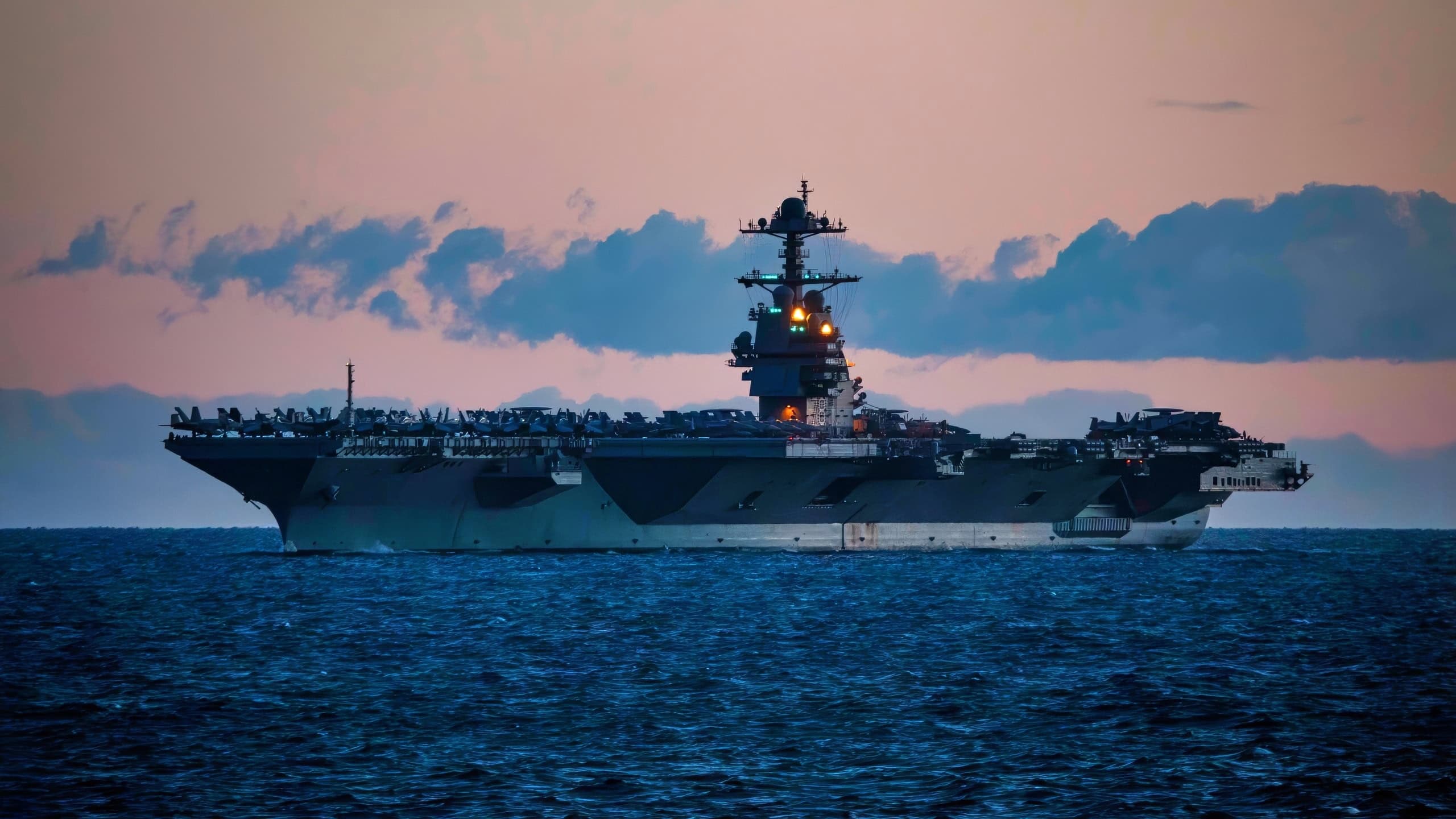
240105-N-LK647-1019 STRAIT OF GIBRALTAR (Jan. 5, 2024) A view from the Ticonderoga-class guided missile cruiser USS Normandy (CG 60) of the first-in-class aircraft carrier USS Gerald R. Ford (CVN 78), as the Ford Carrier Strike Group passes through the Strait of Gibraltar, Jan. 5, 2024. Normandy is part of the Gerald R. Ford Carrier Strike Group and is currently operating in the Mediterranean Sea, at the direction of the Secretary of Defense. The U.S. maintains forward-deployed, ready, and postured forces to deter aggression and support security and stability around the world. (U.S. Navy photo by Mass Communication Specialist 2nd Class Malachi Lakey)
Once delivered to the Navy, the USS John F. Kennedy will need further preparation before deployment. There will be a commissioning ceremony.
Then it will undergo additional operational certifications.
After that, the Navy will need to integrate the air wing. Meanwhile, the crew will train separately from the shipbuilder’s milestones.
So, don’t get too fixated on March 2027. You won’t be seeing the JFK on the front lines of the world’s hotspots anytime soon.
About the Author: Brandon J. Weichert
Brandon J. Weichert is the Senior National Security Editor at 19FortyFive.com. He also manages The Weichert Brief on Substack. Weichert is the co-host for The Mario Nawfal Show on Twitter/X. He is the author of four bestselling national security books, most recently A Disaster of Our Own Making: How the West Lost Ukraine (Encounter Books). His next book, Fortress Americas: A New Monroe Doctrine (Tucker Carlson Books), is due out December 8. Follow him via Twitter/X @WeTheBrandon.