
Summary and Key Points: Patrick Stewart treated Star Trek: The Next Generation like a stage production, ignored Sir Ian McKellen’s advice to stay in the theater, and spent his first season living out of a suitcase, sure of cancellation. His Captain Jean-Luc Picard, an Earl Grey-drinking diplomat commanding Starfleet’s most powerful ship, never abused that power, dissented from his superiors when principle demanded, and knew when to fight. One analyst argues Picard sent a generation into international relations and set the standard for diplomats.
Patrick Stewart Was Much More Than a Star Trek Legend
Patrick Stewart carved out a unique niche for himself in Hollywood. A man who spent much of his career in London theater, Stewart found himself cast as a middle-aged bald man as the lead in Star Trek: The Next Generation.
His fellow stage actor, Sir Ian McKellen, urged him not to abandon his theater career for Hollywood.
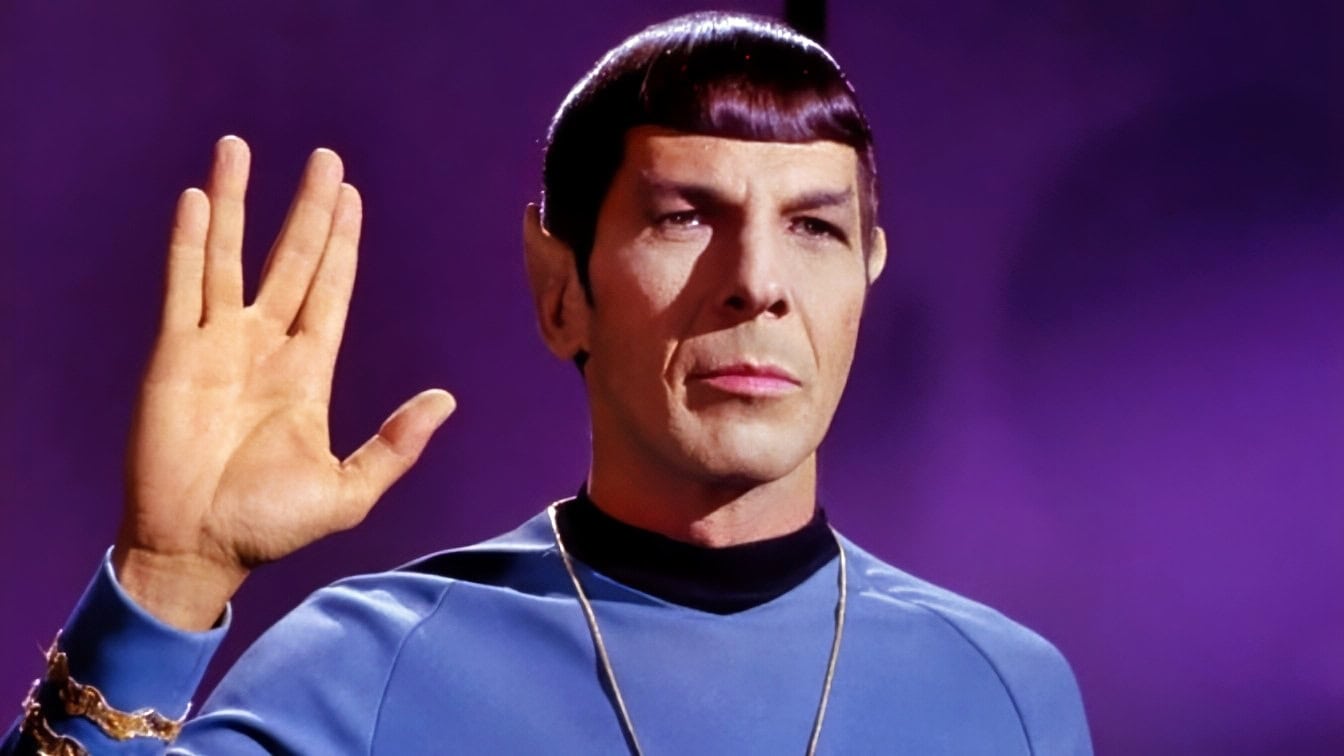
Star Trek’s Spock. Creative Commons Photo.

USS Excelsior from Star Trek VI. Image Credit: YouTube Screenshot.
As McKellen himself recently acknowledged on his X page, that was bad advice.
Stewart treated his time on Star Trek like he would any other stage production.
He led the troupe.
But he feared the show wouldn’t make it beyond its first season, so he spent that first year in Los Angeles living out of a suitcase, convinced it would be canceled.
But the show, despite its slow start, became an icon–even surpassing the original Star Trek.
For an entire generation of TV viewers and science fiction lovers, Patrick Stewart’s character, Captain Jean-Luc Picard, an English-accented, Earl Grey tea-drinking man with a purely French name, became one of the most recognizable characters on television.
The Memory of Captain Picard
Indeed, Captain Picard, because of Stewart’s refined bearing and his decision to treat The Next Generation like any other theater production, brought seriousness and intelligence to a role that could have easily devolved into something campier and far less memorable.
And that leads me into what Stewart’s portrayal meant for the people who chose international relations as a career. Picard was first and foremost a diplomat.
He contrasted beautifully with his swashbuckling predecessor (also great), Captain James T. Kirk.
Whereas Kirk threw a punch, Picard led his crew into complex problem-solving. But Picard knew when to fight. What’s more, he knew how to fight.
Captain Picard was also deeply committed to the principles of the organization he served: Starfleet.
We all know that Gene Roddenberry envisioned the United Federation of Planets and its exploration (and military) arm, Starfleet, as being an idealized form of a futuristic, interstellar United States of America.
Picard did more than explore the universe and kiss exotic women.
Picard commanded the most powerful ship in Starfleet–akin to an aircraft carrier in space–and he commanded a diverse crew of highly intelligent, exceptionally competent people.
Together, he marshaled their strengths to resolve diplomatic crises, defend the Federation, and explore the universe, using Starfleet and the Federation’s values as the guiding principles for each mission.
And that’s key.
He commanded the most powerful ship in one of the most powerful groups in the Star Trek universe, and the captain never abused that power.
He never bullied or cajoled even those pesky Romulans (who were an authoritarian race that competed with the Federation for power).
Jean-Luc Picard was a strict non-interventionist.
Even in conflict, he often sought the least destructive option to protect his ship and crew without overpowering his foes.
Balancing Power with Probity
Picard understood optionality, and that optionality was balanced by superior technology and a moral framework that was rarely fungible.
Picard understood power, and that understanding was tempered by the ideals he was instilled with as a Starfleet officer.
More importantly, some of Picard’s best moments in the series (and what made him such a memorable figure) were that the good captain had no qualms about dissenting from his superiors’ decisions when he believed they violated the fundamental principles of the Federation and Starfleet, whether it was taking on a popular admiral over a completely rational attempt to acquire an illegal weapon to stay ahead of the Romulans, or standing up to the Federation’s judicial authorities because they tried to use their power to violate the fundamental, inalienable rights of a Starfleet officer who lied about his Romulan heritage.
Picard set the standard for how a modern American should operate in diplomacy and geopolitics. He was wise.
Competent.
Kind.
Picard rarely raised his voice at his subordinates.
He always maintained his composure.
And he was never–rarely–quick to anger (because he understood that the power he wielded could end civilizations).
So many people from that era were inspired to seek work in international relations because, in part, of the example that Picard set.
Yes, Star Trek was an overtly Left-leaning show.
But I knew many conservative nerds who got into international relations because of the example set by Patrick Stewart’s portrayal of Picard.
The good captain reminds us that an advanced society of laws–a democracy predicated upon robust institutions–is a healthy society worthy of emulation.
That society produces powerful weapons and smart, competent, judicious people to man them.
A Truly Memorable Character
Such a society is not quick to fear or anger.
And when some do tread into that domain, men like Picard help rein them in.
Meanwhile, the society is sophisticated enough to actually listen to dissent without becoming irate.
Picard is the man that every diplomat and government executive should desire to emulate.
That’s why Jean-Luc Picard was one of the most consequential fictional characters of the last half-century.
It’s also why Sir Patrick Stewart will be sorely missed.
About the Author: Brandon J. Weichert
Brandon J. Weichert is the Senior National Security Editor at 19FortyFive.com. He also manages The Weichert Brief on Substack. Weichert is the co-host for The Mario Nawfal Show on Twitter/X. He is the author of four bestselling national security books, most recently A Disaster of Our Own Making: How the West Lost Ukraine (Encounter Books). His next book, Fortress Americas: A New Monroe Doctrine (Tucker Carlson Books), is due out December 8. Follow him via Twitter/X @WeTheBrandon.