
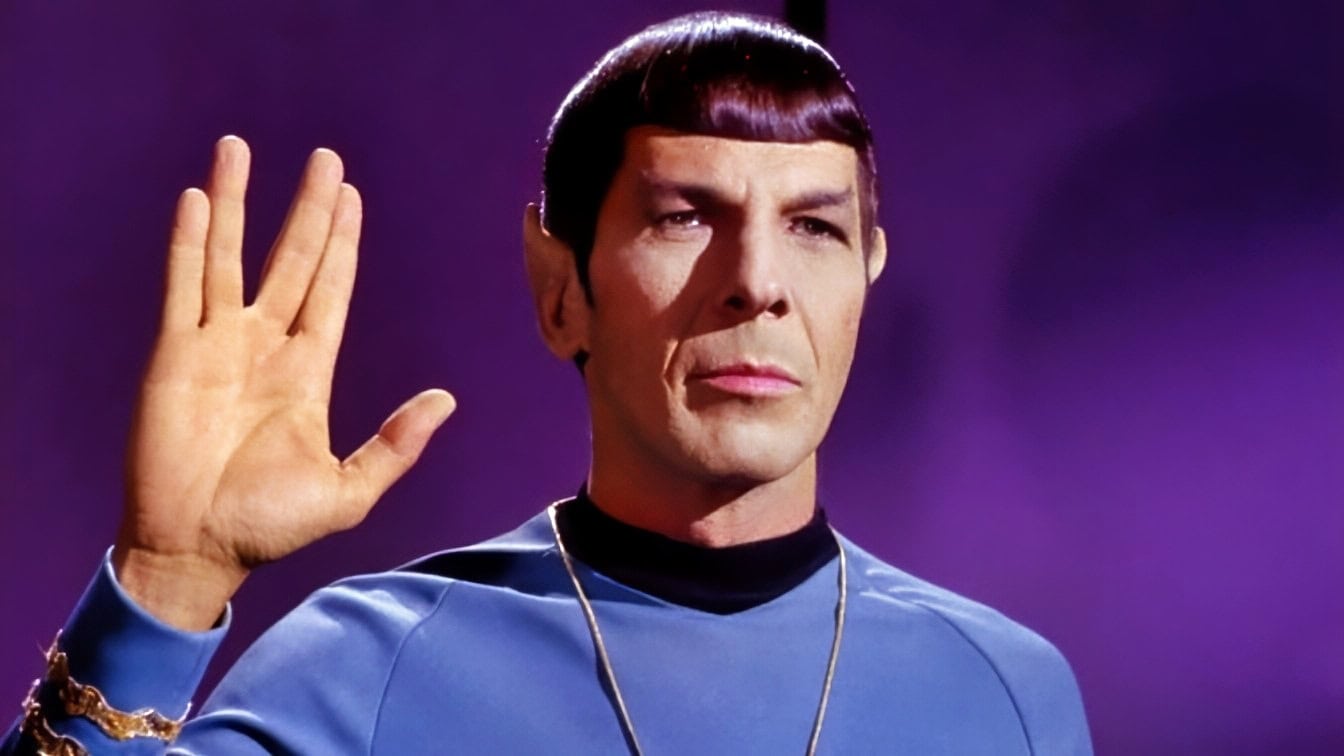
On June 4, 1982, a science fiction sequel with a quarter of its predecessor’s budget ended with its most beloved character dying behind a pane of glass, telling his best friend that the needs of the many outweigh the needs of the few, and letting the friend finish the thought before adding the coda that breaks it: or the one. Forty-four years later, the death of Spock in Star Trek II: The Wrath of Khan remains the scene every science fiction death is measured against, and half of what makes it remarkable happened before a single frame was shot. And honestly, for whatever reason, this movie is my favorite movie of all time.
The Road to the Reactor Room
Star Trek II exists because Star Trek: The Motion Picture underwhelmed in 1979, an expensive, chilly epic that made money but little love.
Paramount ordered a cheaper, livelier sequel, eased creator Gene Roddenberry aside, and handed the project to television producer Harve Bennett, who screened the entire original series and found his villain in a single 1967 episode, “Space Seed,” whose genetically engineered tyrant Khan, played by Ricardo Montalbán, had been left in exile with a promise of consequences.
Director Nicholas Meyer then rewrote the script in twelve days without taking credit, recasting the series as a nautical adventure, Horatio Hornblower in space.
The deepest problem was Spock.
Leonard Nimoy was finished with the character, and the production landed him with an offer no actor could refuse: a great death scene.
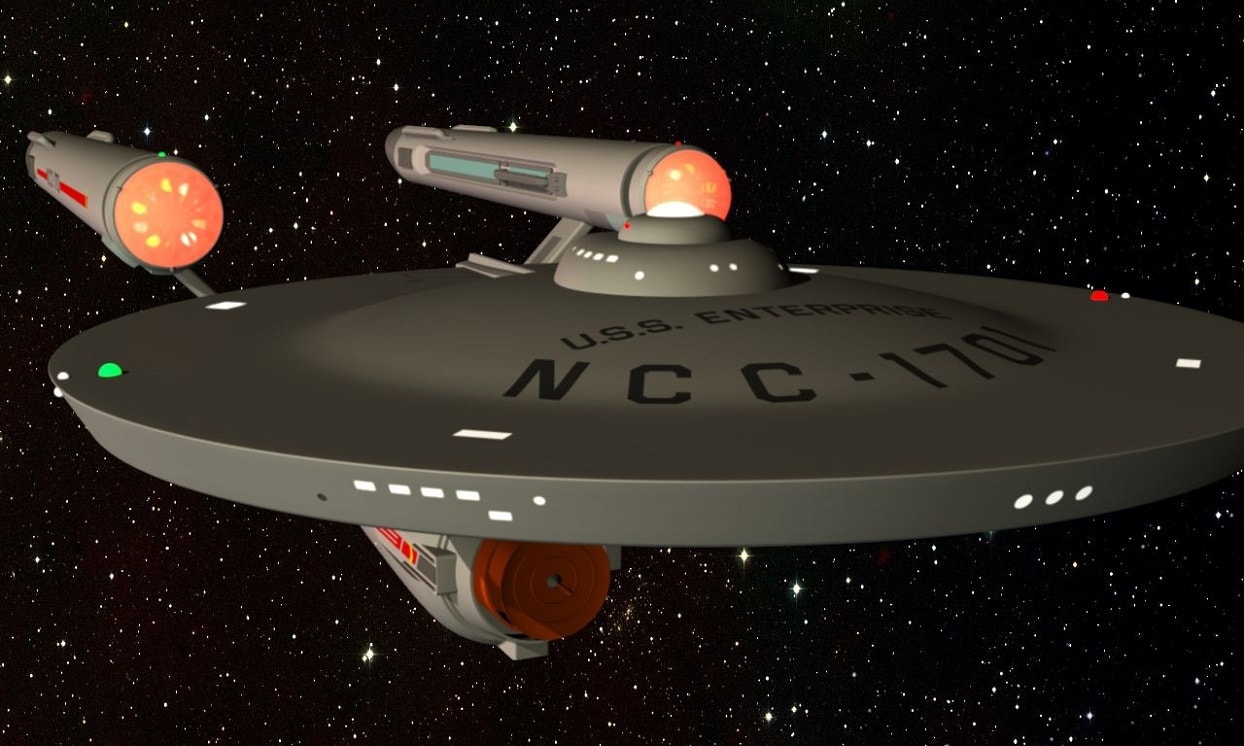
USS Enterprise. Image: Creative Commons.
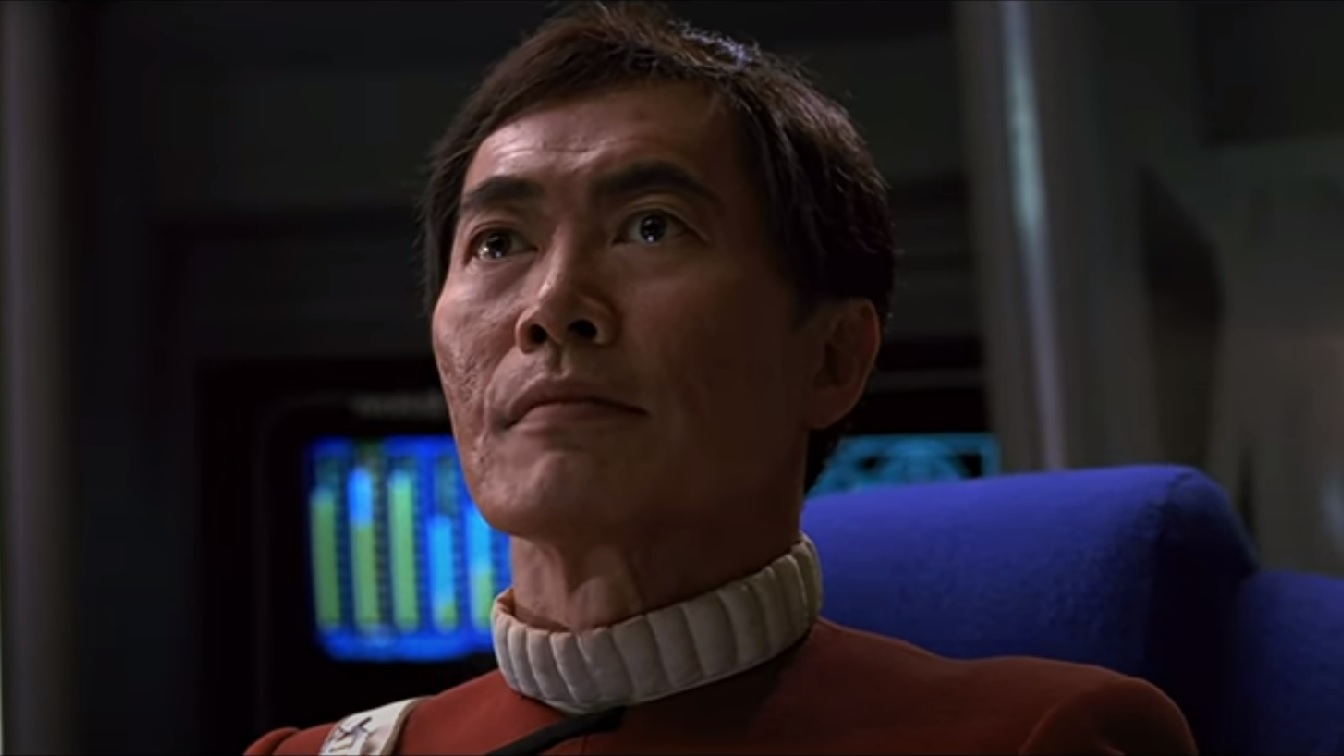
USS Excelsior with Captain Sulu commanding from Start Trek IV. Screenshot.

USS Excelsior from Star Trek VI. Image Credit: YouTube Screenshot.
Then the death leaked during production, and the reaction previewed modern fandom: protest letters poured into Paramount, an admirer bought trade-press advertising demanding the plot be changed, and Nimoy received actual threats over the fictional demise of a Vulcan.
The ending became a battlefield of its own.
Test audiences rejected the original dark cut, and Nimoy, who had enjoyed the shoot so much he changed his mind about leaving, asked for a door back; the result was the added mind-meld, the casket on the newly made planet, and a closing note of hope, installed over Meyer’s objections.
The scene that played out as inevitable was negotiable until last week.
The Scene
The staging is the film’s proof of pure genius. They don’t make Star Trek like this anymore. Period.
Khan, beaten, triggers the Genesis Device as his dying act; the Enterprise cannot escape because its warp drive is down; and Spock, without a word to anyone, leaves the bridge, disables the objecting Dr. McCoy with a nerve pinch and a cryptic one-word mind-meld, and walks into the radiation-flooded reactor compartment to fix the drive with his hands.
The ship leaps away with seconds to spare.
Only then does Kirk learn the price, arriving to find his first officer dying on the far side of a transparent barrier, and the glass is the scene: two men who have saved each other for sixteen years, close enough to touch and permanently unable to.
The famous line completes an architecture the film built patiently, since Spock states the needs-of-the-many principle early on as cool Vulcan logic; at the glass it returns transformed, logic converted into love, with Kirk supplying the middle and Spock, straightening his uniform with his last strength, supplying the ending.
“I have been and always shall be your friend,” he says, raising the split-fingered salute against the glass, and dies asking his captain not to grieve.
The funeral gives the film its release: a torpedo casket, a piper playing Amazing Grace, and Kirk’s broken eulogy for a Vulcan soul he calls the most human he has encountered.
Why It Still Works
Three things separate this death from every imitation.
First, it was earned off-screen: the friendship had sixteen real years behind it, and the audience had aged alongside the men at the glass, in a film honest enough to be about aging, with Kirk’s reading glasses, his melancholy birthday, and the no-win Kobayashi Maru scenario framing the story.
Spock’s death is the film’s answer to the test: the no-win scenario is real, and character is how you meet it.
Second, the craft is restraint: the death is quiet, procedural, and dignified, a duty performed rather than a martyrdom staged, and the barrier does the emotional work no dialogue could.
Third, the sacrifice is coherent, the character’s lifelong ethic executed rather than a flourish invented for the occasion.
Audiences rewarded it with a record-setting opening and roughly $97 million worldwide; the franchise was reborn on the spot, and the resurrection that followed in the third film, justified by inverting the famous line, only proved how much weight the original scene could carry.
The Namesake’s Long Wake
There is a fitting coda for readers of this publication, because the starship’s name was always a Navy name.
Roddenberry nearly called his ship Yorktown before choosing the more storied carrier from the same war, and the official franchise history traces the lineage proudly: CV-6, the most decorated American warship of World War II, then CVN-65, the world’s first nuclear carrier, then the fiction.
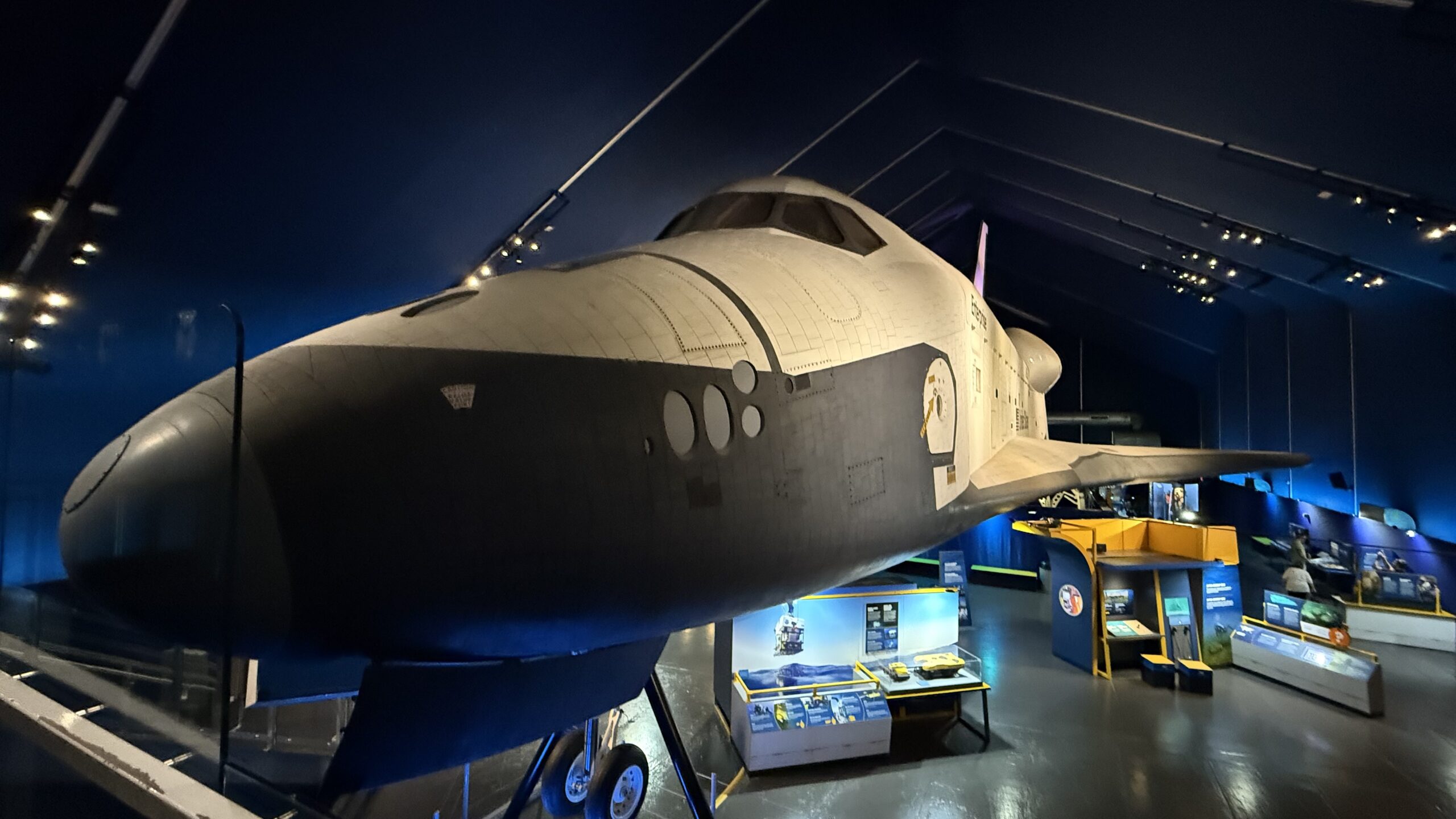
NASA Space Shuttle Onboard USS Intrepid. 19FortyFive.com Image.
The site’s own naval files return the salute, noting that the carrier name is the starship’s and making the case for the Big E as the best carrier ever, and the exchange ran both directions: a fan letter campaign put the name Enterprise on NASA’s first space shuttle in 1976, the fourth film sent Kirk’s crew sneaking aboard the real nuclear Enterprise to borrow her reactor, and a new CVN-80 Enterprise is under construction now.
Fiction and Fleet have traded the name for sixty years.
The scene at the glass is why the trade holds: one officer in the reactor room, doing the arithmetic of the many and the few with his own life, which is the oldest naval mathematics there is, and the reason a made-up death on a made-up ship, forty-four years old this summer, still outranks every real attempt to film one.
And it’s coming back to the silver screen in a few weeks. I already have my tickets.
MORE –
About the Author: Harry J. Kazianis
Harry J. Kazianis (@Grecianformula) was the former Senior Director of National Security Affairs at the Center for the National Interest (CFTNI), a foreign policy think tank founded by Richard Nixon based in Washington, DC. Harry has over a decade of experience in think tanks and national security publishing. His ideas have been published in the NY Times, The Washington Post, The Wall Street Journal, CNN, and many other outlets. He has held positions at CSIS, the Heritage Foundation, the University of Nottingham, and several other institutions related to national security research and studies. He is the former Executive Editor of the National Interest and the Diplomat. He holds a Master’s degree focusing on international affairs from Harvard University.

