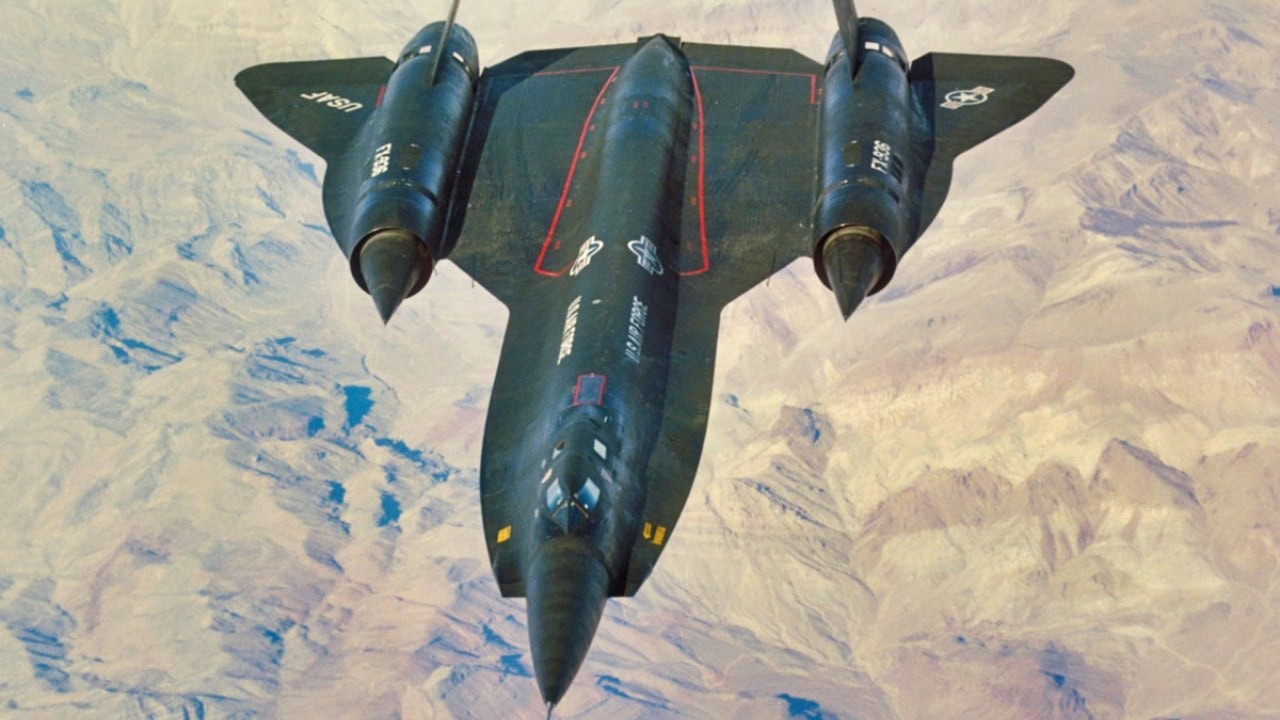
Summary and Key Points: By 1965, a YF-12A had flown 2,070 mph at 80,257 feet, and at Mach 3.2 and 74,400 feet, it shot down a B-47 target drone flying at 500 feet. The Air Force ordered 93. In 1968, the Defense Secretary withheld further funding, and only the three prototypes flew.
We Got as Close to the YF-12A: Here Is Her Story
The Lockheed YF-12A stands in history as the largest, heaviest, and fastest manned interceptor in aviation history. And, as you can see below, we got really close to the plane and took some great photos for you to see.
Longer than a WWII B-29 Superfortress and able to exceed Mach 3.2 at nearly 90,000 feet, it was built to take on the Soviet Air Force’s supersonic heavy bombers with Mach 4 air-to-air missiles that could hit them from 100 miles away.
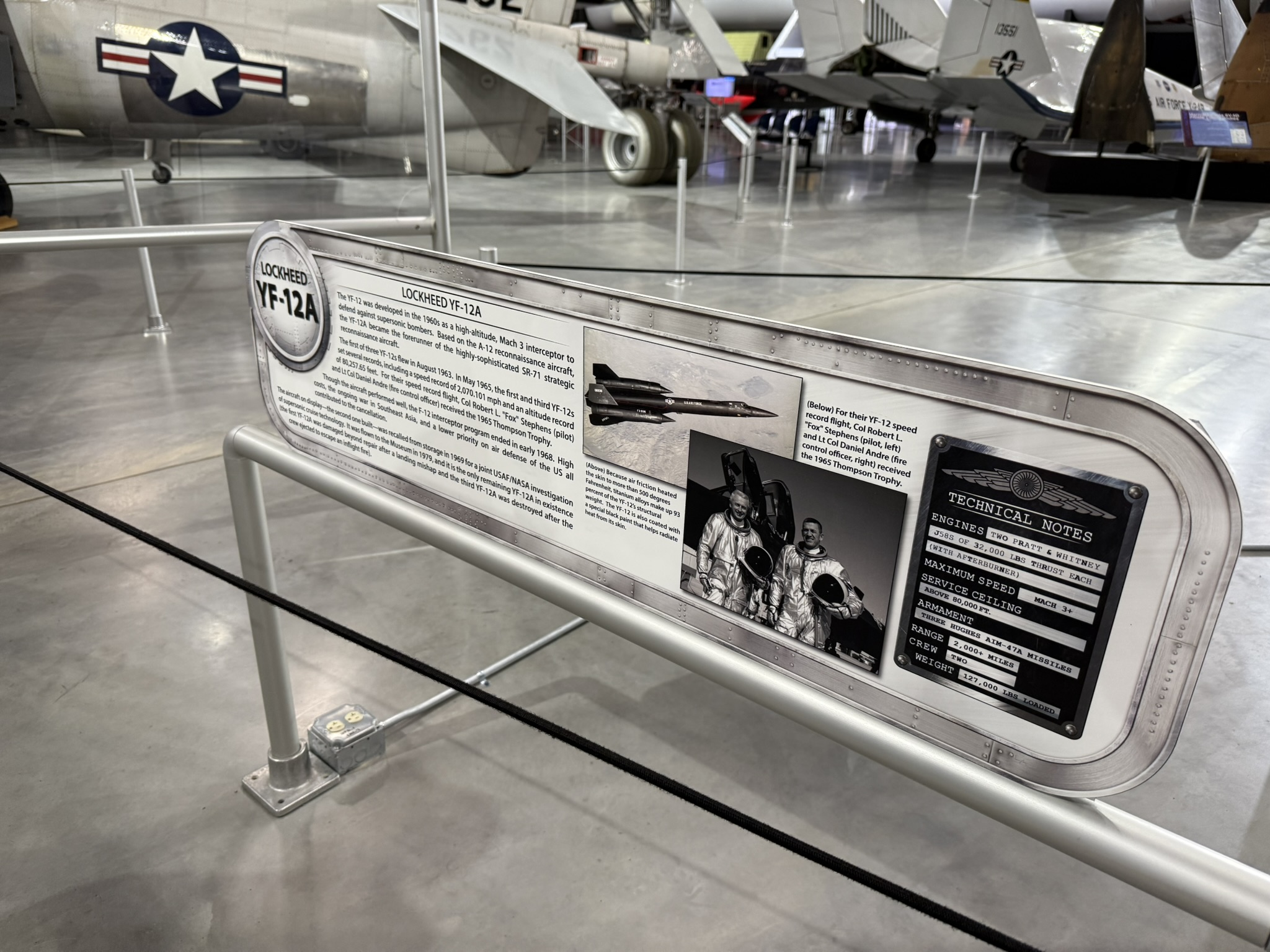
YF-12 display. 19FortyFive.com image.
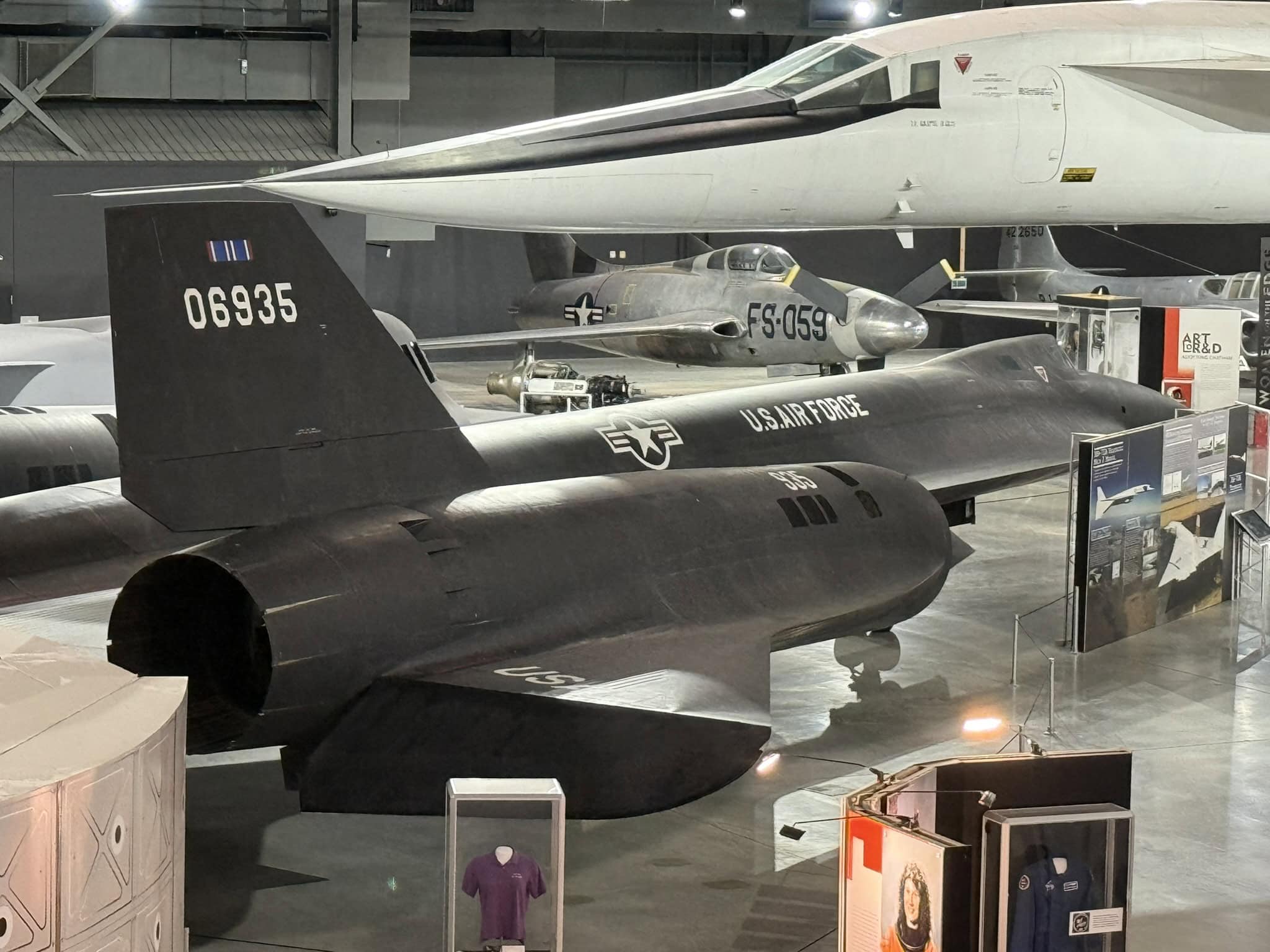
YF-12A. 19FortyFive.com Image from National Museum of the U.S. Air Force.
In the 1950s, the Air Force looked to replace its F-106 Delta Dart interceptors.
The Air Force thought it wanted to move away from fighters like the F-106 as pure interceptors and replace them with multi-mission fighters.
They had spent considerable time and money developing the North American XF-108 Rapier even as it appeared a dedicated interceptor would no longer be needed.
Both the US and Soviet Union in the late 1950s began to move away from heavy bombers as delivery systems for nuclear bombs in favor of large, intercontinental ballistic missiles.
Enter Kelly Johnson With A Conversion Plan To Turn The A-12 Oxcart Into The YF-12A
Then Lockheed’s Kelly Johnson stepped in. Since the late 1950s, Johnson had been working on the A-12 Oxcart, a high-altitude, high-speed reconnaissance aircraft of stunning performance.
It could exceed Mach 3 in sustained flight at over 80,000 feet. Johnson proposed taking the existing A-12 and modifying it into an interceptor.
He would remove the sharp aerodynamic chines to make room for powerful Hughes AN/ASG-18 search radar. He would replace the camera bays with a second cockpit for a Fire Control Officer to operate the radar and weapons.
Ventral fins would be added to compensate for the loss of the nose chines.
Finally, the internal bays holding reconnaissance gear would be converted into internal weapons bays that could fit 3 AIM-47 Falcon missiles, A Mach 4, 12 ft, 900 lb. air-to-air radar-guided missile that could hit targets 100 miles away.
Plans were in the works (later abandoned) to tip the AIM-47 with a nuclear warhead, allowing entire formations of Soviet bombers to be brought down with a single missile.
This excellent radar and missile were planned for the canceled XF-108 program, and the Air Force wanted to use them.
The Air Force Decided That It Might Need The YF-12A Anyway
Suddenly, the Air Force set aside its plan to move away from dedicated interceptors; it wanted to develop the YF-12A.
Kelly Johnson interrupted Lockheed’s A-12 assembly line to insert production orders for 3 YF-12A interceptor prototypes for the Air Force to evaluate.
In flight, the YF-12A’s performance was nothing short of stunning, pushing a manned aircraft to the very limits of engineering and technology.
By 1965, a YF-12A shattered the existing speed and altitude record, flying 2,070 mph at 80,257 feet.
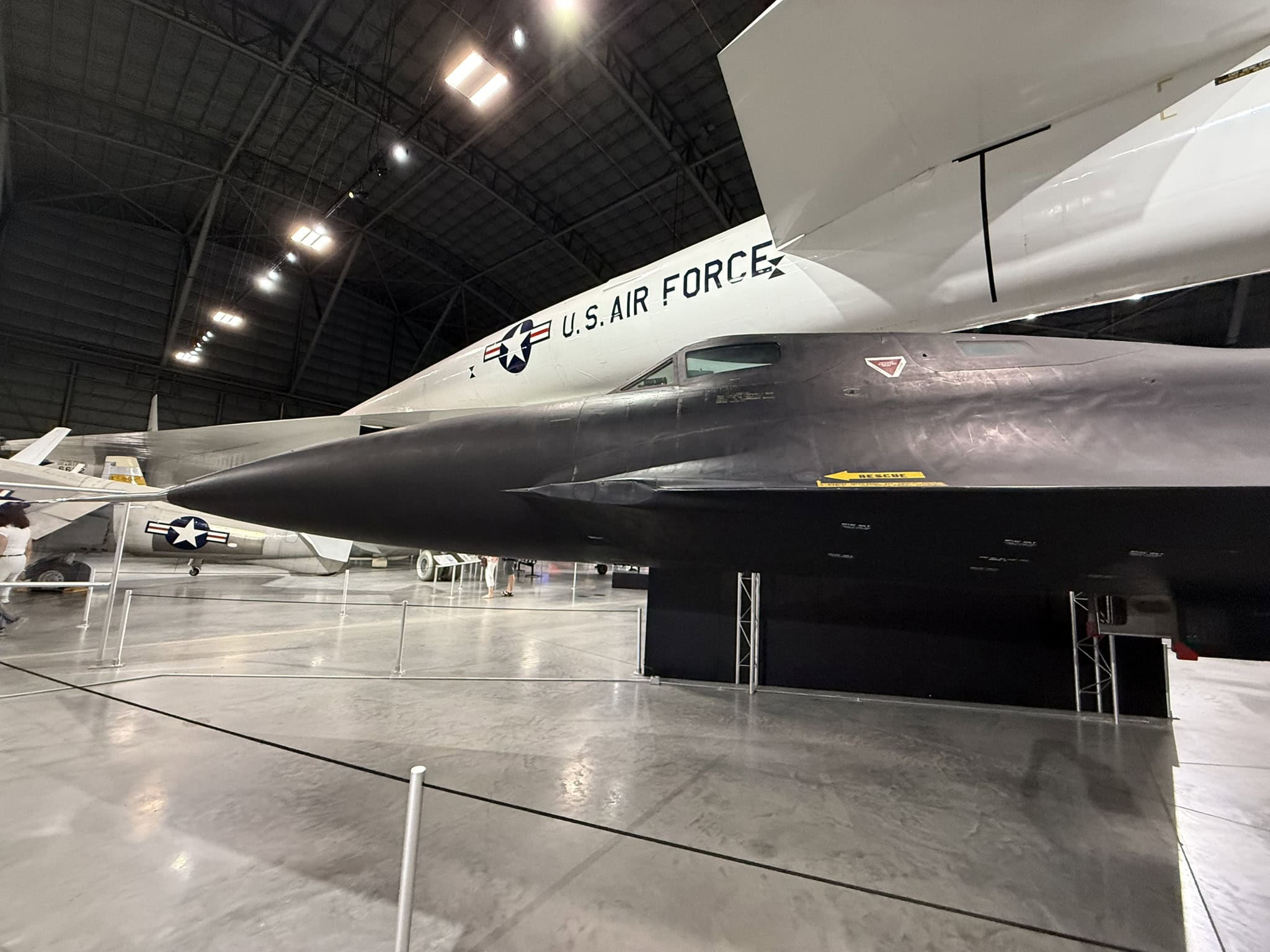
YF-12A. Image taken by staff at National Museum of the Air Force for 19FortyFive.com
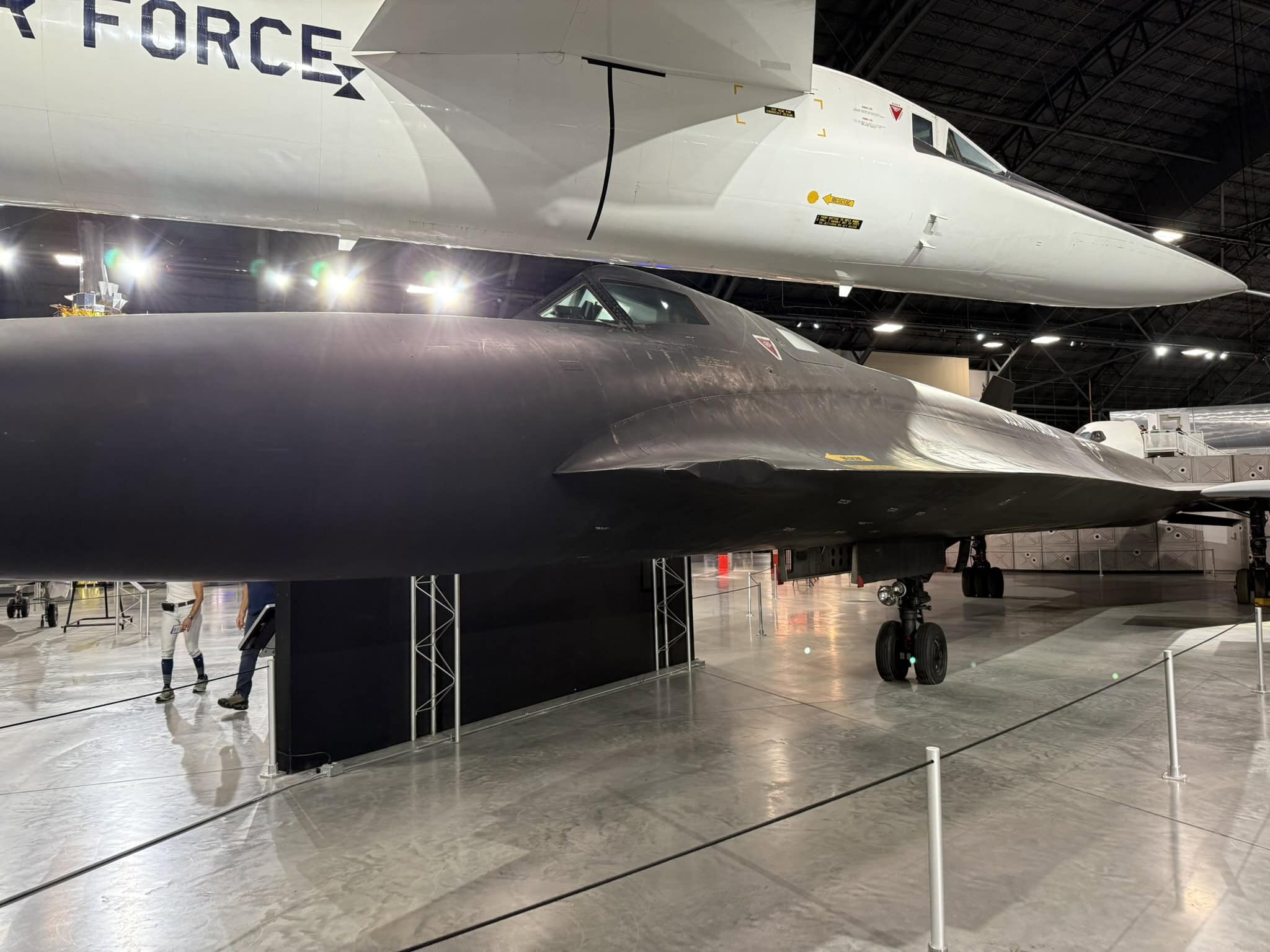
YF-12A. Image taken by Harry J. Kazianis at National Museum of the Air Force for 19FortyFive.com
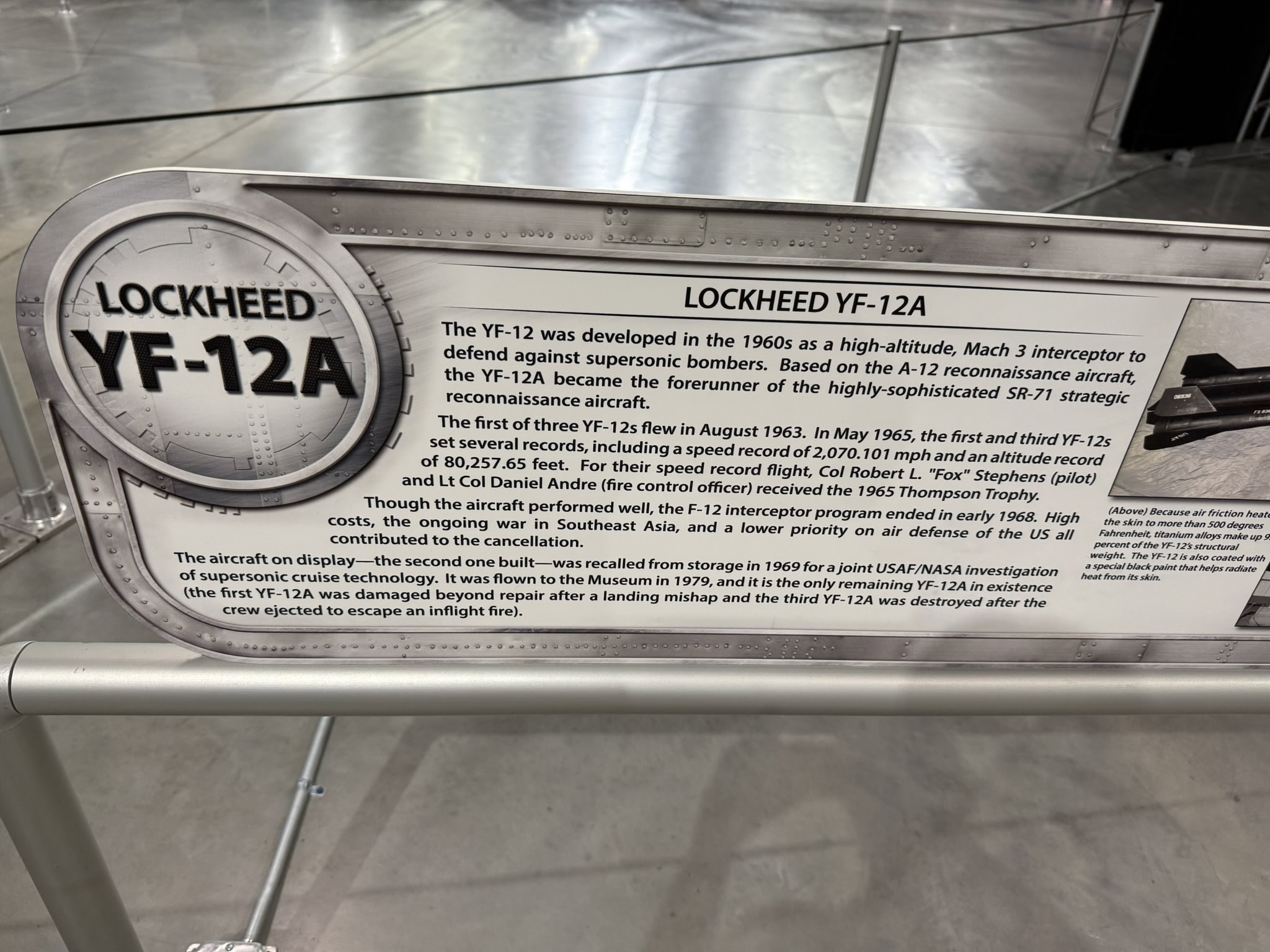
YF-12A. Image taken by staff at National Museum of the Air Force for 19FortyFive.com.
This earned the YF-12A the historic Thompson Trophy and dethroned the previous record holder from 1962, the Soviet Union’s Ye-166, a heavily modified Mikoyan-Gurevich experimental aircraft.
In an impressive display of the capabilities of the Hughes radar and the AIM-47 missile, a YF-12A at 74,400 feet flying at Mach 3.2 fired an AIM-47 and shot down a B-47 bomber used as a target drone that was skimming the Earth at just 500ft.
Air Force: Give Us Ninety-Three YF-12As, To Go
That was good enough for the Air Force brass to order 93 YF-12A aircraft from Lockheed, but Defense Secretary Robert McNamara was not as impressed.
With the US and the Soviets both moving away from bombers and towards ICBMs launched from land and submarines, and the ever-increasing costs of the conventional ground war in Vietnam, McNamara rearranged the Air Force’s priorities.
In 1968, he withheld further funding for the YF-12A and directed that the money be spent instead on tactical aircraft needed in Vietnam.
The Tech In The YF-12A Ended Up In The Space Shuttle And the F-14A Tomcat
The two remaining prototype YF-12As were too valuable to break up. The NASA-USAF Research Program took them and flew 300 test flights to advance the science of high-speed, high-altitude flight.
The data from these flights later informed the design of the Space Shuttles’ thermal protection systems and continues to influence current supersonic transport designs.
The AN/ASG-18 radar and AIM-47 missile were also refined and developed into the AWG-9 radar and AIM-54 Phoenix missile used in the F-14A Tomcat.
This did not come without cost to the original 3 YF-12A prototypes. In 1968, a crash landing nearly destroyed one of them completely.
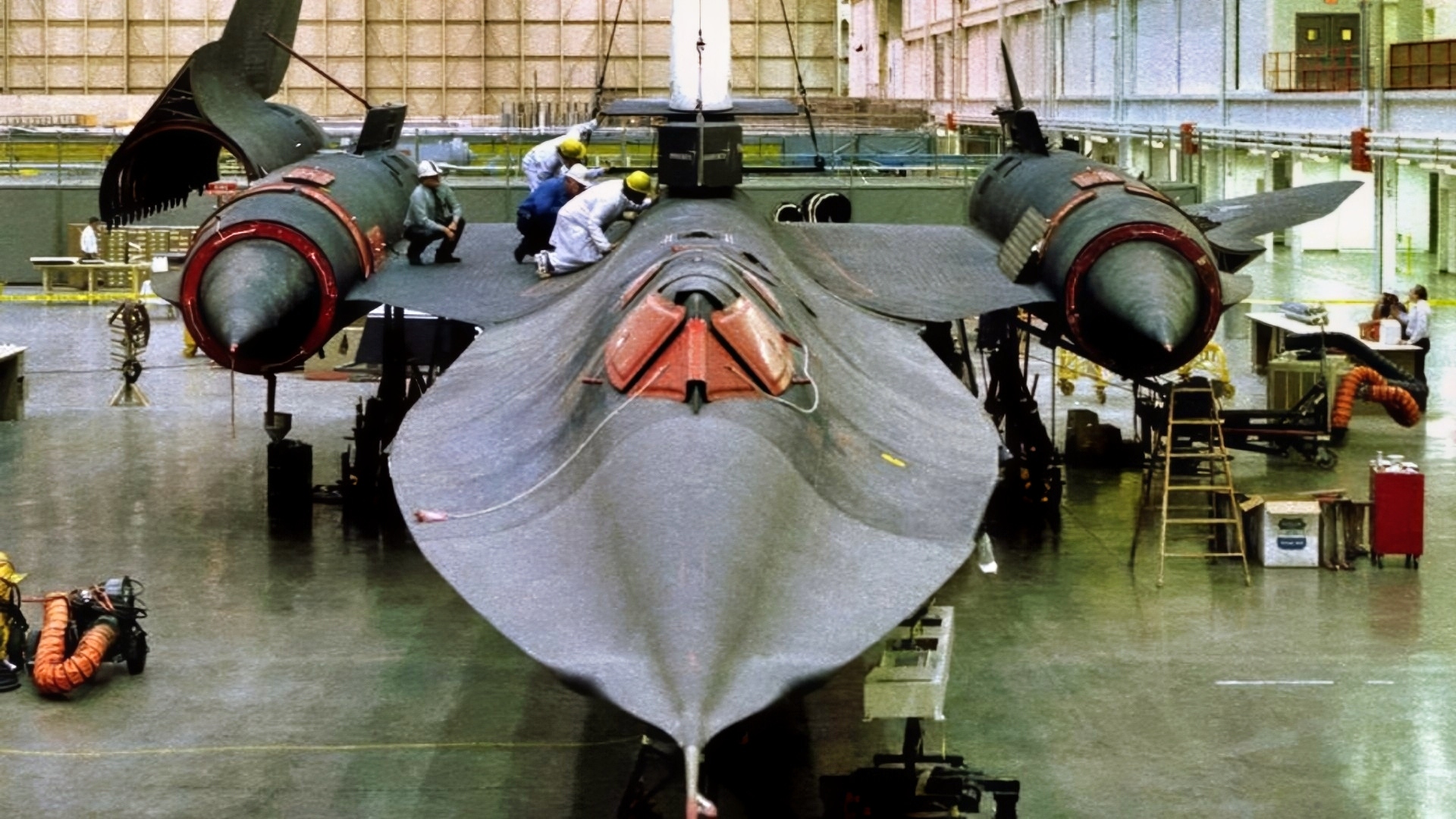
NASA SR-71 Blackbird Creative Commons NASA Photo
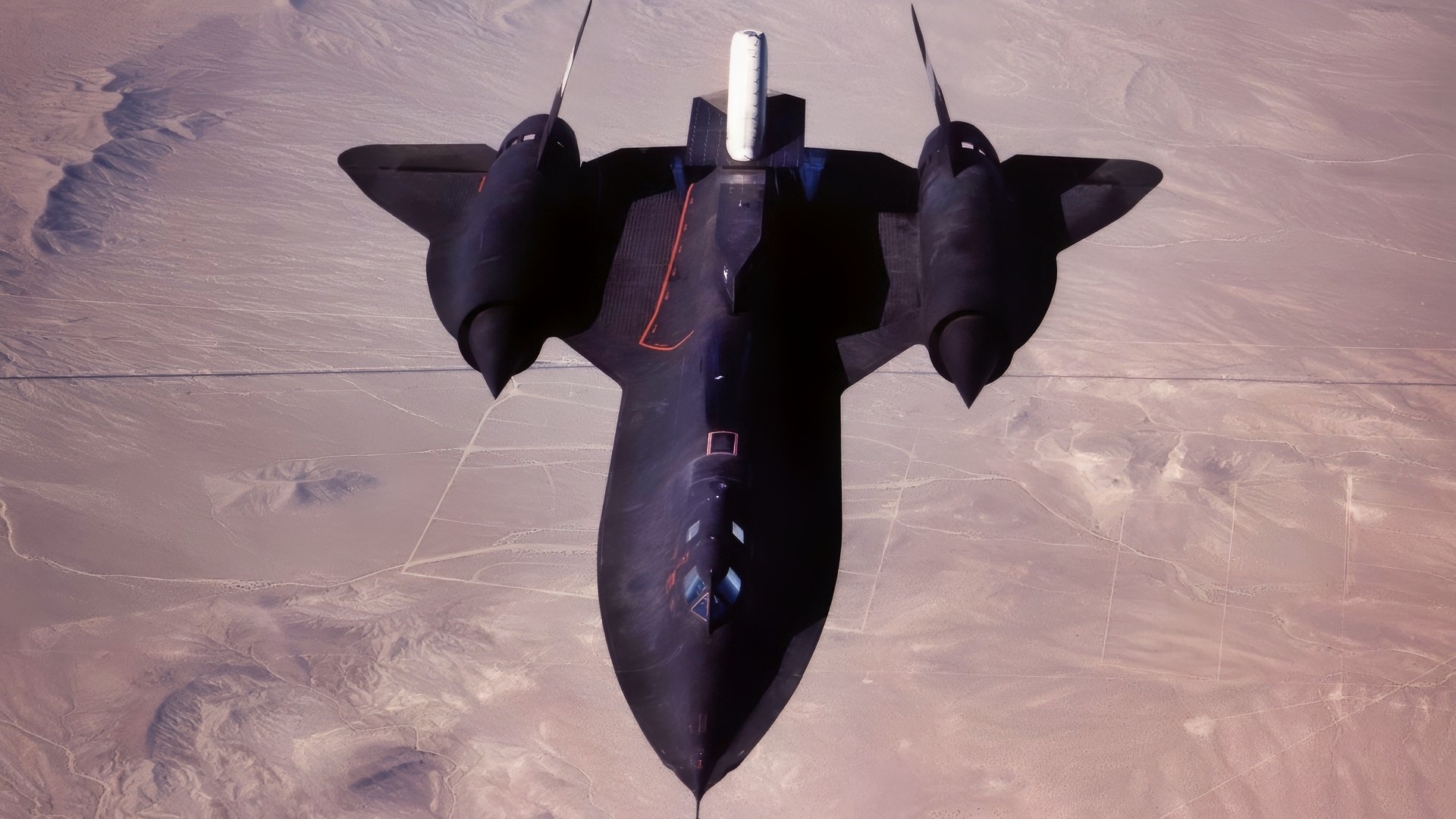
SR-71 Blackbird NASA Photo Handout
Its rear section was salvaged and attached to a static test frame to create the SR-71C trainer.
Another was lost in 1971 when a fuel line caught fire during in-flight refueling. Both crewmen ejected safely.
The sole surviving YF-12A was retired on November 7th, 1979, when it was flown directly to the National Museum of the Air Force in Dayton, Ohio, where it remains the fastest, highest-flying manned interceptor ever to take to the skies. Some of the photos you see above are from that very exhibit.
About the Author: Sean Spoonts
Sean Spoonts is the former Editor-In-Chief of SOFREP.com. He is a military analyst, writer, and commentator whose work has appeared in Newsweek, CNS News, Ukrinform, and various military/veteran media networks and professional publications, including the Military Intelligence Professional Bulletin. He is a U.S. Navy veteran, having served as an Aviation Anti-Submarine Warfare Operator and Search and Rescue Helicopter Aircrewman.