
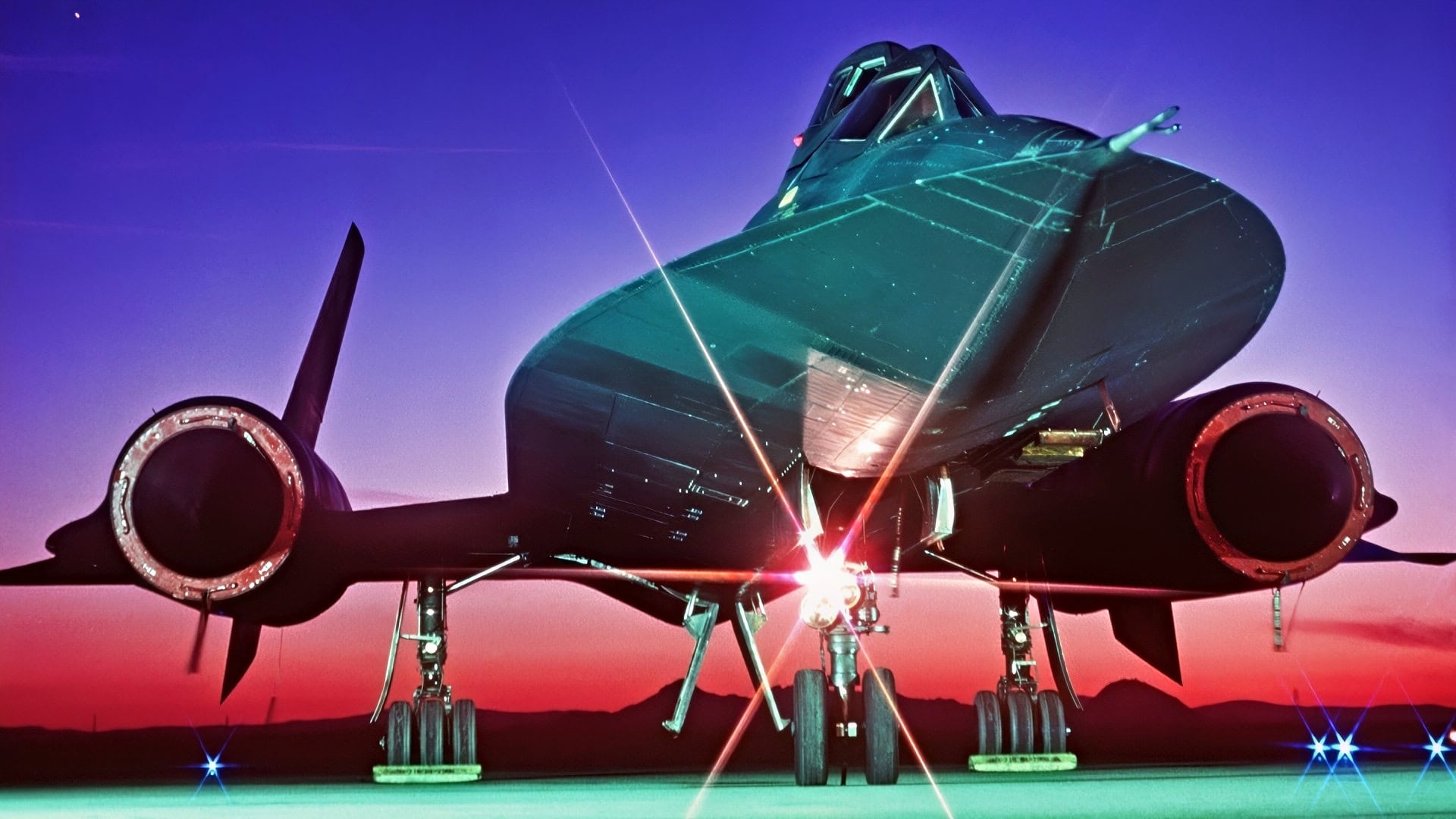
SR-71 Blackbird vs. MiG-25: The MiG-25 could reach Mach 2.83 and had a 68,000-foot service ceiling, but it was not built for prolonged Mach 3 flight, and pushing past its limits could damage its engines. The SR-71 cruised at Mach 3-plus and up to 85,000 feet. In one encounter, all three MiGs passed beneath it without engaging.
The SR-71 Was Something the Soviet Union Could Not Match
Here at 19FortyFive, we spend a lot of time visiting various museums to photograph the SR-71 Blackbird built by Lockheed. And the history of that plane is why. Below, we have many great pictures we took over the years.
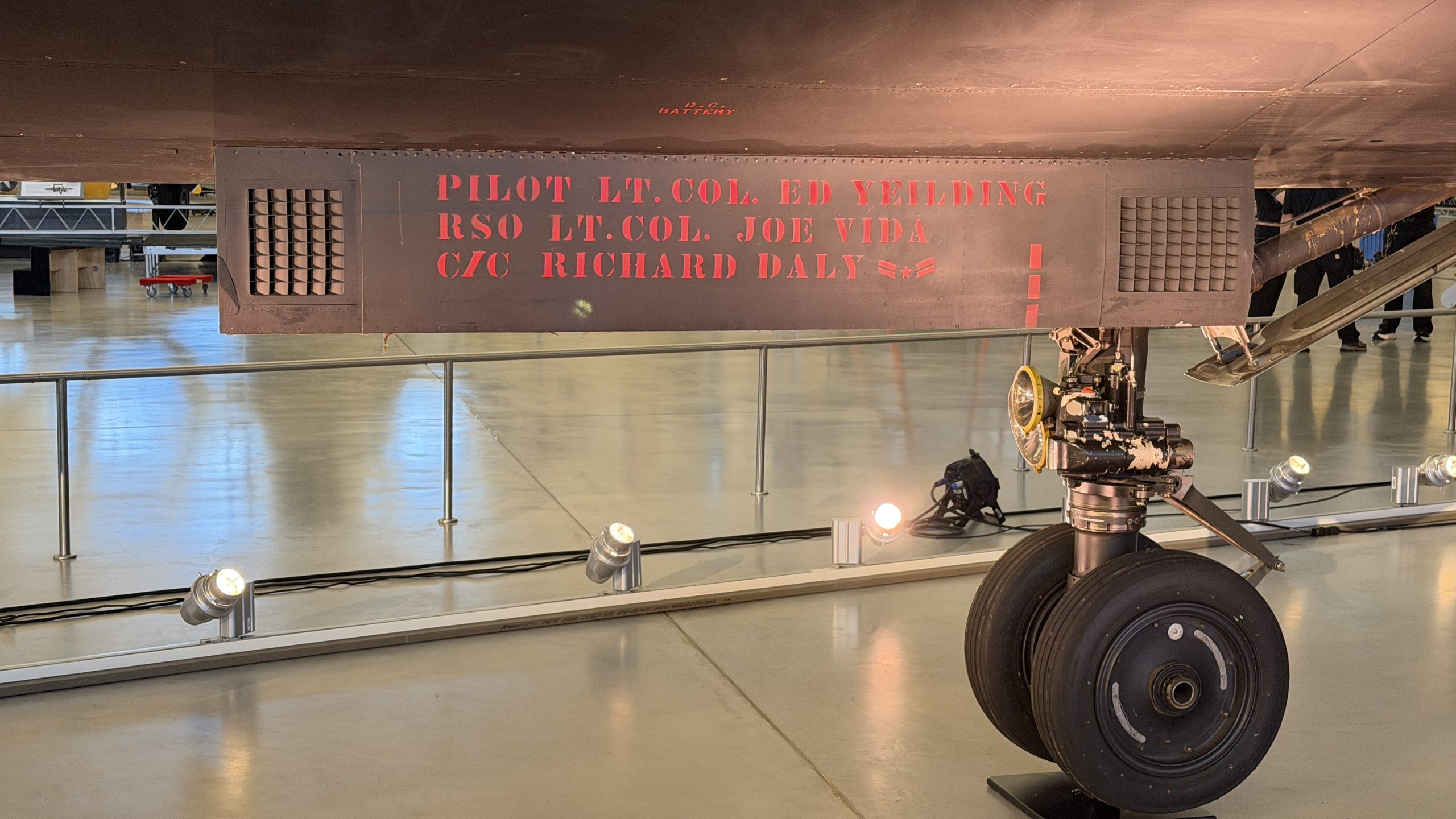
SR-71 Blackbird. Smithsonian Display Photo Taken by 19FortyFive on 9/30/2026.
Case in point: During a Cold War reconnaissance mission near the Soviet Union, an American SR-71 Blackbird encountered three Soviet MiG-25 Foxbat interceptors.
The Soviet aircraft attempted to position themselves to intercept the American spy plane.
According to an account published by Linda Sheffield Miller in The Aviation Geek Club on November 9, former SR-71 pilot Richard Graham recalled witnessing the encounter firsthand.
Graham was flying at approximately Mach 3 and 75,000 feet when he spotted the Soviet fighters below. Despite their considerable speed, all three MiGs ultimately passed beneath the Blackbird without engaging it.
Recon Near Kamchatka
Graham was conducting a reconnaissance mission near Petropavlovsk-Kamchatsky, on Russia’s Kamchatka Peninsula.
The region was strategically important because of Soviet military installations, including nuclear-related facilities and submarine infrastructure.
The nearby Rybachiy submarine base, in the Avacha Bay Area, served as an important Soviet Pacific Fleet submarine facility. Graham recalled that SR-71 crews routinely photographed portions of the southern Kamchatka Peninsula.
On this mission, the Blackbird had refueled from an aerial tanker off the coast of Japan.
Graham climbed back toward cruising altitude and accelerated to Mach 3.
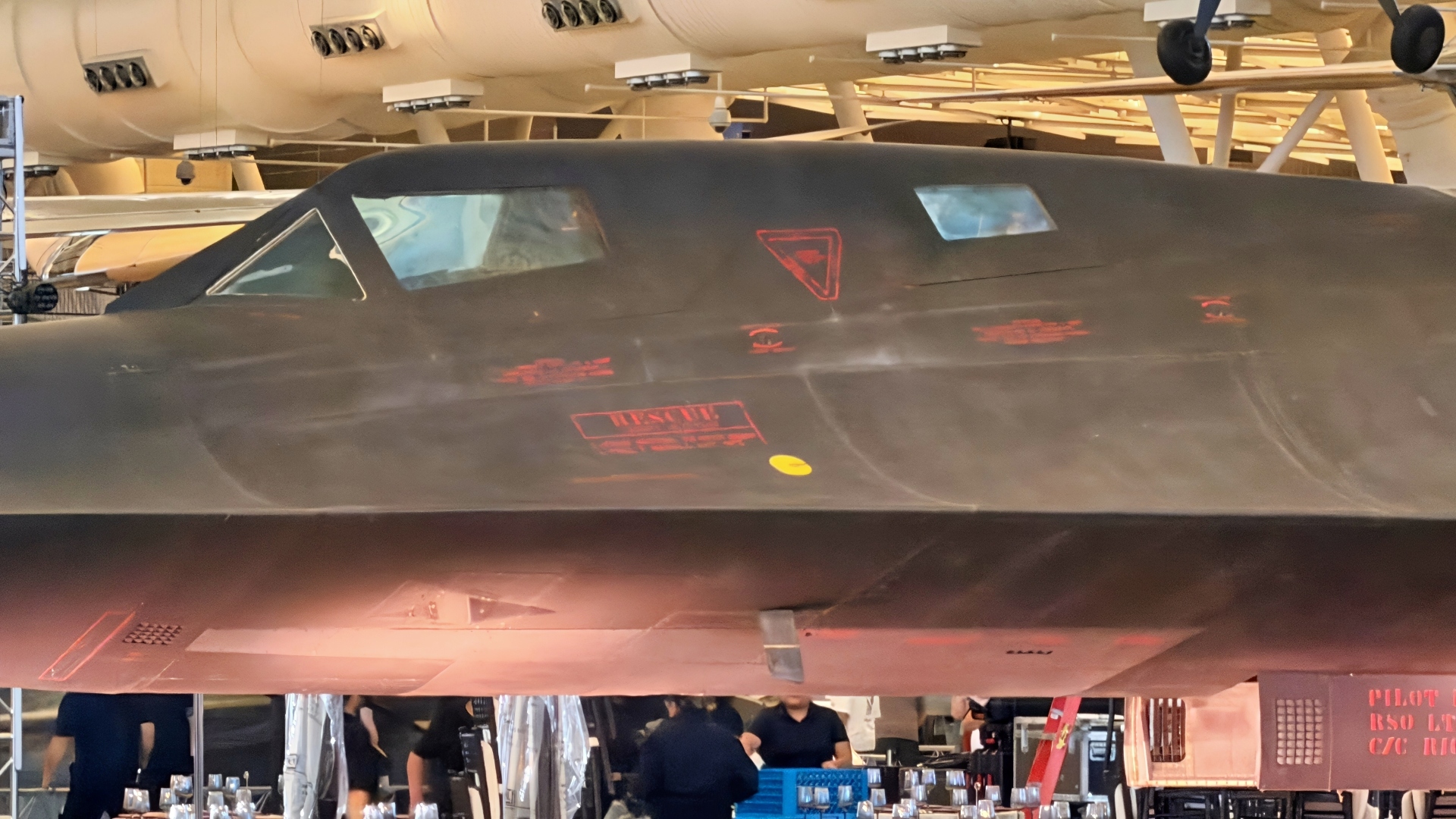
SR-71 Blackbird Sideview. Smithsonian Display Photo Taken by 19FortyFive on 9/30/2026.
Conditions were unusually clear, allowing him to see aircraft contrails at considerable distances.
This visibility made the approaching Soviet interceptors detectable to the naked eye.
Spotting the Fighters
Graham first noticed the MiG-25s approximately 200 miles ahead of his aircraft.
The three fighters were flying in a clockwise orbit, apparently waiting for an opportunity to intercept.
As the Blackbird approached to roughly 100 miles, the Soviet aircraft changed formation.
According to Graham’s estimates, the SR-71 was at an altitude of 75,000 feet while the MiG-25s were at approximately 30,000 feet.
The separation between the SR-71 and the MiGs was ten miles.
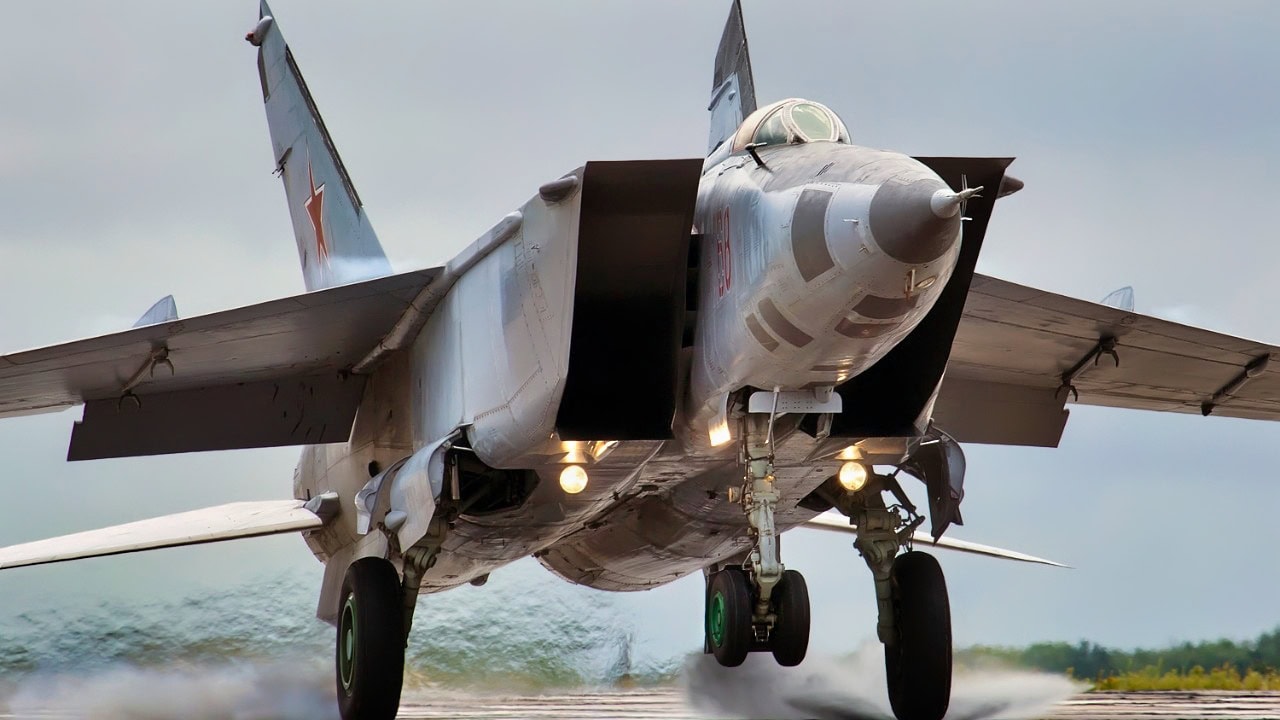
MiG-25 Foxbat. Image Credit: Creative Commons.
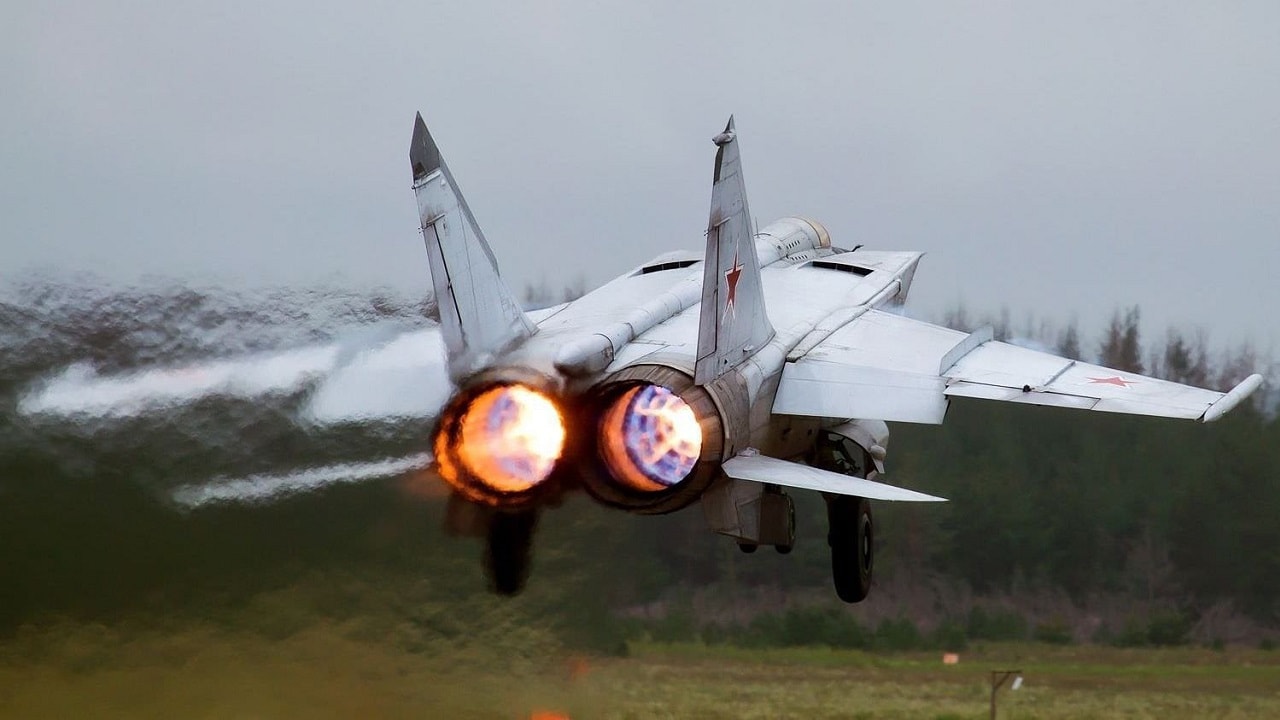
MiG-25. Image Credit: Creative Commons.
The fighters then transitioned into a trail formation when Graham noticed the aircraft’s contrails disappeared.
He assumed the Soviet pilots had engaged their afterburners to accelerate. The MiGs continued toward the American aircraft but remained far below its altitude.
Built to Outrun Everything
Developed by Lockheed’s Skunk Works under Clarence “Kelly” Johnson, the SR-71 was designed for strategic reconnaissance at extraordinary speeds and altitudes.
After making its first flight on December 22, 1964, the SR-71 entered operational service in 1966.
With a top speed of Mach 3-plus and an operating altitude of up to 85,000 feet, the SR-71 relied on two Pratt & Whitney J58 turbojets that were optimized for sustained high-speed flight.
The aircraft was built with a titanium-intensive structure designed to withstand the extreme aerodynamic heating of sustained Mach 3 flight.
At the same time, a sophisticated inlet system managed supersonic airflow into the engines.
Soviet High-Speed Interception
The MiG-25, known to NATO as the Foxbat, was developed to intercept high-altitude, high-speed aircraft. Entering Soviet service in the early 1970s, the MiG-25 had a maximum speed of Mach 2.83 and a service ceiling of 68,000 feet.
With two Tumansky R-15B-300 afterburning turbojets, the MiG-25 used a predominantly stainless-steel structure to withstand high-speed aerodynamic heating.
Although extremely fast, the MiG-25 was not designed for prolonged Mach 3 cruising. Sustained operation beyond its normal speed limits could damage its engines.
Indeed, the aircraft was optimized for interception—not high-speed reconnaissance.
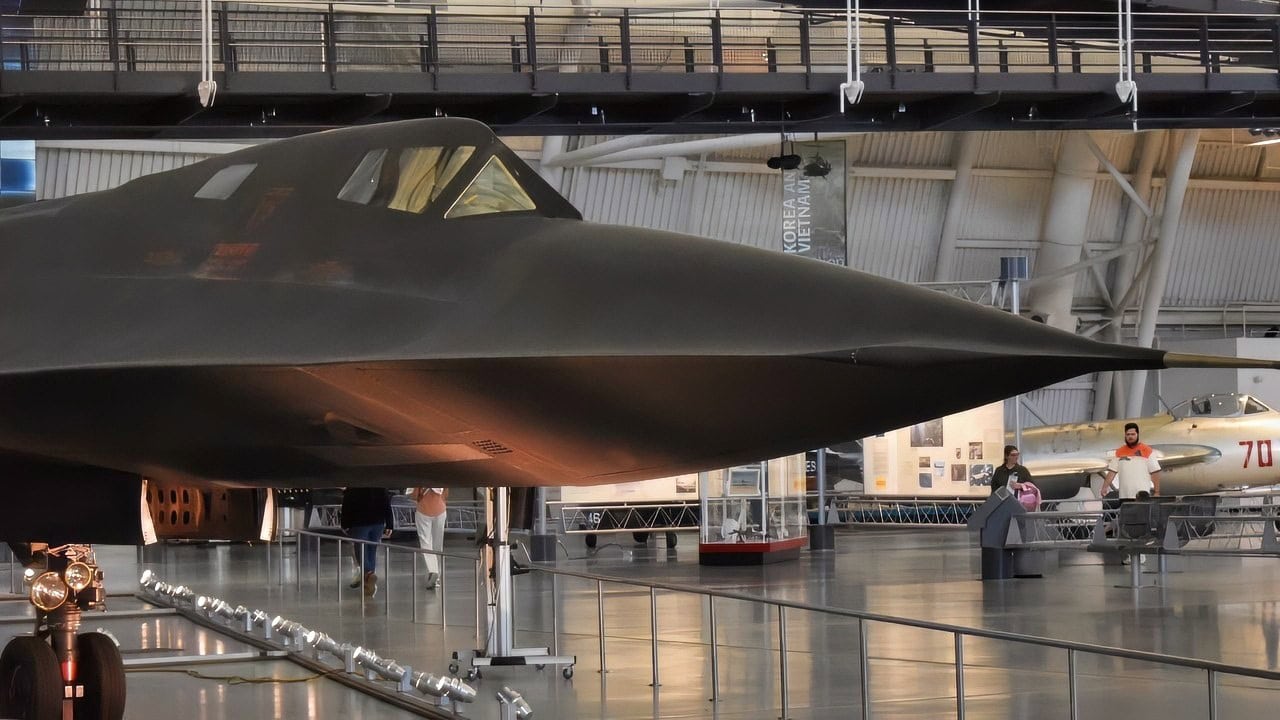
SR-71 Blackbird Photo by Dr. Brent Eastwood of 19FortyFive.

SR-71 Blackbird Photo from Dr. Brent Eastwood at the Smithsonian. 19FortyFive.com Original Image.
Too Slow
The SR-71 enjoyed a significant advantage in sustained speed and operating altitude over the MiG-25s, which could accelerate to extraordinary speeds but suffered from limited operational endurance at maximum performance.
Intercepting an SR-71 required more than momentarily matching its speed.
Soviet pilots needed favorable positioning, sufficient altitude, radar acquisition, and an opportunity to launch missiles within their engagement envelope.
Graham’s account suggests the MiGs attempted to position themselves ahead of the Blackbird rather than simply pursue it from behind, but their lower altitude and the Blackbird’s sustained Mach 3 cruise complicated the interception.
Ultimately, the interception failed.
The three Soviet MiG-25s passed beneath Graham’s SR-71 without threatening the aircraft.
The encounter illustrated the Blackbird’s remarkable combination of sustained speed, altitude, and reconnaissance capability.
Although the MiG-25 was among the fastest fighters ever built, it struggled to intercept the SR-71.
About the Author: Harrison Kass
Harrison Kass is a writer and attorney focused on national security, technology, and political culture. His work has appeared in Tablet, City Journal, The Hill, The Spectator, and The Cipher Brief. He holds a JD from the University of Oregon and a master’s in Global & Joint Program Studies from NYU—more at harrisonkass.com.