
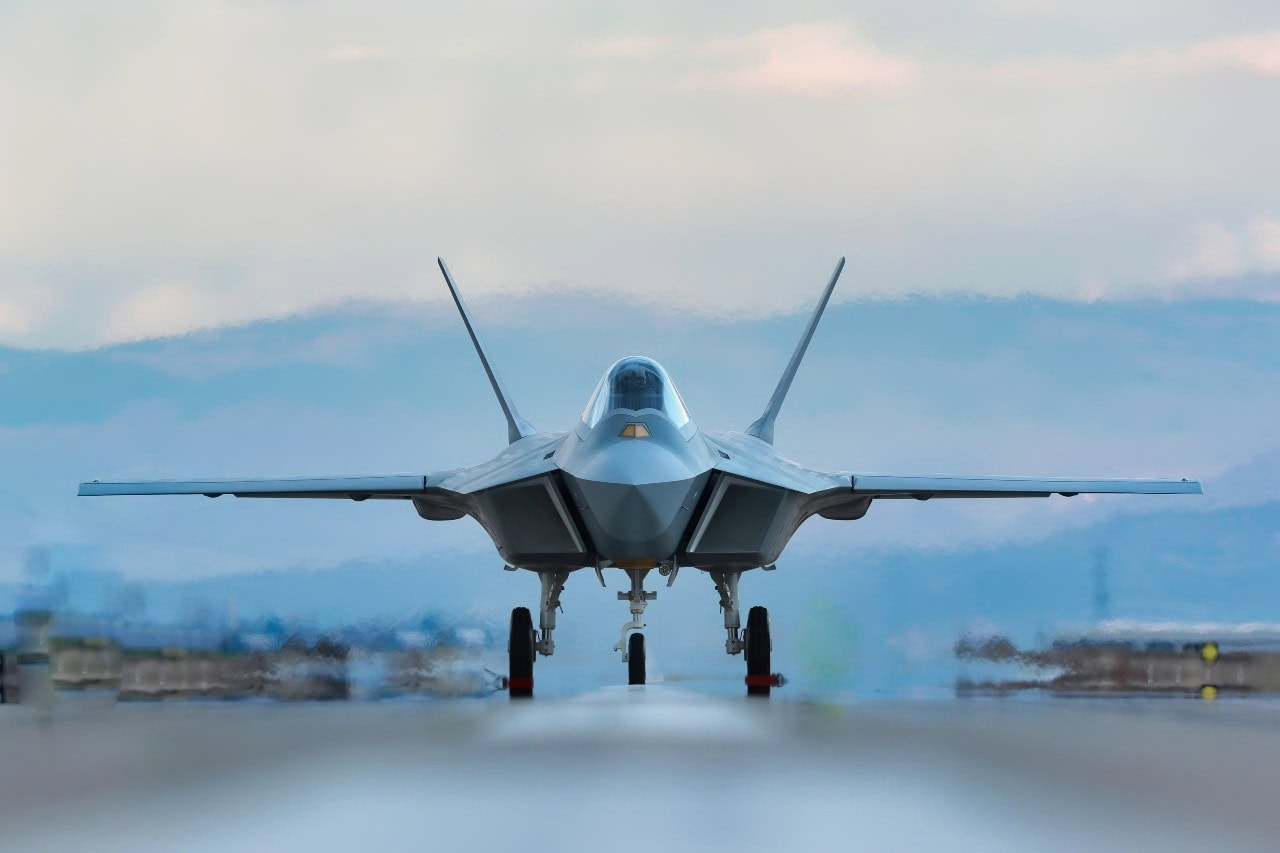
A Rival ‘F-35’ Fighter?: Turkey’s TAI Kaan stealth fighter jet, under development since 2010, is emerging as a potential competitor to the F-35.
-Developed by Turkish Aerospace Industries with assistance from BAE Systems, the Kaan boasts impressive features, including advanced stealth, a powerful engine enabling a top speed of Mach 1.8, and the ability to control a “Loyal Wingman” drone.
-It’s designed to carry a significant weapons payload, including Turkish-made missiles.
-With its first flight last year and potential interest from Saudi Arabia, the Kaan could establish Turkey as a major player in the global fighter jet market, particularly for nations unable to acquire the F-35.
Turkish TAI TF Kaan, a Stealth Fighter Leaping Ahead of Rivals in the Middle East
As the United States assists Israel in its war in Lebanon and Gaza, and tenuous ceasefires and prisoner swaps for hostages take place, Turkey has become a regional military power. Iran’s power was blunted, and Saudi Arabia struggled to eliminate the Houthi terrorists. Meanwhile, Turkey has emerged as a leader in aviation.
Its drones, such as the Bayraktar TB2, helped the Ukrainians in the early part of the war against Russia. So now the Turks have another aircraft to be proud of.
How Did the Turks Build This Airplane So Well?
The TAI TF Kaan jet fighter is developing into something American defense contractors must notice. It could become a hit on the export market—made for countries unable to buy the F-35. Turkish Aerospace Industries produces the TAI TF Kaan with an assist from BAE Systems and other defense firms.
Turkey hopes this is a fifth-generation fighter that can match capabilities with Western warplanes and serve as a much cheaper alternative to the F-35. The TAI KANN gives aviators many advantages. It has stealth attributes and can toggle between dogfighting and ground strike mission sets.
This airframe is a surprising development for Turkey’s homegrown defense industry. The TAI TF Kaan has snuck up on the world.
They Put in the Time and Showed Patience
The surprising thing about the TAI TF Kaan is that the Turks have been steadily working on the jet since 2010, when it was known as the TF-X experimental platform.
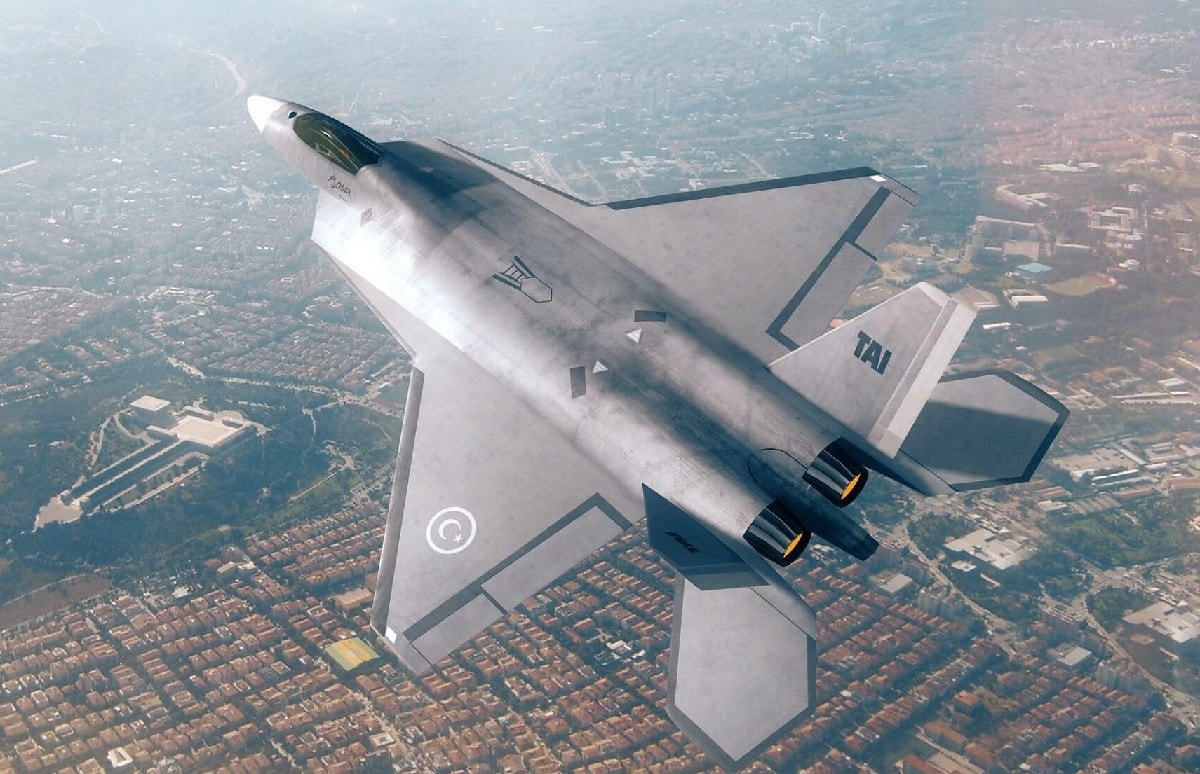
Image Credit: TAI
Over the last 15 years, Turkish Aerospace Industries has kept its head down and focused on design and engineering. Other defense contractors in the West wonder if Turkey can continue to blaze past the competition in the export market.
The Turkish government became tired of depending on other countries for its armaments. In the 2010s, it made a strategic decision to build up its indigenous defense industry. It wanted to lead the world in drone development, and the Turks hoped this expertise in unmanned flight could transfer over to manned flight dominance.
Creating a Consortium Is the Way to Do It
Turkish Aerospace Industries could not do it all themselves, though. They needed a partner that would help with system engineering and component integration. BAE Systems fit the bill; later, this would become a full collaboration with other smaller defense contractors. By 2015, Turkish Aerospace had the prime contract. Production was set in motion.
The tricky part was developing stealth attributes, and Turkish Aerospace had to start from scratch. Also, the avionics and sensors needed to be top-notch if the airplane would ever be competitive with the F-35. The engine integration would be a challenge, too, but the Turks were not intimidated by the technological effort required.
Saudi Arabia Signals That It Is Interested
Last year, the TAI TF Kaan made its first flight, and the Turkish Air Force hopes to have this jet in full production in the early 2030s. Foreign militaries became excited about the TAI Kaan, and Saudi Arabia may have already placed an order for 100 TAI Kanns.
The Saudis can’t wait to get their hands on these fighters and have even offered to help with some of the technology integration so Turkey can produce the Kaan quicker.
The Turks have bragged that the radar evasion qualities can rival the stealthiness of an F-35. This claim is probably not completely true, but the Turkish military should be given credit for its ambition. The stealth coating on the TAI Kaan is impressive. The jet can also collect intelligence, surveillance, and reconnaissance data, while the electronic warfare suite is something to be proud of.
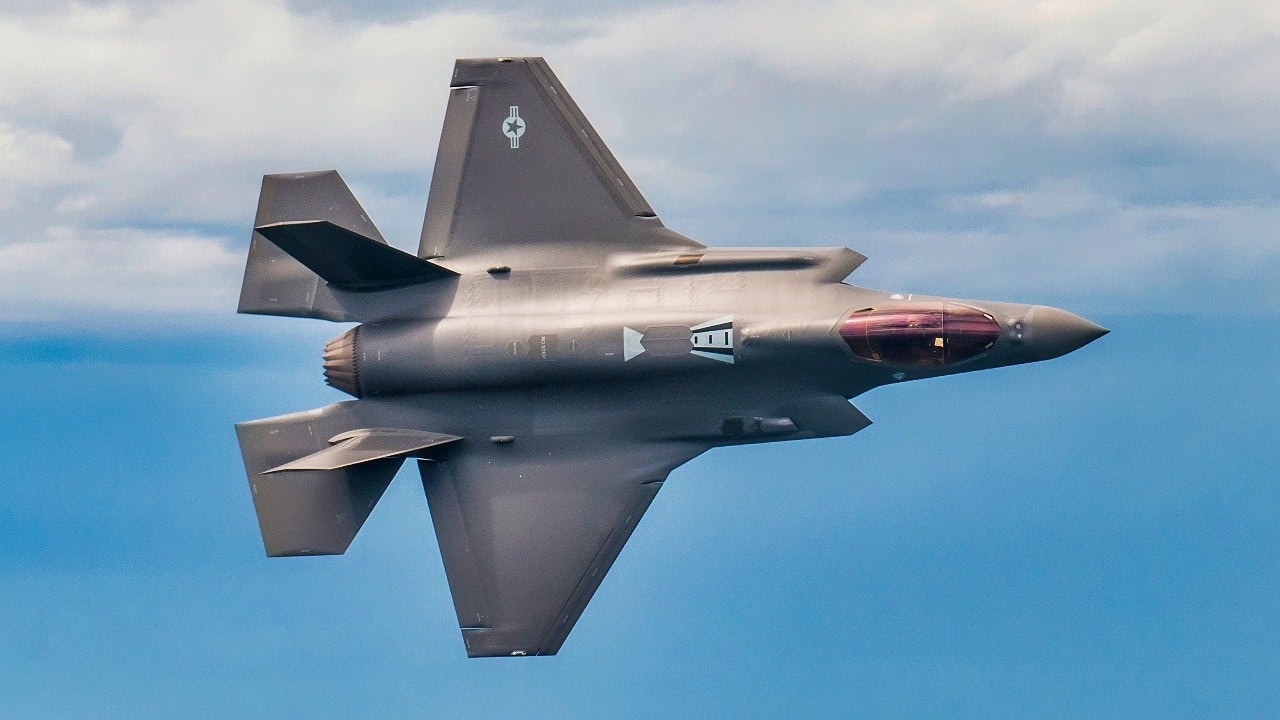
F-35 Fighter. Image Credit: Lockheed Martin.
The TAI TF Kann is billed to be a maneuverable dogfighter. It also boasts the capability to control a “Loyal Wingman” or a drone tethered to the manned fighter that can fly out ahead and conduct targeting and bomb damage assessment, plus recon duties – making the TAI TF Kaan more lethal with better situational awareness.
The Turks Have Homegrown Weapons, Too
Weapons are also a strong point for this Turkish fighter. It is expected to have a similar load-out compared to the F-35. That means 2,000 pounds of ordnance internally and another 18,000 pounds of weapons externally.
The TAI TF Kaan can carry “indigenous Turkish-made missiles such as the Gökdoğan [long-range air-to-air missile] and Bozdoğan [short-range air-to-air missile]. Its internal weapons bay and stealth features ensure that it can carry these munitions without compromising its low radar profile,” according to ArmyRecongnition.com.
And the Turks have made the engine something to behold. It pushes out 38,000 pounds of thrust with a top speed of MACH 1.8, a shade faster than the F-35 at MACH 1.6.
Overall, this thing is noteworthy. The Turks should be commended for producing a jet rivaling the F-35. I’m a little skeptical about all the specs. This could be a marketing ploy to undermine the F-35’s prowess, but it is still an impressive warbird even if it delivers on half of these attributes.
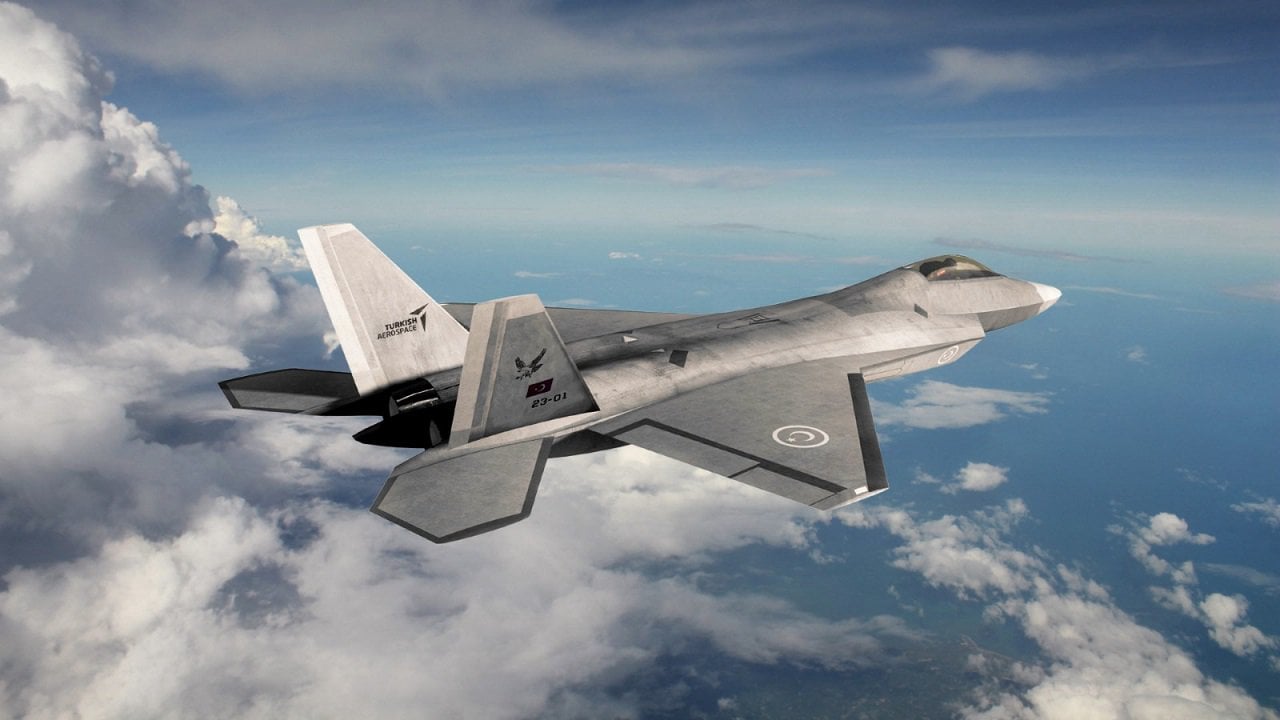
TF-X Concept Image. Image Credit: Industry Handout.
The Turkish indigenous arms industry is growing fast, especially on the aviation front. If the talking points about the TAI TF Kaan are true, then Turkey has quickly emerged as one of the best defense industries in the Middle East.
Let’s see if it can produce the TAI TF Kaan in numbers before the mid-2030s and acquire more customers. America’s Lockheed Martin, the maker of F-35s, may have a competitor on its hands.
About the Author: Dr. Brent M. Eastwood
Brent M. Eastwood, PhD. is the author of Don’t Turn Your Back On the World: a Conservative Foreign Policy and Humans, Machines, and Data: Future Trends in Warfare, plus two other books. Brent was the founder and CEO of a tech firm that predicted world events using artificial intelligence. He served as a legislative fellow for U.S. Senator Tim Scott and advised the senator on defense and foreign policy issues. He has taught at American University, George Washington University, and George Mason University. Brent is a former U.S. Army Infantry officer. He can be followed on X @BMEastwood.