
During my 16 years in the U.S. House of Representatives, from 1981 through 1997, I witnessed firsthand the power that principled American leadership can have on the international stage. Those were heady days, with the Cold War at full tilt by the time I entered office. The Soviets had just invaded Afghanistan, America’s military buildup was beginning in earnest, and we as a country were still recovering from the collective scars of the Vietnam War. Later in my tenure, we watched in awe as the mighty USSR dissolved with a whimper, seemingly overnight, and a nascent democratic movement began to take hold in early post-Cold War Russia.
What was clear throughout this experience was this: American leadership was essential to maintaining the global order and all of the positive impacts that flow from it. Particularly regarding Russia and its designs on its neighbors, the US is the only existing power that possesses the wealth, the military capability, and the collective will to check Russian expansionism and ensure that smaller, democratic powers have a fair shot at maintaining their sovereignty and their independence. This used to be a well-established and widely accepted fact in the Republican Party that I’ve been a lifelong member of. Not so much anymore.
Today, as Russia continues its brutal offensive war against Ukraine, it is Republicans in Congress who have gone wobbly, pulling support for the Ukrainians and talking favorably about Vladimir Putin and his ilk. It’s worth dwelling on how historically anomalous this is. Back during the Cold War, it was the Democrats who were sometimes talked about as “useful idiots,” unwittingly doing the bidding of the Community Party and its international sympathizers. Today it’s Republicans who sound more like Putin shills, and you can often find them literally appearing as props in Russian state media.
This stands in stark contrast to the example set by Ronald Reagan, who my generation of conservatives grew up emulating. We watched as Reagan admonished his Soviet counterpart to “tear down this wall,” rather than continue a brutal regime of repression against the citizens of the Eastern Bloc. We celebrated when, on Christmas 1991, we watched the hammer and sickle flag finally come down, a feat that many of us doubted we’d ever see without massive bloodshed. And many of us felt misty-eyed hearing Reagan’s successor, George H.W. Bush, talk about the meaning of the American triumph, about the elevation of human freedom above tyranny, and about the more positive future it pointed us all toward.
This shows the power that leadership can have for a party, and for the country. America prevailed in no small part because its leaders—Republicans as well as Democrats—shared a common understanding about the stakes of the conflict, and the necessity of seeing it through. Certainly there were policy mistakes, and with hindsight it’s easy to see where we blinded ourselves to the consequences of certain decisions. But through all this, we all knew a few core things to be true: American freedom is a way of life worth protecting and promoting across the world. Soviet tyranny is a scourge unto humanity, and we should do all in our power to liberate people from it.
What’s changed, of course, is the leadership component. Today it’s Donald Trump who acts like one of those apologists for Putin we used to talk about. For whatever reasons, personal or political, Trump shows an enduring refusal to criticize Vladimir Putin and the dictatorial regime he heads, or to take concrete steps to act as a meaningful check against it. Ever since the full-scale invasion of February 2022, Trump has been one of the leading voices undermining Ukrainian security and giving aid and comfort to the forces of Russian expansionism. Once he re-entered the White House earlier this year, this became official US government policy.
The Members of Congress, agency heads, and rank-and-file voters of today’s Republican Party take their cues from the leader. Over the past 10 years, Donald Trump has re-made the GOP in his image, causing the party to reverse itself on certain principles that it used to hold sacrosanct. Among them are America’s fundamental leadership role as the world’s “indispensable nation.” Republicans used to believe—and many of us continue to believe—that since World War II, the United States has had a moral obligation to act in defense of freedom and liberty around the world. That meant championing these values through the use of soft power and, when necessary, deploying military assets to act as a bulwark against international aggression.
Compare that to how Donald Trump talks about Putin. He calls him “smart,” a “genius,” a “strong leader,” and someone who is “doing a great job.” His administration cut off foreign aid to Ukraine for a period upon entering office. He and his vice president ambushed Volodymyr Zelensky in the White House, in what to my mind can only be described as a coordinated, made-for-TV attack. In turn, Congressional Republicans have soured on aid to Ukraine, and show no signs of providing additional aid anytime soon, even as Ukrainians continue to fight valiantly, despite diminishing arms and matériel. Now leading Republicans talk about Ukraine as “Nazis,” “corrupt,” and “not our friend.”
Making matters worse, it didn’t have to be this way. At the beginning of the Ukraine war, many Republicans in Congress championed the heroism and bravery of the Ukrainian people. They talked about the need to support the Ukrainians with whatever they needed, and pledged to remain in the fight for as long as it took to win. This was in keeping with the best traditions of the Republican Party I grew up with. But three long years of Trump’s pro-Putin sycophancy has made these elected leaders change their tunes. And it’s the people of Ukraine who will suffer the consequences of their cowardice, if it continues.
The contours of this war are crystal clear and unambiguous: Russia attacked Ukraine, unprovoked. Russia started this war, and it bears the practical and moral responsibility for it. Throughout, Ukraine has acted justly in its own defense. It hasn’t committed brutal war crimes as a matter of course, as Russia has. It hasn’t abducted thousands of children and used rape and torture as weapons of war, as Russia has. It hasn’t threatened the international community with apocalyptic rhetoric, as Russia has. On this one, there’s an astonishing degree of moral clarity for anyone of good faith who chooses to see it: Russia is our enemy. And Ukraine is our friend.
It’s time the GOP—and the man who heads it— to start acting like it. It’s unthinkable to me, as a Reagan Republican, to watch as Trump and his acolytes give verbal cover to Vladimir Putin. And it’s appalling that we are depriving Ukraine of the tools it needs to prosecute its defensive war for survival, freedom, and democracy. This is especially true when doing so costs US taxpayers essentially nothing, and acts as a boon for American defense companies like those operating across my native Wisconsin. Russia chose to start this war, and it’s on us to bring the necessary pressure to bear on its leadership to ensure they end it in a manner that preserves Ukrainian sovereignty and sends the message that borders are not to be changed through force.
That’s why I’m part of Republicans for Ukraine, a nationwide campaign of Republicans and conservatives who still support aiding America’s democratic ally in this fight for freedom. Hundreds of us have spoken out, highlighting just how critical this fight is, and the benefits that accrue to us as Americans by providing moral leadership in this moment. It’s especially important that people hear from real Republicans across the country, in their own communities, who still see this conflict for what it plainly is: a fight between good and evil, and one in which we must do all in our power to ensure the good guys win.
Donald Trump talked about ending the war on “day one” (he’s since walked that back). JD Vance and Marco Rubio speak of territorial concessions. These are the exact wrong messages to be sending at a time like this. Especially when Ukraine was, until recently, notching victory after victory, showing up the once-vaunted Russian Army as a paper tiger, and inflicting massive casualties on the Russian soldiers stationed on Ukrainian land. To walk away now with a phony “peace deal” would be the ultimate example of snatching defeat from the jaws of victory. It would be to our eternal shame as Republicans, and Americans.
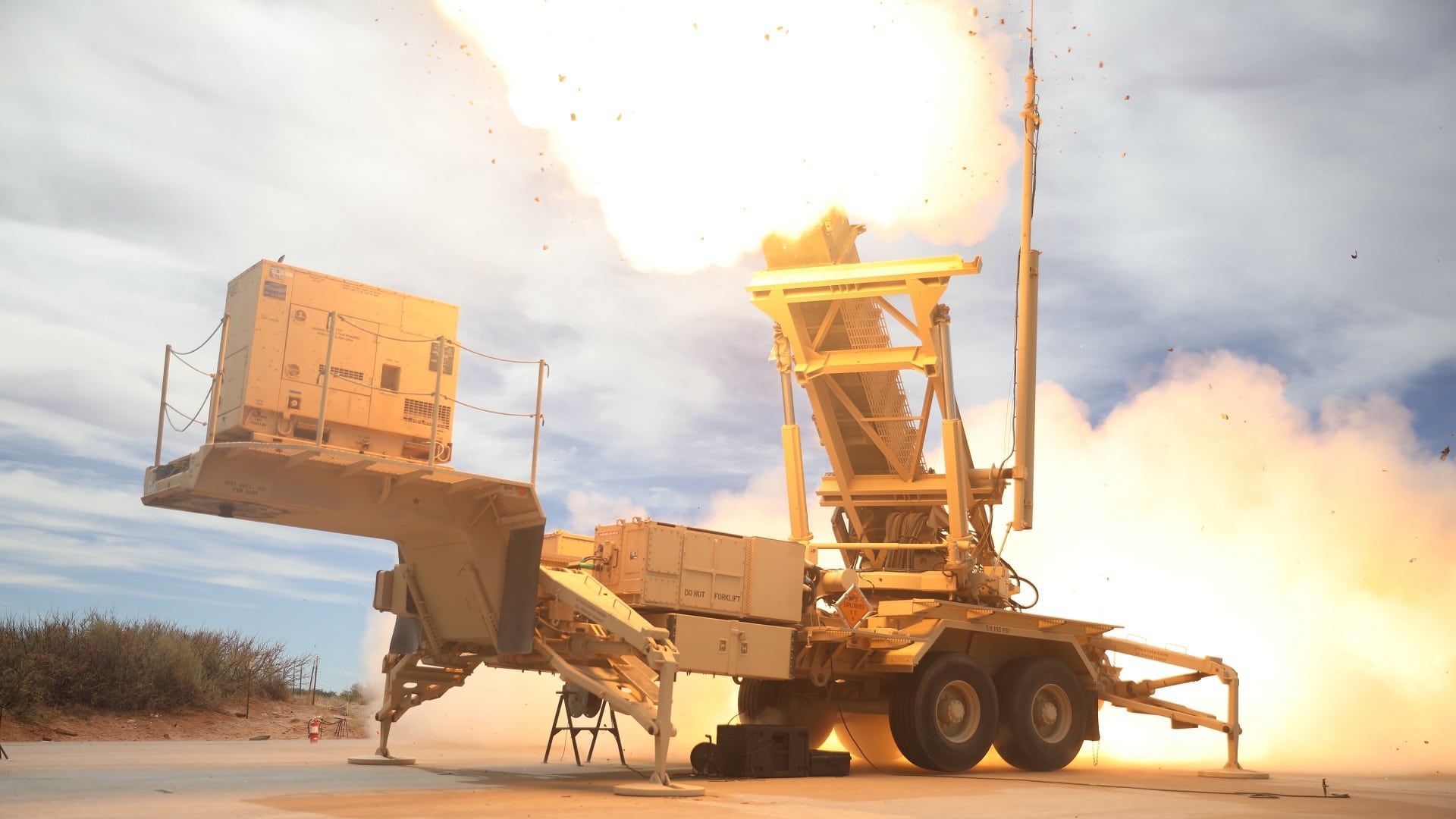
I am hard on the Trump foreign policy, for all the reasons stated above. But I can’t conclude this conversation without a glimpse of optimism. Maybe, just maybe, Trump is now realizing that Putin has no interest in peace. The recent announcement that the US is providing an additional $50 million in air defense support is a very positive signal—not only about American resolve, but to serve as a warning to Putin. Let us hope that we can build on this small step forward, in hopes of returning to a time when the US defends freedom and opposes unilateral invasions anywhere.
Something that Trump talks about often is his legacy. He wants to be seen as a great American president. I will reserve judgment on that. But what I will say is that allowing a large, powerful country to gobble up a small, weak one will not bolster the president’s legacy in the eyes of history. It would, in fact, be seen as one of the great capitulations of our time. And history will remember the man responsible for this failure, if it comes to pass.
About the Author:
Rep. Steve Gunderson (Ret.) is a spokesman for Republicans for Ukraine, a nationwide campaign of Republicans and conservatives who support standing by Ukraine in its fight for freedom and democracy. You can watch his testimonial video here. From 1981 through 1997, he represented Wisconsin’s 3rd district in the United States Congress, serving as House Republican Chief Deputy Whip from 1989 through 1993.