
Key Points: Vladimir Putin’s rejection of President Trump’s exceptionally favorable peace proposals for Ukraine—which included recognizing Russian territorial gains and rolling back sanctions—indicates his true aim is likely the complete conquest of Ukraine, not a negotiated settlement.
-This intractability clarifies Moscow’s maximalist war goals, even when offered a deal beneficial for Russia.
-While Ukraine appears more open to compromise following military setbacks, Putin continues to pursue battlefield victory.
-The Trump administration’s recent decision to resume military aid to Ukraine suggests a realization that Russia must face continued resistance to reach a point where meaningful peace negotiations become possible.
The Ukraine War Just Won’t End
US President Donald Trump entered office insisting he would end the Ukraine war rapidly (in one day). His initial approach was to pressure Ukraine into substantial concessions while demanding little of Russian President Vladimir Putin. Trump’s logic appeared to be that Putin was his friend and would respond in good faith.
Trump also seems to have absorbed Putin’s narrative of the war. Trump does not seem to grasp that Putin started the conflict, that Ukraine is the defender, not the aggressor, and that Russian behavior in the war has been appalling.
Indeed, Trump offered Putin such a good deal that it is surprising that Putin did not take it. Trump offered de facto recognition of Russia’s illegal annexation of Crimea in 2014, de facto recognition of Putin’s conquests since 2022, rollback of US sanctions on Russia’s economy, and no US security commitment to Ukraine.
This deal is excellent for Moscow. It would give the Russian army and economy a much-needed breather. Russia’s military has not fared well in the war; its casualty estimates are close to one million dead and wounded. Russia’s economy is now hyper-militarized and needs to return to a civilian footing eventually.
A ceasefire with no security commitment would leave Ukraine vulnerable to a renewed Russian attack a few years later.
Putin’s Rejection of Trump’s Generous Deal Tells Us What He Really Wants
The crafty Putin play would have been to take the deal now, re-arm and re-fit, and then destabilize Ukraine again later. Indeed, this was a big concern for Ukraine’s backers. It was a bad deal for Ukraine, but Kyiv is desperate to placate Trump and achieve at least a ceasefire. Putin had the great opportunity to solidify his war gains and slip out from under international opprobrium.
That Putin rejected such generous terms tells us a lot—namely, that he truly seeks the conquest of most, if not all, of Ukraine. The Russian army is likely not capable of that, but Putin simply does not care. As former Vice President Mike Pence says, Putin’s relentless intractability—his refusal to take even Trump’s balance-positive deal—tells us that “he wants Ukraine, not peace.”
In this way, Trump’s extraordinary pro-Putin posturing has served a useful analytic purpose: Putin was more likely to get a good deal from Trump than any other Western leader, including Ukrainian President Volodymyr Zelenskyy. That Putin still rejected the most pro-Russian deal available makes unambiguously clear that he wants the war and that the only ‘peace’ he will accept is a Ukrainian surrender. Even Vice President J.D. Vance, a relentless critic of Zelenskyy, seems to grasp this now.
Ending Wars Requires Both Sides to be Exhausted and Seek Peace
There is extensive literature in political science on war termination. Unless one side is completely obliterated on the battlefield, most conflicts end when both sides prefer peace over continuing the conflict. They become amenable to ending hostilities when the perception of future battlefield success becomes dim and the costs of continuing to fight exceed the costs of peace. In William Zartman’s words, they reach a ‘mutually hurting stalemate.
Ukraine has almost certainly reached this point of flexibility. It has signaled a willingness to engage in Trump’s various deals despite the poor terms for Kyiv. Ukraine’s big chance to roll back Russian gains was in the much-hyped offensive of 2023. Since that effort failed, the war has mostly stalemated. A deal where Ukraine loses some territory but mainly persists as a free and independent state is not a bad outcome at this late date.
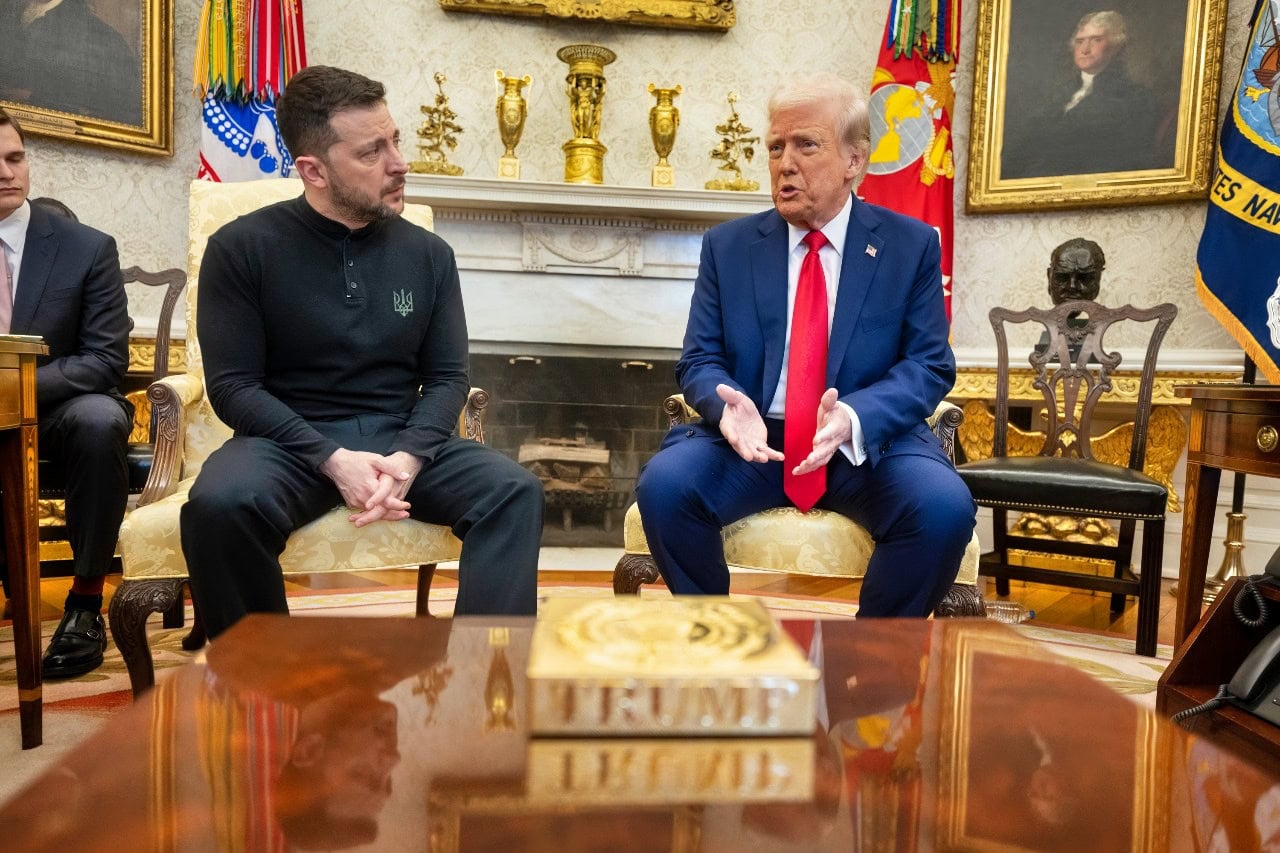
President Donald Trump greets President Volodymyr Zelenskyy of Ukraine, Friday, February 28, 2025, in the West Wing Lobby. (Official White House Photo by Daniel Torok).
Russia has notably not reached this point of acceptance. Trump is the most pro-Russian Western leader in generations. He has offered various deals far better than his predecessor ever would have. Yet Putin has turned them down and continues to muse about using nuclear weapons to win the war. He genuinely seems to believe that Russia can win.
The Trump administration seems to have finally grasped this with its decision to militarily aid Ukraine again. Trump must give Ukraine the tools to fight until Putin reaches that hurting stalemate. The only alternative for peace is the total Russian conquest of Ukraine, which even Trump realizes would be a catastrophe for the West and the United States.
About the Author: Dr. Robert E. Kelly
Dr. Robert E. Kelly is a professor of political science at Pusan National University. Kelly is also a 19FortyFive Contributing Editor. You can find him on X: @Robert_E_Kelly.