
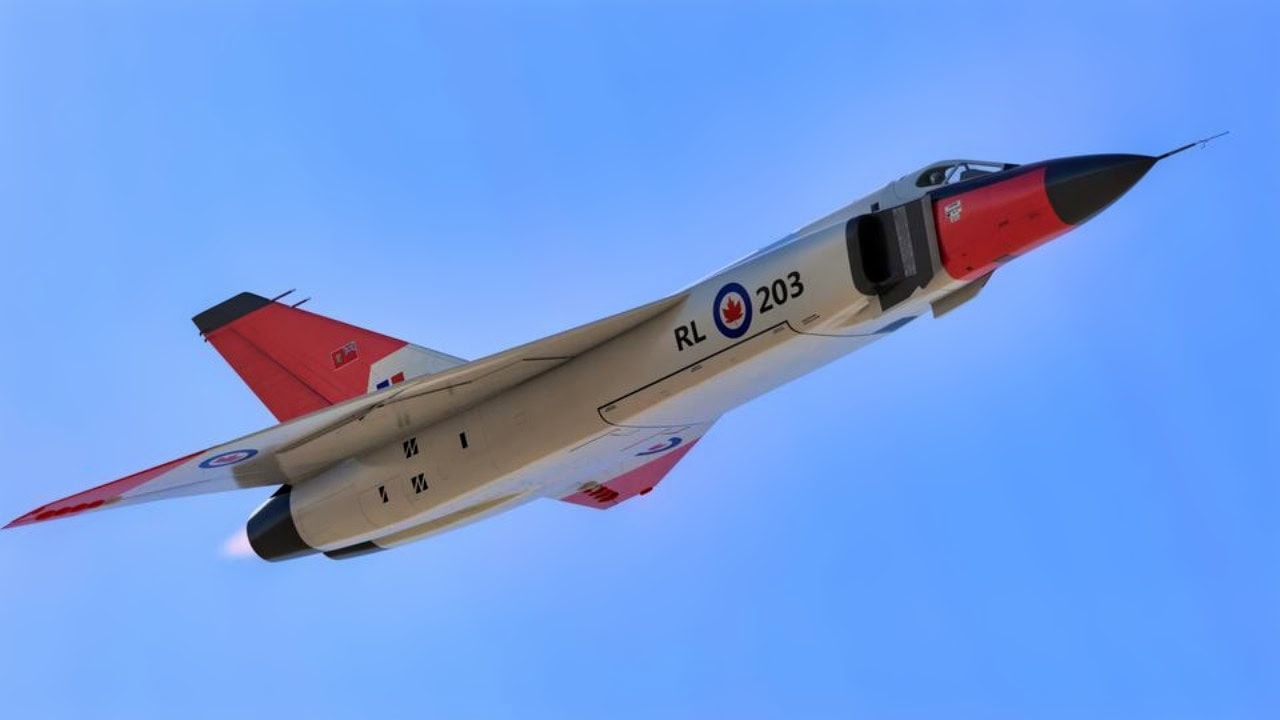
Key Points and Summary – The Avro Canada CF-105 Arrow was the RCAF’s bold bid for a homegrown supersonic interceptor, designed in the 1950s to stop Soviet bombers over the Arctic.
-With twin Iroquois engines, near-Mach 2 speed, advanced avionics, and heavy missile armament, the Arrow was years ahead of its time and briefly proved its promise in test flights.
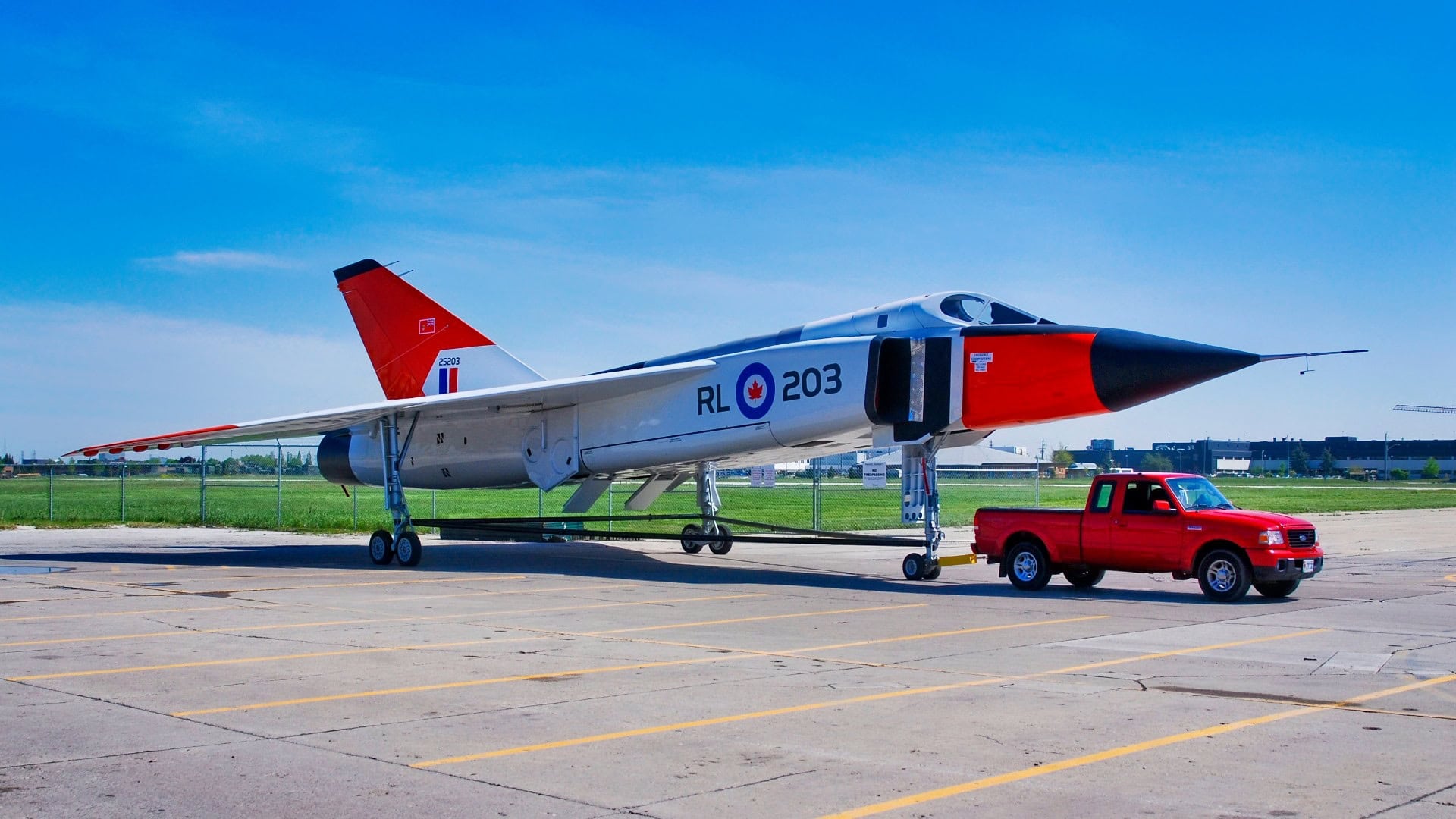
Avro Arrow CF-105 Canada. Image Credit: Creative Commons.
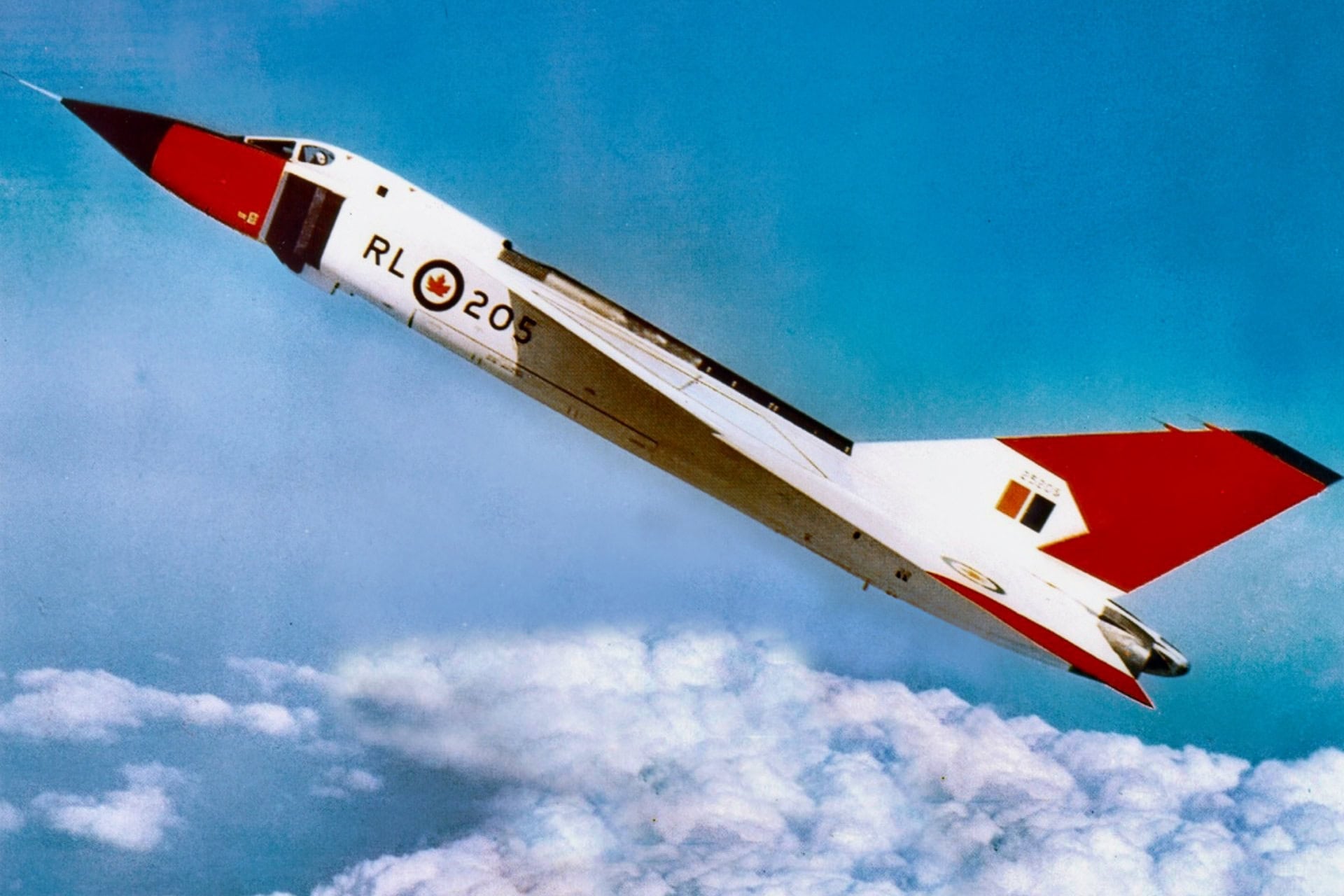
Avro Canada CF-105 Arrow. Image Credit: Creative Commons.
-But soaring costs, the rise of ICBMs, and Prime Minister John Diefenbaker’s push to cut spending and align with U.S. defense policy doomed the program in 1959’s “Black Friday.”
-The fleet was destroyed, Avro collapsed, and many Arrow engineers later helped power NASA’s Apollo era.
CF-105 Arrow Fighter Profile: The RCAF’s What Might’ve Been Story
In the proud history of the Royal Canadian Air Force (RCAF), most of its fighter planes have been of foreign manufacture, from the British-made Hawker Tempest and Supermarine Spitfire of World War II to the American-made F-104G Lockheed Starfighter of the Cold War to the US-made CF-18 Hornet and Lockheed Martin F-35 Lightning II of the present day (coming soon?).
That’s not to say the Canadians haven’t attempted to build their fair share of homegrown fighters.
One, the CF-100 Canuck (AKA the “Clunk” or “Leadsled”), was reasonably successful. However, another, the Avro Canada CF-105 Arrow, instead became the ultimate “What might have been” story of the RCAF. National Security Journal now looks at the history of the star-crossed Arrow.
CF-105 Initial History
Built by the now-defunct A.V. Roe Canada Limited (typically shortened to “Avro Canada;” headquartered in Toronto), the CF-105 Arrow had the distinction of being both the first and last supersonic interceptor designed and built in Canada. It was developed between 1953 and 1959 and made its maiden flight on March 25, 1958. The warbird was envisioned to counter jet-powered Soviet bombers capable of attacking North America via the Canadian Arctic.
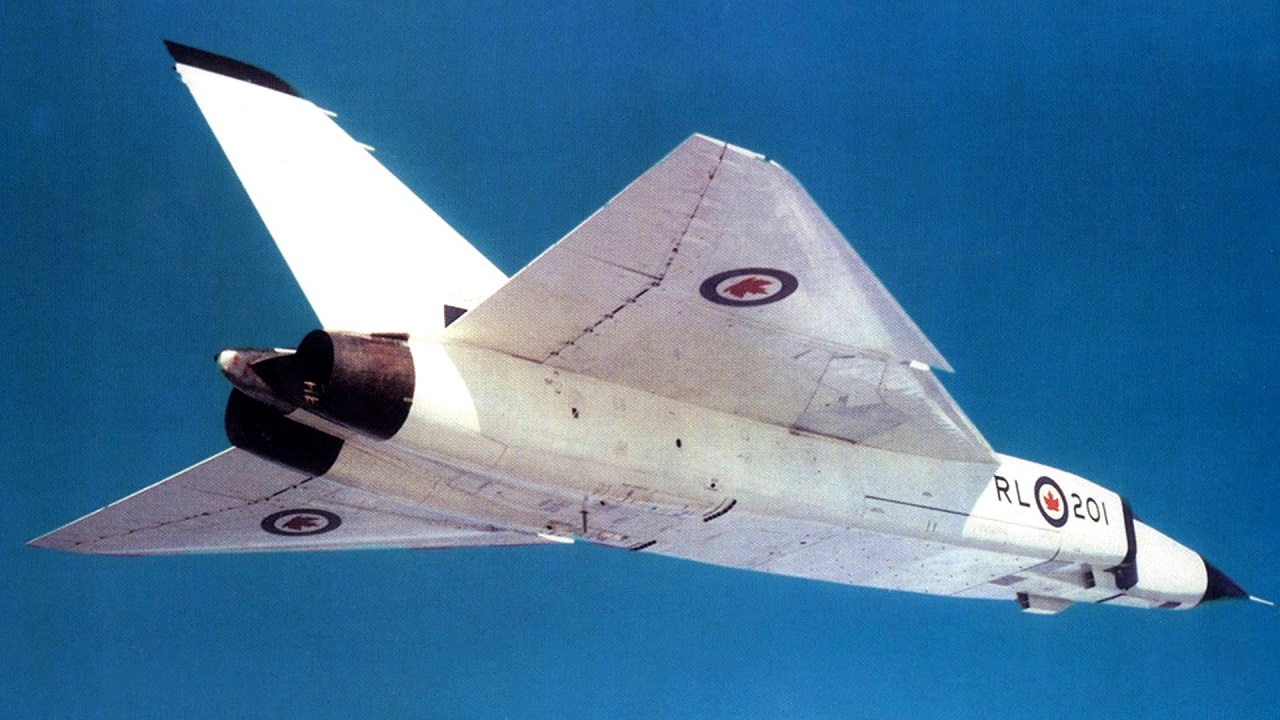
CF-105. Image Credit: Creative Commons.
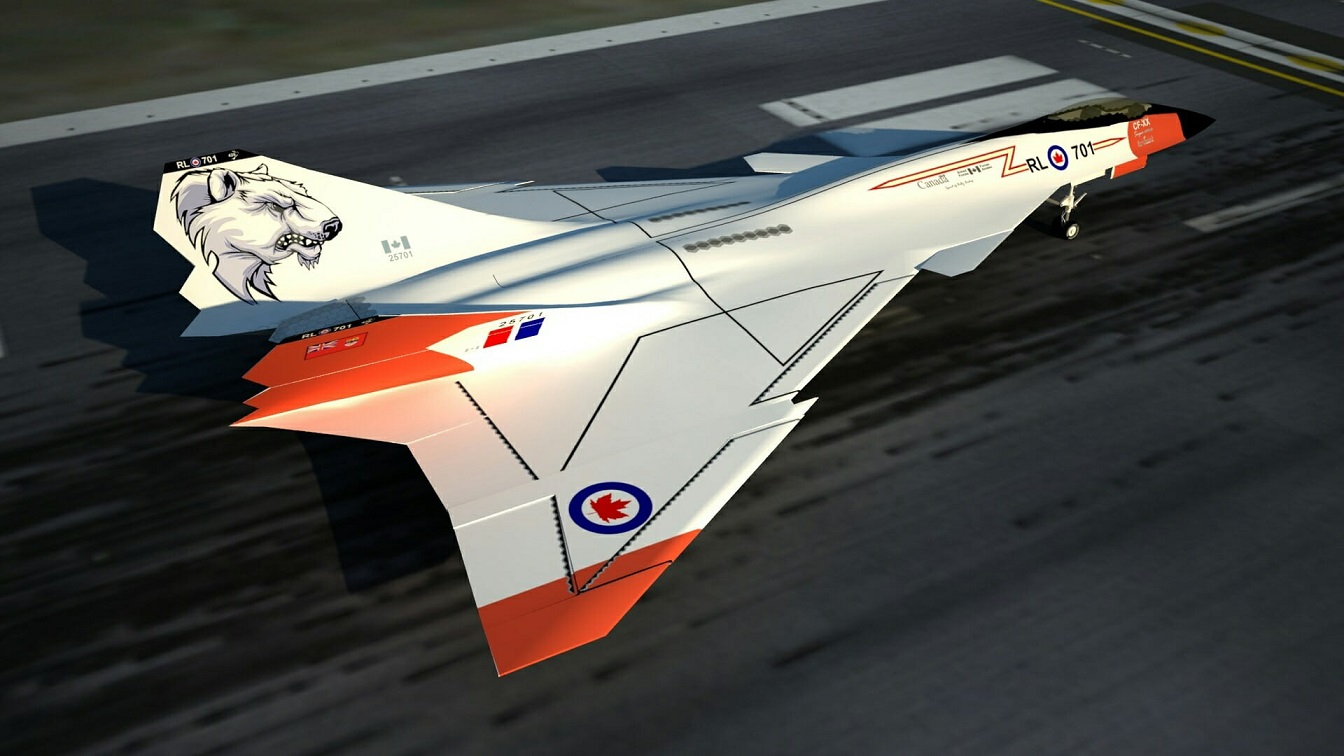
CF-105. Image Credit: Creative Commons.
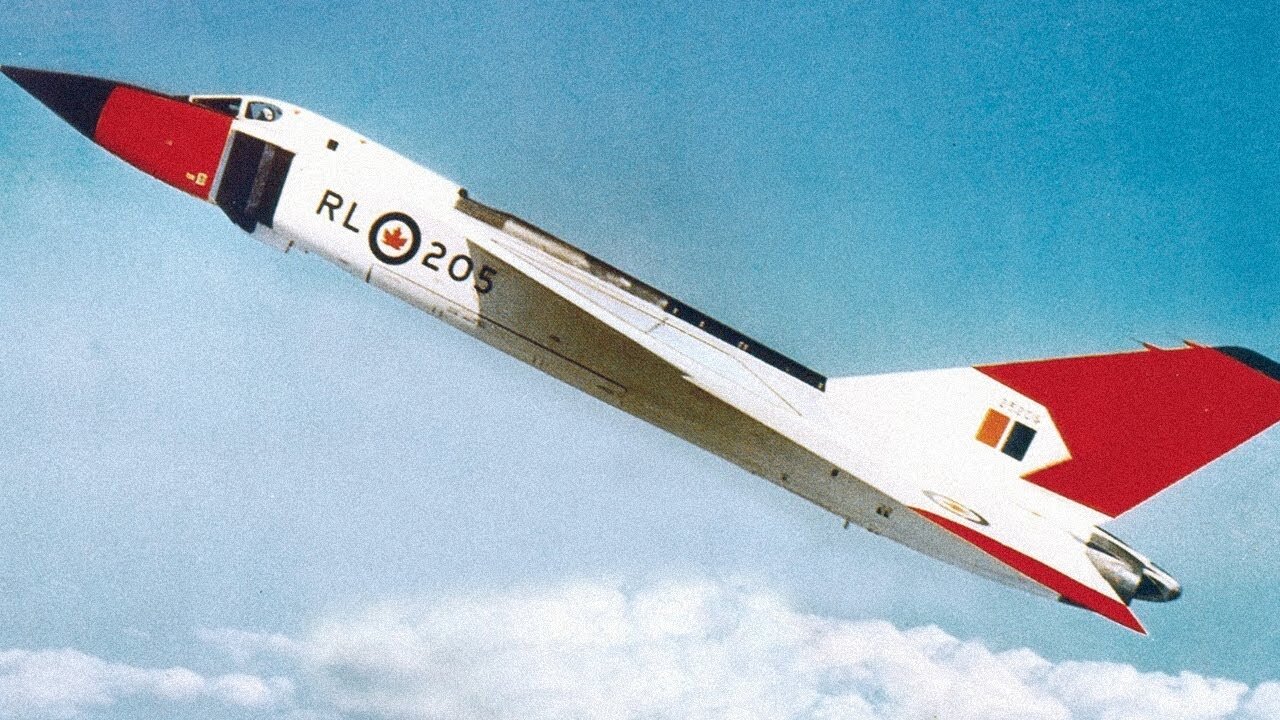
Avro CF-105 Arrow. Image Credit: Creative Commons.
As blogger TomGlad of Military Tech put it in an October 27, 2025, article titled “The Avro Arrow: Canada’s Forgotten Supersonic Dream,” the plane was “a sleek, delta-winged interceptor designed to soar higher, faster, and smarter than anything else in the air.”
CF-105 Technical Specifications and Vital Stats
Crew: 2
Fuselage Length: 26.1 m (85 ft 6 in)
Height: 6.5 m (21 ft 3 in)
Wingspan: 15.2 m (50 ft)
Empty Weight: 19,935 kg (43,960 lb.)
Gross Weight: 28,319 kg (62,431 lb)
Powerplant: 2× Orenda Iroquois axial flow turbojet engines, each generating 11,791 kg (26,000 lb) static thrust, with afterburner
Combat Range: 1,330 km (820 mi)
Service Ceiling: 17,830 m (58,500 ft)
Rate of Climb: 15,240 m (50,000 ft) / 4 min 24 sec
Cruise Speed: 1,128 km/h (701 mph)
Max Airspeed: Mach 1.98 (2,453 km/h; 1,524 mph; 1.324 kn)
Armament:
2× AIR-2A Genie unguided nuclear rockets; or
4× Canadair Velvet Glove air-to-air missiles (AAMs); or
8× AIM-4 Falcon AAMs; or
3× AIM-7 Sparrow II 2D AAMs
The aircraft was also blessed with a slew of innovative technological features, such as a fly-by-wire control system and a computerized control system that allowed the pilot to operate the aircraft electronically.
A total of five airframes were built.
Test Flight History (In Brief)
The project’s potential had generated so much buzz that it attracted talent from around the globe, including U.K.-born chief engineer James C. Floyd (October 20, 1914 – April 5, 2017) and gifted Polish-born test pilot Janusz “Jan” Zurakowski (September 12, 1914 – February 9, 2004).
The latter gentleman had the honor of being chosen to take the Arrow on its maiden flight, was awarded the Trans-Canada (McKee) Trophy (the oldest aviation award in Canada) for his efforts, and was later inducted into Canada’s Aviation Hall of Fame.
On that first flight, “Jan” checked the response of controls, engines, undercarriage, and air brakes, handling qualities at speeds up to 400 knots, and low-speed handling in a landing configuration. Subsequently, he flew Arrow models 1, 2, and 3 on a total of 21 test flights, reaching higher altitudes and faster speeds, up to Mach 1.89.
One of his Avro test-pilot colleagues, Władysław Jan (“Spud”) Potocki, reached Mach 1.98 in the Arrow, but it was never tested at maximum speed.
So, What Went Wrong?
The short answer, to quote TomGlad again, was “a story of ambition, politics, controversy, and an enduring legacy that has left Canadians wondering for decades: What if?”
As is the case with many promising weapons systems that ended up falling by the wayside, it often boiled down to dollars and sense.
The Arrow’s price tag had ballooned into the hundreds of millions of dollars—staggering for a mid-sized nation like Canada.
Another factor was changing defense strategies. With the rise of intercontinental ballistic missiles (ICBMs), many military analysts began to question whether high-speed interceptors were still necessary, given that the real threat was now missiles.
The final death blow was the “politics” component that TomGlad mentioned: the election of Prime Minister John G. Diefenbaker in 1957, who was under pressure to reduce spending, align more closely with U.S. defense policies, and make hard economic decisions.
Thus, it came to pass that the Arrow was cancelled on February 20, 1959, a day that to this day is known as “Black Friday” in the Canadian aerospace community. In a sad, ironic twist, an advert for Avro Aircraft celebrating the “first 50 years of powered flight in Canada 1909–1959” had only just been printed when the cancellation was announced.
When the company president announced the bad news to his employees on the factory loudspeakers, he didn’t mince words, stating “that f—ing p—k in Ottawa” had killed the entire program.
Three years later. Avro Canada, previously the third-largest company in Canada and one of the 100 largest companies in the world (employing over 50,000 people directly), ceased operations.
Where Are They/Is It Now?
No Arrow airframe survives intact today, as the Canadian government ordered that all completed Arrows, related documentation, and equipment be destroyed. However, the Canada Aviation and Space Museum in Ottawa has luckily preserved at least a few parts for posterity, namely:
-A nose section, donated to the Museum in 1965 by the Institute of Aviation Medicine in Toronto (which had been using it as a pressure chamber)
-Two undercarriage legs
-An Orenda Iroquois engine
–A Pratt & Whitney J75 engine that was used for test flights
-Wingtips
-“Other small parts, along with memorabilia”
Meanwhile, many of the engineers who had lost their jobs due to the Arrow’s cancellation joined a brain drain to the United States, forming an “Avro group” of 32 engineers who played critical roles in NASA’s Apollo program that beat the Soviets in the race to land a man on the moon.
About the Author: Christian D. Orr, Defense Expert
Christian D. Orr is a Senior Defense Editor. He is a former Air Force Security Forces officer, Federal law enforcement officer, and private military contractor (with assignments worked in Iraq, the United Arab Emirates, Kosovo, Japan, Germany, and the Pentagon). Chris holds a B.A. in International Relations from the University of Southern California (USC) and an M.A. in Intelligence Studies (concentration in Terrorism Studies) from American Military University (AMU). He is also the author of the newly published book “Five Decades of a Fabulous Firearm: Celebrating the 50th Anniversary of the Beretta 92 Pistol Series.”