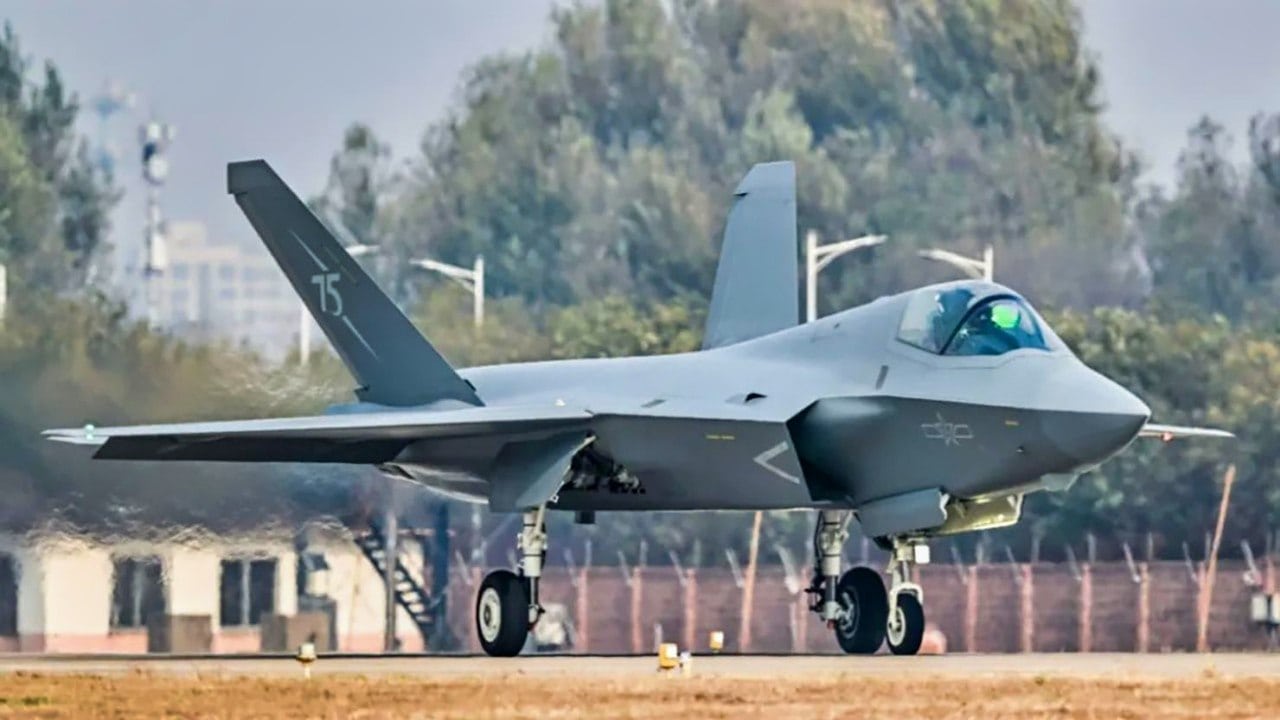
Key Points and Summary – China’s carrier-capable J-35 stealth fighter is drawing attention not just for its appearance on the deck of the Fujian, but for how closely it mimics the U.S. F-35.
-A sleek, blended wing-body, buried engines, diverterless supersonic inlets, and smoothed tail surfaces all point to a design optimized to shrink radar cross-section—Chinese media even claim it’s comparable to a “sparrow” or a human palm. But true stealth is more than shaping.
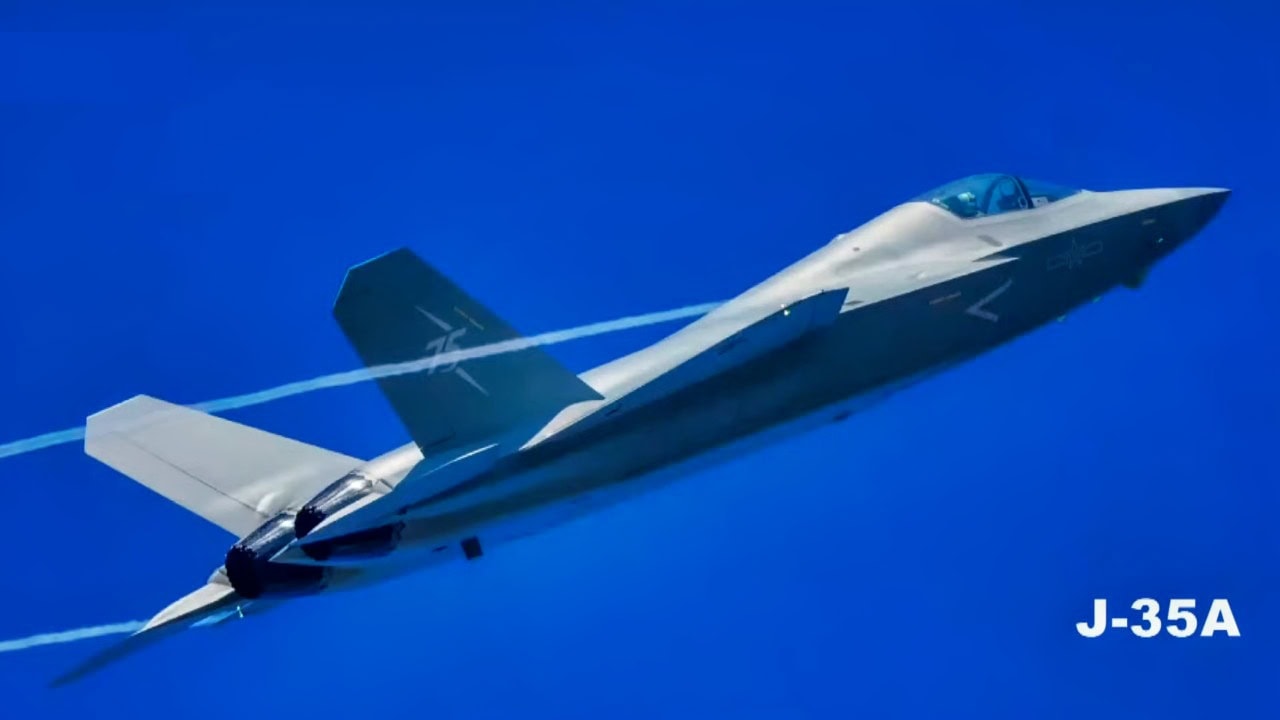
China J-35 Fighter. Image Credit: Creative Commons.
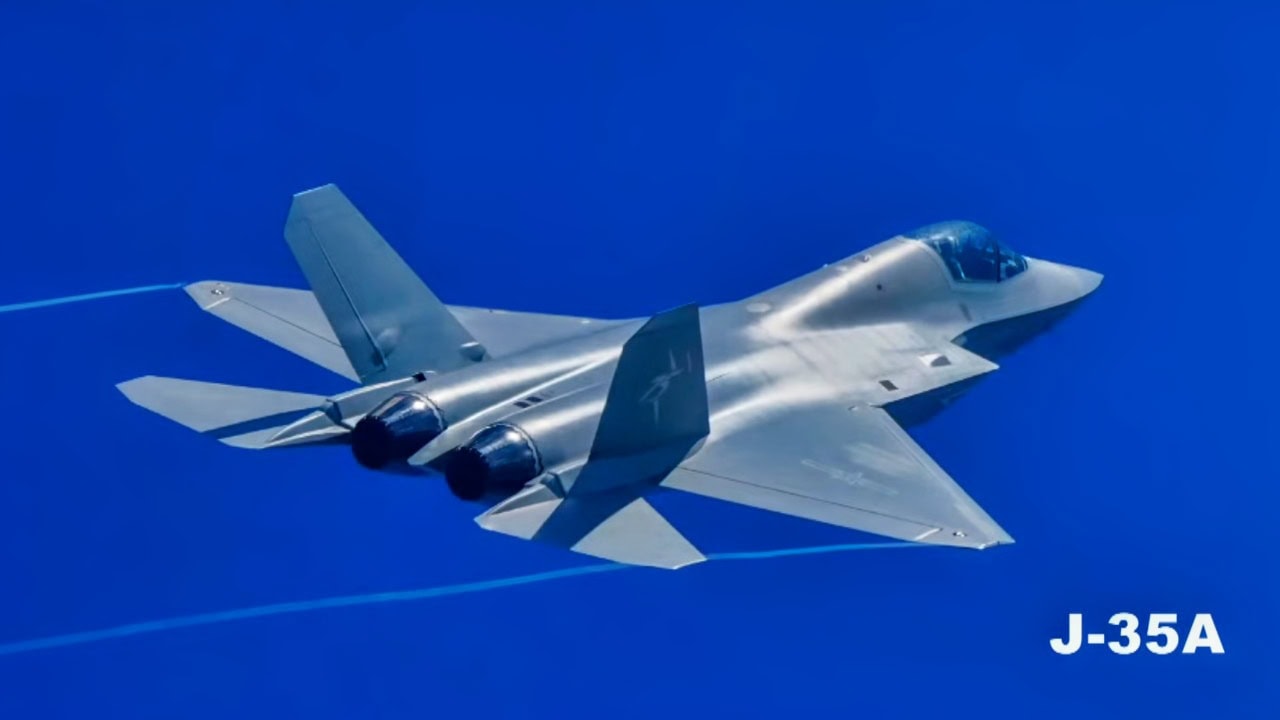
J-35 flying at Zhuhai Airshow 2024.
-Thermal management, engine integration, and advanced radar-absorbent materials will determine whether the J-35 is merely an external copycat or a genuine peer to America’s fifth-generation fighters.
China’s J-35 Might Be a Threat to the U.S. Air Force
A few months back, the People’s Republic of China (PRC) teased yet another glimpse of its anticipated 5th-generation fighter jet.
A photograph of the front end of China’s carrier-launched 5th-generation stealth fighter, the J-35, published in the PRC government-backed Global Times newspaper, shows a fighter that is almost indistinguishable from the United States’ F-35.
Such a similarity, long noticed by observers, is unlikely to surprise Pentagon weapons planners who have referenced the PLA’s “copycat” tendencies for many years.
What is significant, however, is the potential accuracy of recent comments in the Chinese state media that the J-35’s radar cross-section is comparable to that of a “sparrow” or a “human palm.”
The photo in the PRC newspaper shows the J-35 on the deck of China’s famous and recently launched Fujian aircraft carrier, and the front end of the aircraft very closely resembles the front “third” of a US Navy F-35C.
The J-35 certainly appears stealthy, as its nose radome and canopy are rounded and blended into a smooth surface designed to generate little or no return signal to ground-based radar systems. The front of the F-35 appears slightly larger and more angled than that of the J-35; however, the front nose radome and radar sections of both aircraft look nearly identical.
J-35: Smooth, Blended Wing-Body
Interestingly, much of the remaining portions of the J-35 seem to resemble those of an F-22, given that there are two smooth, rounded horizontal tails and a rounded dual-engine fuselage and exhaust area. Overall, the J-35 appears smooth, sleek, rounded, and blended, giving it great stealth potential.
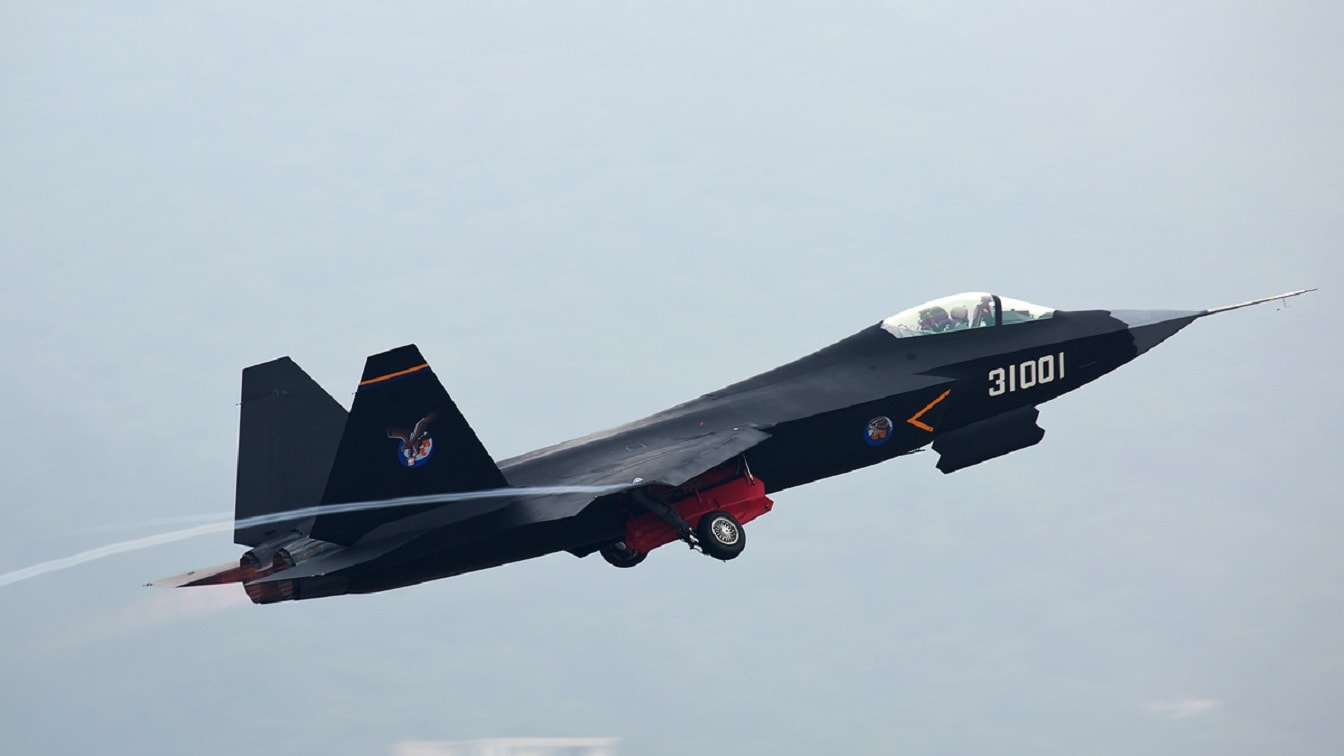
J-35 Stealth Fighter. Image Credit: Creative Commons.
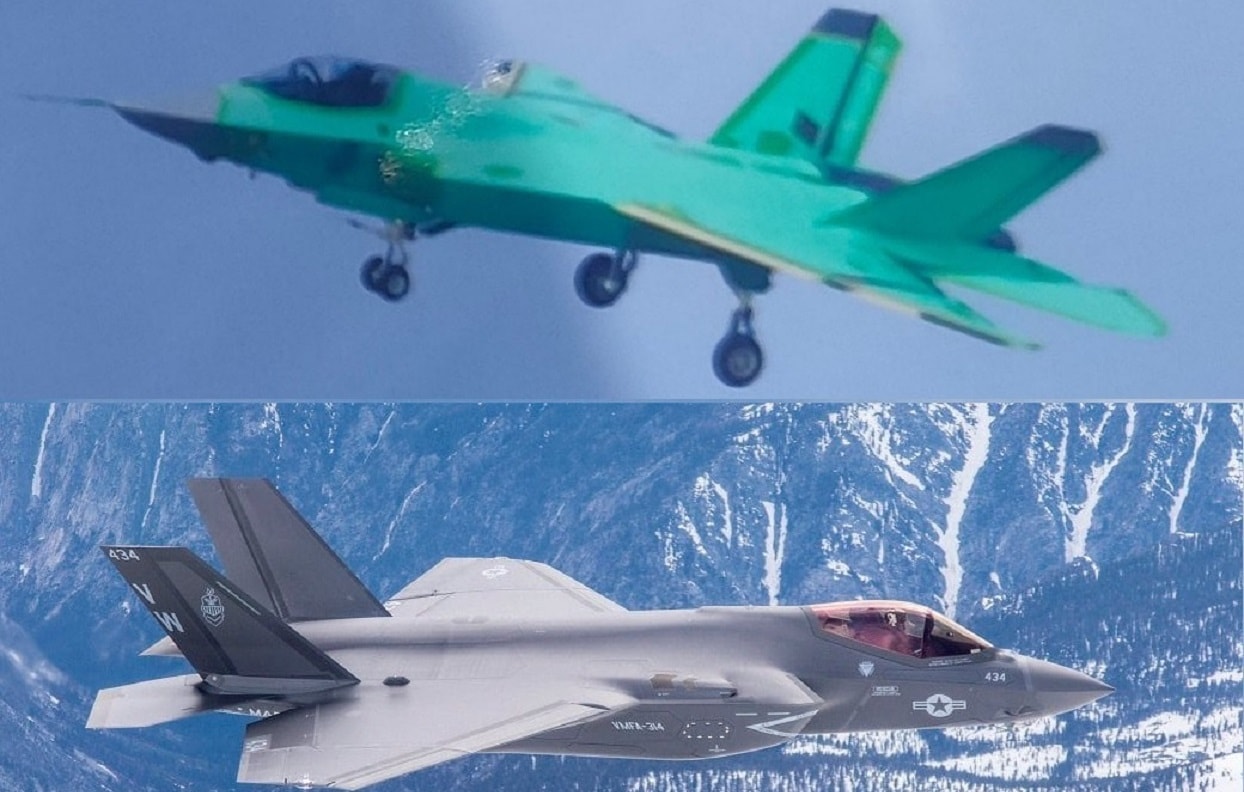
J-35 vs. F-35 Comparison. Image by Twitter User RupprechtDeino.
The absence of angled vertical structures, in particular, is by design intended to prevent electromagnetic pings from ground radar from having defined shapes and contours to bounce off of and generate a return signal or rendering.
Therefore, a quick examination of the external configuration of the J-35 would seem to indicate that the PRC’s comments about its low radar cross-section may hold validity.
Overall, the J-35 fuselage appears sleek, smooth, and stealthy, as it seems more purely horizontal than most 5th-generation aircraft.
A somewhat horizontal, blended wing-body configuration for a fighter jet begins to approach a “bomber-like” advanced stealth, characterized by the absence of vertical or protruding structures.
The J-35 features F-35-like tails protruding from the back for vectoring. It appears to utilize F-35-like fuselage-aligned Divertless Supersonic Inlet air intakes, designed to redirect slow-moving air from the engine and effectively shield or “hide” the engine fan from enemy radar.
More than External Configuration
Stealth effectiveness depends on much more than external configuration, as it consists of a host of variables, including thermal management, radar-absorbent materials, engine placement, and temperature.
The closer the temperature of a stealth aircraft is to that of the surrounding atmosphere, the stealthier it becomes. Such a signature leaves no margin of difference for infrared sensors to detect.
Thermal management is critical, as stealth aircraft are specifically engineered to emit very little heat, which is challenging given the engine thrust required to achieve speeds of Mach 2 or greater. Some aircraft are known to use IR suppressors, essentially technologies designed to minimize or dissipate and decrease heat coming from an aircraft.
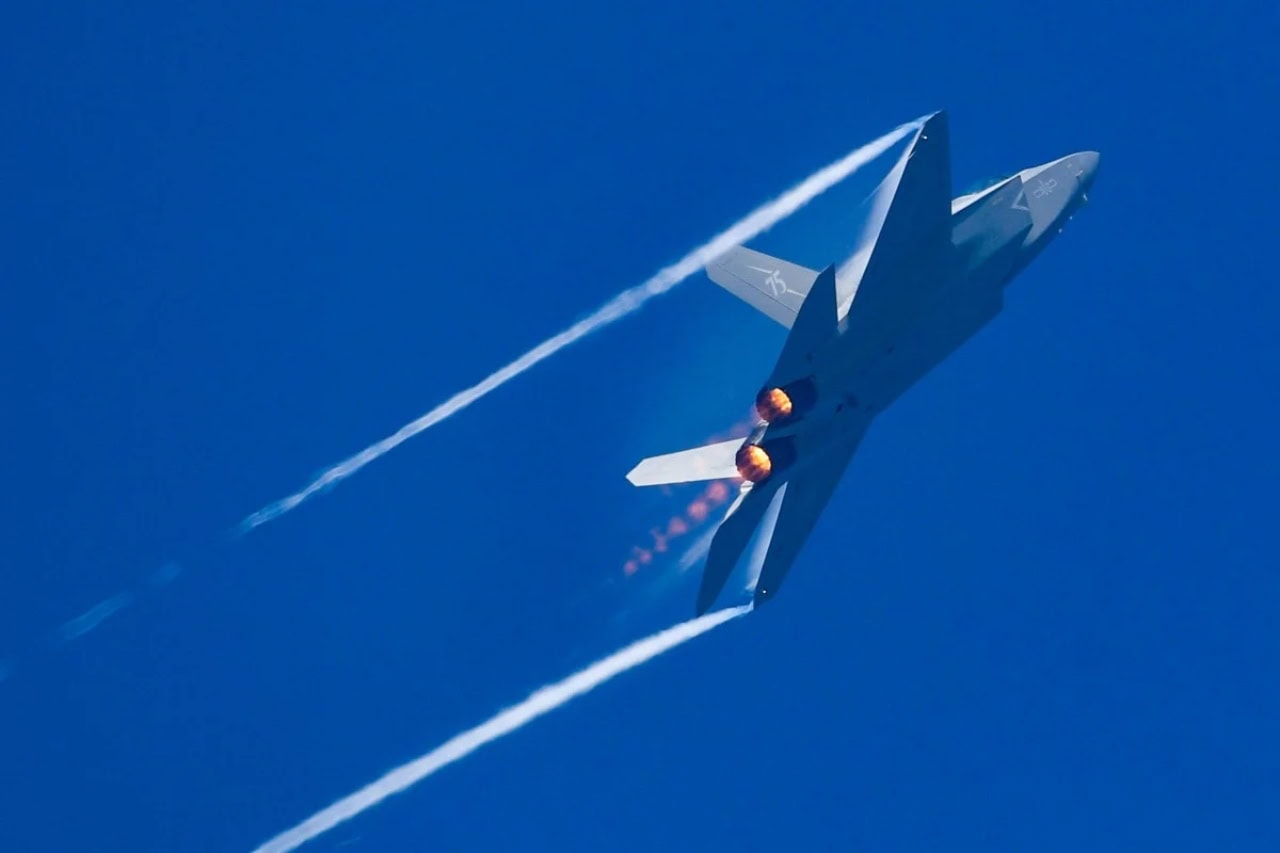
J-35. Image Credit: Chinese State Media.
This is also a reason why stealth aircraft have internally buried engines, as engines are, of course, great sources of heat. Fifth-generation fighter jets are equipped with specialized cooling liquids and technologies designed to prevent the aircraft’s avionics and electronics from generating excessive heat.
Coating materials are also critical, as advanced stealth aircraft are known to be built with highly specialized radar-absorbent materials designed to absorb electromagnetic pings and not simply “bounce” them back to enable ground radar to develop a rendering of the aircraft.
About the Author: Kris Osborn, Warrior Maven President
Kris Osborn is the President of Warrior Maven – Center for Military Modernization. Osborn previously served at the Pentagon as a highly qualified expert in the Office of the Assistant Secretary of the Army—Acquisition, Logistics & Technology. Osborn has also worked as an anchor and on-air military specialist at national TV networks. He has appeared as a guest military expert on Fox News, MSNBC, The Military Channel, and The History Channel. He also has a Masters Degree in Comparative Literature from Columbia University.