
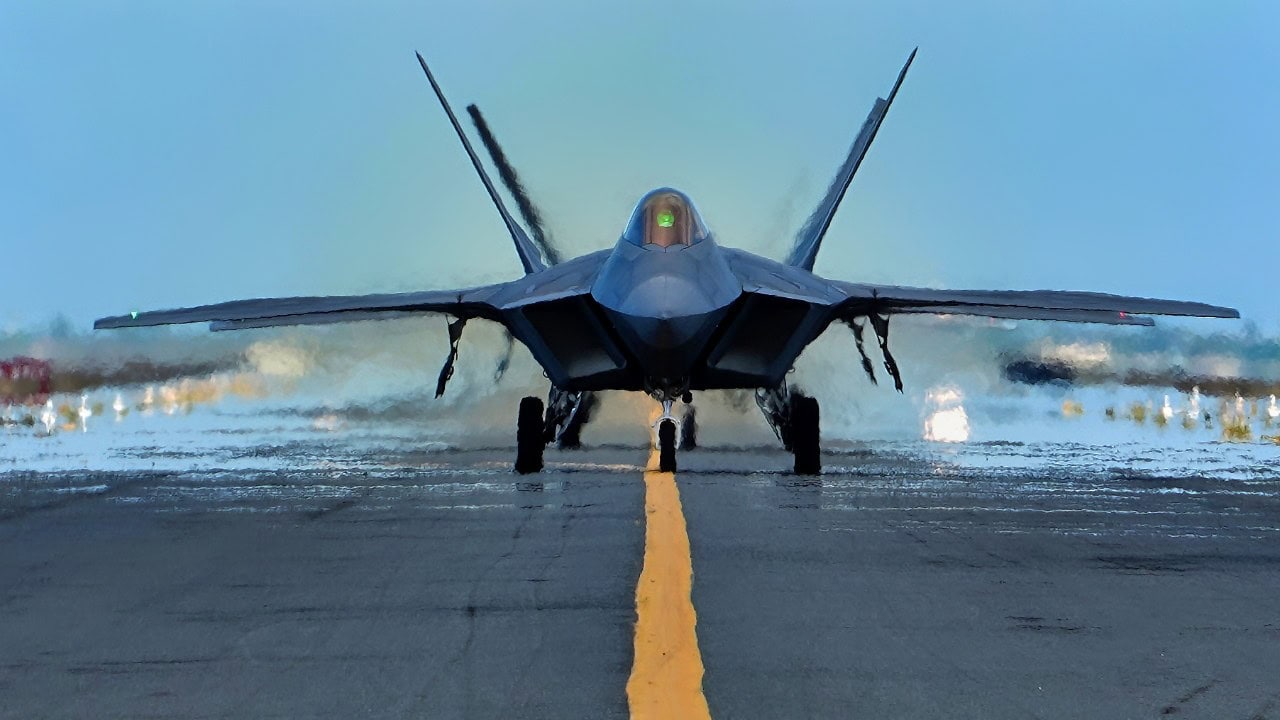
Key Takeaways – The F-22 Raptor delivered exactly what the Air Force wanted on paper: stealth, supercruise, brutal kinematics, and unmatched sensors.
-What it never got was scale.
-Born from the Cold War ATF program, the jet was supposed to replace the F-15 in the hundreds. Instead, post–Cold War complacency, soaring unit costs, and shifting priorities capped the fleet at just 186 aircraft before the line was shut down.
-That leaves the U.S. with the world’s best air-superiority fighter—but not enough of them to absorb losses or blanket multiple theaters in a major war. NGAD now risks repeating the same mistake.
The F-22 Raptor’s Only Real Weakness: America Didn’t Build Enough
When the U.S. Air Force introduced the F-22 Raptor in December 2005, it promised to usher in a new era of air-superiority warfare.
The platform was designed to replace the F-15 and dominate any adversary fighter jet in contested skies, combining stealth, super-cruise (sustained supersonic flight without afterburner), advanced sensors, and improved maneuverability.
And today, the Raptor does have a fatal flaw – but it’s not its engineering. Its main problem is simply numbers. Although early planning called for around 750 aircraft (and some internal U.S. Air Force documents recommended even higher), production stopped at just 186 operational jets.
Origins and Ambitions
In the 1980s, amid the Cold War, U.S. planners launched the Advanced Tactical Fighter (ATF) program to develop a next-generation air-superiority fighter that could replace the F-15 across multiple theaters.
The F-22 was the winning design, and the Air Force originally envisaged hundreds of units joining the U.S. Air Force fleet.
The logic was thus: to face peer adversaries with large numbers of modern fighters and sophisticated air defenses in a potential high-end war scenario, requiring both quality and quantity.
But as conditions changed, so too did the plans.
The ambitious production targets started to unravel in the 1990s and 2000s. With the Cold War over, U.S. defense strategy began to shift toward expeditionary operations, counterinsurgency, and asymmetric warfare rather than large-scale air wars.
At the same time, the unit cost of the F-22 began to increase. The total program cost, by some accounts, exceeded $67 billion, making unit costs extremely high once spread across a smaller number of aircraft.
The combination of problems prompted Congress and the Department of Defense to eventually decide that the value of adding additional Raptors simply didn’t justify the cost. In 2009, the program was capped and ultimately cut off.
The manufacturing lines then closed, tooling was retired, and restart costs were so high that further production became completely infeasible.
In short, the Raptor wasn’t a failure in terms of its performance, because it succeeded technically.
The world simply changed around the program, so it was never fielded in the numbers initially intended.
In short, the F-22 was a great plane, but it lost the math war, so to speak.
What Use Is A Small Fleet?
While the F-22 didn’t technically fail as a platform, a small fleet poses challenges. With only 186 in service, the U.S. Air Force simply never had enough to cover every mission or replace losses in the event of a major war.
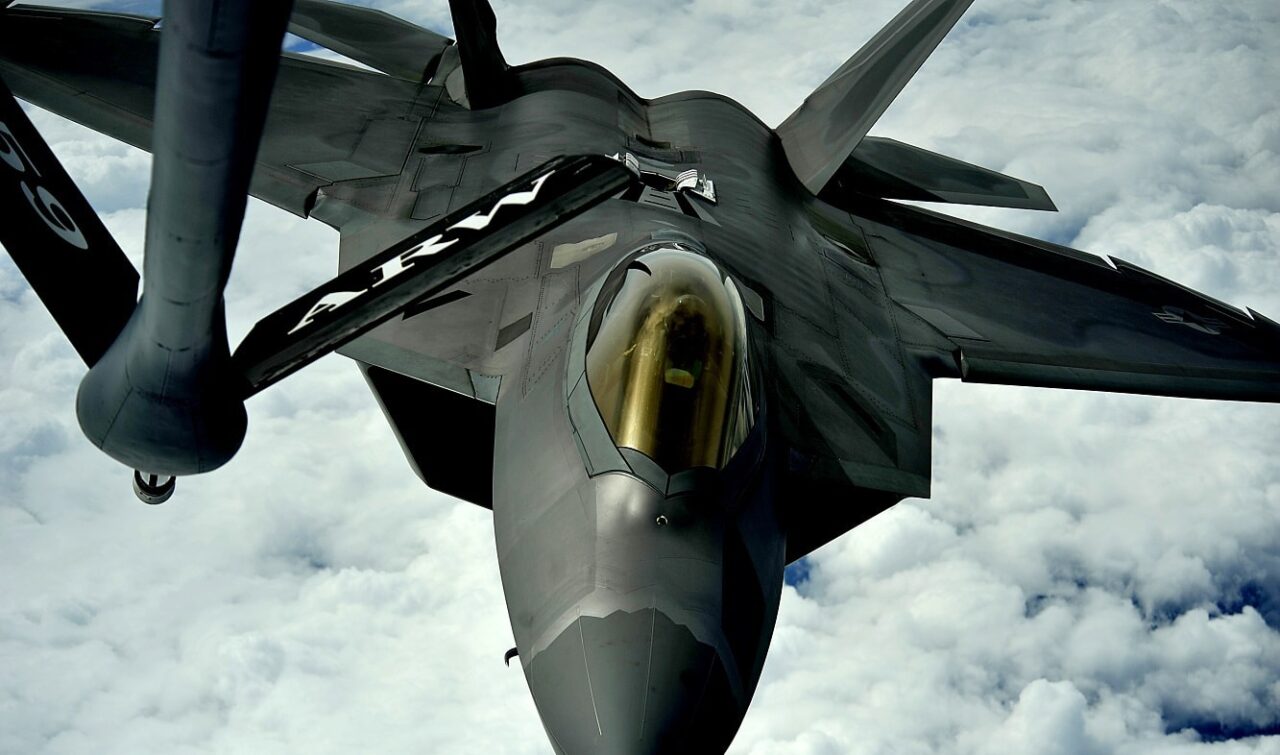
A 1st Fighter Wing’s F-22 Raptor from Joint Base Langley-Eustis, Va., pulls into position to accept fuel from a KC-135 Stratotanker with the 756th Air Refueling Squadron, Joint Base Andrews Naval Air Facility, Md., off the east coast on May 10, 2012. The first Raptor assigned to the Wing arrived Jan. 7, 2005. This aircraft was allocated as a trainer, and was docked in a hanger for maintenance personnel to familiarize themselves with its complex systems. The second Raptor, designated for flying operations, arrived Jan. 18, 2005. On Dec. 15, 2005, Air Combat Command commander, along with the 1 FW commander, announced the 27th Fighter Squadron as fully operational capable to fly, fight and win with the F-22.
In military planning, that’s called a lack of redundancy – meaning there aren’t enough aircraft to rotate through combat, maintenance, and training without significant gaps.
If a significant conflict were to break out with China or Russia, that shortfall would be felt. China’s air force, for example, is now believed to operate several hundred fifth-generation J-20 fighters and many more advanced fourth-generation jets.
Meanwhile, Russia continued to produce the Su-57, though in markedly smaller numbers.
Because the F-22 fleet is small, the Air Force can only send limited numbers to forward bases and must be cautious about overusing them.
It also can’t easily afford combat losses. And unlike the F-35, the Raptor was never exported. Congress banned sales to allies, meaning that the U.S. alone bears the cost of operating and maintaining the platform.
Even today, the Raptor is still widely regarded as the best air-superiority fighter ever built, but it will never be able to dominate every front in a high-intensity air war without support.
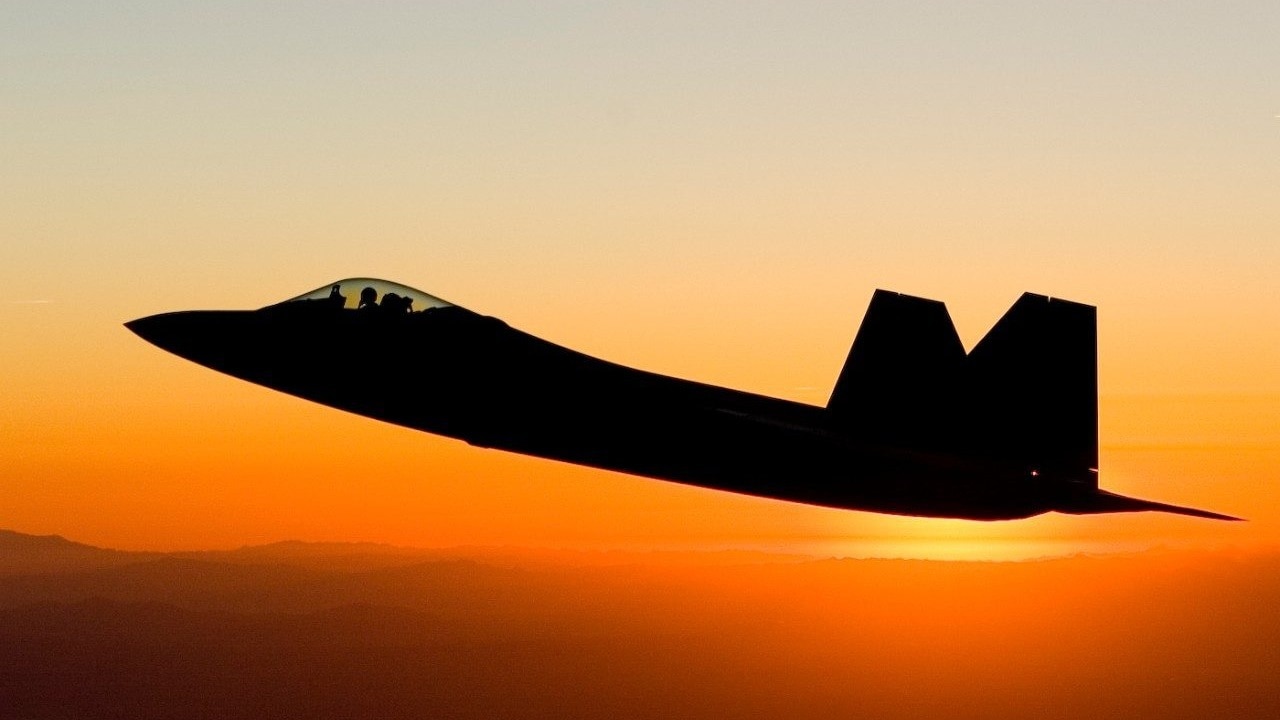
F-22 Raptor. Image Credit: Lockheed Martin.
Lessons for the Future
As the U.S. Air Force now turns toward its next-generation fighter program, Next Generation Air Dominance (NGAD), the F-22’s story offers some important lessons.
Most important for today is that investing in the latest high-end capability is good, but without sufficient numbers, the strategic utility may be somewhat hollow.
Buying small numbers of elite jets can be great in short-lived conflicts, but if a real war were to break out, it’s now possible that the United States could be outnumbered.
Quality matters, of course, but so too does quantity. Deterrence and war-fighting ability depends on having good scale.
The Air Force’s next fighter, NGAD, is expected to cost around $300 million per aircraft. If the U.S. can only afford to produce the plane in the dozens, rather than the hundreds, it could repeat the same mistake made with the F-22 – having the best technology in the world, but not enough aircraft to make a real difference in a real war.
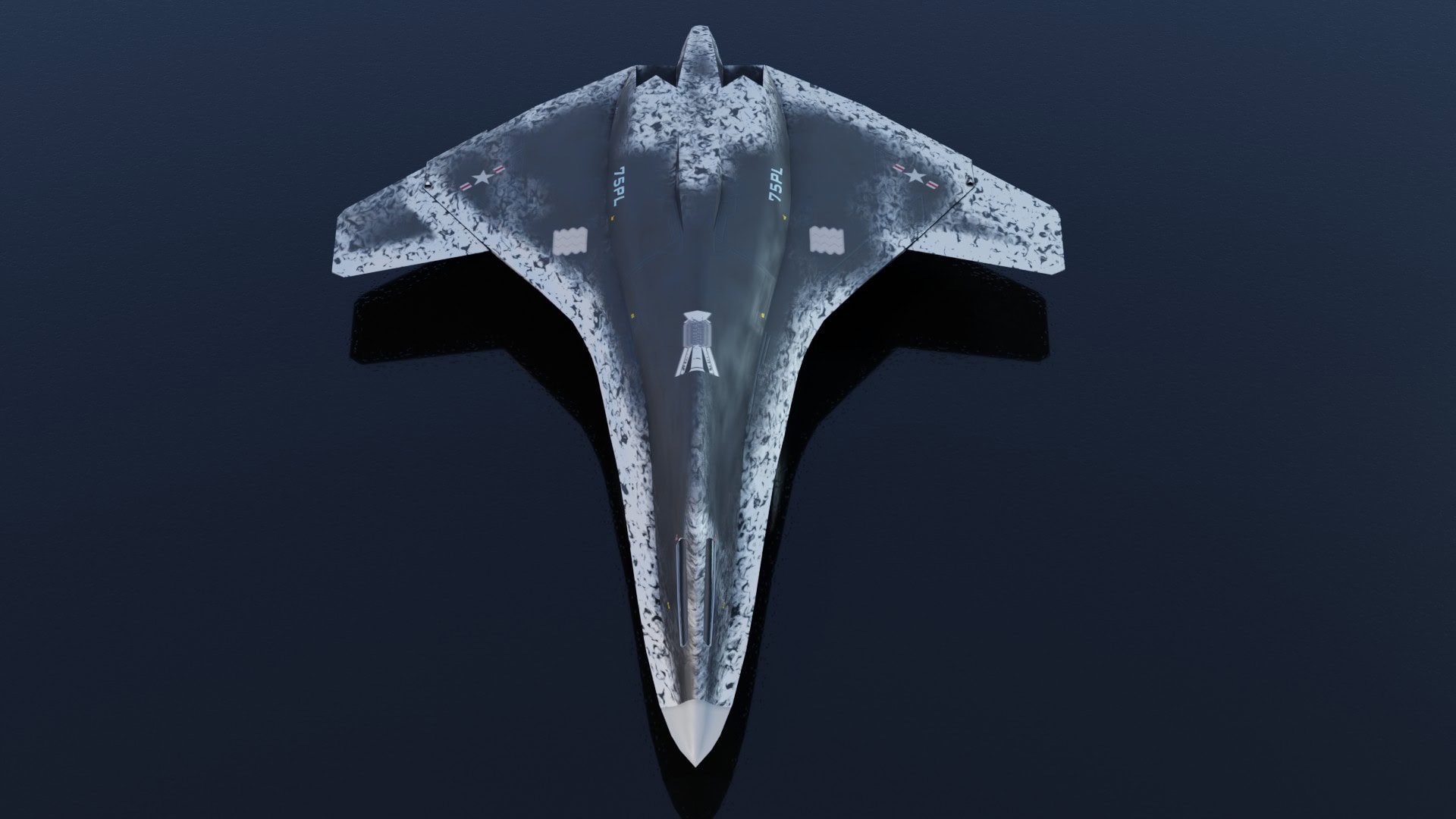
NGAD Fighter Mock Up. Image Credit: Creative Commons.
As the U.S. Air Force warns that it needs “hundreds” more fighters to meet rising threats, it’s essential that the Department of Defense responds to those calls and does so appropriately.
With China and Russia expanding production, too, delays or underinvestment in NGAD risk leaving the U.S. short again—this time, when competitors are finally beginning to catch up to the United States’ once-unchallenged technological lead.
About the Author:
Jack Buckby is a British author, counter-extremism researcher, and journalist based in New York. Reporting on the U.K., Europe, and the U.S., he works to analyze and understand left-wing and right-wing radicalization, and reports on Western governments’ approaches to the pressing issues of today. His books and research papers explore these themes and propose pragmatic solutions to our increasingly polarized society. His latest book is The Truth Teller: RFK Jr. and the Case for a Post-Partisan Presidency.