
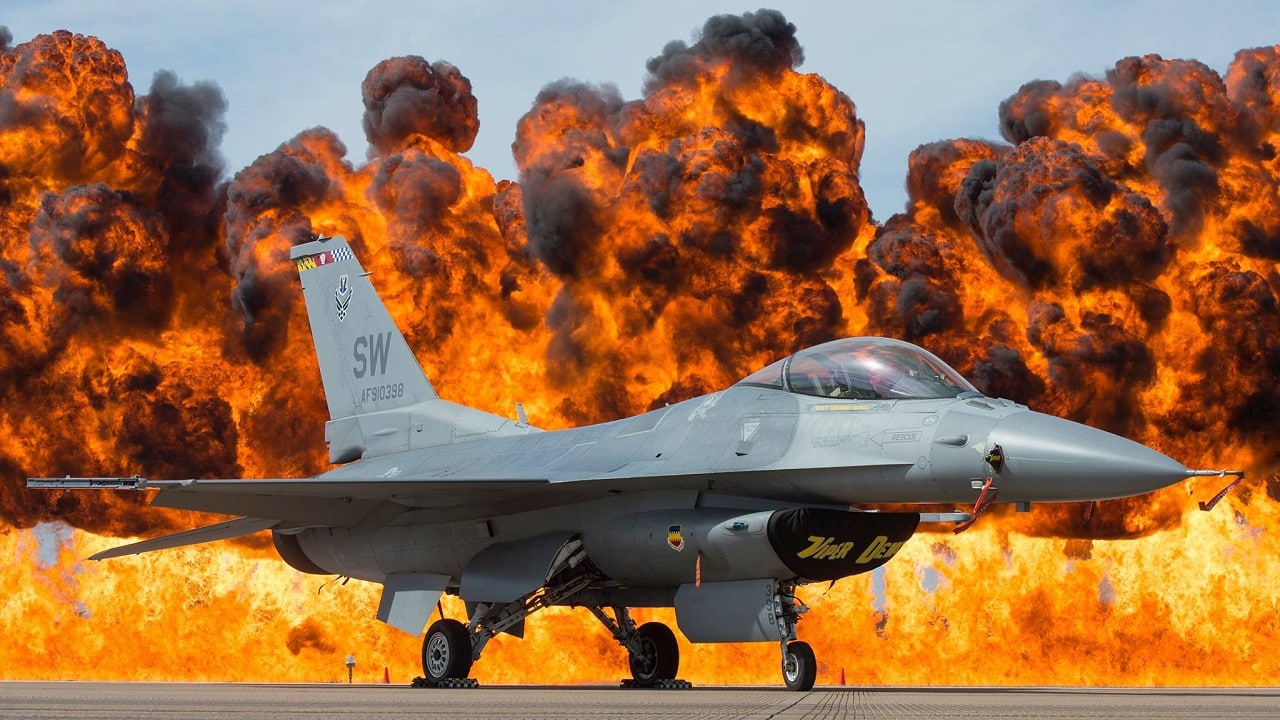
Key Points and Summary – In the 1970s, the Air Force’s new lightweight fighter, the F-16, almost made the jump to carrier decks. Under pressure to save money and streamline fleets, the Pentagon pushed the Navy to adapt the jet as a navalized “Vought 1600.”
-Engineers stretched and strengthened the F-16, added a tailhook, and beefed up its gear—but the single-engine design, low intake, dangerous on a crowded deck, and Sidewinder-only weapons fit worried Navy leaders. Northrop’s twin-engine YF-17,which evolved into the F/A-18 Hornet, ultimately won.
-The result: the Air Force got its F-16, the Navy got its Hornet, and both became legends.
F-16 vs F/A-18: Inside the Forgotten Dogfight for the Navy’s Future
Like the F-15, the F-16 nearly ended up on an aircraft carrier. The F-16 has been an incredible aircraft for the US Air Force. It has done it all, logging more than 19 million flight hours. Battle-tested? How about more than 400,000 combat sorties?
The F-16 has served in 25 countries, 4,600 of which were produced, and served as an air-to-air fighter, a ground attack aircraft, and an electronic warfare aircraft. It is highly maneuverable and has an outstanding combat range.
There is only one thing missing from the incredible multi-role fighter’s resume. That is carrier aircraft, and it nearly came to fruition.
The Vought 1600
The story begins during the 1970s when there was a fly-off of sorts between the YF-16 and the YF-17. The Air Force chose the General Dynamics YF-16 over the Northrop YF-17 in a lightweight fighter “fly-off.” The YF-16 was selected and became the F-16 Fighting Falcon.
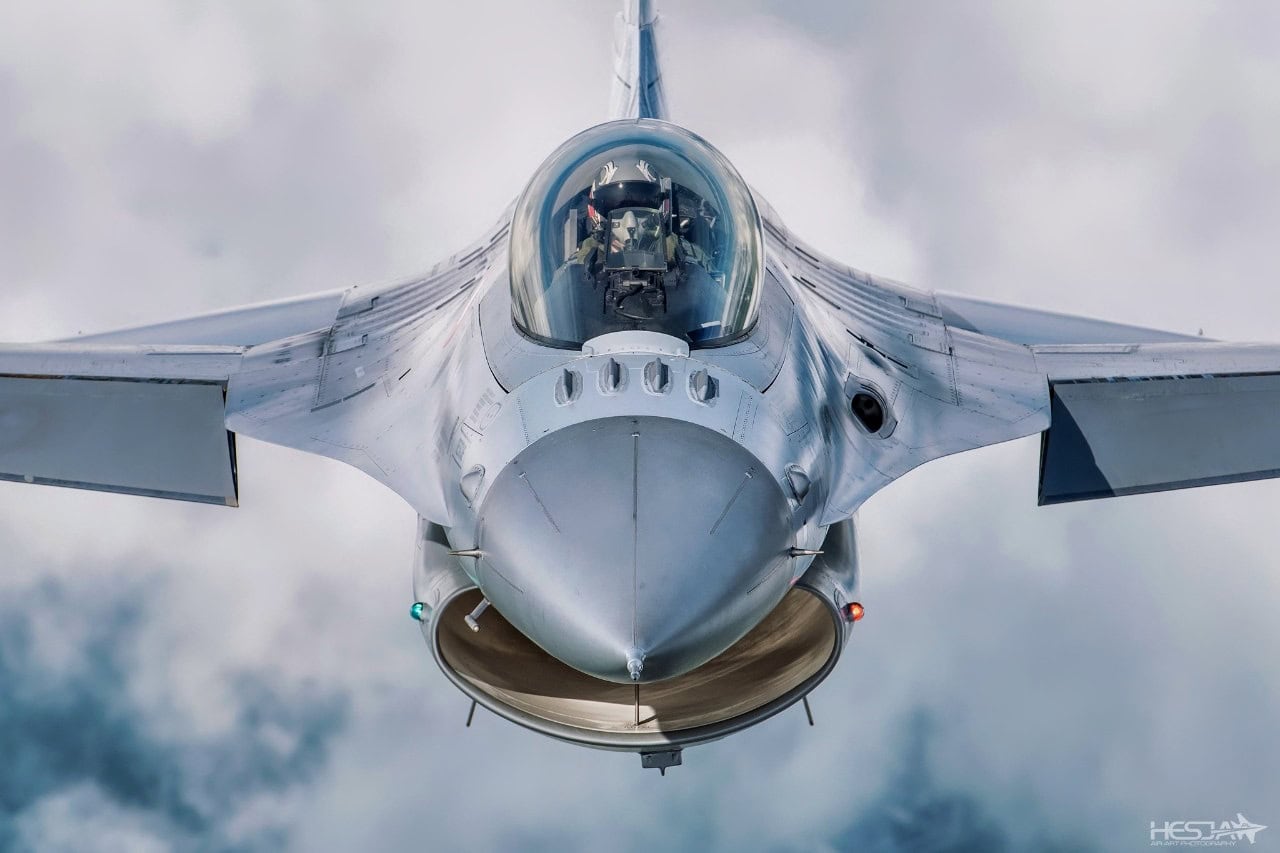
F-16 Fighter. Image Credit: Creative Commons.
In 1975, then-Secretary of Defense James Schlesinger pushed the US Navy to adopt the F-16. Schlesinger reasoned that the aircraft could fill a similar role for the US Navy and streamline logistics and production for both services.
The F-16 performed well in its pursuit of the Air Force contract, and Schlesinger reasoned that if the Navy could also find use for the Fighting Falcon, the Defense Department could procure the jet in more significant numbers.
Schlesinger’s rationale has proven correct 50 years later, as the Air Force, Navy, and Marines fly the F-35 Joint Strike Fighter.
Congress had already directed the Navy a year earlier to look to the LWF/ACF program’s competitors for its new Navy Air Combat Fighter (NACF) program. This program had replaced the Navy’s VFAX (Navy Fighter Attack Experimental) program, which had begun several months before, in April 1974, to replace the F-4, A-4, and A-7 aircraft on carriers.
The YF-16 and the YF-17 were lightweight prototype fighters first designed to serve as a lower-cost alternative to America’s most dominant air superiority fighter in the modern era, the F-15 Eagle. Again, the rationale behind the decision is similar to the F-22 and the F-35.
The YF-16 had performed better against the YF-17 in tests designed to satisfy the Air Force’s needs, but neither General Dynamics (F-16 manufacturer) nor Northrop (YF-17 manufacturer) had ever built a carrier fighter.
With a lucrative contract on the line, both firms sought partners with carrier aircraft experience. General Dynamics teamed up with Vought to convert their new F-16 Fighting Falcon into the Vought Model 1600, and Northrop paired off with McDonnell Douglas to improve their YF-17 design.
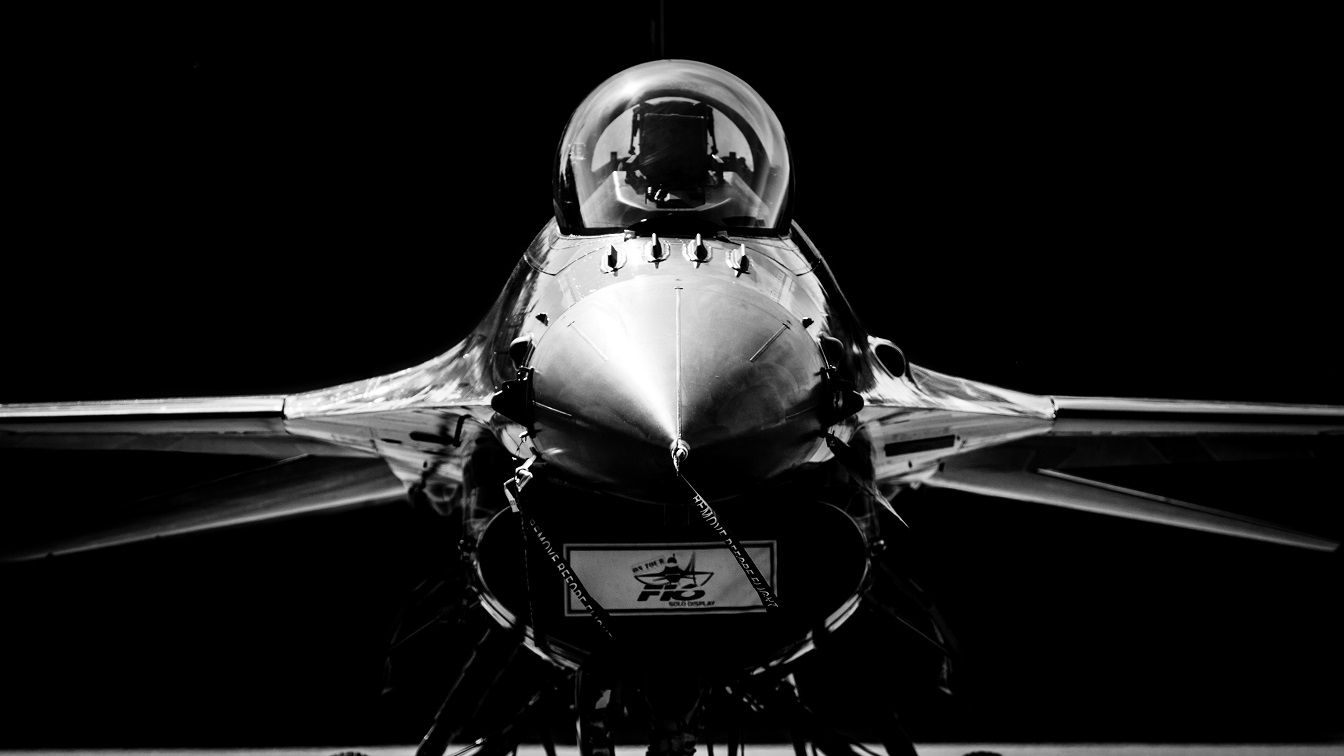
F-16. Image Credit: Creative Commons.
General Dynamics had to stretch the F-16 about three feet longer and two feet wider, with a larger wing area to meet the Navy’s requirements. Carrier landings are hard on the landing gear, so the system underwent changes to withstand the heavy-duty operation it would entail.
Engineers added a landing tail hook and reinforced the fuselage. The changes added 3,000 pounds to the aircraft. Its low-lying intake was located just aft of the front landing gear. The Navy considered that element a real risk on the flight deck of a Navy carrier, as it could suck unsuspecting sailors straight into it.
Vought had faced this issue before; the Vought F-8 Crusader’s large, low intake had already earned it the nickname “the Gator” because of its tenacity for gobbling up sailors. Despite this, the F-8 remained a favorite of the pilots.
But the Vought 1600/F-16 carried only AIM 9 Sidewinder air-to-air missiles and were clear-air-mass missiles. Operating in clouds, a radar missile like the AIM-7 Sparrow III was required, wrote retired Admiral James Hollowell, former Chief of Naval Operations.
The YF-17 Becomes the F-18
The YF-17 offered a second engine, which could mean the difference between getting a jet back to its carrier or having to dump it in the sea if anything went wrong with one of them. Ultimately, the intended weapons for each platform may have become the deciding factor.
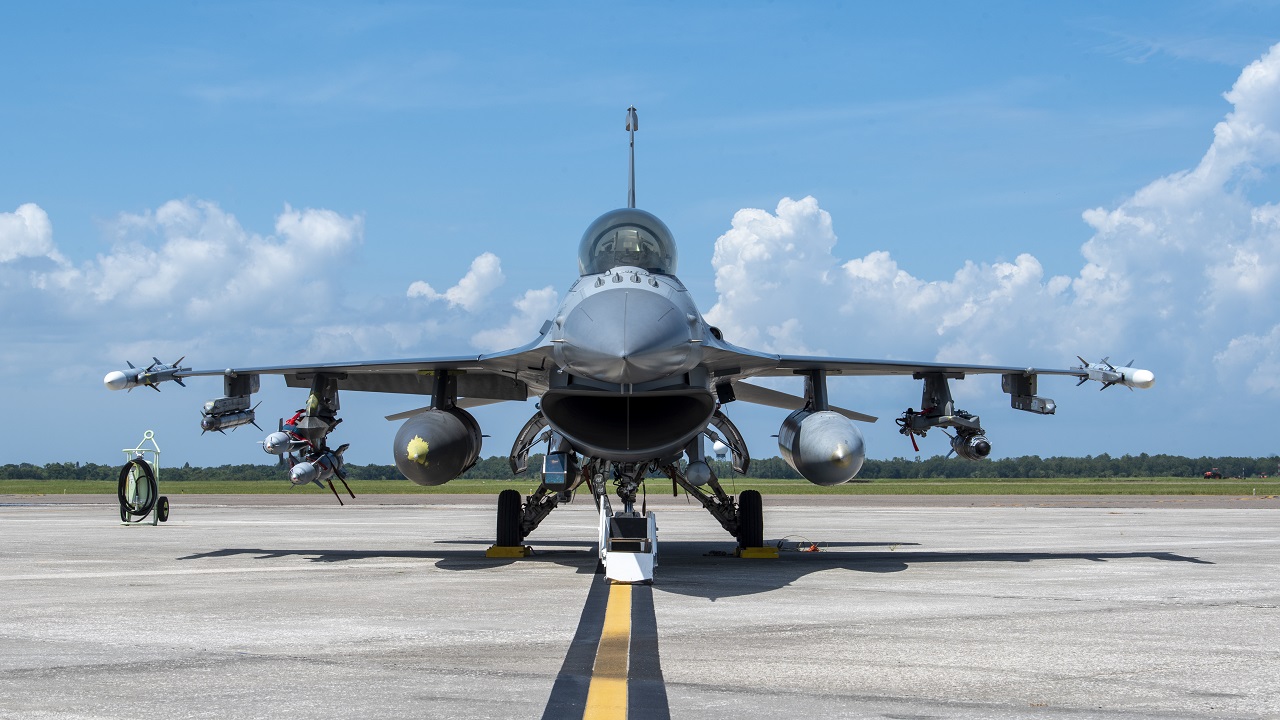
A U.S. Air Force F-16 Fighting Falcon aircraft sits parked on flight line at MacDill Air Force Base, Sept. 8, 2021. (U.S. Air Force photo by Airman 1st Class Lauren Cobin).
So, the Navy, over Schlesinger’s attempts to push the F-16 on the service, chose the YF-17. This aircraft became the F/A-18 Hornet. The F/A-18 went through models A-D. Then, it became the F/A-18E/F Super Hornets and the EA-18G Growlers.
The F-16 developed into one of the most successful multi-role aircraft in the world. It eventually got the AIM-7 Sparrow radar-guided, air-to-air missile and the AIM-120 advanced medium-range air-to-air missile (AMRAAM).
Ultimately, both services ended up with the right aircraft for their missions.
Both are legendary aircraft.
About the Author: Steve Balestrieri
Steve Balestrieri is a National Security Columnist. He served as a US Army Special Forces NCO and Warrant Officer. In addition to writing on defense, he covers the NFL for PatsFans.com and is a member of the Pro Football Writers of America (PFWA). His work was regularly featured in many military publications.