
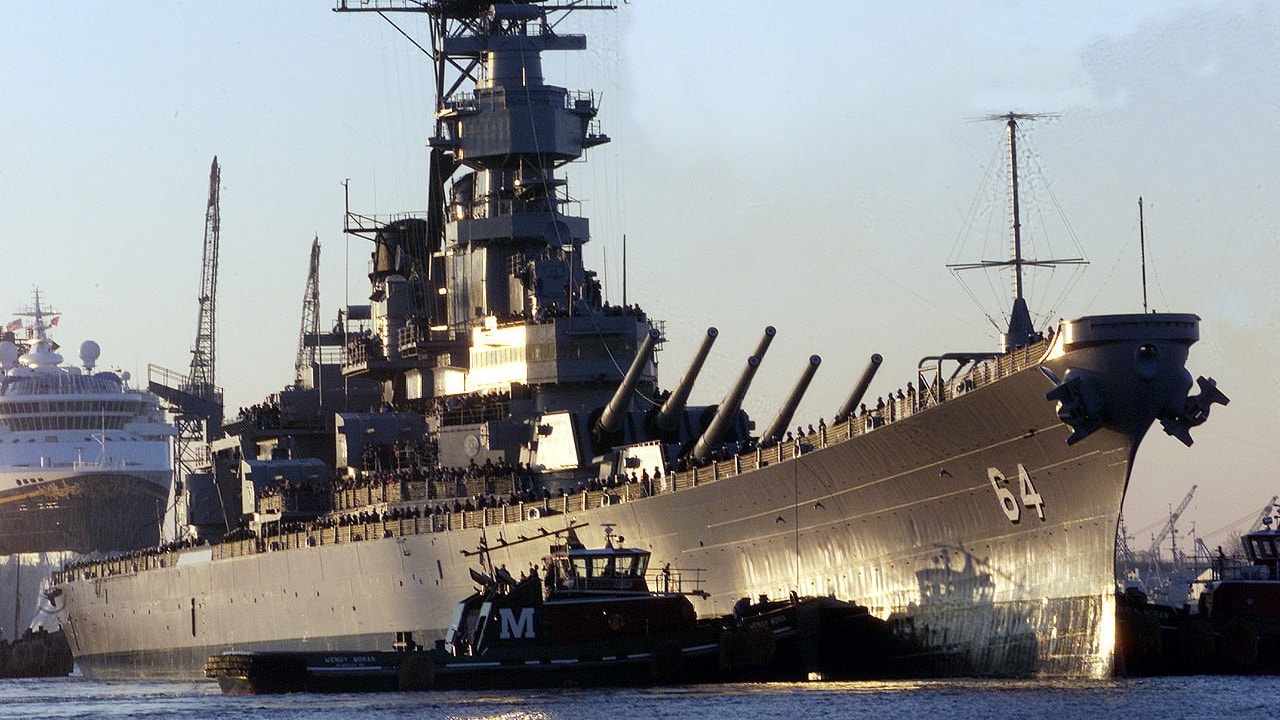
Key Points and Summary – President Donald Trump’s proposed “Trump-class” battleships—flagships of a new “Golden Fleet”—would be huge missile-laden surface combatants meant to revive capital warships and plug the Navy’s dwindling VLS capacity.
-On paper, they promise massive firepower and a visible answer to China’s growing fleet.
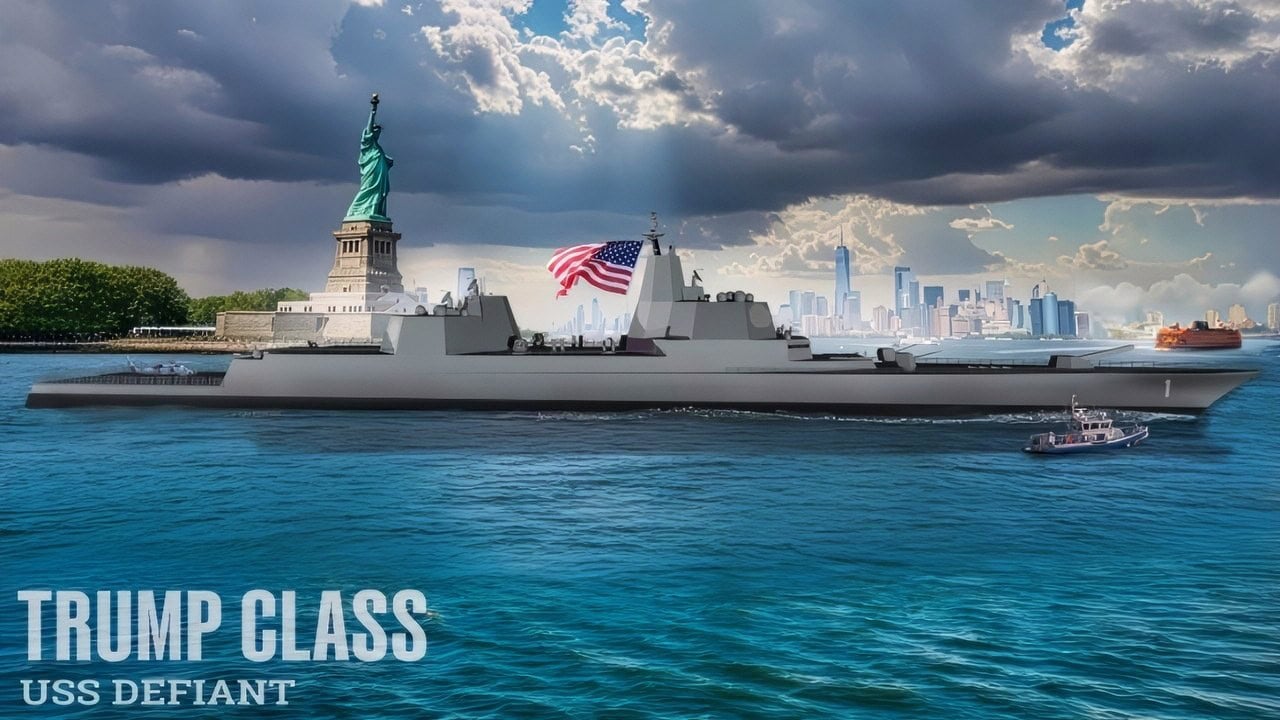
Trump-Class Battleship. Image Credit: Creative Commons/White House.
-In practice, they collide with reality: overstretched U.S. shipyards, chronic cost overruns, and a 10–15 year design-to-fleet timeline.
-History from Zumwalt to Constellation suggests delays are inevitable, while a change of administration in 2028 could kill or rename the program outright.
-The Navy may want the capability—but politics and industry may not cooperate.
Trump-Class Battleship: Will Trump’s “Golden Fleet” Really Happen?
President Donald Trump unveiled plans for what he called a new class of U.S. Navy battleships – the “Trump-class” – on December 22, describing the planned vessels as the centerpiece of a new “Golden Fleet” that will secure and expand American seapower.
The administration is presenting the plans as a revival of the capital warship – a massive, heavily armed surface combatant designed to anchor fleet operations, and a concept that the Navy walked away from decades ago.
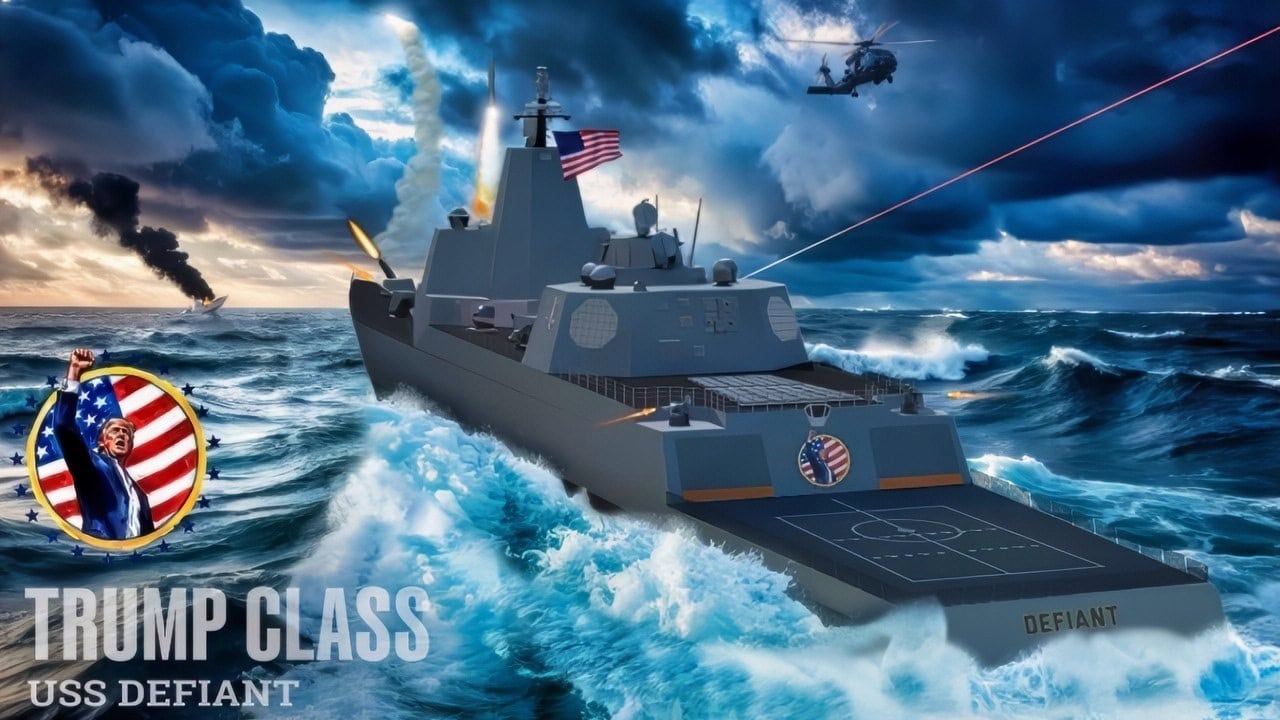
Trump-Class Battleship. Image Credit: Creative Commons/White House Photo.
The news is exciting given recent discourse about the roles of surface combatants and aircraft carriers in modern combat, and the increasingly vulnerable nature of those ships due to adversaries’ growing reliance on long-range missiles, drones, and autonomous systems.
What the Trump-Class Is – and What Was Actually Announced
Speaking at his Mar-a-Lago resort in Florida with Defense Secretary Pete Hegseth, Secretary of the Navy John Phelan, and Secretary of State Marco Rubio, President Trump announced that the U.S. will commission a new series of heavily armed battleships.
Trump said that the construction of the Trump-class USS Defiant will begin soon. The ships will be equipped with “extremely lethal” and hypersonic weapons and would, according to the president, become the new flagships of the U.S. Navy.
The announcement comes amidst a broader ramp-up of U.S. military capabilities, though notably as the Navy sees funding for its next-generation fighter jet program slashed in favor of the U.S. Air Force’s NGAD efforts. During the announcement, the president said that two new battleships have already been approved, and plans are in place to secure as many as 25 new ships.
“They’ll be the fastest, the biggest, and by far, 100 times more powerful than any battleship ever built,” the president said.
According to Navy materials, the Trump class is envisioned as a new class of large surface combatants significantly larger than the Navy’s current destroyers, with a displacement of roughly 30,000 to 40,000 tons – approximately three times the size of the Arleigh Burke-class destroyers.
During the announcement, Secretary Phelan described the new class as an urgent requirement for the Navy, comparing it to the Iowa-class battleships that served as the backbone of American naval power throughout the 20th century.
“The future Trump-class battleship, the USS Defiant, will be the largest, deadliest and most versatile and best-looking warship anywhere on the world’s oceans,” Phelan said.
“The Iowa was designed to go on the attack with the biggest guns, and that’s exactly what will define the Trump-class battleships: offensive firepower from the biggest guns of our era,” he continued, adding that the boats are now just designed to defend, but to “reach out and kill” adversaries.
Will the Trump-Class Come to Fruition?
If built, the Trump-class battleships would be intended to serve as high-capacity missile platforms and fleet command nodes, filling a gap the U.S. Navy itself has acknowledged is becoming apparent as its aging Ticonderoga-class cruisers retire without a direct replacement.
The Navy has repeatedly warned that its overall vertical launch system (VLS) capacity – meaning the number of missiles the fleet can carry at sea – is declining just as long-range strike requirements are increasing, particularly in the Indo-Pacific.
In theory, a very large surface combatant could address that problem by carrying significantly more missiles, power generation, and sensors than existing destroyers, while acting as a command ship in broadly distributed maritime operations.
The geopolitical logic here is clear: U.S. naval planning is increasingly oriented toward a potential conflict with China, now that its People’s Liberation Army Navy is fielding the world’s largest fleet by hull count and is rapidly expanding its missile capability.
However, the timeline and feasibility of Trump’s plans are major constraints. Modern U.S. surface combatants typically take 10-15 years from concept to commissioning.
History Says Good Luck, U.S. Navy
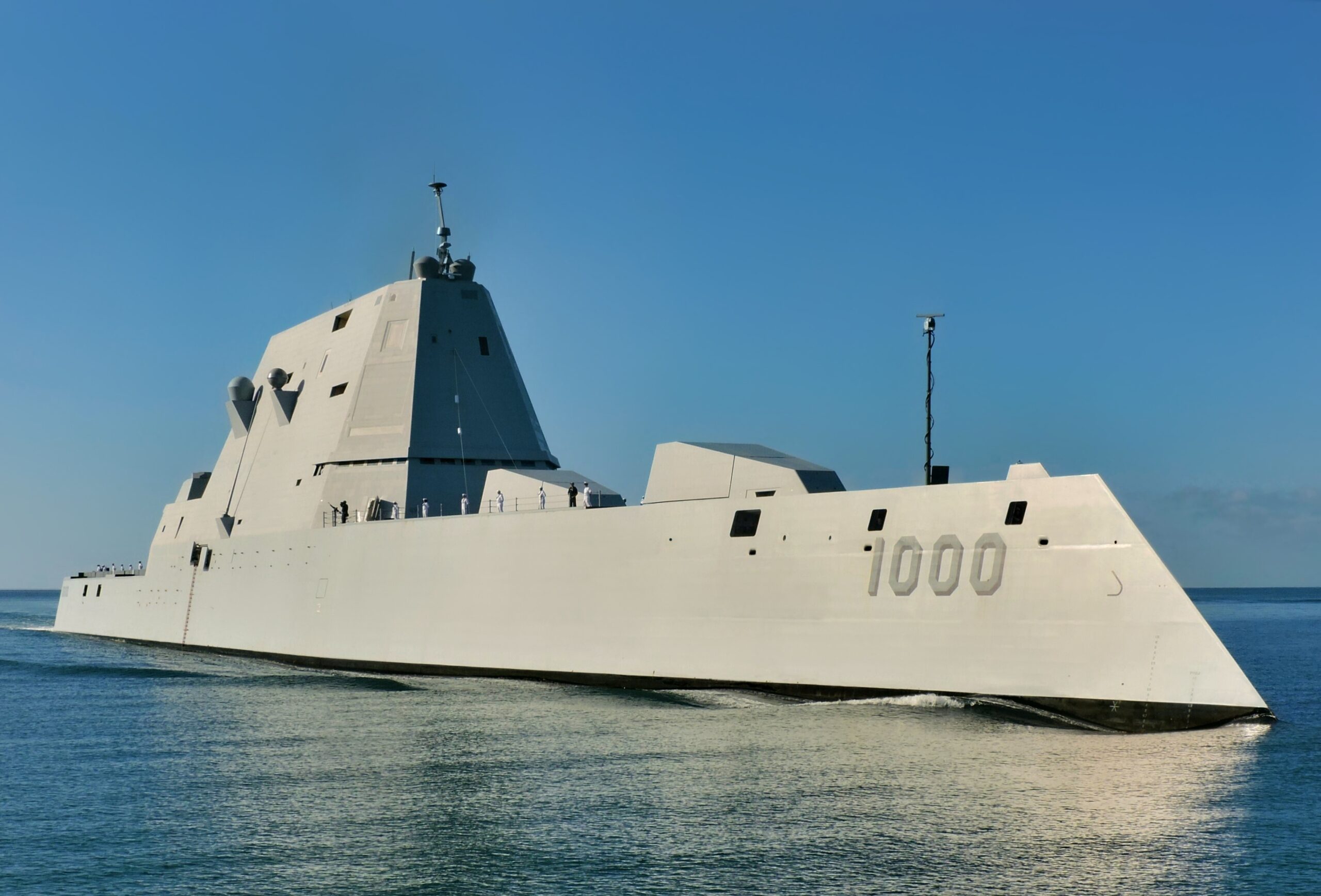
Zumwalt-Class Destroyer U.S. Navy. Image Credit: Creative Commons.
The Zumwalt-class destroyer, which is often cited as a cautionary example of how these programs can go, was first proposed in the late 1990s and did not achieve initial operational capability until 2020 – after severe cost overruns and capability reductions.
Even today, the Navy is struggling to deliver frigates and submarines on schedule due to shipyard capacity and workforce shortages.
And if that wasn’t enough, Trump also faces political challenges. It’s hard not to imagine a Democratic presidential candidate winning in 2028 and immediately canceling Trump’s plans in the same way former President Joe Biden reversed every Trump executive order on the day he assumed office.
The likelihood of 25 ships being built is exceptionally low, and the president may be lucky if the first two are built any time soon.
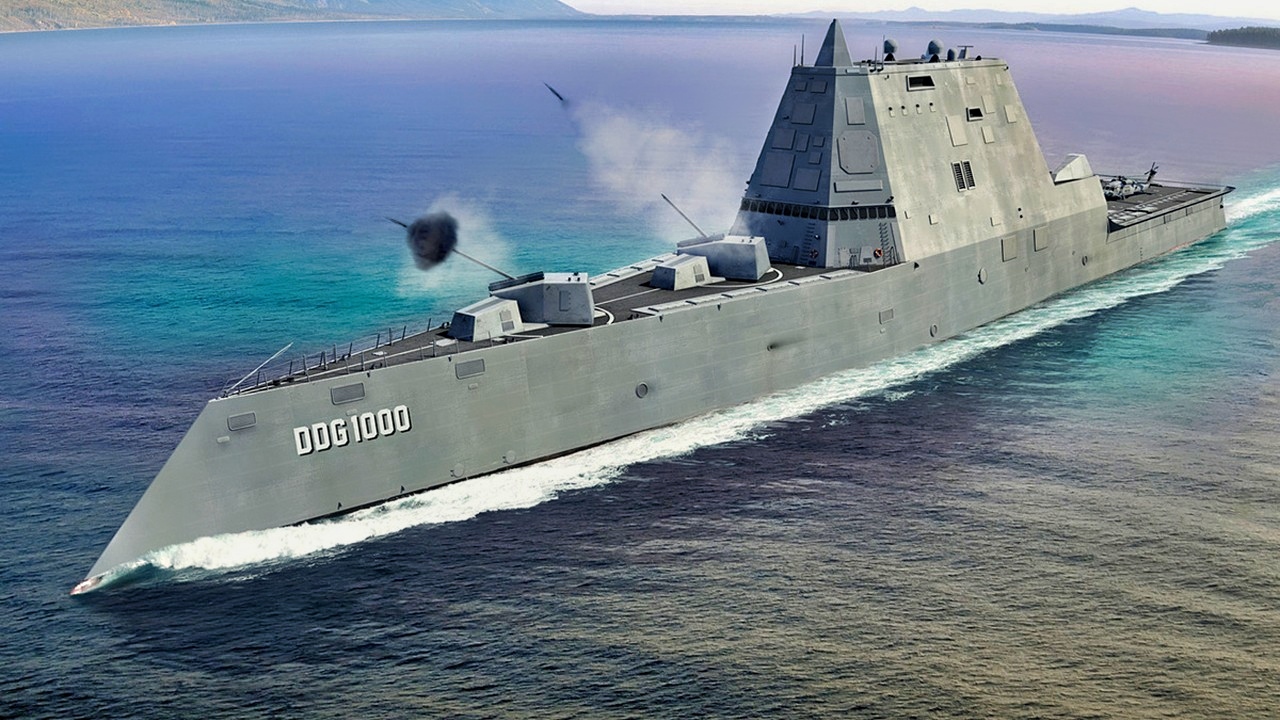
Zumwalt-Class U.S. Navy Destroyer. Image Credit: Creative Commons.
Historical precedent suggests that the U.S. industrial base may not be up to the task, that cost overruns and schedule slippage are likely to occur, and that political partisanship could stand in the way of Trump realizing a capability the U.S. Navy genuinely needs.
About the Author:
Jack Buckby is a British author, counter-extremism researcher, and journalist based in New York who writes frequently for National Security Journal and 19FortyFive. Reporting on the U.K., Europe, and the U.S., he analyzes and understands left-wing and right-wing radicalization and reports on Western governments’ approaches to the pressing issues of today. His books and research papers explore these themes and propose pragmatic solutions to our increasingly polarized society. His latest book is The Truth Teller: RFK Jr. and the Case for a Post-Partisan Presidency.