
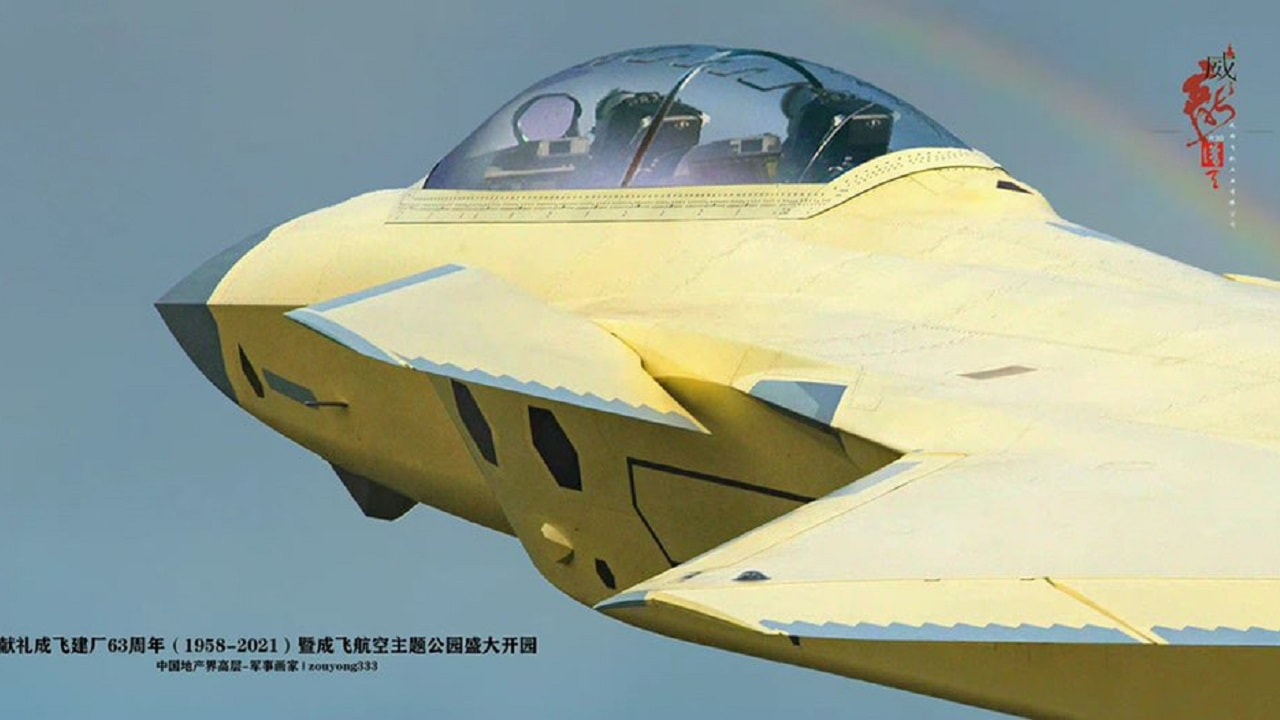
Key Points and Summary – Rising Indo-Pacific tensions are pushing a renewed debate over the J-20 Mighty Dragon versus the F-22 Raptor.
-China’s J-20 brings numbers, range, and long-reach missiles, but often trades away stealth when it carries weapons externally and lacks a built-in cannon.
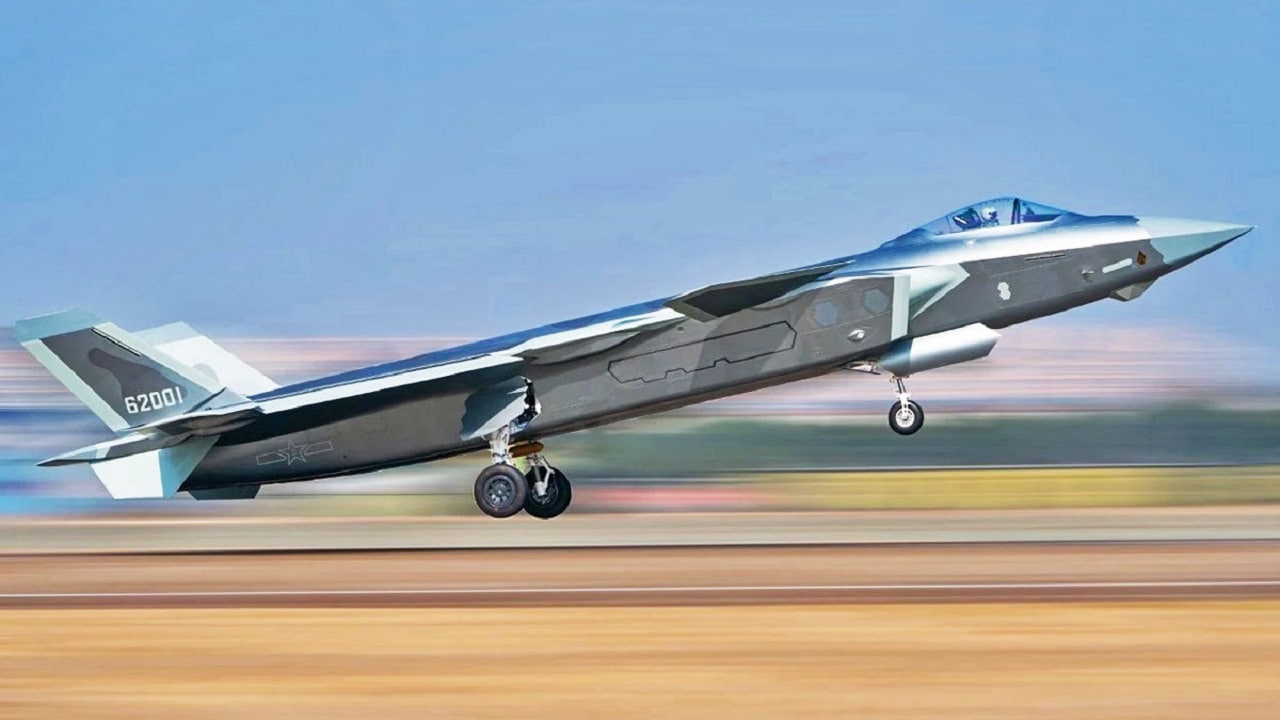
China’s J-20 stealth fighter. Image Credit: Creative Commons.
-The F-22 remains a pure air-superiority jet, blending very low observability, supercruise, and thrust-vectoring agility for brutal within-visual-range fights.
-The piece argues Beijing’s simulation-driven claims are inflated, and that training, integration, and the Raptor’s stealth-first design still tilt the matchup toward the United States in most realistic scenarios.
-Even with loyal wingmen, the Raptor’s advantages make a first shot likely.
In 4 Words: J-20 Might Be Hype
J-20 vs F-22: The Real Fighter That Wins in the Skies
As tensions with China continue to rise in the Indo-Pacific, Chinese aircraft are increasingly engaging in belligerent actions.
Recently, Chinese J-15 fighters operating from the Chinese carrier CNS Liaoning twice locked radar targets on Japanese F-15 fighters that were monitoring the carrier and her aircraft, which were violating Japan’s airspace.
On Thursday, US and Japanese aircraft conducted a series of drills over Japan’s airspace, a day after Chinese and Russian bombers flew together around western Japan.
China is pushing on all fronts in the Pacific, trying to intimidate its neighbors. And this is how conflicts begin.
China wants Taiwan, the small island nation, which was the last vestige of freedom, where the Nationalists fled after Chairman Mao and the Communists took over the country in October 1949, following World War II. China wants a bloodless takeover, especially since it wants control of the lucrative semiconductor industry.
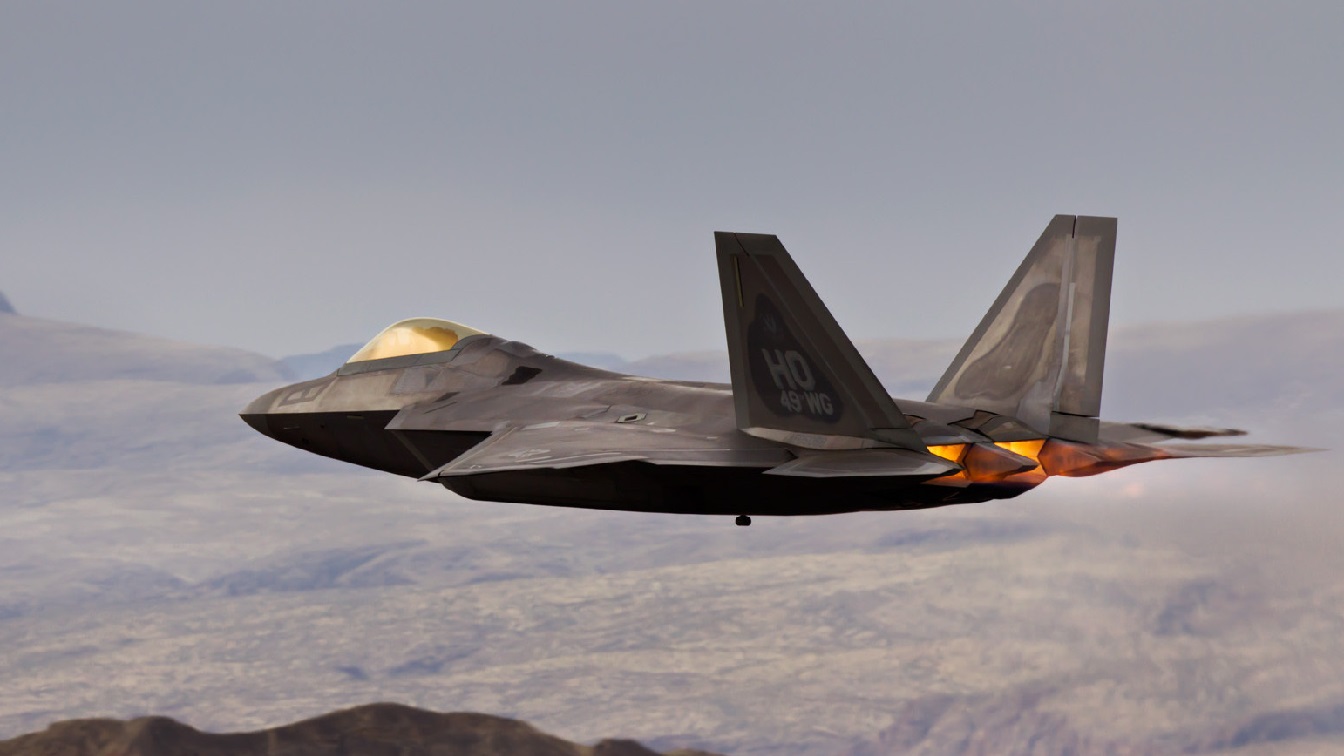
F-22 Raptor. Image Credit: Creative Commons.

F-22 Raptor. Image: Creative Commons.
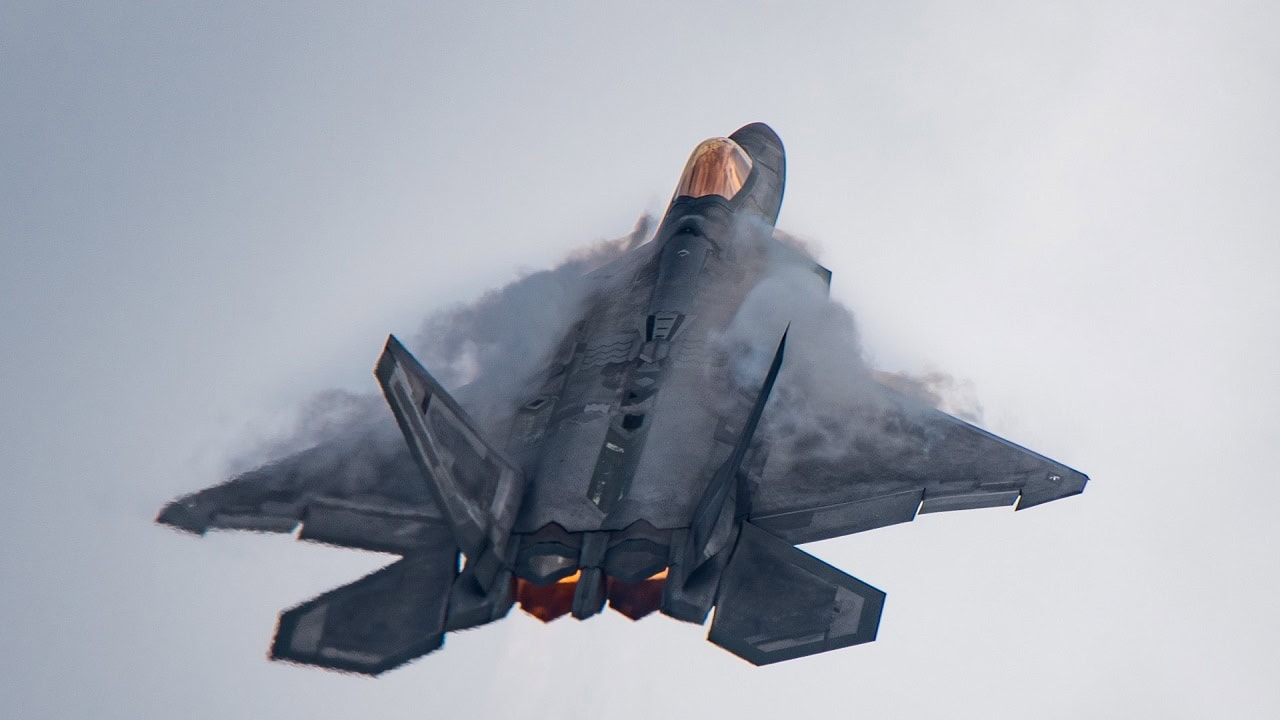
F-22 Raptor. Image Credit: Creative Commons.
Taiwan produces more than 60 percent of the world’s semiconductors and over 90 percent of the world’s most sophisticated chips.
So, while China wants a reunification of its people, the US currently supports Taiwan. There’s the rub. And in its insistence on taking the island, China has claimed ownership of a large chunk of the Pacific and has built bases on the Spratly Islands off the coast of the Philippines in the First and Second Island Chains.
All signs point to a possible conflict with the US, South Korea, the Philippines, Australia, and Japan in the not-so-distant future. And China is modernizing its military. Its Air Force and Navy are growing by leaps and bounds.
Which Aircraft Would Be First Used In a Conflict?
The Chengdu J-20 Mighty Dragon was built in no small part thanks to documents stolen by Chinese espionage from the US on the F-22, F-35, and the Russian MiG-1.44.
The US F-22 Raptor has been the standard against which all fighter aircraft have been measured for more than 20 years. Yet it still sits at the top of the mountain in terms of dogfighting ability, stealth, supercruise ability, maneuverability, and integrated avionics.
So, which aircraft is most likely to defeat the other in the skies? Let’s look at each aircraft.
China’s J-20 Mighty Dragon
The Chinese J-20 fighter was designed and built by the Chengdu Aircraft Industry Group. The J-20 “Mighty Dragon” is a fifth-generation fighter with the NATO designation FAGIN.
The J-20 is a large aircraft with a wingspan of 44 feet, a length of 67 feet, and a maximum take-off weight (MTOW) of 81,660 pounds.
While early models of the J-20 used twin Russian AL-31FM2 engines, based on those that powered the Russian Sukhoi Su-27, later models switched to Chinese WS-10B powerplants as part of a broader transition of China’s fighter fleet to domestically produced engines.
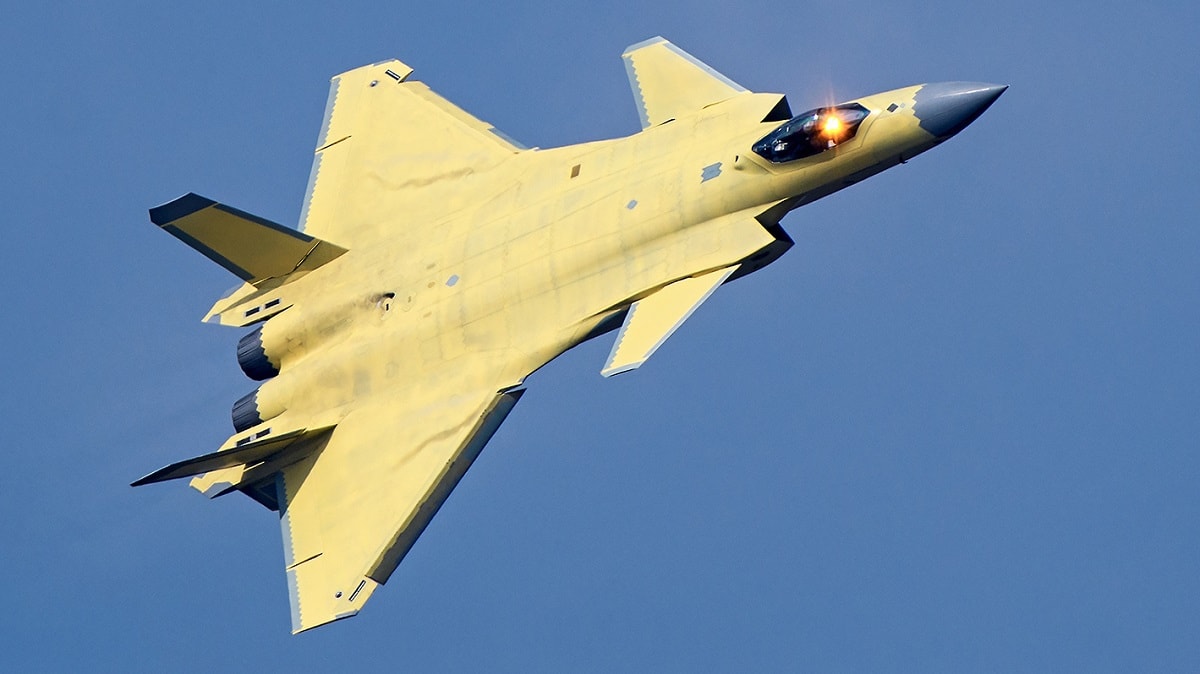
J-20. Image: Chinese Internet
The J-20 has also been seen testing a new and more powerful WS-15 engine. With WS-10 engines, the J-20 has a maximum speed of Mach 2.
The jet is capable of carrying various weapons systems, including the very long-range PL-15 missile, PL-21 long-range missile, and the LS-6 precision-guided bomb.
First seen in November 2024, the J-20S is a two-seat variant under development. It is a long-range, multi-role, stealthy fighter jet that can also team up with unmanned drones and aircraft. The “loyal wingman” concept that the US is also testing. Currently, China has between 270 and 300 J-20 aircraft.
The F-22 Raptor Remains The Standard
The F-22 Raptor remains the world’s best pure fighter aircraft, but its service window is closing. The Air Force plans to replace the Raptor in 2030 with the F-35 and the Pentagon’s Next Generation Air Dominance (NGAD) fighter, the F-47.
“We’ve already built and flown a full-scale [sixth generation] flight demonstrator in the real world, and we broke records in doing it,” Will Roper, Director of the Pentagon’s Strategic Capabilities Office, told Defense News in 2020. “We are ready to go and build the next-generation aircraft in a way that has never happened before.”
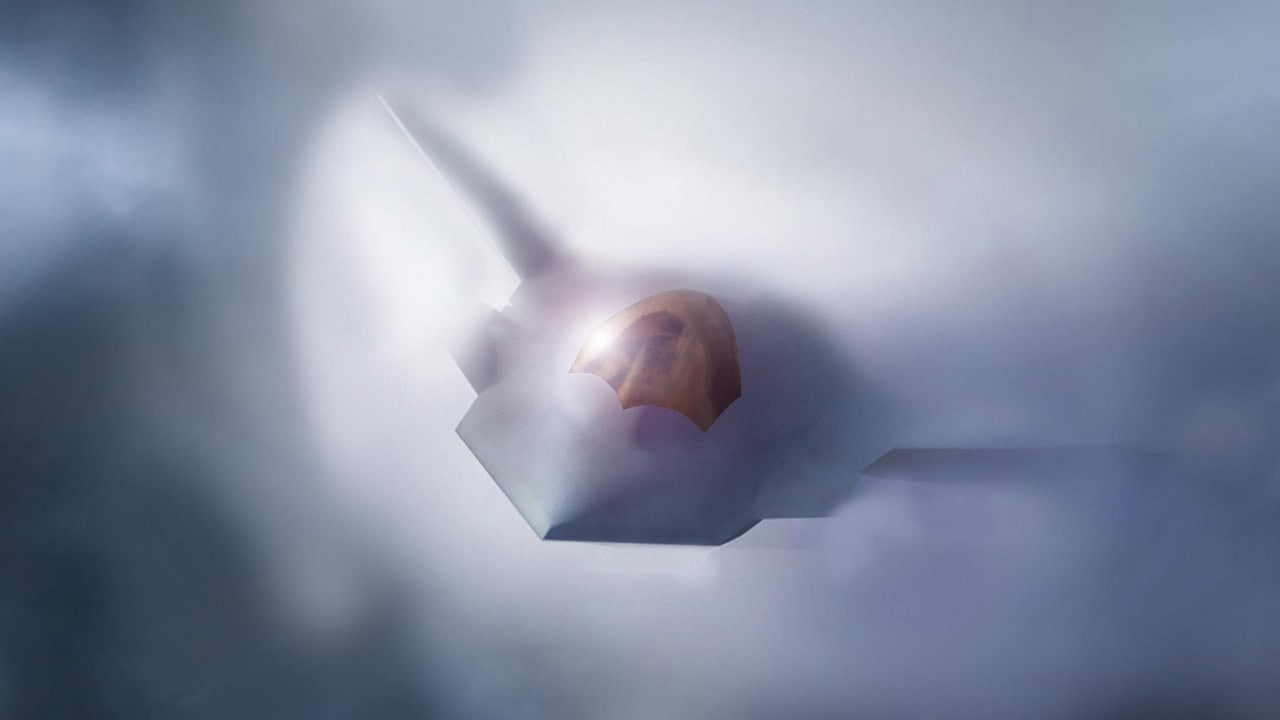
F-47 Fighter. Image Credit: U.S. Air Force.
However, the US Air Force’s decision to prematurely halt F-22 Raptor production at just 186 aircraft was a “strategic blunder” that has created a dangerous “air superiority gap.”
What makes the F-22 great in a dogfight is the aircraft’s thrust vectoring capabilities.
Its two engines have specially designed nozzles at their ends that can move on a vertical plane to vector the aircraft’s 70,000 pounds of thrust in one direction even if the aircraft is heading in another, thus allowing the F-22 to do some impressive acrobatics, as well as leverage a highly high angle of attack during a within-visual-range engagement.
The Raptor’s top speed is Mach 2.25 or 1,500 mph, powered by the Pratt & Whitney F119 turbofan engines.
The USAF currently has approximately 150 combat-ready F-22s in its inventory.
Comparisons Between the J-20 and the F-22
While the J-20 can carry an enormous payload, most of it must be carried on external pylons, which will reduce its stealth capability. Due to the size of its long-range missiles, it can have only four internally. The F-22 can carry six AIM-120 AMRAAMs and two AIM-9X Sidewinders in its internal weapons bay.
And stealth is already a factor that the J-20 is behind the Raptor. The J-20’s radar cross-section is about 35 meters, or about 100 times more than the Raptor, not counting the additional weapons on pylons.
The J-20 lacks a cannon, which could mean the designers didn’t intend it as a dogfighter. The Chinese may view the J-20 in a more interceptor-like role, utilizing its long-range missiles to penetrate opposing air defenses by engaging and destroying enemy fighter patrols, early warning aircraft, and refueling tankers.
The speed of the Raptor is about 1,500 mph. Reports of the J-20’s new WS-15 engine now put it roughly on par with it. The J-20 has a considerable advantage in range, with a combat range of about 1,100 miles, while the Raptor has a range of about 650.
However, the Air Force is working on a conformal external fuel tank for the F-22 and F-35 that won’t affect its stealth, similar to what Israel did with their F-35I Adir fighters.
Chinese Computer Programs Try To Skew The Facts
Headlines from China recently featured statements from Chinese computer programmers who posted that the J-20 would win engagements 95 percent of the time against the F-22.
However, that is if the J-20s had two “loyal wingmen.” The US is also developing the same program.
The Collaborative Combat Aircraft (CCA) program is a US Air Force initiative to develop a new type of uncrewed, jet-powered aircraft that will operate alongside and collaborate with crewed fighter jets. These are already flying and being tested.
In 4 Words: The F-22 Raptor Wins
However, in the same computer simulations conducted by Chinese programmers, it was reported that a single J-20 equipped with eight medium-range air-to-air missiles had a less than 10 percent chance of defeating an F-22 equipped with six AIM-120C missiles.
The Raptor is still the king of the air superiority fighters.
About the Author: Steve Balestrieri
Steve Balestrieri is a National Security Columnist. He served as a US Army Special Forces NCO and Warrant Officer. In addition to writing on defense, he covers the NFL for PatsFans.com and is a member of the Pro Football Writers of America (PFWA). His work was regularly featured in many military publications.