Synopsis – The piece argues that Vladimir Putin’s record—mass violence, repression, and open imperial intent—makes it implausible that a U.S. president could genuinely believe Moscow wants a just peace in Ukraine.
-If Trump claims Putin seeks peace, the author offers two broad explanations: either Trump is executing a calculated strategy (flattery and misdirection to maneuver toward a deal), or he is indifferent to Putin’s methods and drawn to strongman politics—an outlook that would undermine any honest-broker role.
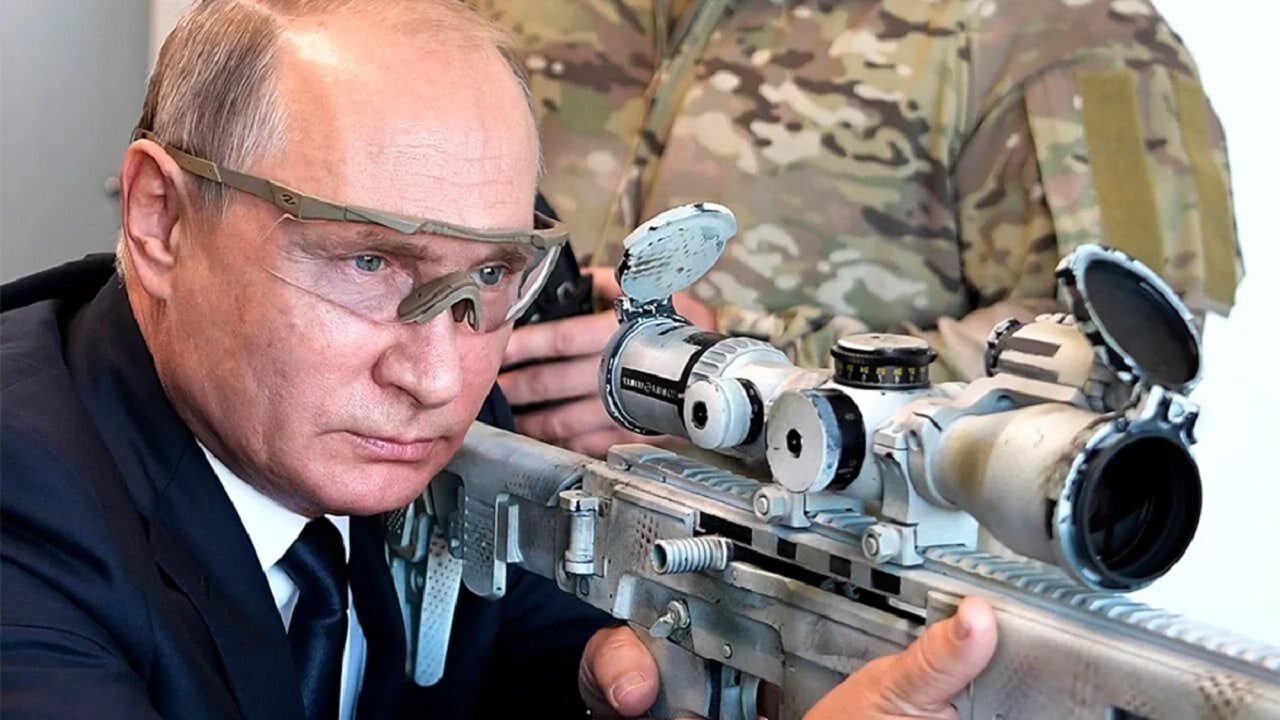
Russian President Putin testing a new sniper rifle. Image Credit: Russian State Media.
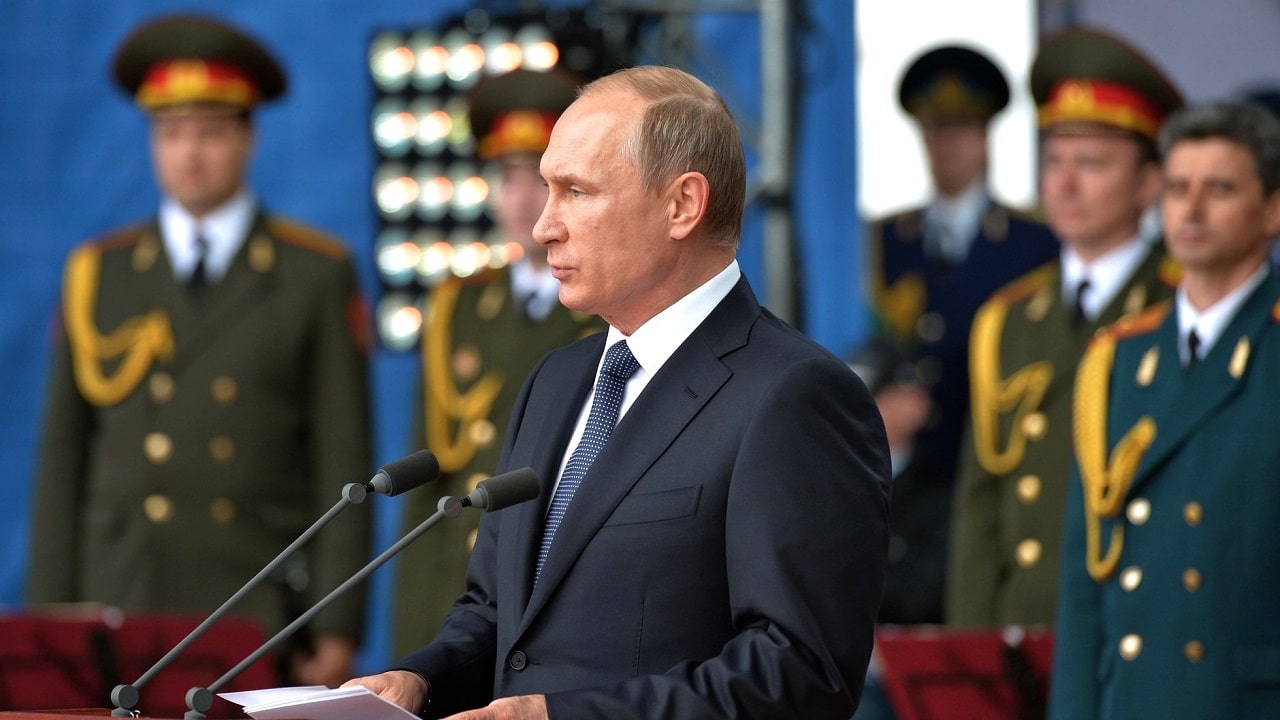
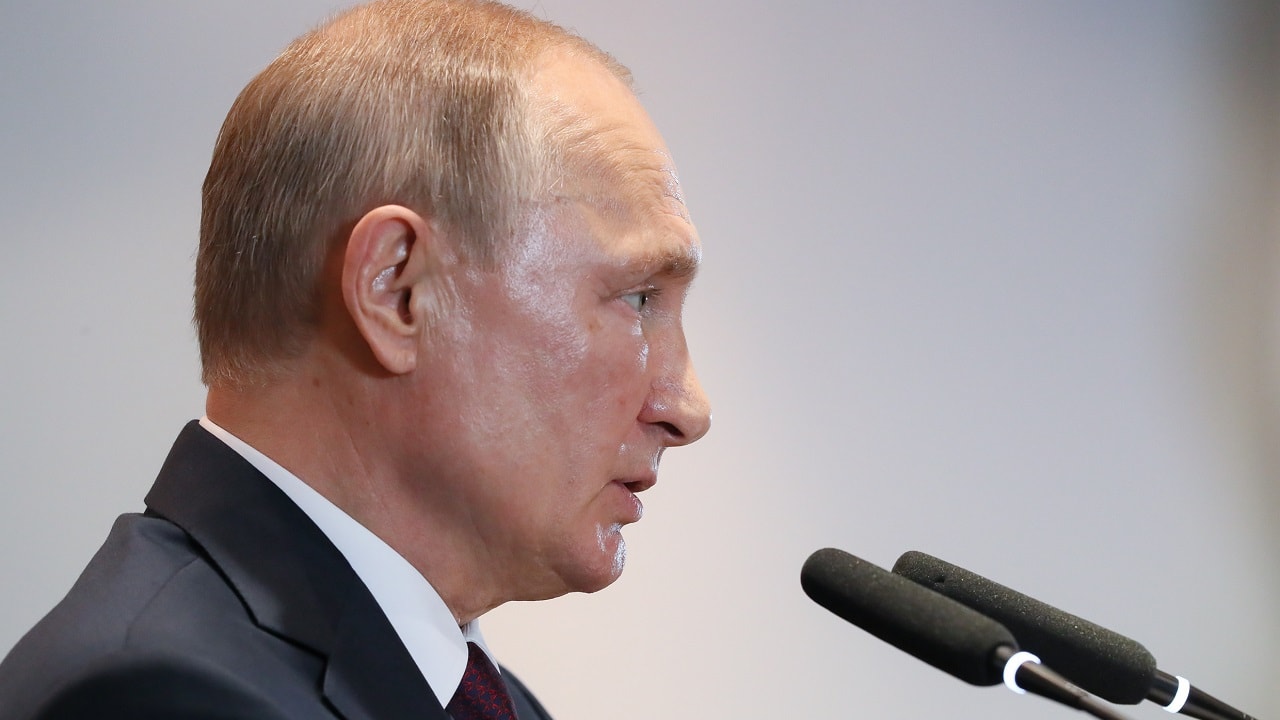
Vladimir Putin at the opening ceremony of international military-technical forum.
-Europe and Ukraine, the author contends, must play along as if Trump is gaming the situation, even as Putin appears convinced Trump is aligned with him. A decisive choice is approaching.
Trump Says Putin Wants Peace. Here Are the 2 Explanations
Can President Donald Trump truly believe that Vladimir Putin wants peace in Ukraine?
After all, Russia’s dictator has been a humanitarian and economic disaster for Ukraine, Russia, and the world. He’s destroyed millions of lives, killed scores of opponents, and presided over a staggering economic devastation.
The International Criminal Court has accused Russia’s illegitimate president of war crimes for kidnapping thousands of Ukrainian children.
But Putin’s criminality extends far wider.
As Russia’s supreme leader since 1999, he bears responsibility, and guilt, for every Russian, Ukrainian, Chechen, and Georgian soldier’s and every Russian and non-Russian civilian’s non-natural death, for the disastrous decline of GDP in Russia, Ukraine, and the countries dependent on them for trade, and for the millions of interrupted lives of refugees from his wars in Chechnya, Georgia, and Ukraine.
The destruction wrought by Putin falls short of that brought about by Adolf Hitler, Joseph Stalin, Mao Zedong, Napoleon Bonaparte, Genghis Khan, Julius Caesar, Alexander the Great, and other autocratic empire-builders.
Still, it’s comparable to that produced by Vladimir Lenin, the Ayatollah Khomeini, Saddam Hussein, Hafez al-Assad, and Binyamin Netanyahu.
As important as the scope of Russia’s killing is the fact that Putin and his comrades have made no secret of their bellicose and genocidal intentions. They aren’t ashamed or apologetic. Quite the contrary, destruction is the core of Putin’s empire- and fascism-building project.
None of this is occult knowledge available only to a select few. The world knows, just as every American knows. We may be indifferent to Putin’s rampages, and we may even attempt to justify them, but there is simply no way a semi-literate person could claim not to know.
Trump’s Ukraine and Putin Strategy?
So, back to the initial question: Can President Donald Trump truly believe that Vladimir Putin wants peace in Ukraine? Alternatively, how can we explain Trump’s claims of Putin’s pacific intentions?
Trump can not know that Putin is a stone-faced killer and war-monger. One might claim that Trump honestly doesn’t know Putin’s bloody record, but such an explanation couldn’t possibly hold for the president of the United States, even if his reading habits are circumscribed.
It could be that Trump is playing a sly chess game, moving ahead of analysts and policymakers. Perhaps he’s deliberately trying to flatter Putin, confuse the world, and manipulate Ukrainians to exploit his vaunted unpredictability and strike a decisive blow? That would be the optimistic reading.
Rather more negative would be that Trump is indifferent to or supportive of Putin’s violent methods. Such a stance would make the American president morally complicit in Putin’s crimes. It would also disqualify him from serving as an honest broker in the ongoing “peace process.”
We can’t exclude the possibility that Trump is playing an exceedingly clever game. Some of his foreign-policy successes appear to be the product of such Byzantine maneuverings.
Unfortunately, we cannot exclude the far more disturbing possibility of Trump’s indifference to human rights violations and his genuine admiration of strongmen rulers willing to break as many rules as possible to achieve their goals.
Playing Trump’s Ukraine Game
Europe and Ukraine have no choice, at least for now, but to assume that Trump is playing a game. As tempting as it may be to turn their backs on Trump, they have to play along for as long as the possibility of his game-playing exists.
Putin, on the other hand, appears to believe that he has Trump in his pocket, that the American president is one of the boys.
If Ukraine and the Europeans are right, there may be a slight chance of achieving peace in the foreseeable future. If Putin is correct, the war will continue for as long as Putin—and Trump—are in power.
As to Trump, we don’t know what he’s thinking, and there’s a good chance that neither does he. Regardless, Trump will soon have to make an exceedingly uncomfortable choice between Ukraine and Russia. Opting for Ukraine would look good and enhance Trump’s chances of winning the Nobel Peace Prize. Opting for Russia would look bad, but might also satisfy Trump’s instincts.
He can play both sides for only so long, especially since the war is now wholly his. Crunch time is coming.
About the Author: Dr. Alexander Motyl
Dr. Alexander Motyl is a professor of political science at Rutgers-Newark. A specialist on Ukraine, Russia, and the USSR, and on nationalism, revolutions, empires, and theory, he is the author of 10 books of nonfiction, including Pidsumky imperii (2009); Puti imperii (2004); Imperial Ends: The Decay, Collapse, and Revival of Empires (2001); Revolutions, Nations, Empires: Conceptual Limits and Theoretical Possibilities (1999); Dilemmas of Independence: Ukraine after Totalitarianism (1993); and The Turn to the Right: The Ideological Origins and Development of Ukrainian Nationalism, 1919–1929 (1980); the editor of 15 volumes, including The Encyclopedia of Nationalism (2000) and The Holodomor Reader (2012); and a contributor of dozens of articles to academic and policy journals, newspaper op-ed pages, and magazines. He also has a weekly blog, “Ukraine’s Orange Blues.”