
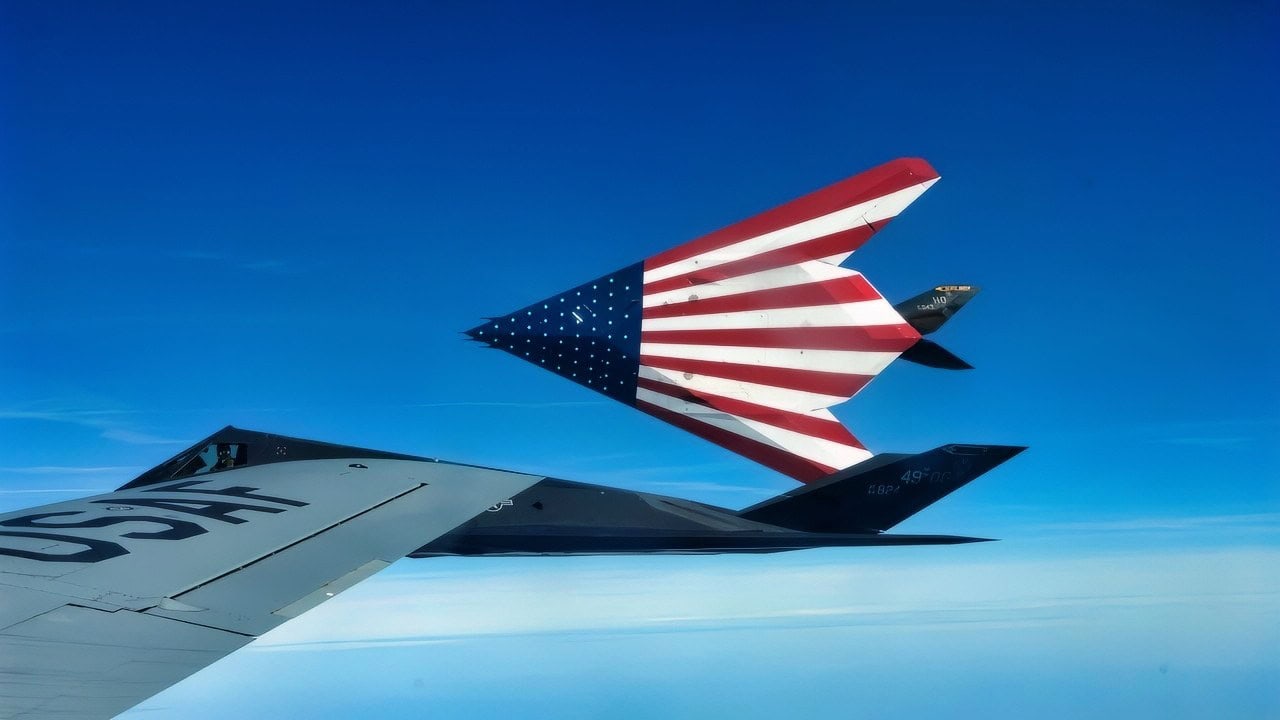
Key Points and Summary – The F-117A Nighthawk pioneered operational stealth and proved its value in early conflicts, from its 1989 Panama debut to high-risk strikes in Desert Storm.
-The jet flew more than a thousand sorties in 1990–91 with no combat losses, cementing its reputation as a transformational precision-strike platform against dense air defenses.
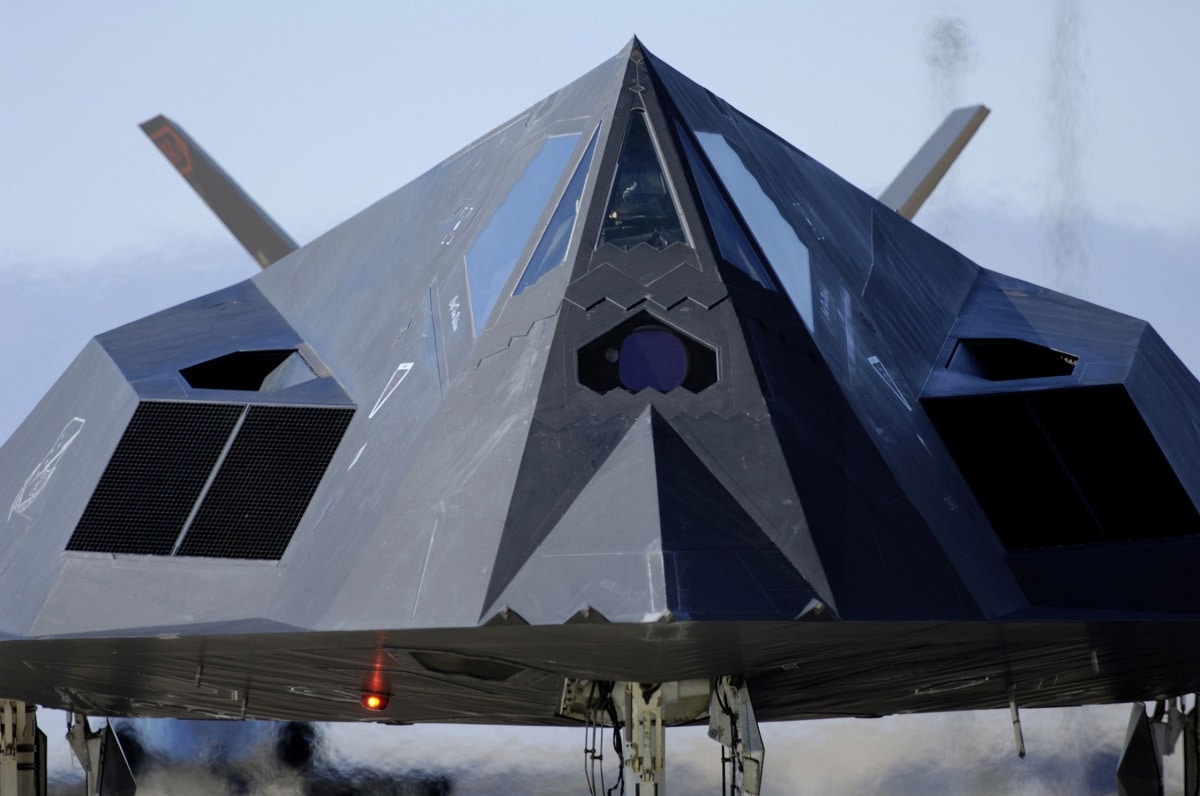
F-117 Stealth Fighter.
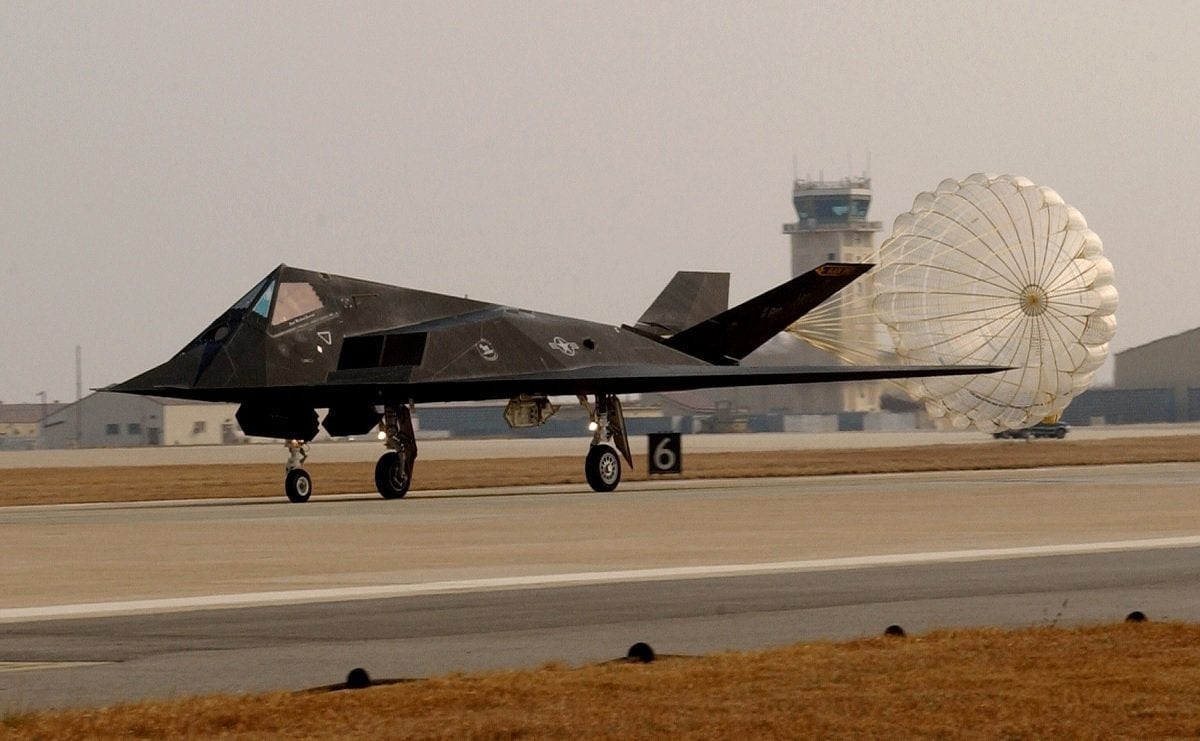
F-117 Image: Creative Commons.
-That near-perfect record was punctured in 1999 when a Yugoslav unit downed an F-117 during the Kosovo air war, reportedly exploiting brief exposure when bomb-bay doors opened.
-Retired in 2008, select airframes still fly in testing and training, keeping the Nighthawk relevant to modern stealth tactics.
The F-117 Nighthawk Is Flying Again, and Its Combat Record Still Matters
The sleek silhouette of the iconic F-117A Nighthawk once shot across foreign airspaces under the cloak of secrecy, and in doing so, helped rewrite the rules of air combat permanently. But today, the aircraft, which has long been retired, has recently re-entered public discussion following sightings of the retired airframe occasionally taking to the air in training and testing roles.
We have covered that story many times at 19FortyFive, specifically noting the many benefits of operating an old yet proven platform for testing.
But it’s against this backdrop that revisiting the Nighthawk’s combat history is particularly interesting: this is an aircraft that helps planners, engineers, and pilots shape the future, based on a history of huge successes.

F-117
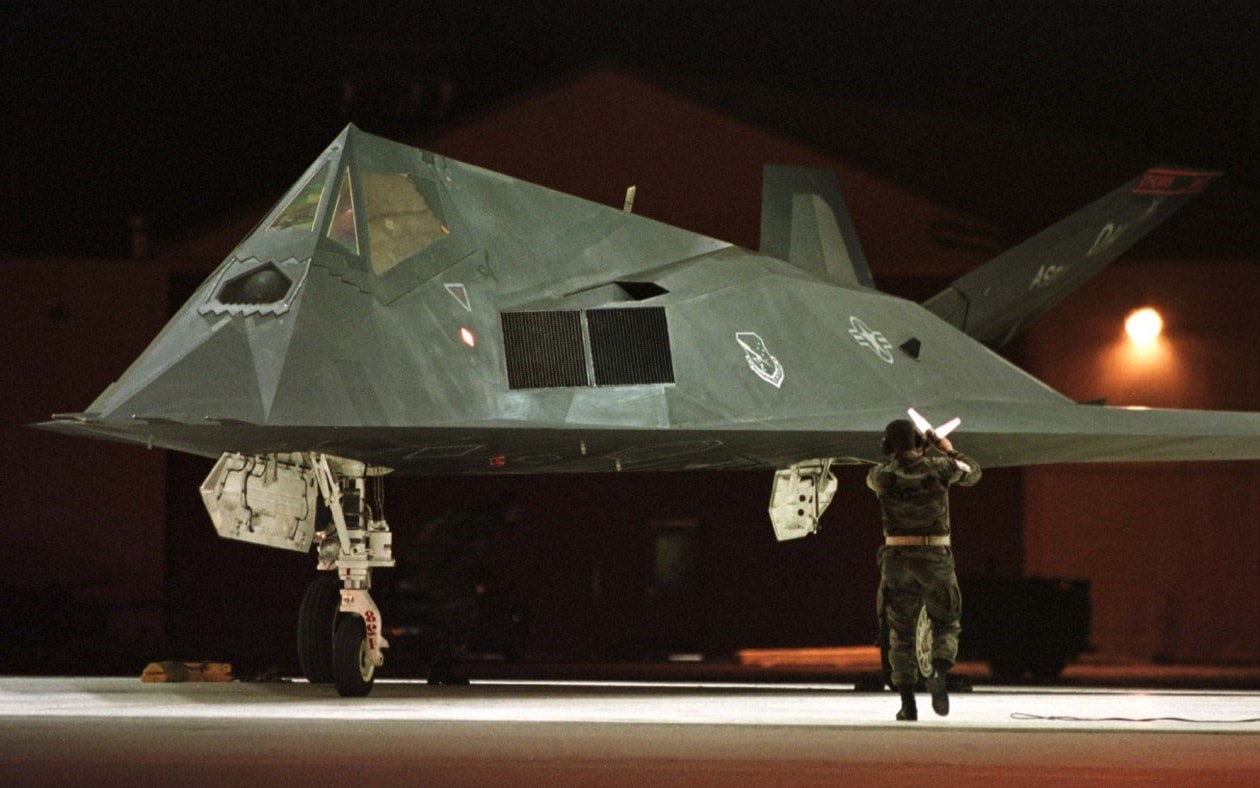
F-117 Stealth Fighter. Image Credit: US Government.

An F-117 Nighthawk taxies down the runway after landing Jan. 11 at Kunsan Air Base, Republic of Korea. A squadron of F-117s, together with 300 Airmen, have deployed here in support of a continuing force posture adjustment throughout the Pacific. The aircraft, assigned to the 9th Expeditionary Fighter Squadron, is part of the third squadron of Kunsan AB’s host unit, the 8th Fighter Wing, during the deployment’s duration. (U.S. Air Force photo/Senior Airman Darnell Cannady)
Conceived in the Cold War, the F-117A was the world’s first operational stealth aircraft. Its first combat deployment came in 1989 during Operation Just Cause, the U.S. invasion of Panama.
Over the following two decades, the Nighthawk has been used all over the world – from Iraq to the Balkans – establishing an operational record that was, for much of its service life, almost perfect.
And while its record was impressive, the downing of an F-117 in 1999 over Serbia remains a memorable moment in aviation history – and almost two decades after its official retirement in 2008, the Nighthawk’s legacy still informs stealth doctrine to this day.
The Rise of the First Stealth Jet
The Nighthawk’s first combat sorties over Panama in 1989 were more a demonstration of its precision-strike capability than of stealth – but they were still the first sorties for this legendary aircraft.
The opponent’s radar and air defenses at this time were minimal, and it was a relatively safe environment for the new stealth technology to be officially debuted. The true proving ground – the moment the Nighthawk’s value was really proven – came a year later.
During the 1990-91 Operation Desert Storm, the F-117A was entrusted with some of the most dangerous and strategically critical missions of the time: penetrating heavily defended Iraqi airspace to strike high-value targets under cover of darkness.
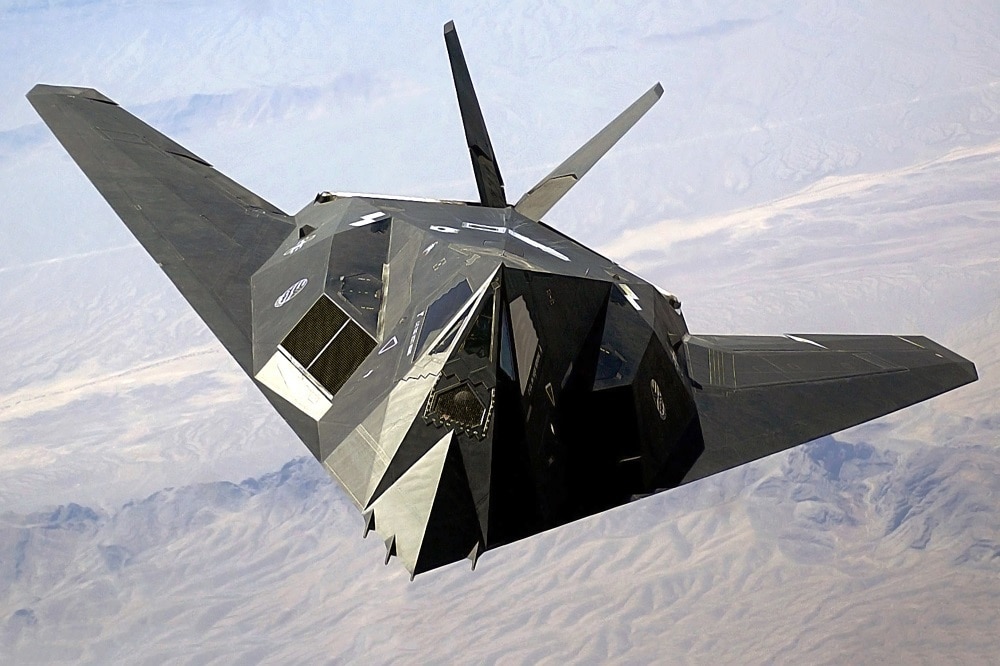
The USAF F-117 Nighthawk, one of the key aircraft used in Operation Desert Storm.
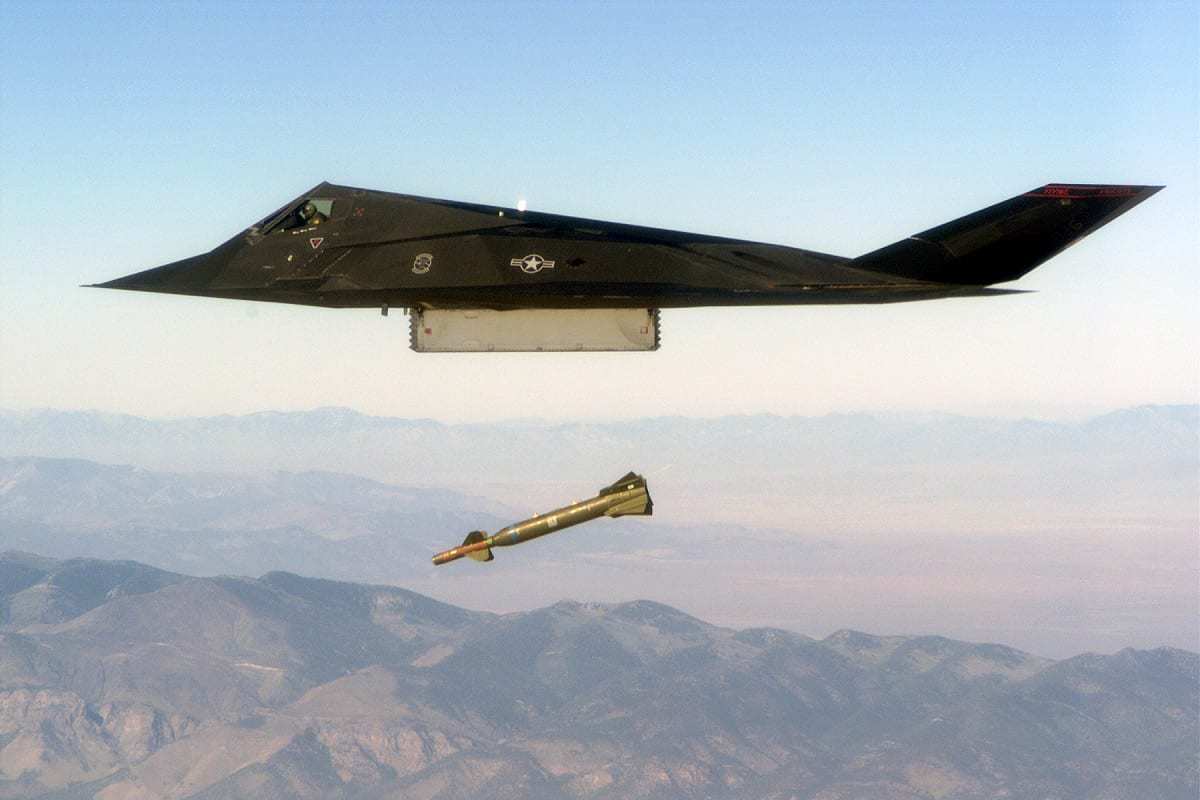
An F-117 Nighthawk engages it’s target and drops a GBU-28 guided bomb unit during the ‘live-fire’ weapons testing mission COMBAT HAMMER, at Hill Air Force Base, Utah.
According to U.S. Air Force data, the Nighthawk fleet flew over 1,270 sorties during that conflict. Industry reports have also attributed as many as 1,600 direct hits to the aircraft against command-and-control centers, air defense nodes, and other critical infrastructure.
Throughout Desert Storm, the F-117 sustained no combat losses – a remarkable feat given the density and sophistication of Iraqi air defenses. And it was that spotless record that helped cement the F-117’s reputation not just as a stealth novelty but as a truly transformational asset for modern warfare.
Following the Gulf War, the Nighthawk remained in heavy use. In 1999, under Operational Allied Force – which was NATO’s air campaign against Yugoslavia during the Kosovo conflict – F-117s were among the first aircraft to hit Serbian targets.
But on March 27 of that year, the F-117 revealed its vulnerabilities for the first time when a Yugoslav Army unit, using a Soviet-era surface-to-air missile system, successfully shot down an F-117 near Budanovci, Serbia.
The pilot ejected safely and was ultimately rescued by U.S. Air Force Pararescue teams after spending several hours on the ground.
And in the years that followed, the downing was somewhat spectacular in that the aircraft had been detected not with newer sensors but through the methodical and disciplined use of older radar technology.
The enemy reportedly waited until the F-117 opened its bomb bay doors – a momentary vulnerability that increased the aircraft’s radar signature.
Despite the loss, though, the Nighthawk program pressed on, and the U.S. continued to deploy the stealth jet alongside newer platforms.
The Nighthawk’s Retirement and Return
By the mid-2000s, advances in aircraft design and radar-evading technology paved the way for new stealth platforms, and while the Nighthawk remains iconic, the technology it pioneered led to the development of the equally iconic B-21 Raider.
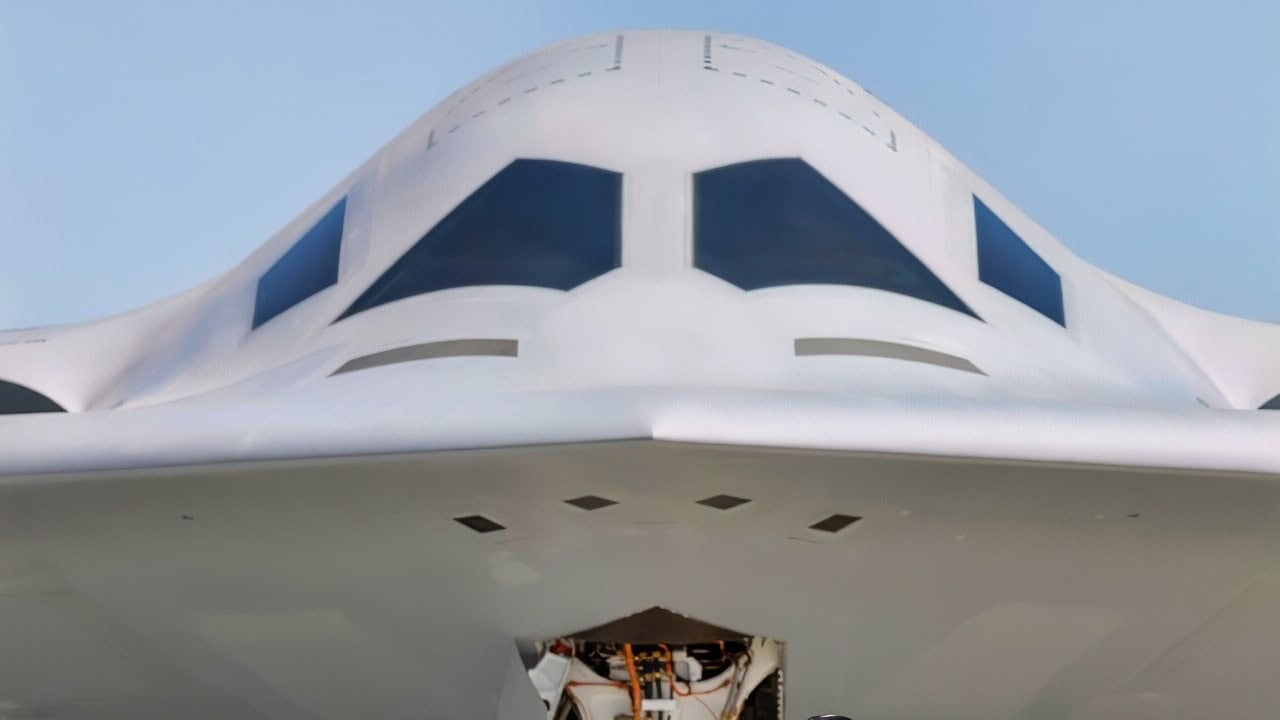
U.S. Air Force Airmen with the 912th Aircraft Maintenance Squadron prepare to recover the second B-21 Raider to arrive for test and evaluation at Edwards AFB, Calif., Sept. 11, 2025. The arrival of a second test aircraft provides maintainers valuable hands-on experience with tools, data and processes that will support future operational squadrons. (U.S Air Force photo by Kyle Brasier)
The F-22 Raptor and later the F-35 Lightning II also built on its breakthroughs, offering improved performance, multirole flexibility, and modern avionics – all of which led to the U.S. Air Force retiring the Nighthawk in a phased drawdown that concluded in 2008.
Retirement wasn’t the end for this aircraft, though. Several F-117s have reportedly remained airworthy and have been repurposed as test platforms, aggressor aircraft, and training assets.
The value of the Nighthawk, then, goes well beyond its excellent wartime record, but in the shift it created in aerial warfare, modern aviation technology, and how pilots train for combat to this day.
About the Author:
Jack Buckby is a British author, counter-extremism researcher, and journalist based in New York who writes frequently for National Security Journal. Reporting on the U.K., Europe, and the U.S., he analyzes and understands left-wing and right-wing radicalization and reports on Western governments’ approaches to the pressing issues of today. His books and research papers explore these themes and propose pragmatic solutions to our increasingly polarized society. His latest book is The Truth Teller: RFK Jr. and the Case for a Post-Partisan Presidency.

