
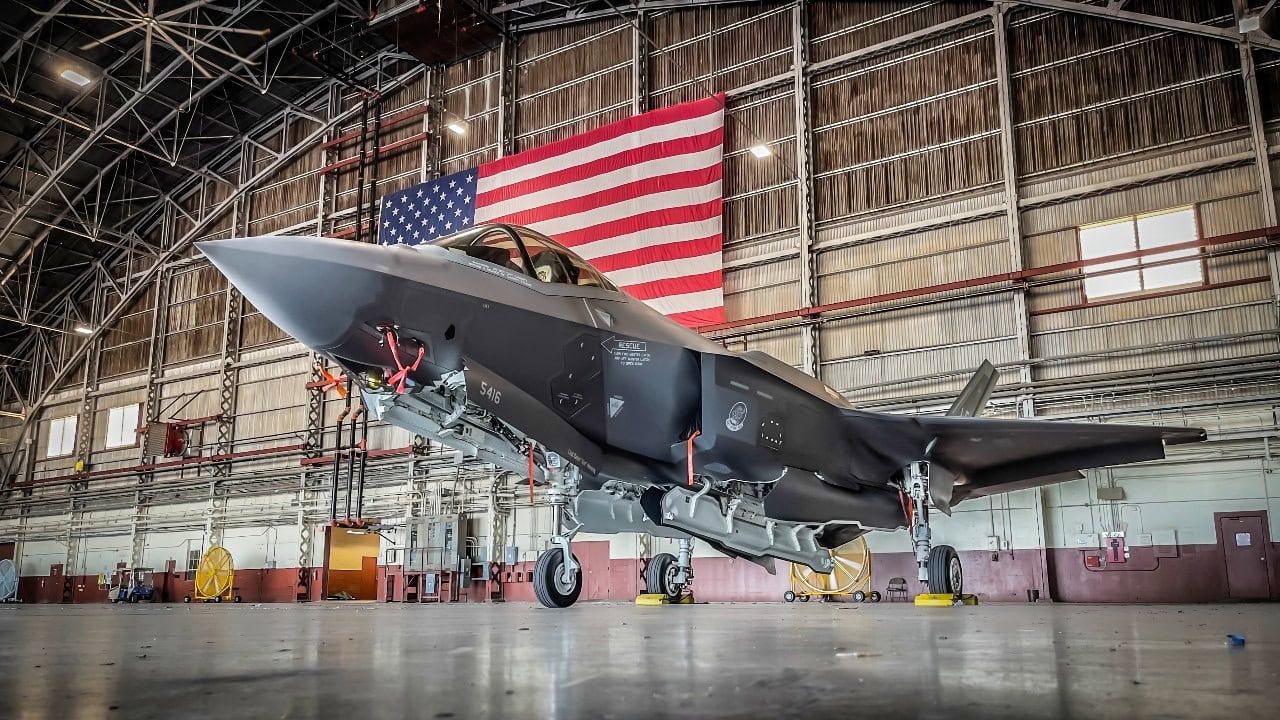
Key Points and Summary – After losing the Air Force’s Next Generation Air Dominance contest to Boeing’s F-47, Lockheed Martin is pushing an aggressive Plan B: a “Ferrari” F-35.
-CEO Jim Taiclet says the company can deliver roughly 80 percent of sixth-generation capability at half the cost by grafting NGAD-era tech onto the F-35 airframe.
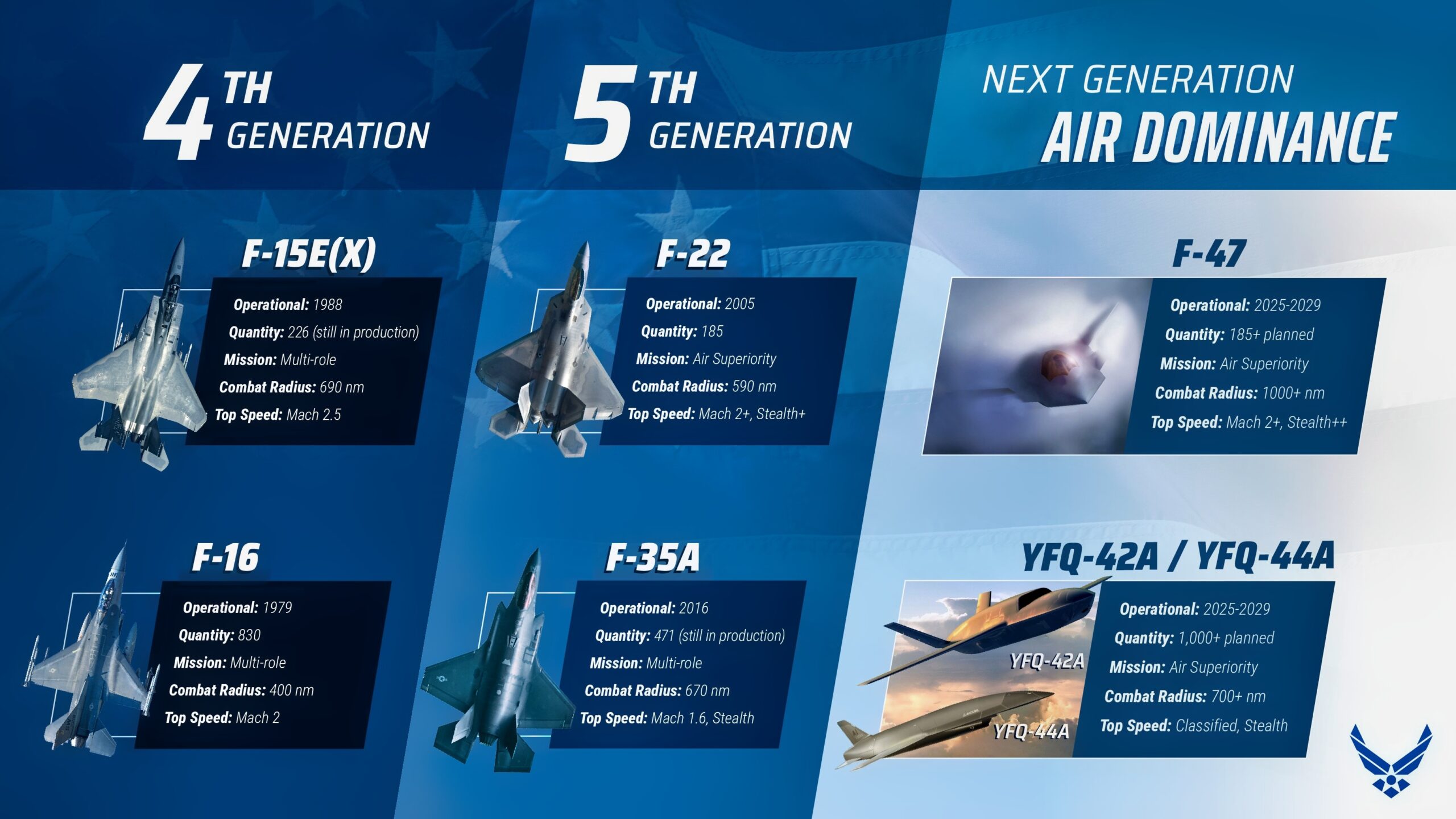
F-47 Infographic. Image Credit: U.S. Air Force
-That could mean new stealth coatings, reshaped inlets and nozzles, more powerful engines, extreme low observability, upgraded sensors, “stealthy” comms—and possibly even pilot-optional operations.
-Lockheed is already in “very active” talks with the Pentagon and is self-funding prototypes, betting that a fifth-gen-plus F-35 could keep it central to America’s future fighter fleet.
Lockheed’s ‘Ferrari’ F-35: 80% of Sixth-Gen Power at Half the Price?
This spring, Lockheed Martin lost out on the Air Force’s Next Generation Air Dominance contract to Boeing, for what is now known as the F-47.
Not long after that, Lockheed indicated that it was working on something new, a “fifth-gen plus,” in the words of Lockheed CEO Jim Taiclet. The promised jet would offer, per the contractor, 80 percent of the capability at half the price.
On a series of earnings calls and at conferences throughout the year, Taiclet has shared details about the company’s plans for such a jet project.
“We’re basically going to take the [F-35] chassis and turn it into a Ferrari,” the CEO said on an earnings call in April. “It’s like a NASCAR upgrade, so to speak, where we would take the F-35 [and] apply some of those co-funded technologies both from NGAD and the F-35 program.”
The chief executive also discussed how he is handling it with his engineering team.
“My challenge here on my aeronautics team is, let’s get 80 percent of six-gen capability at half the price. And that’s something that — these are engineers, you know, they wouldn’t have agreed to this if they didn’t think there was a path to get there,” Taiclet told investors in April.
Taiclet also discussed his conversations with the president.
“I explained this at a meeting at the White House to the president,” the CEO said in April. “Dogfights are not what we want anymore. In air-to-air combat, we want to shoot the other guys, I said, before he even knows we’re there. And you do that, first of all, with the critical sensors to find them. Then you make sure they can’t find you, and that’s the stealth technology.”
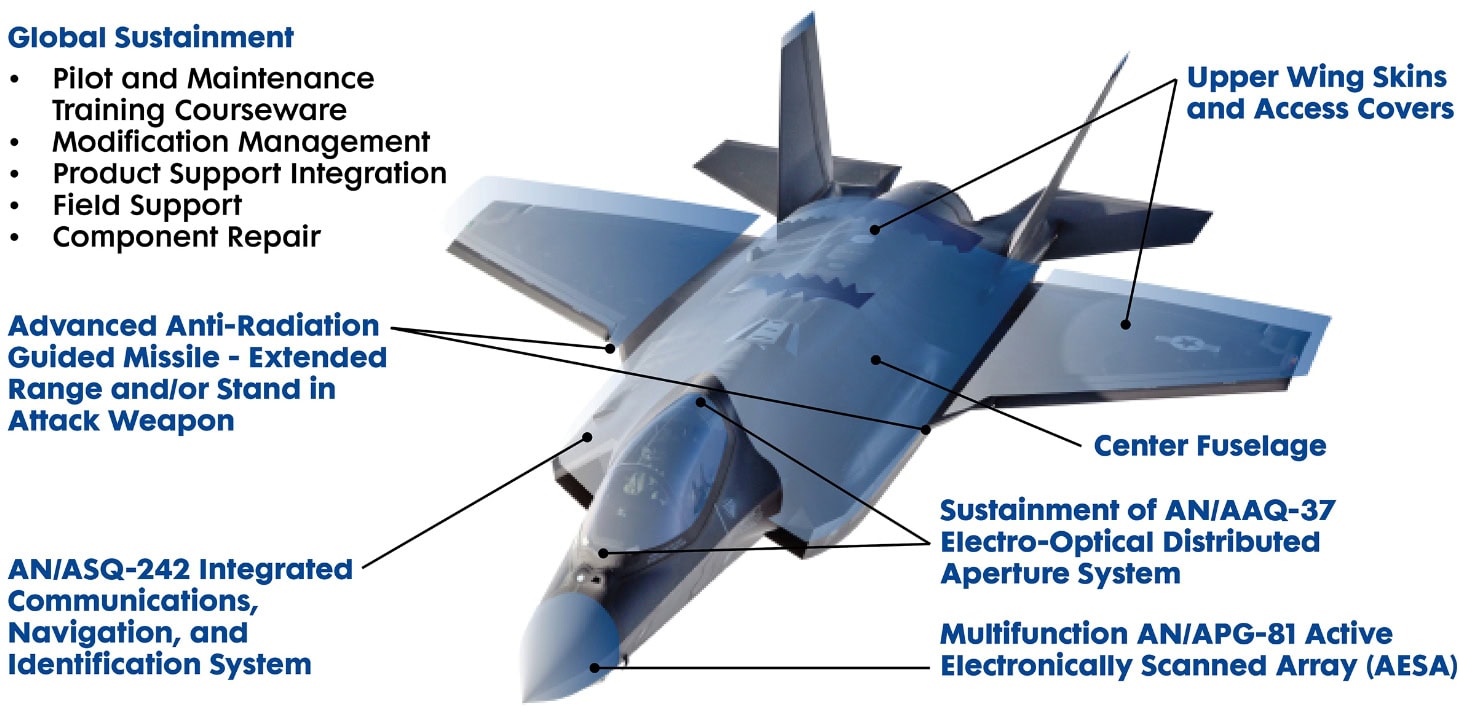
F-35 Fighter. Image Credit: Industry Handout.
What Will it Look Like?
As for what a “Ferrari” version of the F-35 might look like, a different Air and Space Forces story back in April speculated about that question.
“We have 70,000 engineers and scientists in the company working on really interesting stuff all the time,” Taiclet, the CEO, had said in the April earnings call.
“Some of the fifth-gen-plus solution set is already being funded by the U.S. government and the F-35 program itself,” he added.
However, he also said that “Secrecy” prevented him from going into a lot more detail.
Possible upgrades in such a jet could include sensors, more powerful engines, and “extreme low observability,” as well as improved weapons, range, and “stealthy communications.”
More Details
In May, The War Zone wrote about some of the things that the “Ferrari” could include. One possibility is “pilot-optional” F-35s.
“The feasibility of this proposal, as well as the huge claim that it could produce a jet with 80 percent of the capability of a sixth-generation design at 50 percent of the cost, remains very much in question,” TWZ reported.
This reporting was also based, at least in part, on comments the CEO delivered at yet another conference, this time the Bernstein’s Strategic Decisions Conference.
In two or three years, Taiclet said, “we could have a meaningful increase in capability for the F-35.”
What might the jet have had at that point?
“As for the kinds of technologies being considered, Taiclet specifically mentioned new infrared and radar coatings applied on the surface of the aircraft,” Air and Space Forces reported.
“The implication here is that sixth-generation stealth coatings developed under the NGAD program could be applied to the existing F-35 airframe for an improvement in its low-observable qualities, and likely also its maintainability.”
The Lockheed CEO did get more specific about one potential design change.
“There have been some adjustments or learnings, I’ll say, on outer mold line, which is the actual shape of the aircraft itself, especially with regard to engine inlets and outflow nozzles that we might be able to again improve on the F-35 without redesigning it,” he said at the Bernstein conference.
A Pentagon Pitch
Then, in September, it was reported that Lockheed was in talks with the Pentagon about building the “Ferrari” F-35, following Taiclet’s remarks at a Morgan Stanley conference.
Per Breaking Defense, the CEO called the talks with the Pentagon “very active.”
“There’s a very active engagement at an extremely high level with the Department of Defense, and I expect it’ll be taken to the White House sometime soon, hopefully, to consider this kind of concept,” the Lockheed CEO said at the September conference.
“We’ve gotten encouraging feedback. … There’s significant interest in the government about discussing aircraft modernization writ large, all the way up to the administration level, the White House level, and we’re in the middle of that with them, and we’re getting heard. We’re hearing back, and it’s pretty active.”
Self-Funding?
Meanwhile, Air and Space Forces reported in another earnings call in late October that Taiclet has been taking a “home run” approach to research and development, including building full prototypes to show the government.
The company, the CEO said on that call, is focusing on “big-bet, home-run heavy allocation … where we are actually building prototype vehicles to demonstrate to the government, perhaps alongside the new entrants, where we can show them a working vehicle that we can produce at scale, that they can rely on.”
He referenced a new autonomous Black Hawk helicopter, as well as what he described as “this notion of sixth-generation technology insertion into the F-35 and F-22.“
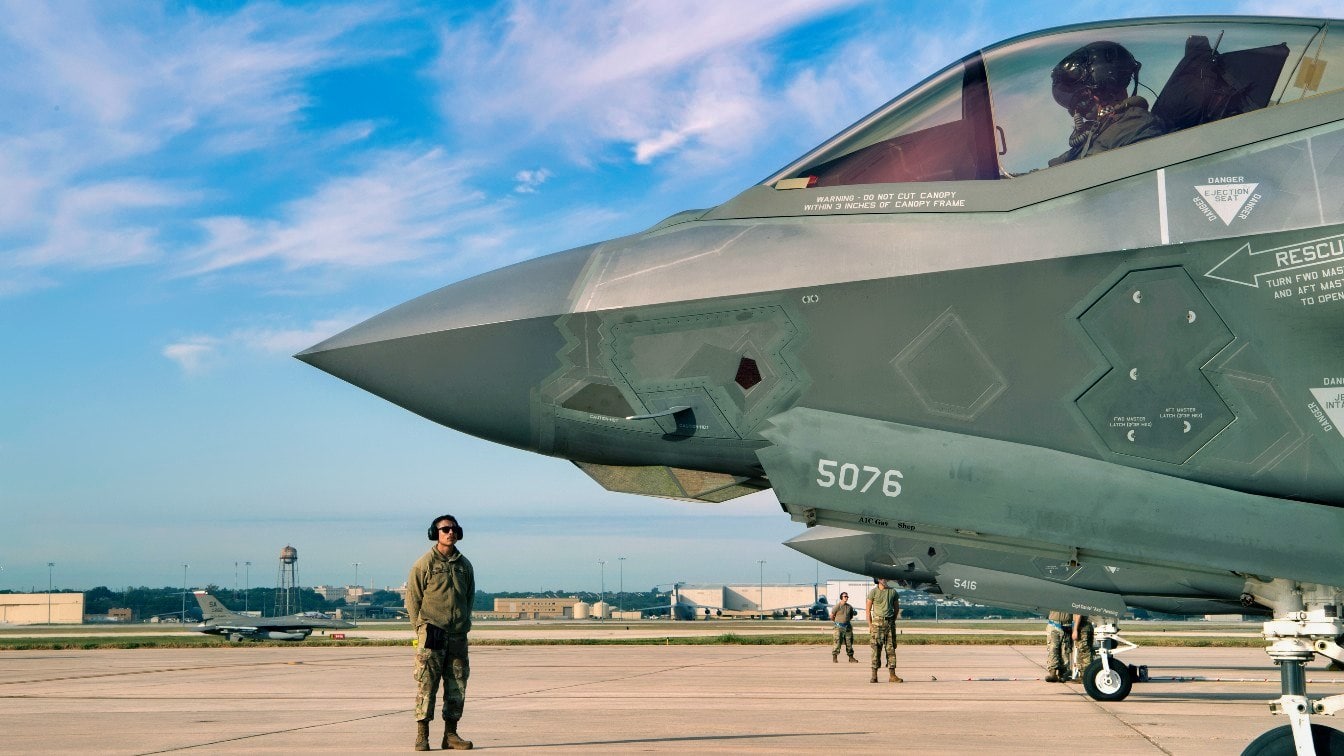
F-35s from the 62nd Fighter Squadron visit Joint Base San Antonio-Lackland, October 21, 2021. F-35 Lightning II aircraft traveled to JBSA-Lackland for a two week stay to train and fly with multiple different aircraft from the surrounding area to include the 149th Fighter Wing’s F-16 Vipers. (Air National Guard Photo by Staff Sgt. Ryan Mancuso)
“How do we take the Skunk Works activities that were designed to go into NGAD and other potential opportunities, some of which are classified, but we developed these sixth-generation capabilities, whether it’s stealth, propulsion, inlet designs, coatings, those kinds of things in … Skunk Works, which we can actually backward integrate into F-35 and F-22, and are doing so,” Taiclet said on the October earnings call, per Air and Space Forces.
Was he referring specifically to the “Ferrari”?
A Lockheed spokesperson declined to say when asked.
About the Author: Stephen Silver
Stephen Silver is an award-winning journalist, essayist, and film critic, and contributor to the Philadelphia Inquirer, the Jewish Telegraphic Agency, Broad Street Review, and Splice Today. The co-founder of the Philadelphia Film Critics Circle, Stephen lives in suburban Philadelphia with his wife and two sons. For over a decade, Stephen has authored thousands of articles that focus on politics, national security, technology, and the economy. Follow him on X (formerly Twitter) at @StephenSilver, and subscribe to his Substack newsletter.