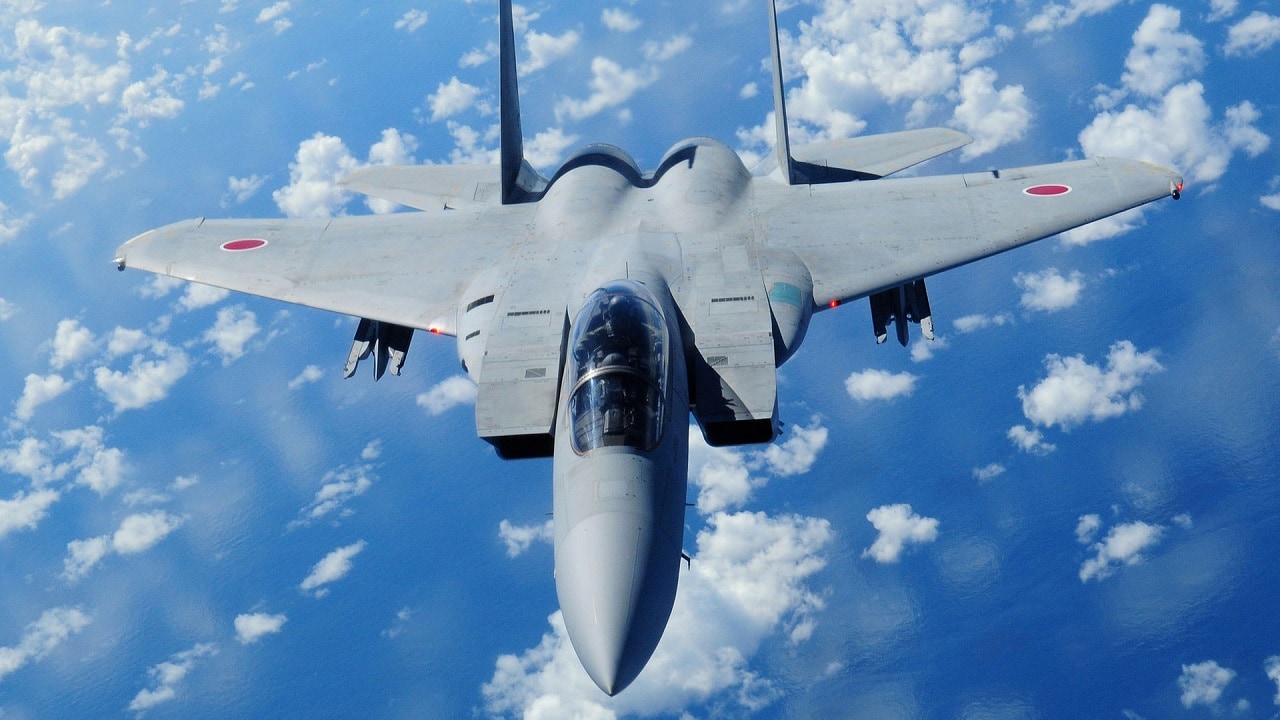
Key Points and Summary – Japan is executing a major “Super Interceptor” modernization to keep 68 F-15J fighters relevant into the next decade, aiming for completion by 2030.
-Built around the logic behind the U.S. F-15EX, the upgrade adds an AESA radar, modern electronic warfare, and high-speed mission computing to expand sensing, survivability, and software-driven growth.
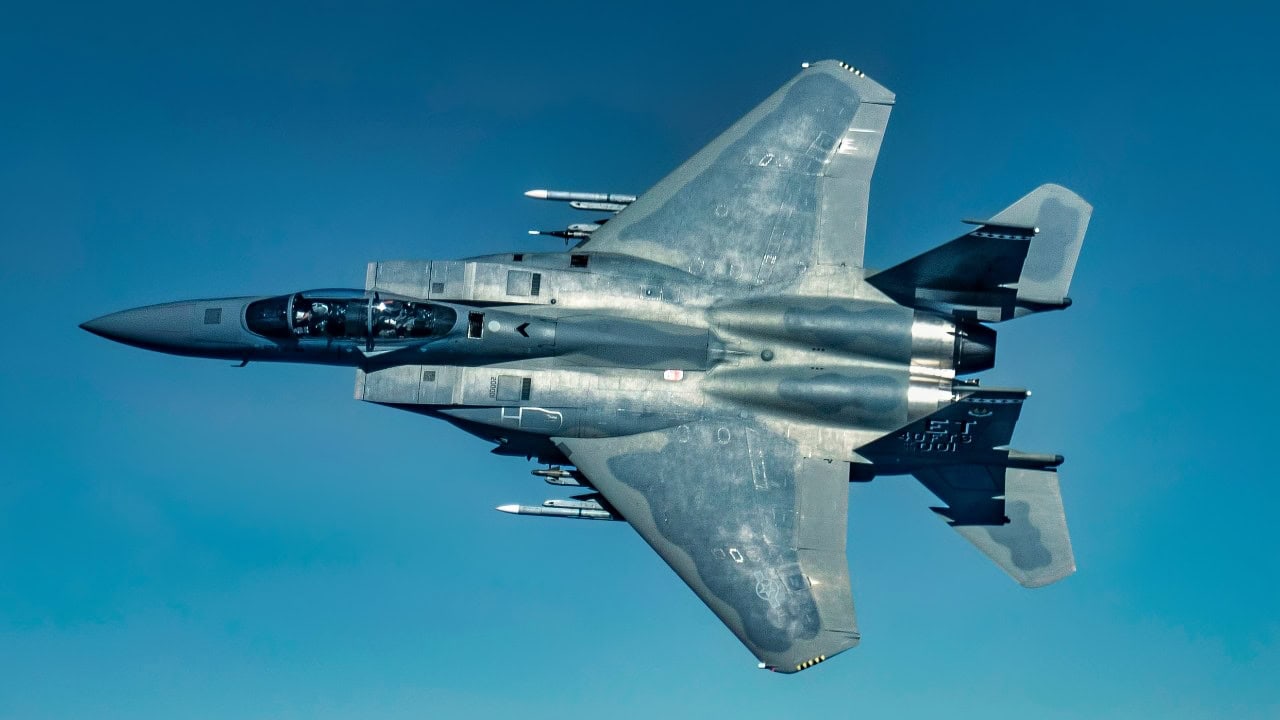
U.S. Air Force Lt. Col. Richard Turner, 40th Flight Test Squadron commander flies 40 FLTS Senior Enlisted Leader, MSgt Tristan McIntire during a test sortie in the F-15EX Eagle II over the Gulf of Mexico on Jun. 14, 2022. Assigned to the 96th Test Wing at Eglin Air Force Base, Fla., the F-15EX Eagle II is the Air Force’s newest 4th generation fighter being tested at the 40 FLTS. (U.S. Air Force photo by Tech. Sgt. John McRell)
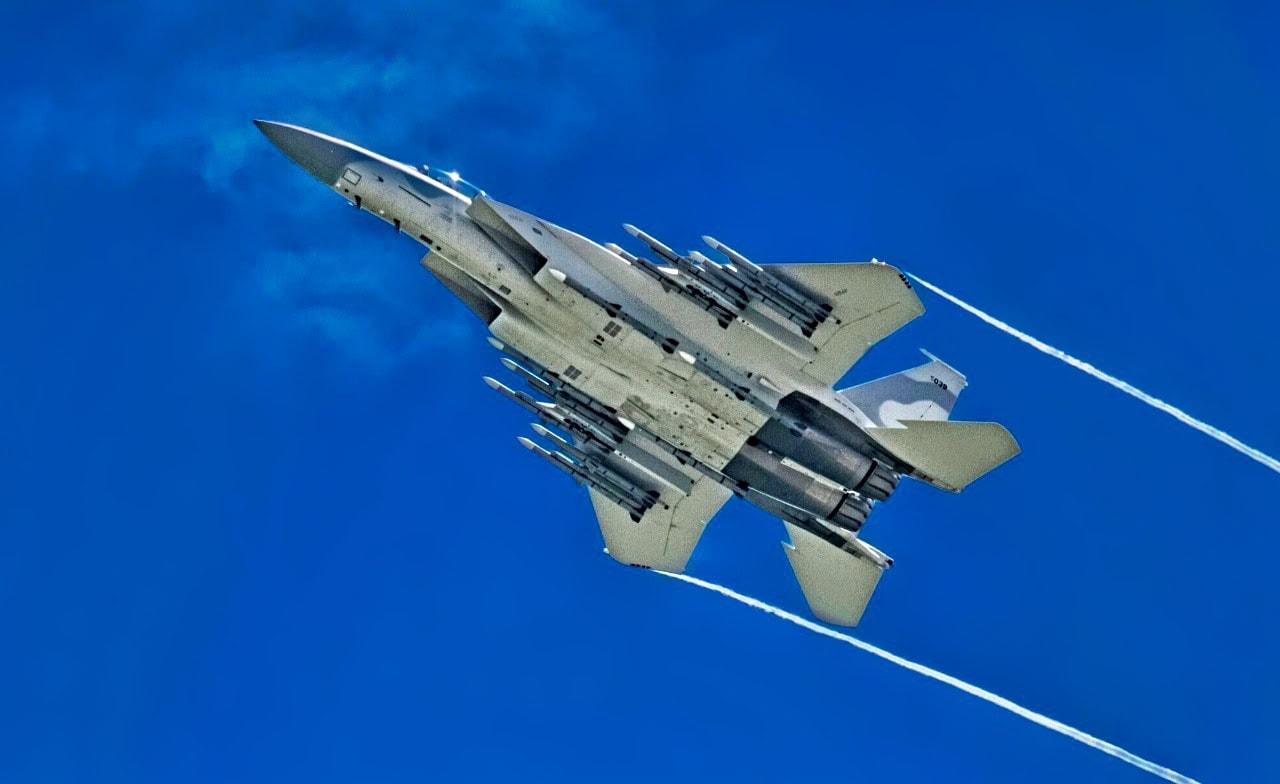
F-15EX Eagle II from U.S. Air Force
-The most consequential shift is a broader weapons envelope, including long-range strike options like JASSM-ER, enabling F-15Js to operate as standoff cruise-missile carriers while F-35s penetrate and suppress air defenses.
-The result is a 4th-gen-plus force optimized for China-era ranges.
Japan’s F-15J “Super Interceptor” Upgrade Is Built for a China Fight
Long-range, multi-target high resolution radar, precision air-to-surface and air-to-ground air-launched weapons, advanced electronic warfare (EW), and a variant of the fastest computer ever put in a fighter jet.
This impressive list comprises key elements of a massive Japanese Super Interceptor Program designed to substantially modernize and enhance 68 of the Japanese Air Defense Forces’ F-15J fighter jets. The program aims to be completed by 2030.
The Japanese aircraft, to be worked on at Boeing’s St. Louis, Mo., facility under a DoD Foreign Military Sales contract with Japan, will receive advanced technologies, many of which are already integrated in the US Air Force’s F-15EX.
The concept and technological strategy for the Japanese plane align well with the US Air Force’s approach to the F-15. The upgrades are based upon the premise that a legacy airframe can remain viable, supported, and relevant for many years beyond its intended service life.
This is very much the case with the US Air Force’s F-15EX, as extensive upgrades have turned a 1980s airframe into an almost entirely new fighter jet.
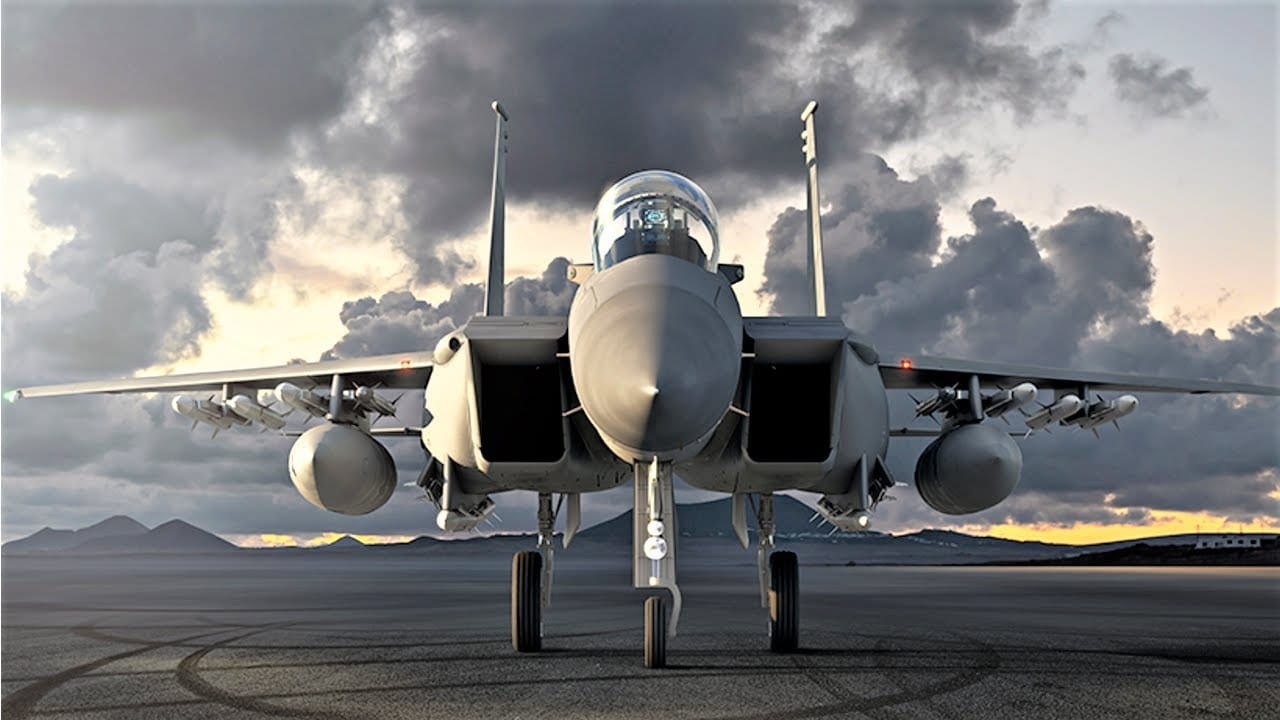
F-15EX Eagle II. Image Credit: Creative Commons.
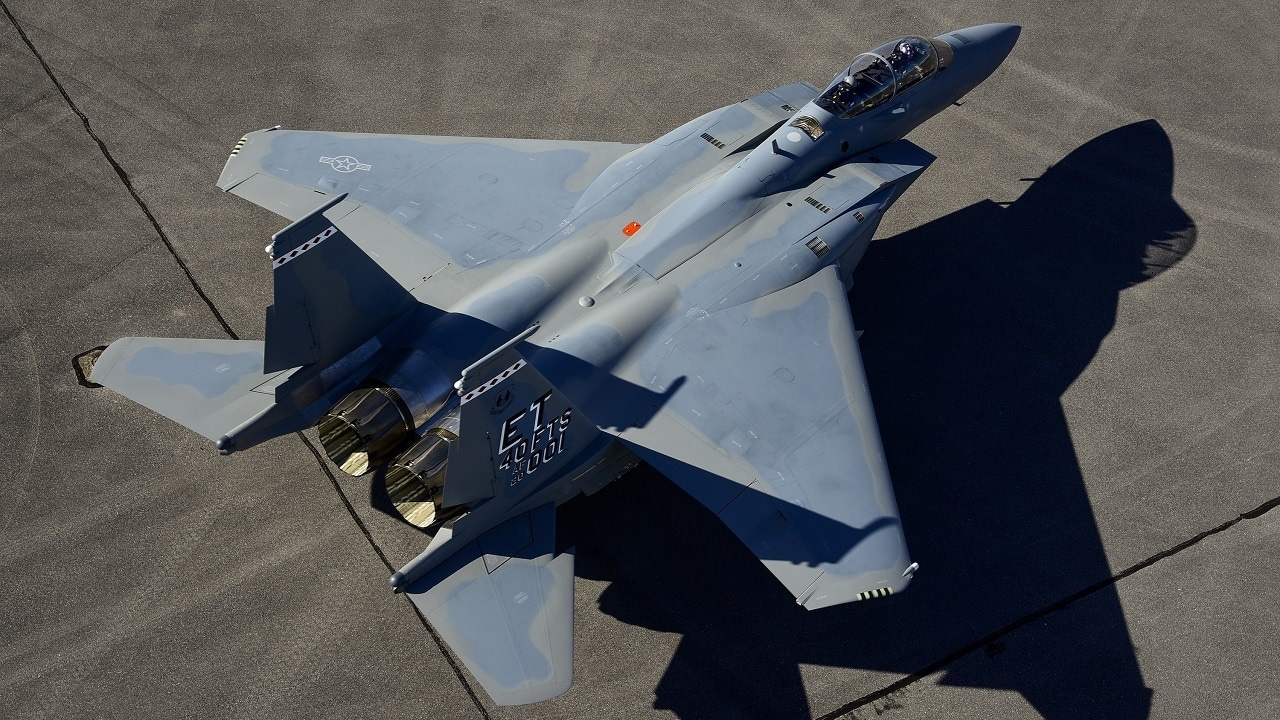
The F-15EX Eagle II, the Air Force’s newest fighter aircraft, arrives to Eglin Air Force Base, Florida March 11. The aircraft will be the first Air Force aircraft to be tested and fielded from beginning to end through combined developmental and operational tests. The 40th Flight Test Squadron and the 85th Test and Evaluation Squadron personnel are responsible for testing the aircraft. (U.S. Air Force photo/1st Lt. Karissa Rodriguez)
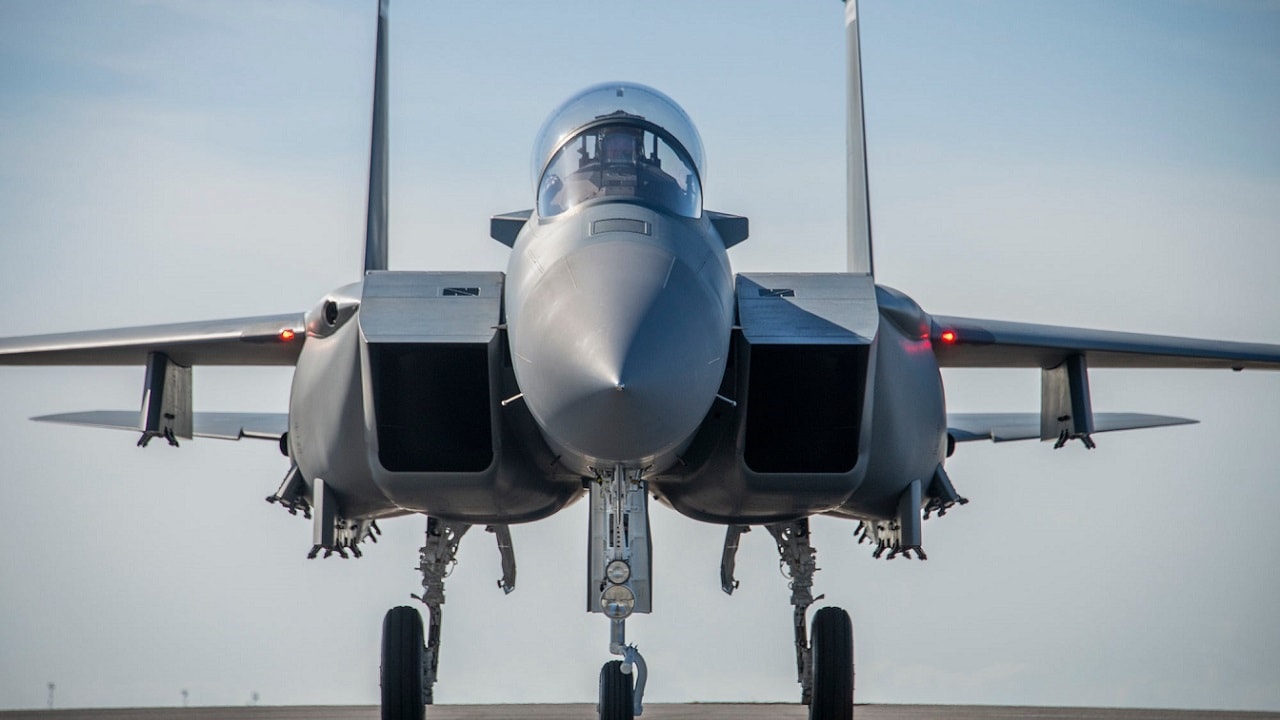
F-15EX Eagle II. Image Credit: Boeing.
New Weapons for Japan’s F-15
The technological upgrades are wide-ranging and quite significant, according to an interesting article in the Aviationist, encompassing a comprehensive suite of technologies. A critical part of the upgrades includes a weapons envelope expansion and new air-to-surface attack capabilities, with the addition of the US-built AGM-158 Joint Air-to-Surface Standoff Missile-Extended Range (JASSM ER).
This not only introduces land-attack possibilities but also extends the attack range for Japanese aircraft, which are intended to serve as supportive air-combat platforms for the F-35, operating as a cruise missile carrier and supplemental attack platform.
This makes great tactical sense, as Japan is acquiring a large force of F-35s, and 5th-gen aircraft are intended to use stealth and speed to destroy enemy air defenses to open up an attack “corridor” for more heavily armed 4th-generation fighters.
This synergy has been dramatically improved in recent years by the US Air Force, which has found new ways to enable two-way data-link networking between 5th- and 4th-generation fighter jets.
HIgh-Tech Computing
Japan is likely doing this as well, as evidenced by other ongoing electronic, computing, and communications upgrades fundamental to JSI. These include the addition of AESA (Actively Scanned Electronic Array) radar and the AN/ALQ-250 EPAWSS (Eagle Passive Active Warning Survivability System).
AESA radar is well known as a next-generation threat-detection system capable of simultaneously scanning multiple targets at longer ranges across a wide range of frequencies, using high-fidelity imaging.
The addition of AESA radar is extremely significant, as it can identify and track multiple targets simultaneously and, when coupled with long-range precision weaponry, attack and destroy enemy fighters from safe standoff distances.
This is the situation with the F-35, meaning its sensors and AESA radar position the jet to see and destroy 4th-generation aircraft from standoff ranges.
The JSI F-15s are also getting Honeywell’s high-speed ADCP II Advanced Display Core Processor II. This computer, described as the fastest computer processing ever integrated into a fighter jet, has been added to the US Air Force’s upgraded F-15EX Eagle II.
Boeing developers told me a few years ago that this ADCP computer performs 87 billion functions per second. The new processing speed not only supports improved air-attack weapons such as the AIM-9X and AIM-120 missiles but also enables continued software upgrades.
The addition of this F-15 “J” variant for Japan could help the country maintain an advantage over China by elevating its 4th-generation aircraft to a 4th-gen “plus” configuration, enabling it to outmatch PLA Air Force 4th-generation platforms.
About the Author: Kris Osborn
Kris Osborn is the President of Warrior Maven – Center for Military Modernization. Osborn previously served at the Pentagon as a Highly Qualified Expert with the Office of the Assistant Secretary of the Army—Acquisition, Logistics & Technology. Osborn has also worked as an anchor and on-air military specialist at national TV networks. He has appeared as a guest military expert on Fox News, MSNBC, The Military Channel, and The History Channel. He also has a Masters Degree in Comparative Literature from Columbia University.